运营商

Search documents
运营商25年总结:稳健增长,强化AI
HUAXI Securities· 2026-03-30 08:41
Investment Rating - Industry rating: Recommended [4] Core Insights - The traditional business of operators continues to face pressure, with profitability shrinking due to the macroeconomic environment and high penetration of 5G. However, the digital transformation and intelligence initiatives are showing initial results, leading to a steady increase in revenue and stable profit growth due to cost reduction and decreased depreciation [1][18]. Revenue and Profitability - In 2025, the revenue of major operators remained stable: China Mobile achieved revenue of 1,050.2 billion, a year-on-year increase of 0.9%; China Telecom's operating revenue was 529.6 billion, showing a slight increase; China Unicom's revenue reached 392.2 billion, with a year-on-year growth of 0.7% [6]. - Profit growth slightly declined: In 2025, China Unicom's net profit attributable to shareholders was 9.13 billion, up 1.1% year-on-year; China Telecom's net profit was 33.2 billion, up 0.5%; China Mobile's net profit was 137.1 billion, a slight decrease of 0.9% [6]. Traditional Business Performance - Mobile communication service revenue for China Mobile decreased by 1.0% to 714.9 billion, with mobile ARPU slightly declining to 46.8 yuan/month/household. However, family broadband revenue grew by 8.0%, and enterprise broadband revenue increased by 6.7% [7]. - China Telecom's mobile communication service revenue increased by 1.0% to 204.5 billion, maintaining stable ARPU at 45.1 yuan/month/household [7]. Growth in Intelligent Services - Revenue from computing services and intelligent services is continuously increasing. China Mobile's computing service revenue grew by 11.1% to 89.8 billion, accounting for 10.0% of total revenue, while intelligent service revenue increased by 5.3% to 90.8 billion [9]. - China Telecom's intelligent revenue reached 12.3 billion, growing by 38.2%, indicating a shift towards token-based operations [9]. Capital Expenditure Trends - Capital expenditures are expected to continue decreasing, with the share of intelligent computing networks exceeding 35% [10][12]. - In 2025, China Mobile's capital expenditure was 150.9 billion, a decrease of 8.0%, while China Telecom's was 80.4 billion, with a projected decrease of 9.2% in 2026 [12][14]. Dividend Policy - The three major operators emphasize shareholder returns, with increasing dividend payout ratios: China Telecom, China Mobile, and China Unicom's interim dividends were 0.272, 5.27 (HKD), and 0.417 yuan, respectively, with year-on-year growth rates of 4.7%, 3.5%, and 3.1% [15].



两会召开在即,科技创新将成为关注重点
Yin He Zheng Quan· 2026-03-01 13:10
Investment Rating - The report suggests a positive outlook for the communication industry, particularly focusing on operators, artificial intelligence, satellite internet, and quantum technology sectors [6][28]. Core Insights - The communication industry is experiencing robust growth, with significant performance in sub-sectors such as optical fiber and cable, as well as main equipment manufacturers [6][10]. - The upcoming Two Sessions are expected to emphasize technological innovation, particularly in artificial intelligence, which will be integrated into various sectors to enhance productivity [20][21]. - Nvidia's recent financial results exceeded market expectations, indicating strong demand for AI and data center capabilities, which may positively influence the communication sector [22][23]. Summary by Sections Market Performance - The communication sector index increased by 5.12% over the past week, outperforming major indices such as the Shanghai Composite and Shenzhen Component [8][10]. - Sub-sectors like optical fiber and main equipment manufacturers showed strong performance, with respective increases of 13.44% and 8.84% [10][15]. Industry Development and Key Events - Domestic policies are focusing on technological innovation, with AI being a central theme in the upcoming government work report [20][21]. - Nvidia's financial performance highlights the growing importance of AI and data centers, with a forecasted revenue of $7.2 billion for the next quarter, which is above market expectations [22][24]. Investment Recommendations - The report recommends focusing on communication operators, AI, satellite internet, and quantum technology sectors, highlighting specific companies such as China Mobile, China Telecom, and China Unicom as key players [28]. - Notable companies in the optical communication sector include Zhongji Xuchuang and Xinyi Technology, while leading firms in optical fiber and cable include Changfei Fiber and Hengtong Optic-Electric [28].
独家:中国移动集团总经理何飚调走 另有重用!
Xin Lang Cai Jing· 2026-02-12 09:13
Core Viewpoint - The leadership of China Mobile has undergone a significant change, with General Manager He Biao being reassigned to a new role as Deputy Director of the National Radio and Television Administration [1][3]. Group 1: Leadership Changes - He Biao, a prominent figure in the telecommunications industry, has held senior positions at both China Unicom and China Mobile, earning widespread recognition for his contributions [3]. - His previous role at China Unicom involved overseeing the largest provincial company, Guangdong Unicom, where he significantly improved performance and led the company to new heights [3]. - During his tenure as Vice General Manager at China Unicom, he was instrumental in digital transformation initiatives, focusing on optimizing computing infrastructure and advancing key areas such as industrial internet and smart cities [3]. Group 2: Contributions to Digital Transformation - At China Mobile, He Biao played a crucial role in the company's transition from a "telecommunications operator" to a "technology service enterprise," contributing to its digital transformation and innovative development [3]. - His leadership is expected to yield positive results in his new position at the National Radio and Television Administration, reflecting his capability to excel in various roles [3].


恒生央企ETF(513170)涨超1%,石油石化领涨市场
Xin Lang Cai Jing· 2026-02-04 06:49
Group 1 - The oil and petrochemical sectors are leading the market, with Hong Kong's central enterprise dividend assets gaining attention due to rising regional tensions and resource competition [1] - Guojin Securities indicates that resource-related dividends will benefit from both overseas power shortages and the synchronization of global manufacturing investment and interest rate cuts [1] - The recovery of gold suggests that the impact of the "WASH" shock is subsiding, but the rebound of the US dollar may continue, potentially suppressing liquidity in the Hong Kong market [1] Group 2 - As of February 4, 2026, the Hang Seng Central Enterprise ETF (513170) rose by 1.20%, with the latest price at 1.6 yuan [2] - The Hang Seng Central Enterprise ETF closely tracks the Hang Seng China Central Enterprise Index, which reflects the overall performance of Hong Kong-listed companies with mainland central enterprises as the largest shareholders [2] - The Hang Seng China Central Enterprise Index has a balanced industry distribution, with nearly 40% in finance, around 20% in energy (including the "three barrels of oil" and coal), and about 10% in operators [2] - The top ten weighted stocks in the Hang Seng China Central Enterprise Index account for 65.99%, with major companies including China National Offshore Oil, SMIC, and major banks [2]
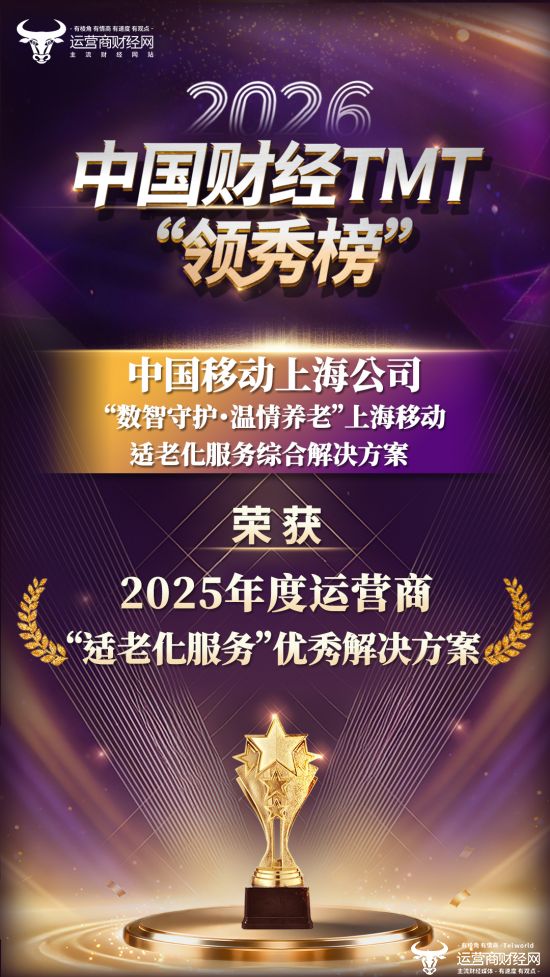
热烈祝贺!上海移动斩获“2025年度运营商‘适老化服务’优秀解决方案”
Xin Lang Cai Jing· 2026-01-29 15:43
Group 1 - The 2026 China Finance TMT "Leading List" ceremony was held on January 29, organized by a well-known financial media operator [1] - China Mobile Shanghai's "Smart Guardian: Warm Elderly Care" comprehensive solution won the "2025 Annual Operator 'Elderly Care Service' Excellent Solution" award [1] - The evaluation process was fair, open, and competitive, involving major domestic telecom operators and numerous well-known enterprises [1]
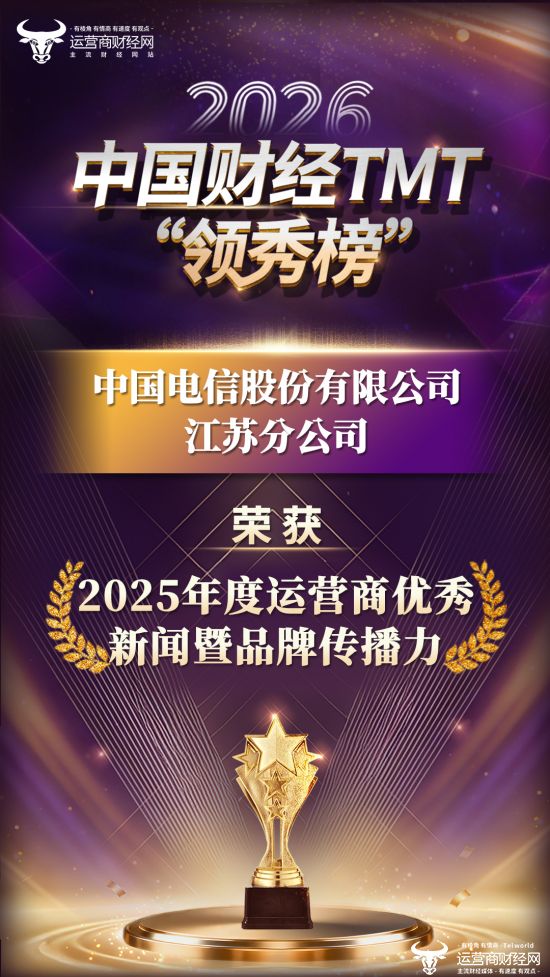
2026中国财经TMT“领秀榜”盛典:江苏电信荣获“2025年度运营商优秀新闻暨品牌传播力”
Xin Lang Cai Jing· 2026-01-29 14:40
Core Insights - The 2026 China Finance TMT "Leading List" ceremony was successfully held on January 29, showcasing various sectors including telecommunications, finance, automotive, real estate, digital devices, internet, home appliances, home furnishings, pharmaceuticals, liquor, and food [1] - China Telecom Jiangsu Branch won the "2025 Annual Excellent News and Brand Communication Power" award, highlighting its competitive edge in the telecommunications sector [1]

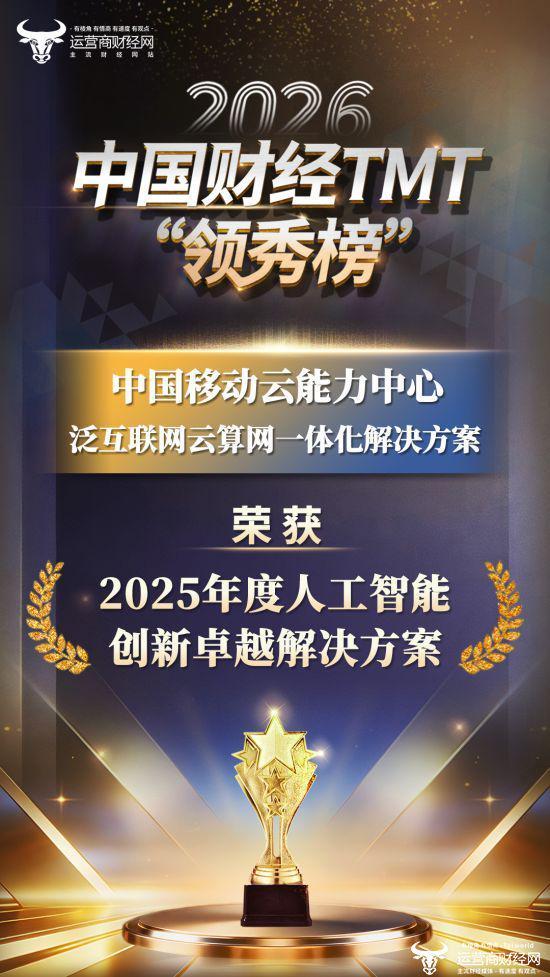
喜讯!中移云能泛互联网云算网一体化解决方案荣获2026中国财经TMT“领秀榜”一项大奖!
Xin Lang Cai Jing· 2026-01-29 14:40
Group 1 - The 2026 China Finance TMT "Leading List" ceremony was held on January 29, attracting significant attention and participation from various industry stakeholders, including operators, financial institutions, and research institutes [1] - The event announced the annual award winners across multiple sectors such as telecommunications, finance, automotive, real estate, digital devices, internet, home appliances, home furnishings, pharmaceuticals, liquor, and food, recognizing outstanding companies and products that contribute to industry development [1] - China Mobile's Cloud Capability Center won the "2025 Annual Artificial Intelligence Innovative Excellence Solution" award for its integrated solution of pan-internet cloud computing and networking, standing out among fierce competition [1]
关键时刻,私募大佬吴伟志发声!
中国基金报· 2026-01-22 05:37
Core Viewpoint - The current market is characterized by a "summer" phase of a bull market, with active trading, accelerated sector rotation, and a broadening profit effect, but without signs of full-blown bubble or extreme sentiment, indicating that both time and space have not yet peaked [2][5]. Group 1: Market Analysis - Compared to major global markets, the recent rise in the Chinese stock market is more of a "catch-up" rather than a "bubble," with the A-share market still undervalued despite a significant rebound in 2025 [4][6]. - As of the third quarter of 2025, the dynamic price-to-earnings ratio of the CSI 300 index is approximately 14 times, significantly lower than the S&P 500 (about 29 times) and the Nasdaq (about 42 times), indicating a relative undervaluation [6]. - The foundation of the bull market in China is solid, supported by the unshakeable advantage of the manufacturing sector, underestimated technological strength, cautious global corporate capital expenditure, and supportive policies [7]. Group 2: Investment Opportunities - The company identifies five key "hard asset" investment directions: "Technology Innovation+", pharmaceutical and biotechnology, supply-side reversal of resource products, gold, and high-dividend assets [8][9]. - In the "Technology Innovation+" sector, internet platform companies are experiencing a valuation recovery post-antitrust adjustments, with strong cash flows and enhanced dividends, while AI-enabled new businesses are emerging [9][10]. - The pharmaceutical and biotechnology sector is entering a harvest phase, with innovative drug development yielding global licensing opportunities, and the industry is at a historical low in valuation after four years of deep adjustment [10]. - The supply-side reversal of resource products is driven by a significant lack of capital expenditure over the past five years, coupled with rigid demand growth in new energy, military, and AI hardware, leading to a supply gap for key metals [10]. - Gold assets are gaining value as a non-credit asset amid global de-dollarization and ongoing geopolitical conflicts, with potential support for gold prices if the Federal Reserve continues to lower interest rates [10]. - High-dividend assets, such as those in the power, telecommunications, and banking sectors, provide stable cash flows in a declining interest rate environment, serving as a ballast in investment portfolios, especially during periods of increased volatility [10].
运营商形式主义的代价:员工贴钱买数据,市场一片虚假!
Sou Hu Cai Jing· 2026-01-14 12:39
Core Insights - The telecommunications industry appears to be thriving on the surface, but there is a hidden issue where many frontline employees resort to spending their own money to "buy data" in order to meet unrealistic KPIs [1][2] Group 1: Employee Practices - Employees face strict performance evaluations with increasing targets, including new user acquisition and service upgrades, which are difficult to achieve in a saturated market [1] - To meet these targets, employees often end up spending thousands of yuan out of pocket, effectively "paying to work" [1] Group 2: Market Implications - The practice of data falsification undermines fair competition, creating a vicious cycle where diligent employees are penalized while those who manipulate data gain short-term benefits [2] - This behavior can lead to misleading marketing practices, such as inducing sign-ups and concealing terms, which harms consumer rights and erodes trust in the telecommunications sector [2] - If this formalism persists, both the telecommunications companies and the market will ultimately bear the consequences, although the three major operators are beginning to address this issue [2]
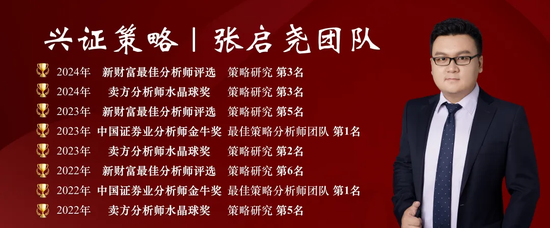
【兴证策略】60大热门赛道:哪些拥挤度仍在低位?
Xin Lang Cai Jing· 2026-01-13 09:26
Core Insights - The article discusses the investment strategies for the year 2026, focusing on opportunities identified by top fund companies and managers in the market [1][124]. Group 1: Market Sentiment Indicator - The "Congestion Degree" is a unique indicator developed by the company to reflect trading sentiment in popular sectors, combining four dimensions: volume, price, funds, and analyst forecasts [3][126]. - This indicator quantitatively tracks changes in market sentiment and has strong implications for short-term stock price movements [3][126]. Group 2: TMT Sector Insights - The congestion levels for various TMT (Technology, Media, Telecommunications) segments are as follows: - Optical modules: congestion level is moderately low [10][131]. - Servers: congestion level is moderately high [8][133]. - Base stations: congestion level is moderate [10][135]. - Optical fiber and cables: congestion level is moderately high [10][136]. - IDC (Internet Data Center): congestion level is moderately high [10][136]. - Computer equipment: congestion level is high [10][139]. - Optical components: congestion level is high [10][140]. - RF components: congestion level is high [10][145]. - PCB (Printed Circuit Board): congestion level is moderate [10][146]. - IT services: congestion level is moderately high [10][147]. - Semiconductor materials: congestion level is high [10][157]. - Consumer electronics: congestion level is moderately low [10][172]. Group 3: Manufacturing Sector Insights - The congestion levels for various manufacturing segments are as follows: - Automotive parts: congestion level is high [10][181]. - Lithium batteries: congestion level is moderate [10][184]. - Wind power: congestion level is moderately low [10][187]. - Photovoltaic components: congestion level is high [10][197]. - Industrial robots: congestion level is high [10][199]. - Unmanned aerial vehicles: congestion level is high [10][200]. Group 4: Consumer and Pharmaceutical Sector Insights - The congestion levels for various consumer and pharmaceutical segments are as follows: - White goods: congestion level is low [10][207]. - Alcoholic beverages: congestion level is moderately low [10][209]. - Medical services: congestion level is moderately high [10][222]. Group 5: Financial and Real Estate Sector Insights - The congestion levels for various financial and real estate segments are as follows: - Real estate: congestion level is moderate [10][225]. - Insurance: congestion level is high [10][225]. - Banking: congestion level is low [10][226].