高端装备产业集群

Search documents
中国筑起LNG船产业“生态绿洲”
Xin Lang Cai Jing· 2026-01-30 07:17
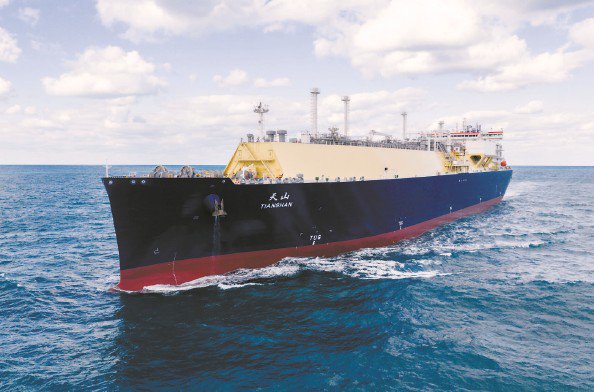
Core Viewpoint - The successful delivery of the LNG carrier "Tianshan" marks a significant advancement in China's shipbuilding industry, showcasing its transition from following to leading in certain areas of LNG transportation technology [2][3] Group 1: Ship Specifications and Features - The "Tianshan" is 295 meters long, 45 meters wide, and 26.25 meters deep, with a service speed of 19.5 knots, featuring low evaporation rates, low energy consumption, high environmental protection, strong versatility, and economic efficiency [2] - It employs the latest generation of dual-fuel low-speed propulsion systems and domestically produced high-efficiency propellers, further reducing fuel consumption [2] - The vessel meets the strictest environmental emission standards set by the International Maritime Organization (IMO) in both fuel and gas modes [2] Group 2: Industry Impact and Developments - The "Tianshan" is the final piece of the China National Offshore Oil Corporation's LNG transportation project, joining a fleet of eight sister ships, significantly enhancing China's autonomous control over LNG maritime transportation [2] - The successful delivery of the "Tianshan" also signifies that China's own classification society, China Classification Society (CCS), has achieved comprehensive independent technical service capabilities in the large LNG carrier sector [3] - The construction cycle for LNG ships in China has been reduced from 36 months to 16 months, achieving the fastest level globally, with a continuous increase in domestic production rates [3] Group 3: Future Prospects and Orders - Hudong-Zhonghua, as the leader in the LNG industry chain, holds over 50 orders with production plans extending to 2030, driving the collaborative development of over 130 high-end supporting enterprises [3] - The company is also advancing in the clean energy equipment sector, having introduced over ten types of green vessels capable of transporting liquid hydrogen, liquid ammonia, and ethane, contributing to national energy security and global low-carbon development [3]