高蛋白

Search documents
2025年消费新潜力白皮书
魔镜洞察· 2026-02-06 09:55
Group 1: Investment Rating - The report provides a positive investment rating for the food and beverage industry, indicating a stable growth outlook for the sector [9][13]. Group 2: Core Insights - The food and beverage market in China is projected to reach a total scale of 593.67 billion yuan by 2025, with a year-on-year sales growth of 7.8%, driven by a 6.3% increase in volume and a 1.4% rise in average price [9][13]. - Health-oriented products are leading the growth in the food and beverage sector, with consumers increasingly prioritizing quality, health benefits, and functionality in their purchasing decisions [10][17]. - The snack food market is expected to grow to 132.76 billion yuan by 2025, with a growth rate of 5.8%, highlighting a significant shift towards high-protein and high-quality products [10][24]. - The beverage market is characterized by a dual structure where flavor remains the primary driver of sales, while functional and health-related attributes are gaining traction, contributing to overall market growth [11][50]. Group 3: Market Overview - The food and beverage market is experiencing a steady expansion, with significant growth in categories such as instant food, grains, and condiments, which are projected to grow by 14.5% and 13.8% respectively [13][17]. - The snack food segment is leading in sales, with beef jerky and marinated snacks showing a year-on-year growth of 13.5%, reflecting a consumer shift towards healthier and high-protein options [24][31]. - The beverage market is evolving, with a notable increase in demand for health-oriented products, including herbal and functional drinks, indicating a shift from traditional flavors to health-focused offerings [50][54]. Group 4: Emerging Trends - The trend towards health and convenience is reshaping the food and beverage landscape, with products like fresh cakes and plant-based drinks gaining popularity due to their perceived health benefits [17][40]. - The snack food market is witnessing a rise in personalized offerings, with regional and cultural specialties becoming more prominent, catering to consumer preferences for unique flavors and experiences [32][40]. - The beverage sector is moving towards a focus on functional benefits, with products aimed at specific health needs, such as digestive health and immune support, becoming increasingly popular among consumers [50][55].
美国官方饮食指南被“推翻”了?这几点值得国人餐桌借鉴
Xin Lang Cai Jing· 2026-01-14 09:22
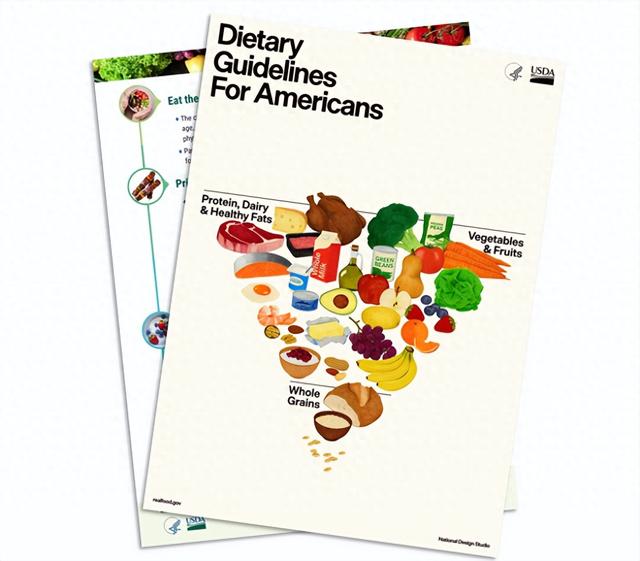
Core Viewpoint - The newly released 2025-2030 Dietary Guidelines for Americans emphasizes the importance of consuming "real food" and shifts focus from what and how much to eat, to where food comes from, marking a significant change in U.S. nutrition policy [1][4]. Group 1: Key Recommendations - The new guidelines recommend a diet centered around whole, nutrient-dense foods such as poultry, meat, eggs, seafood, legumes, nuts, whole grains, and intact fruits and vegetables [4][6]. - There is a strict limitation on foods and beverages containing added salt, sugar, artificial flavors, synthetic colors, preservatives, and non-nutritive sweeteners, specifically avoiding highly processed packaged foods [6][9]. - The guidelines encourage home cooking using gentle methods like baking, roasting, and stir-frying, while advising against frying [6][12]. Group 2: Structural Changes - The traditional food pyramid has been fundamentally inverted, placing high-quality proteins, dairy, healthy fats, and fresh fruits and vegetables at the top, while whole grains have been moved to the tip [7][9]. - This inversion signifies a redefinition of food priorities, aiming to shift public focus towards protein-rich foods and away from high carbohydrate intake, which has been linked to obesity and metabolic diseases [10][12]. Group 3: Protein and Fat Recommendations - The new guidelines increase the recommended protein intake for adults to 1.2-1.6 grams per kilogram of body weight, nearly doubling the previous recommendation of 0.8 grams [10][12]. - While the guidelines promote the inclusion of high-fat foods like butter and full-fat dairy, they also set a cap on saturated fat intake at 10% of total daily energy, which could be easily exceeded [15][16]. - The guidelines take a stricter stance on added sugars, recommending zero intake, especially for children under 10, contrasting with the previous guideline of limiting added sugars to 10% of total energy [17][19]. Group 4: Fruit and Vegetable Intake - The guidelines suggest prioritizing colorful, whole vegetables and fruits, recommending a daily intake of 3 servings of vegetables and 2 servings of fruits [20]. - Compared to the Chinese dietary guidelines, which recommend higher vegetable and fruit intake, the U.S. guidelines may appear insufficient for optimal health benefits [21]. Group 5: Cultural Considerations - The principles of "real food," "high-quality protein," and "strict sugar control" in the U.S. guidelines resonate with China's dietary principles of food diversity and balanced intake [21]. - However, it is emphasized that dietary guidelines should be tailored to local populations' epidemiological characteristics and dietary habits, suggesting that the Chinese population should not blindly follow foreign guidelines [21].

对话宠业家:连续三年取得翻倍增长,CHARM野性魅力在中国市场做对了什么
Zhong Guo Chan Ye Jing Ji Xin Xi Wang· 2025-06-10 11:58
Core Insights - CHARM has achieved remarkable growth in the Chinese pet food market, with a doubling of sales for three consecutive years, attributed to a well-integrated brand strategy and market practices [1][6] - The brand has successfully positioned itself in the high-end pet food segment, with a 112% annual growth rate over the past three years, addressing the rising obesity rates among pets with its "high protein, low glycemic" product offerings [3][6] Brand Strategy - CHARM emphasizes a brand philosophy centered on meeting the natural hunting instincts of pets, using high-quality ingredients and a slow-cooking process to create premium pet food [4][5] - The brand has established a comprehensive quality assurance system from research and development to production, ensuring high standards in product quality [7][9] Product Offerings - The product line focuses on staple foods and main meal cans, providing a complete nutritional solution for pets, with a core emphasis on high protein and low carbohydrate content [10][18] - CHARM's products are designed to meet the dietary needs of pets at various growth stages, with a protein content exceeding national standards by 1.6 times [20][26] Market Presence - Since entering the Chinese market in 2023, CHARM has expanded its reach to over 100 cities and more than 1,000 pet stores, achieving significant online sales growth, which now accounts for 45% of total sales [6][27][28] - The brand employs a dual-channel strategy, leveraging both online platforms like Tmall and JD, and offline partnerships with pet stores to enhance market penetration [27][28] Future Plans - For 2025, CHARM aims to focus on brand value enhancement, product innovation, and strengthening its distribution network, with plans to launch a new high-end product series [29][31] - The company intends to optimize its online strategies and expand its offline presence, particularly in lower-tier cities, while exploring new collaborative models with pet-related businesses [32][33]