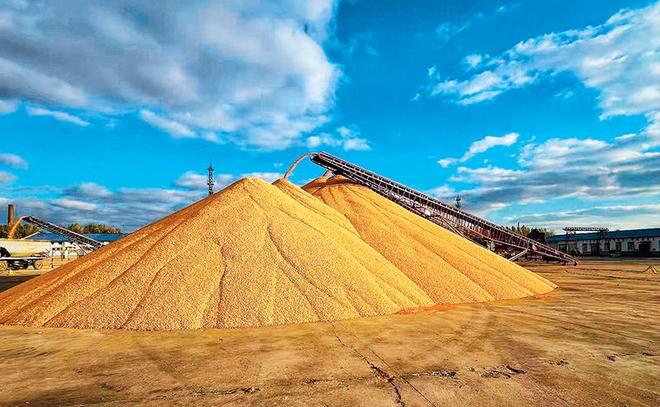
高蛋白玉米产业化

Search documents
瞭望 | “大豆蛋白替代”新赛道
Xin Hua She· 2025-11-18 03:11
Core Viewpoint - High-protein corn is transitioning from genetic innovation and variety breeding to demonstration and promotion, establishing a complete industrial chain and making significant progress towards "soy protein substitution" [1] Summary by Sections Industry Development - High-protein corn is expected to enter its "industrial year" in 2025, with a focus on an order agriculture model that emphasizes specialized breeding, planting, harvesting, storage, and usage [1] - China imports over 100 million tons of grain annually, with more than 80% being soybeans, primarily to address feed protein sources [1][4] - Increasing the protein content of existing corn crops by 4 percentage points could reduce soybean imports by nearly 30 million tons annually, alleviating dependence on imports and enhancing food security [1][4] Research and Innovation - The research on high-protein corn has been prioritized in national agricultural R&D plans since the 14th Five-Year Plan, with significant projects initiated by the Chinese Academy of Agricultural Sciences [5] - New high-yield, high-protein corn varieties have been developed, such as Zhongdan 126 and Weiyu 115, with ongoing efforts to enhance protein content and adaptability [5][6] Market Implementation - In Jilin Province, over 12,000 acres of high-protein corn have been planted under an order agriculture model, with plans to expand to over 1 million acres in the next three years [7] - The establishment of a complete industrial chain for high-protein corn includes specialized planting, harvesting, and storage to maintain quality and protein content [8] Economic Impact - The successful commercialization of high-protein corn could significantly benefit grain-producing regions, potentially transforming the economic landscape for farmers by ensuring higher prices for quality produce [8] - The price premium for high-protein corn could exceed 100 yuan per ton compared to regular corn, enhancing income across the entire supply chain [8] Challenges and Solutions - The industry faces challenges such as limited variety options, the need for increased promotion, and the necessity to improve protein quality [9][11] - Recommendations include increasing R&D investment, establishing dedicated approval channels for high-protein corn varieties, and enhancing the quality of corn protein to meet nutritional standards [9][11]