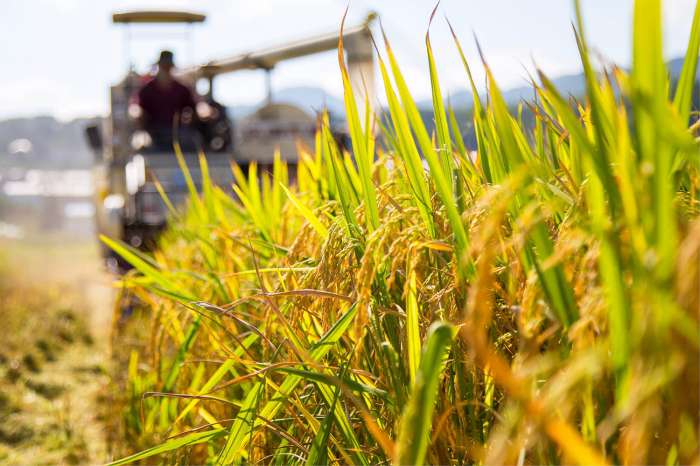
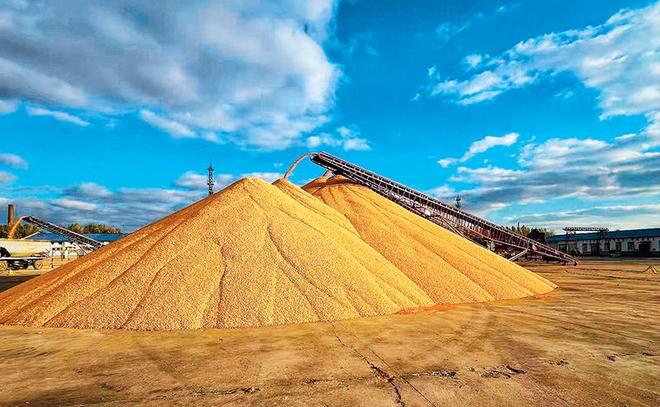
高蛋白玉米

Search documents
藏在田间地头的“生意经”:湖北如何将特色农业转化为经济引擎
21世纪经济报道· 2025-12-23 13:20
Core Viewpoint - Hubei is transforming its rich agricultural resources into a "golden chain" that drives regional development and connects to global markets, showcasing a variety of high-quality agricultural products and innovative initiatives [1][4][12] Agricultural Production and Innovation - Hubei's grain production is projected to reach 557.07 billion jin in 2024, maintaining over 500 billion jin for 12 consecutive years, with rapeseed production surpassing 3 million tons for the first time [4] - The small lobster industry in Qianjiang is expected to achieve a comprehensive output value of 87 billion yuan in 2024, with a brand value of 52.72 billion yuan, leading the industry for seven consecutive years [4] - Enshi selenium tea is gaining international recognition, with a brand system that includes eight sub-brands, contributing to a total annual output value of 30.1 billion yuan for Enshi Yulu and 16.06 billion yuan for Lichuan Hong [5][6] Employment and Economic Impact - The small lobster industry has created employment for 220,000 residents in Qianjiang, accounting for about a quarter of the city's population [6] - In Hekou County, a cooperative model has led to over 600 households cultivating 10,000 acres of vegetables, achieving an average income of 87,000 yuan per household [6] Challenges and Strategic Responses - Despite significant achievements, challenges such as insufficient industry drive and weak brand effects persist [8] - Hubei is focusing on strengthening leading enterprises, building brands, and promoting new business formats through policy support and funding [8] Capital Empowerment - The successful listing of Yizhi Konjac on the Beijing Stock Exchange raised 154 million yuan, significantly increasing production capacity and revenue, with a 28.76% increase in revenue projected for 2024 [10] - Hubei's first seed industry stock, Kangnong Seed Industry, has made significant advancements in corn seed technology, with over 37 national plant variety protections [11] Future Outlook - Hubei's agricultural transformation reflects a response to natural gifts and modern demands, with a focus on leading enterprises, brand development, and capital empowerment [12] - The continuous improvement of industrial chains and value chains is expected to enhance Hubei's agricultural sector's role as a key driver of high-quality regional economic development [12]


藏在田间地头的“生意经”:湖北如何将特色农业转化为经济引擎?
2 1 Shi Ji Jing Ji Bao Dao· 2025-12-23 08:17
Core Viewpoint - Hubei province is leveraging its rich agricultural resources to create a "golden chain" that connects regional development with global markets, focusing on high-quality agricultural products and innovative practices [1][12]. Agricultural Production - Hubei's total grain production is projected to reach 55.707 billion jin in 2024, maintaining over 50 billion jin for 12 consecutive years, with rapeseed production exceeding 3 million tons for the first time [3]. - The summer grain output for this year is 9.902 billion jin, showing a year-on-year increase of 0.91 billion jin [3]. - The local specialty agricultural products, such as the potential of the small lobster industry and high mountain vegetables, are thriving, contributing to a diversified supply structure [3][4]. Industry Development - The comprehensive output value of the entire small lobster industry in Qianjiang is expected to reach 87 billion yuan, with the brand value of "Qianjiang Lobster" at 52.72 billion yuan, ranking first in the industry for seven consecutive years [4]. - The Enshi selenium tea brand has gained international recognition, with a brand system that includes eight sub-brands, generating significant revenue [4]. - Longyang's high mountain vegetable planting technology is evolving, with plans to establish over 50,000 acres of rain-sheltered vegetable greenhouses by 2025, yielding 1.2 million tons of high-quality vegetables [4]. Employment and Economic Impact - The small lobster industry has created jobs for 220,000 residents in Qianjiang, accounting for about a quarter of the city's population [5]. - In Enshi, a cooperative model has successfully engaged over 600 farmers in vegetable cultivation, achieving an average income of 87,000 yuan per household [5]. Challenges and Solutions - Despite the success, challenges such as insufficient industry driving force and weak brand effects persist [6]. - Hubei is addressing these challenges by strengthening leading enterprises, building brands, and promoting new business formats through policy support and funding [7]. Capital Empowerment - The successful listing of Yihua Konjac on the Beijing Stock Exchange has enabled the company to enhance its production capacity significantly, with a revenue increase of 28.76% and a net profit increase of 64.4% in 2024 [10]. - Hubei's first seed industry stock, Kangnong Seed Industry, has made significant advancements in corn seed technology, with a promotion area of high-protein corn varieties reaching 20 million acres [11]. Future Outlook - Hubei's agricultural sector is transitioning from traditional practices to modern, chain-driven development, with a focus on enhancing brand value and capital infusion [12]. - The continuous improvement of industry chains and value chains is expected to position Hubei's specialty agriculture as a key driver of high-quality regional economic development [12].
【大调研我们在行动】科创这盘棋,湖北真真下活了!
Xin Lang Cai Jing· 2025-12-21 19:39
Core Viewpoint - Hubei province is experiencing significant technological innovation and development, characterized by rapid market capture and long-term strategic planning, showcasing a strong momentum in scientific and technological advancements [1][3]. Group 1: Technological Innovation - Hubei's "cutting-edge" technology initiative has led to the rapid development of advanced medical devices, such as a multi-modal imaging surgical robot, which was developed in just three years, significantly faster than similar products [3][4]. - The province has successfully addressed 981 key technological needs, resulting in 42 achievements, with 60% reaching international advanced levels and 20% leading globally [4]. - Hubei's innovation ecosystem includes over 200 research institutions and leading enterprises collaborating on targeted breakthroughs [4]. Group 2: Support for Startups - Hubei's approach to nurturing tech companies involves a comprehensive lifecycle support system, providing tailored resources for each stage of development, from seed to maturity [5]. - The establishment of a supportive environment has allowed startups, such as Opal Biotechnology, to rapidly progress from project initiation to operational status within months [5]. Group 3: Long-term Commitment - Hubei emphasizes the importance of long-term foundational research, with a focus on revolutionary technologies that require sustained investment and commitment [6][7]. - The province has a history of consistent investment in technology, with over 30 years of dedicated funding leading to the establishment of a robust scientific research infrastructure [6]. Group 4: Research and Development Achievements - Significant breakthroughs in various fields, such as high-resolution remote sensing satellites and innovative agricultural products, have been achieved through persistent research efforts [9][18]. - Hubei has developed hundreds of pilot testing platforms to facilitate the commercialization of research outcomes, ensuring that innovations can be effectively translated into market-ready products [12][10]. Group 5: Financial and Institutional Support - The province has implemented reforms to clarify ownership of scientific achievements, encouraging researchers to commercialize their work without fear of losing state assets [16]. - Innovative financial services, such as credit loans based on innovation scores, have been introduced to alleviate funding challenges faced by tech companies [17]. Group 6: Future Prospects - Hubei's commitment to integrating technology into various sectors, including agriculture and manufacturing, is expected to drive economic growth, with projections indicating a crossing of the 6 trillion yuan threshold in economic output [21]. - The province is positioning itself as a leader in advanced manufacturing and smart city development, with significant investments in sectors like automotive and optical communications [20].
瞭望 | “大豆蛋白替代”新赛道
Xin Hua She· 2025-11-18 03:11
Core Viewpoint - High-protein corn is transitioning from genetic innovation and variety breeding to demonstration and promotion, establishing a complete industrial chain and making significant progress towards "soy protein substitution" [1] Summary by Sections Industry Development - High-protein corn is expected to enter its "industrial year" in 2025, with a focus on an order agriculture model that emphasizes specialized breeding, planting, harvesting, storage, and usage [1] - China imports over 100 million tons of grain annually, with more than 80% being soybeans, primarily to address feed protein sources [1][4] - Increasing the protein content of existing corn crops by 4 percentage points could reduce soybean imports by nearly 30 million tons annually, alleviating dependence on imports and enhancing food security [1][4] Research and Innovation - The research on high-protein corn has been prioritized in national agricultural R&D plans since the 14th Five-Year Plan, with significant projects initiated by the Chinese Academy of Agricultural Sciences [5] - New high-yield, high-protein corn varieties have been developed, such as Zhongdan 126 and Weiyu 115, with ongoing efforts to enhance protein content and adaptability [5][6] Market Implementation - In Jilin Province, over 12,000 acres of high-protein corn have been planted under an order agriculture model, with plans to expand to over 1 million acres in the next three years [7] - The establishment of a complete industrial chain for high-protein corn includes specialized planting, harvesting, and storage to maintain quality and protein content [8] Economic Impact - The successful commercialization of high-protein corn could significantly benefit grain-producing regions, potentially transforming the economic landscape for farmers by ensuring higher prices for quality produce [8] - The price premium for high-protein corn could exceed 100 yuan per ton compared to regular corn, enhancing income across the entire supply chain [8] Challenges and Solutions - The industry faces challenges such as limited variety options, the need for increased promotion, and the necessity to improve protein quality [9][11] - Recommendations include increasing R&D investment, establishing dedicated approval channels for high-protein corn varieties, and enhancing the quality of corn protein to meet nutritional standards [9][11]
齐心协力共绘“三农”新画卷
Xin Hua She· 2025-09-23 00:58
Group 1 - The celebration of the "Chinese Farmers' Harvest Festival" highlights the importance of agricultural modernization and rural revitalization, with a focus on enhancing farmers' livelihoods and food security [1][2][3] - The agricultural sector is experiencing a positive trend, with summer grain production stable and early rice yield increased, indicating a potential for another bumper harvest [1][2] - The introduction of high-protein corn varieties and modern agricultural machinery is expected to significantly boost grain production capabilities [2][4] Group 2 - The emphasis on improving rural living conditions includes transforming existing houses into high-quality accommodations to attract tourism and enhance local economies [3][4] - The government is implementing various policies to support farmers, including promoting employment opportunities and developing local industries to ensure sustainable income for rural populations [4][5] - The integration of e-commerce and local agricultural products is being leveraged to expand market reach and enhance the economic vitality of rural areas [4][5]

习近平总书记在“中国农民丰收节”到来之际的节日祝贺和诚挚问候温暖人心催人奋进
Xin Hua She· 2025-09-22 16:16
Core Points - The article emphasizes the importance of agricultural modernization and the role of farmers in achieving this goal, as highlighted by President Xi Jinping during the "Chinese Farmers' Harvest Festival" [2][3] - The focus is on food security, with achievements in grain production despite natural disasters, indicating a positive outlook for the agricultural sector [3][4] - The integration of technology in agriculture is underscored as a key factor for enhancing production capabilities and ensuring food security [4][6] Group 1: Agricultural Production - The article reports that summer grain production has been stable, with early rice yields increasing, and expectations for a good harvest this year [3] - A cooperative managing over 1,300 acres reported an average increase of over 50 pounds per acre in summer grain production [3] - In Heilongjiang Province, a company is trialing high-protein corn varieties, utilizing modern agricultural machinery to support grain production [4] Group 2: Rural Development - The article discusses efforts to improve rural living conditions, including the transformation of old houses into high-quality guesthouses to attract tourism [5] - There is a focus on sustainable income for farmers, with initiatives to develop specialty industries and create more job opportunities in rural areas [5][6] - The promotion of cultural resources and rural tourism is highlighted as a strategy to enhance the vibrancy of rural communities [6] Group 3: Policy Support - The article notes the increasing support from the government for agricultural policies aimed at benefiting farmers and enhancing rural development [6] - Emphasis is placed on the need for local governments to implement these policies effectively to improve farmers' livelihoods [6] - The article mentions the importance of integrating modern agricultural practices and technologies to boost productivity and farmer income [6]
齐心协力共绘“三农”新画卷——习近平总书记在“中国农民丰收节”到来之际的节日祝贺和诚挚问候温暖人心催人奋进
Xin Hua She· 2025-09-22 16:13
Core Insights - The celebration of the "Chinese Farmers' Harvest Festival" emphasizes the importance of agricultural modernization and rural revitalization, as highlighted by President Xi Jinping's message to farmers [1][2][3] Group 1: Agricultural Production - The average yield of summer grain managed by a cooperative increased by over 50 pounds per acre this year, with expectations for corn yield to exceed 1,500 pounds per acre [2] - The emphasis on agricultural technology is crucial for ensuring food security, with companies adopting modern farming techniques and equipment to enhance production capabilities [2][3] Group 2: Rural Development - The modernization of rural areas is essential for improving the quality of life for farmers, with initiatives to enhance living conditions and promote tourism [3][4] - Local governments are focusing on developing specialty industries and creating job opportunities to ensure sustainable income for farmers [4][5] Group 3: Policy Support - The central government has implemented a series of policies aimed at supporting agriculture and rural development, which are increasingly comprehensive and impactful [5] - There is a strong push for the integration of modern agricultural practices, such as unmanned farms and biological breeding laboratories, to enhance productivity and farmer income [5][6]
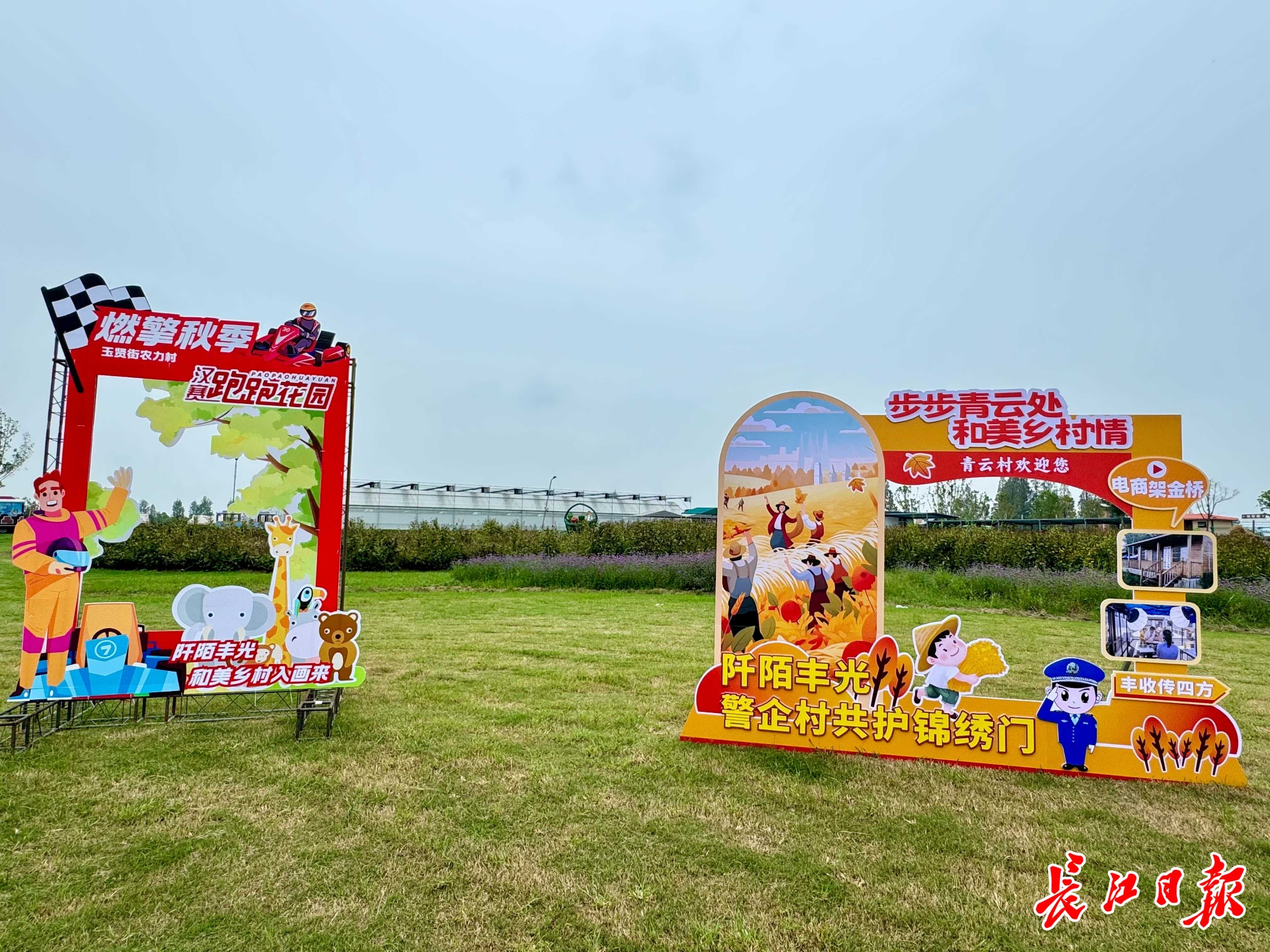
金秋江城好“丰”景,明天一起嗨玩丰收节!
Chang Jiang Ri Bao· 2025-09-22 08:34
Core Viewpoint - The article highlights the celebration of the 2025 Chinese Farmers' Harvest Festival in Wuhan, showcasing a vibrant rural paradise filled with visual, taste, and experiential delights for visitors [1]. Group 1: Event Highlights - The main venue features three major themed autumn display areas, including the "Earth Grain Festival" showcasing various grains like fragrant rice and high-protein corn [4]. - The "Han Flavor Fragrance" specialty area presents local agricultural products such as tomatoes, dried fish, and fresh lotus roots, emphasizing the culinary pride of Wuhan [7]. - The "Countryside Scenery" check-in point allows visitors to virtually explore beautiful rural areas like Huangpi and Caidian, reflecting the new face of rural revitalization [10]. Group 2: Competitions and Activities - Four fun agricultural competitions are organized, including a potato carrying race and a duck herding contest, encouraging public participation and support [12][13]. - The main stage features a variety of performances, including traditional drum formations and dance shows, along with a lucky draw offering local products as prizes [15]. Group 3: Market and Promotion - The "Jiangcheng Baizhen" market gathers over 70 agricultural enterprises to showcase quality local products, allowing visitors to taste and purchase items at discounted prices [16]. - A live-streaming initiative called "Qingyun China" is launched to promote agricultural products, combining offline experiences with online broadcasting to highlight the strengths of Wuhan's agriculture [20].