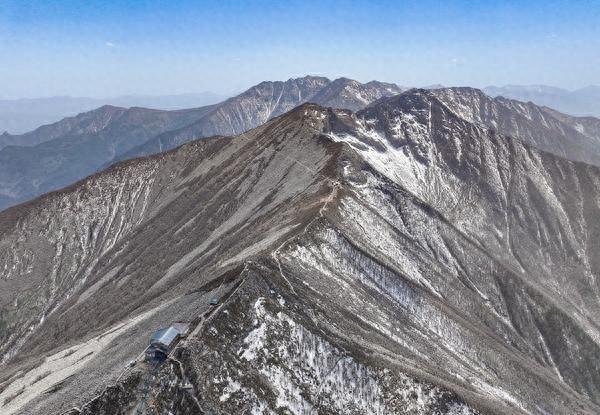
鳌太穿越

Search documents
为什么「鳌太」穿越禁不住?
3 6 Ke· 2026-01-07 15:09
Core Viewpoint - The article discusses the ongoing challenges and dangers associated with the "Ao-Tai Line" in the Qinling Mountains, highlighting the persistent illegal crossings despite numerous fatalities and official prohibitions [2][3][39]. Group 1: Incidents and Fatalities - Over 60 individuals have gone missing or died on the "Ao-Tai Line" since the 21st century, with five memorials established for the victims [3][39]. - In the recent New Year holiday, five climbers illegally crossed the "Ao-Tai Line," resulting in two confirmed deaths and ongoing rescue efforts for the remaining climbers [2][39]. - A significant increase in accidents has been noted, with a report indicating that from 2012 to 2017, 46 individuals were reported missing or deceased on this route [20][39]. Group 2: Regulatory Measures - The Shaanxi Provincial Management Bureau has prohibited illegal crossings of the "Ao-Tai Line" since 2018 to protect both climbers and the local ecology [3][20]. - Despite the ban, over 3,119 individuals were recorded on the "Ao-Tai Line" from 2018 to 2022, indicating a decline in numbers but persistent illegal activity [22][39]. - The management bureau has issued fines totaling 204,600 yuan for 105 individuals since the ban was enacted [10][39]. Group 3: Climbers' Behavior and Motivations - The allure of the "Ao-Tai Line" persists, with climbers often viewing the challenge as a rite of passage or a test of endurance, despite the known dangers [39][41]. - Many climbers are drawn to the route for its reputation as a challenging adventure, with some considering it a "graduation exam" for outdoor enthusiasts [39][41]. - The article notes that climbers often disregard safety warnings and regulations, leading to a culture of risk-taking among outdoor adventurers [39][41]. Group 4: Environmental Concerns - The continuous illegal crossings have raised significant ecological concerns, with evidence of declining vegetation cover and environmental degradation in the area [42][43]. - The management bureau has reported the collection of thousands of pieces of litter left by climbers, highlighting a lack of environmental awareness among outdoor enthusiasts [43][49]. - The article emphasizes the need for a balance between outdoor activities and ecological preservation, as the area is home to protected species and critical habitats [42][43].


为什么「鳌太」穿越禁不住?
36氪· 2026-01-07 13:55
Core Viewpoint - The article discusses the ongoing challenges and dangers associated with the "Ao-Tai Line" in the Qinling Mountains, highlighting the persistent illegal crossings despite government bans and the ecological impact of such activities [4][5][6]. Group 1: Background and Statistics - The "Ao-Tai Line" has seen over 60 fatalities in the past 25 years, with memorials established for the victims [5][10]. - The line is notorious for its difficulty, attracting adventurers who view crossing it as a significant achievement [9][19]. - Since the ban on illegal crossings was announced in 2018, there have been 105 penalties issued, totaling 204,600 yuan in fines [11][28]. Group 2: Management and Enforcement - The management agency, Taibai Mountain National Nature Reserve Administration, has struggled to enforce the ban effectively, with many climbers continuing to attempt crossings [12][50]. - Despite extensive efforts, including the posting of warning signs and the deployment of personnel to intercept climbers, illegal crossings persist [13][64]. - The agency has recorded a decrease in the number of climbers from 1,244 in 2018 to 278 in 2022, but illegal activities continue [30][50]. Group 3: Ecological Concerns - The article highlights the ecological degradation caused by climbers, including a significant decline in high-altitude vegetation cover due to foot traffic [54][55]. - The area is home to protected species and is critical for ecological preservation, making the illegal crossings particularly concerning [54][56]. - The management agency has had to clean up significant amounts of waste left by climbers, indicating a lack of environmental responsibility among some adventurers [56][57]. Group 4: Cultural and Social Aspects - The allure of the "Ao-Tai Line" is partly due to its reputation as a rite of passage for outdoor enthusiasts, with many viewing it as a test of endurance and skill [49][53]. - Local residents, such as Cheng Xiucai, have historically benefited from the influx of climbers, although the recent decline in legal crossings has affected their businesses [10][68]. - The article notes a cultural shift where climbing has become a more competitive and challenging endeavor, with new trends emerging such as reverse and speed crossings [53].

5人非法穿越陕西“小鳌太线”4人失联!最新进展:已找到1人,其余3人仍在搜救中
Xin Lang Cai Jing· 2026-01-05 17:41
Group 1 - Five hikers entered the "Xiao Ao Tai Line" on January 1, with one person descending due to health issues, leaving four missing [2][3] - As of January 5, one more hiker has successfully descended, but three remain missing, with ongoing rescue efforts [3][5] - The "Xiao Ao Tai Line" is part of the "Ao Tai Line," known for its high altitude, complex terrain, and harsh weather, making it one of the deadliest outdoor routes in China [6] Group 2 - The area is located within the core zone of the Taibai Mountain National Nature Reserve, where entry is prohibited by law [6] - Previous announcements in 2018 by local authorities banned "Ao Tai Crossing" activities due to safety concerns [6] - From 2012 to 2017, there were 46 reported cases of missing or deceased hikers in the region, with rescue costs exceeding 2.3 million yuan from 2017 to 2021 [8]

“鳌太穿越”拉锯战
Zhong Guo Qing Nian Bao· 2025-07-15 23:11
Core Points - The article discusses the dangers and challenges associated with the "Ao-Tai Line" in the Qinling Mountains, highlighting the ongoing conflict between outdoor enthusiasts and regulatory authorities [2][29] - Despite a ban on illegal crossings established in 2018, the number of adventurers attempting to traverse the line continues to rise, indicating a persistent allure despite the risks involved [16][29] - The article emphasizes the ecological impact of these activities, noting significant damage to the environment and the presence of litter left by hikers [31][32] Group 1: Dangers and Incidents - Since the 21st century, at least 60 individuals have gone missing or died while attempting to cross the "Ao-Tai Line," with five memorials erected for the deceased [2][16] - The "Ao-Tai Line" is known for its challenging terrain, requiring hikers to carry heavy loads and navigate through remote areas without cell service or supplies [4][19] - The article mentions that even experienced hikers have faced life-threatening situations on the "Ao-Tai Line," with many incidents attributed to sudden weather changes and hypothermia [20][22] Group 2: Regulatory Measures - The Taibai Mountain National Nature Reserve Management Bureau has implemented a ban on unauthorized crossings to protect both the hikers and the local ecosystem [6][16] - Since the ban, over 3,100 individuals have been recorded attempting to cross the line, although the overall trend shows a decrease in numbers from 2018 to 2022 [16][29] - The management bureau has issued fines totaling 204,600 yuan for violations of the crossing ban, with 105 individuals penalized since its implementation [6][16] Group 3: Ecological Concerns - The article highlights the ecological degradation caused by repeated crossings, including a decline in high-altitude vegetation and the disruption of wildlife habitats [31][32] - Littering has become a significant issue, with reports of abandoned items such as gas canisters and plastic waste left by hikers [32] - The management bureau has undertaken efforts to clean up the area, but the ongoing illegal crossings continue to pose a threat to the environment [31][32] Group 4: Cultural and Social Aspects - The "Ao-Tai Line" has gained a reputation as a rite of passage for outdoor enthusiasts, with many viewing the challenge as a test of endurance and skill [29][30] - Local residents, such as those running guesthouses, have seen a decline in business due to the ban, yet the allure of the "Ao-Tai Line" remains strong among adventurers [7][29] - The article notes that the history of the "Ao-Tai Line" dates back to the early days of outdoor sports in China, with its popularity surging in recent years [10][11]