龙山文化

Search documents
应该打造“济南·4200年”城市大IP
Qi Lu Wan Bao· 2026-01-22 09:52
Core Viewpoint - The discovery of the Daming Lake Southwest Site is a significant archaeological finding that pushes back the history of Jinan's urban development to approximately 4200 years ago, marking it as one of the earliest known urban sites in China [1][2]. Group 1: Cultural and Historical Significance - The Daming Lake Southwest Site serves as a benchmark for Jinan's urban history and is considered a "spiritual treasure" that can empower the city's high-quality development [1]. - This archaeological evidence extends the timeline of human activity in Jinan to the mid-Dawenkou culture, providing crucial support for the continuity of Chinese civilization [1][2]. - The site is viewed as a "living fossil" of Jinan's urban civilization, offering invaluable data for studying early urban origins and the development of Yellow River basin civilization [2]. Group 2: Development Opportunities - There is a proposal to create a national-level cultural IP titled "Jinan.4200 Years" to encapsulate the historical and cultural depth of the city, which aligns with Jinan's goals of becoming a central city in the Yellow River basin [3]. - The site could be transformed into an educational base, integrating with local attractions and developing specialized educational materials and courses to promote a unique study tourism brand [3]. - The integration of the "4200-year urban history" into the city's overall promotion strategy is suggested, including the design of a dedicated logo and the development of themed merchandise to attract younger demographics [4]. Group 3: Educational and Cultural Initiatives - The establishment of a digital cultural industry academy and the development of AR/VR projects related to the Longshan culture site are proposed to create a complete industrial chain [7]. - The site can be used to develop practical courses that emphasize themes such as filial piety and integrity, enhancing the understanding of Chinese civilization among youth [6]. - The potential for thematic exhibitions that connect the Longshan culture with historical narratives from the Shun era is highlighted, aiming to merge archaeological findings with historical storytelling [6].
一问到底丨距今4000多年 大明湖西南遗址有何新发现?
Yang Shi Wang· 2025-12-19 15:34
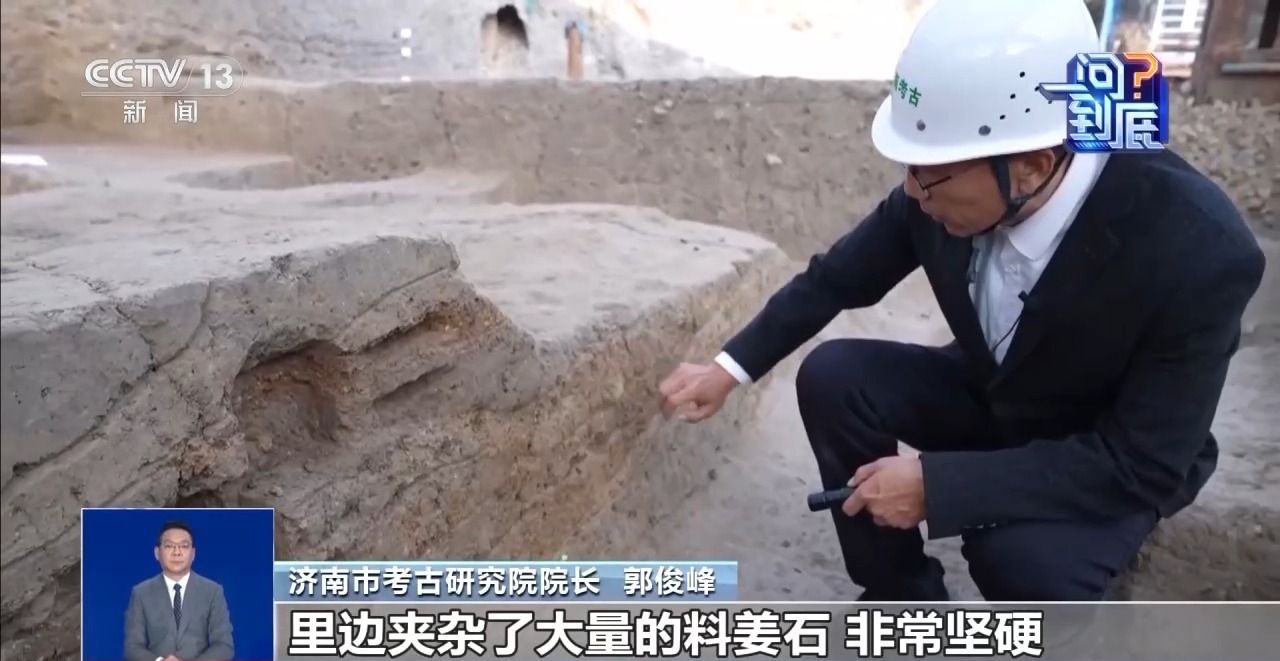
Core Insights - The archaeological findings at the Daming Lake Southwest site in Jinan reveal significant historical artifacts, including a city wall dating back approximately 4,200 years from the Longshan culture period, indicating a well-established urban society in the region [2][15][17] Archaeological Discoveries - A segment of the city wall, measuring 28 meters wide and 22.5 meters long, was discovered, showcasing construction techniques from the Longshan culture [2] - The site also contains evidence of subsequent fortifications from the Yue Stone culture and the Warring States period, indicating continuous habitation and urban development [2][15] - The excavation area revealed 13 wells spanning from the Longshan culture to the Tang and Song dynasties, along with various pits and a kiln from the Warring States period, highlighting extensive human activity over 3,000 years [6][7] Artifacts and Cultural Significance - Over 460 artifacts, including pottery, porcelain, bone, and stone items, as well as more than 130 coins, have been unearthed, representing multiple historical periods [8] - Notable artifacts include a beautifully decorated pottery lid from the Longshan culture and a well-preserved bronze dagger from the Warring States period, which features inscriptions related to quality supervision [10][12][14] Urban Development Insights - The findings suggest that the Daming Lake Southwest site reflects a concentrated urban population with high-status relics, indicating a complex societal structure rather than a simple rural settlement [15] - The ongoing excavations are expected to reveal more about the historical urban landscape, as the current findings only represent a portion of the site [17] Infrastructure and Preservation - The archaeological work was conducted in conjunction with the construction of the Jinan Metro, leading to adjustments in the metro design to protect the discovered relics [18][20] - Plans are in place to create a cultural exhibition space at the site to showcase the 4,200-year history of urban development in Jinan, enhancing public engagement with the city's heritage [20][22]

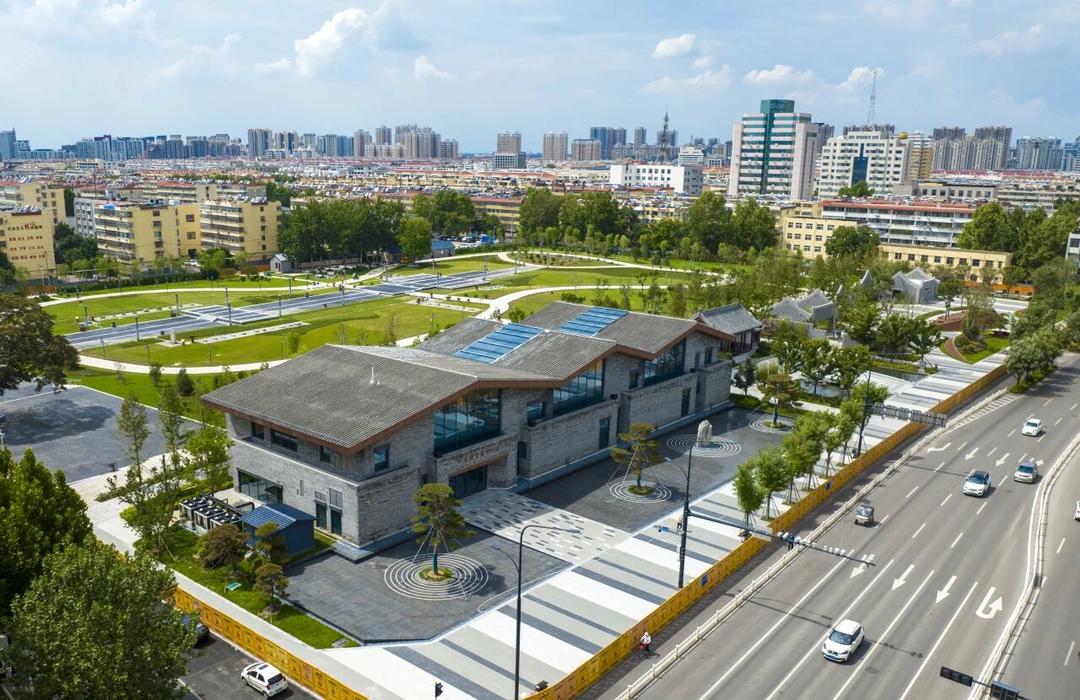
山东上新5家省级考古遗址公园,总数达到17家
Qi Lu Wan Bao· 2025-12-15 08:43
Core Viewpoint - The Shandong Provincial Department of Culture and Tourism has initiated the third batch of provincial archaeological site park recognition, adding five new sites to the existing list, which now totals 17 parks in Shandong Province [1][3]. Group 1: New Archaeological Site Parks - The newly recognized archaeological site parks include: - He Dao Zong Du Shu Ruins - Ji Wang Gu Tomb Group - Su Lu Wang Tomb - Wu Li Zhuang Ruins - Cao Zhi Tomb [1][3]. Group 2: Details of Each Site - **He Dao Zong Du Shu Ruins**: Located in Jining City, it was established during the Ming Dynasty and served as the highest administrative body for the Grand Canal. The park features a museum, cultural square, and preservation area, showcasing the history of canal management [3]. - **Ji Wang Gu Tomb Group**: Situated in Linyi City, this site dates back to the Spring and Autumn period and is significant for research on the political and economic systems of that era. The park integrates local villages, promoting employment and rural revitalization [3]. - **Su Lu Wang Tomb**: Found in Dezhou City, this tomb is one of the few foreign monarchs' tombs in China, housing the remains of the Eastern King of the Sulu Kingdom and his family. It is a unique cultural heritage site [3]. - **Wu Li Zhuang Ruins**: Located in Dezhou City, this site is one of the earliest ancient cultural sites in the region, focusing on the Longshan culture and its historical context [4]. - **Cao Zhi Tomb**: Situated in Liaocheng City, this tomb belongs to the famous poet Cao Zhi from the Three Kingdoms period. The park has been developed into a 4A-level tourist attraction, featuring various scenic spots related to Cao Zhi [4].