AI+本地生活

Search documents
美团发布LongCat原生“深度研究”智能体,实测可用率超越ChatGPT
Cai Jing Wang· 2026-02-11 10:18
2月11日,美团LongCat官微消息,LongCat原生"深度研究"(Deep Research)智能体正式发布。作为美团在"AI+本地生活"领域的最新进展,新产品在智能 体搜索、超长程及高并发任务处理等核心能力上表现突出。在权威评测BrowseComp中,LongCat结合上下文管理能力得分达73.1分,性能逼近顶级闭源模 型;同时支持最多400轮交互与256K上下文,满足持续理解并拆解极端复杂的个性化需求与长文档研究的需求。 ▲美团发布 LongCat 原生"深度研究"智能体 值得一提的是,在针对本地生活场景的"吃喝玩乐"攻略盲测中,LongCat原生"深度研究"智能体的"整体可用率"达到61.1%,显著高于ChatGPT的 42.8%; 其生成的攻略"保存分享率"更是以31.1%位居第一。美团的 LongCat"深度研究"成为当前"最懂生活"的智能体。 目前,LongCat"深度研究"功能已在https://longcat.ai网站上线,用户可免费体验。 以真实对抗幻觉 让智能体更懂用户 | Benchmark | | | Open-Weights Reasoning Models | | | Clo ...



美团发布原生“深度研究”智能体:每一条建议背后都有真实交易履约数据背书
Mei Ri Jing Ji Xin Wen· 2026-02-11 09:16
每经北京2月11日电美团LongCat官微今日正式发布LongCat原生"深度研究"(Deep Research)智能体。 据官方介绍,作为美团在"AI+本地生活"领域的最新进展, LongCat深度研究通过调用真实工具链可以 完成生活服务搜索与规划任务,同时也能为用户提供量身定制吃喝玩乐全攻略。官方同时介绍,其每一 条建议背后都有真实的交易履约数据背书。此外,LongCat深度研究有超长程、高并发任务处理能力, 支持最多400轮交互与256K上下文,能够持续理解并拆解极端复杂的个性化需求,并完成长文档研究。 (文章来源:每日经济新闻) ...
决定了:过年攻略全都不过脑子,让AI去想
机器之心· 2026-02-11 08:34
或许 AI 的事还是用 AI 来解决,今年春节的安排,必须得上「深度研究」了。 说来也巧,我们发现美团大模型 LongCat 刚刚上线了这个功能。 编辑 | 泽南、杨文 春节还没到,「过年的气氛」已经渗入科技圈每个人的毛孔。单说 AI 大模型这一块,刚刚发布的有 kimi 2.5 和 Step 3.5 Flash,即将发布的据说还有 DeepSeek V4,GPT-5.3、 Claude Sonnet 5、 Qwen 3.5,GLM-5,说不定一觉醒来,现有的技术就要被颠覆。 再看看千问和元宝发的红包,组团上春晚的机器人,所有厂商在春节期间都摆出一副志在必得的架势。 正因为如此,我们在这个临近长假的时间段,又遭遇了很多的变数。很多人的行程调了又调,不到最后一刻不知道哪几天有空,难不成这场 AI 的革命,反 而会让我们忙到忘了过节? 这一次的 「深度研究」(DeepResearch)上,LongCat 又把实用化推向新的高度。 LongCat(龙猫)系列大模型,最近才火起来的,在 AI 圈里它的口碑主要是 速度快,工具调用出色,走「实用主义」路线 。 正好,我们就用它来安排一下春节的事儿。 值得注意的是,该功能 ...

元宝、千问轮番刷屏,“受伤”的却并非豆包
Xin Lang Cai Jing· 2026-02-06 13:24
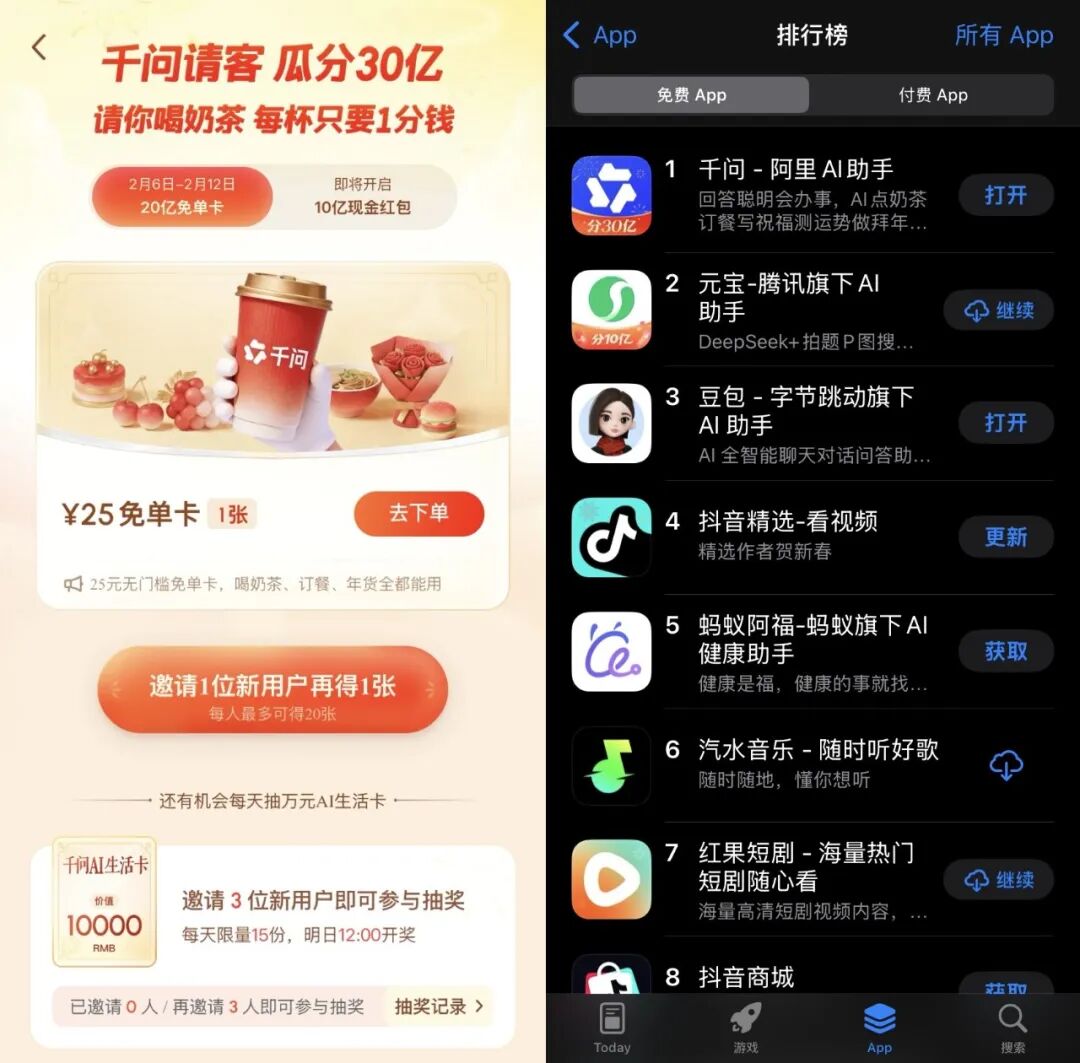
Core Insights - The AI competition among Tencent, Alibaba, and ByteDance has intensified ahead of the Spring Festival, transforming the holiday into a battleground for AI applications and user engagement [1][14] - Unlike previous subsidy wars in the internet sector, this AI Spring Festival battle showcases distinct strategies from each company, focusing on ecosystem collaboration and the practical application of AI [1][14] Group 1: Company Strategies - Alibaba's Qianwen app launched a "30 billion yuan free tea" campaign, achieving over 2 million orders within 4 hours, leading to a surge in app downloads and a temporary crash of the app [1][2] - Tencent's Yuanbao faced challenges as its sharing links were restricted on WeChat, raising questions about internal collaboration and leading to a nearly 10% drop in stock price over five trading days [4][8] - ByteDance's Doubao is preparing for a major push during the Spring Festival, leveraging its unique features like voice and video chat, which are not easily replicated by competitors [11][13] Group 2: Market Impact - The competition is not just between the three companies but also poses a threat to traditional players like Meituan and Baidu, potentially reshaping the internet landscape [1][14] - Qianwen's focus on local life services directly challenges Meituan's core business, while Baidu's reliance on traditional search is increasingly vulnerable to the shift towards AI-driven interactions [14][16] - The AI Spring Festival battle is expected to lead to a significant reshuffling of the mobile internet order, with the potential for a "three-win" scenario among the competitors [1][11] Group 3: User Engagement and Experience - Qianwen's strategy aims to cultivate user habits around AI ordering, contrasting with Yuanbao's more straightforward approach, which has seen diminishing user engagement [10][11] - The rapid influx of users during promotional events raises concerns about user experience, highlighting the need for robust technical infrastructure to handle increased traffic [10][11] - The long-term success of these AI applications will depend on their ability to maintain user interest beyond promotional events, as the initial excitement may fade [17]