AI异构计算

Search documents
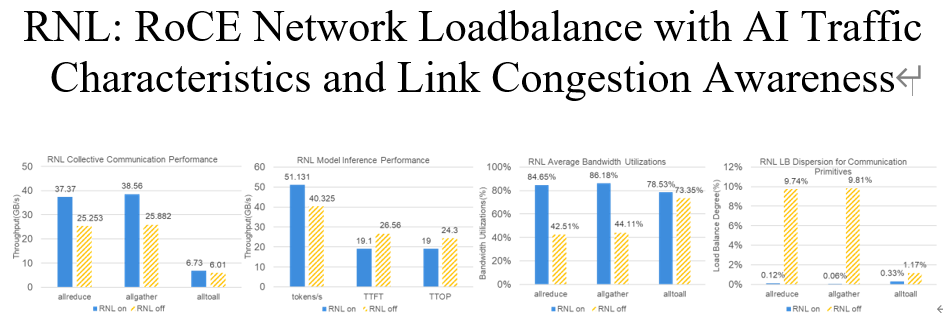
研判2025!中国刀片式服务器行业分类、市场规模及重点企业分析:规模扩张与国产化共塑关键窗口期,高端竞争蓄势待发[图]
Chan Ye Xin Xi Wang· 2025-12-15 01:42
Core Viewpoint - The Chinese blade server industry is experiencing a critical development phase driven by technological upgrades, deepening market applications, and supply chain localization, characterized by simultaneous expansion of market size and acceleration of domestic production processes [1] Industry Overview - Blade servers are a high-density server platform designed for specific application industries and high-density computing environments, allowing multiple "blade" modules to be inserted into a unified chassis, providing optimal space efficiency and energy efficiency for large data centers [4][6] - The evolution of the blade server industry in China has transitioned from early architectural exploration to market maturity, showcasing a trajectory from single functionality to multi-fusion [6] Market Size - The market size of the Chinese blade server industry is projected to reach approximately 15.07 billion yuan in 2024, reflecting a year-on-year growth of 2.8%, driven by strong demand from cloud computing and artificial intelligence [1][8] Key Enterprises - Unisplendour Corporation, through its subsidiary H3C, leads the blade server market, leveraging its unique position as the exclusive provider of HPE servers in China and its "plastic architecture" for resource pooling [10] - Inspur Information maintains a strong market share through continuous innovation in liquid cooling technology, while Huawei excels in AI computing scenarios with its self-developed Kunpeng chips [10] - Sugon focuses on high-performance computing and liquid cooling technology, establishing a competitive edge in the research and supercomputing sectors [10] Industry Development Trends 1. **Liquid Cooling Technology and AI Integration** - The industry is accelerating towards green and intelligent infrastructure, with liquid cooling technology expected to penetrate over 30% of the market by 2025, significantly improving energy efficiency [13] 2. **Market Concentration and Localization** - The competition is becoming increasingly oligopolistic, with domestic CPUs gaining traction in government and military sectors, while the supply chain is reducing reliance on imports [14] 3. **Edge Computing Expansion** - The blade server architecture is evolving towards a dual-mode of "centralized large clusters + distributed micro-clusters," adapting to the demands of edge computing driven by 5G and IoT applications [16]





联想万全异构智算研发团队论文被IEEE CyberSciTech 2025收录
Huan Qiu Wang· 2025-11-28 09:37
Core Insights - Lenovo's RNL technology addresses long-standing challenges in RoCE network load balancing for AI training and inference scenarios, showcasing innovation in multi-dimensional perception, path load balancing optimization, and incremental flow migration [1][2]. Group 1: RNL Technology Overview - The RNL technology integrates multi-dimensional perception, path load balancing optimization, and incremental flow migration into a closed-loop system, providing both algorithmic innovation and practical value [1]. - The multi-dimensional perception mechanism allows real-time awareness of network topology, AI task network demands, and RoCE link load status, forming a data foundation for dynamic scheduling [1]. - Path load balancing optimization employs virtual-physical network mapping and path scoring algorithms to intelligently select optimal data transmission paths, maximizing bandwidth utilization [1]. Group 2: Performance and Cost Efficiency - RNL technology demonstrates high reliability and dual advantages in enhancing AI business efficiency and reducing total cost of ownership (TCO) [2]. - Performance improvements include a 50% enhancement in communication primitive performance, 85% bandwidth utilization, and a 90% reduction in load balancing discreteness [2]. - In AI inference scenarios, transactions per second (TPS) increased by 26%, time to first byte (TTFT) decreased by 30%, and time per output token (TPOT) reduced by 22%, while overall deployment costs were lowered by 60% [2]. Group 3: Strategic Implications - RNL technology is incorporated into Lenovo's heterogeneous computing platform, reinforcing its technological barriers in the AI heterogeneous computing market and enhancing its industry influence and core competitiveness [4].