
AI推理性能

Search documents
至少有九家中国AI芯片公司出货量超万卡
3 6 Ke· 2026-01-28 01:46
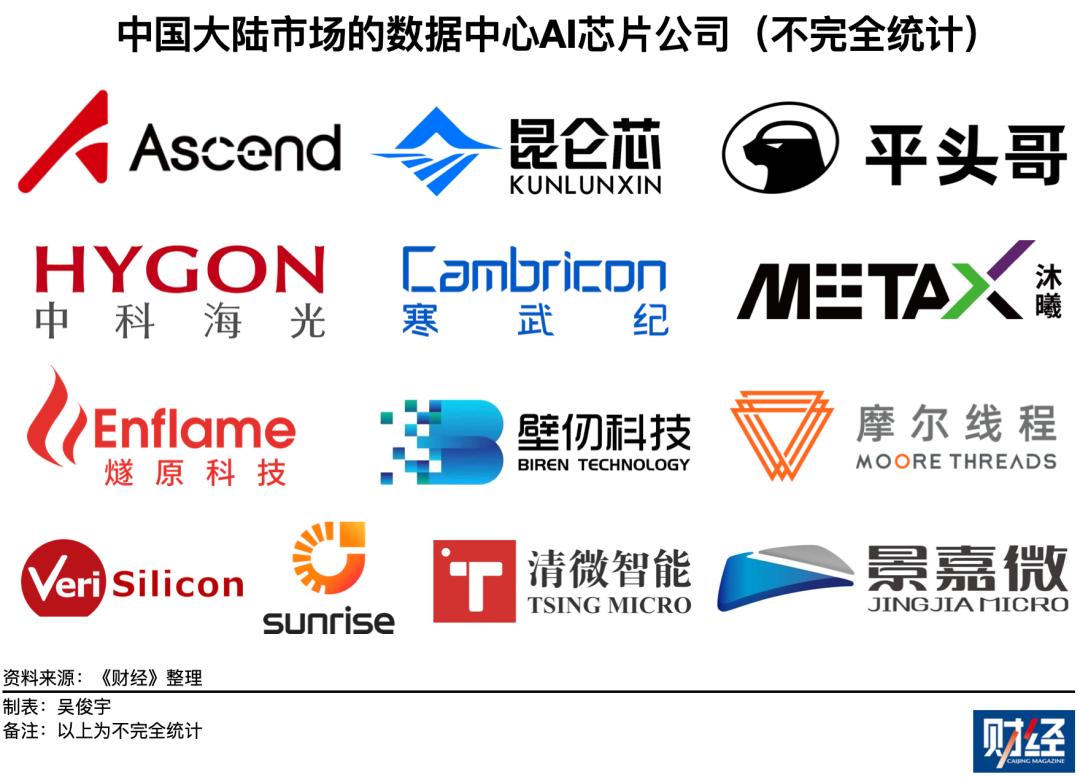
Core Insights - The self-sufficiency process of domestic AI chips in data centers is accelerating due to strict chip export controls, with over ten brands including Huawei Ascend, Baidu Kunlun, and Alibaba PingTouGe emerging in the market [1] - At least nine Chinese AI chip companies have reported shipment or order volumes exceeding 10,000 units, indicating a growing market acceptance of domestic AI chips [1][2] - The average price of domestic inference AI chips ranges from 30,000 to 200,000 yuan per unit, reflecting their performance, stability, and total cost of ownership [1] Group 1: Market Dynamics - The Chinese AI chip server market is projected to reach $16 billion in the first half of 2025, with domestic AI chips capturing approximately 35% market share, significantly growing faster than Nvidia [2] - The emergence of companies with 10,000-unit shipments marks the beginning of a "scale delivery verification" phase in the industry [2][15] - Major players like Huawei Ascend and Baidu Kunlun are leading in market share, with Huawei Ascend being used in various domestic clusters [5] Group 2: Company Performance - Companies like Mozi, Tianshu Zhixin, and Suiruan Technology have reported cumulative shipments exceeding 10,000 units, with Mozi achieving over 25,000 units by August 2025 [8] - Sunrise and Qingwei Intelligent, still in startup phases, have also surpassed the 10,000-unit mark, although they lag behind leading companies in terms of volume [10] - The performance of some domestic AI chips has reportedly reached or exceeded that of Nvidia's H20, particularly in inference scenarios [14] Group 3: Competitive Landscape - Domestic AI chip companies are focusing on usability and controllability rather than peak performance, often utilizing more mature manufacturing processes like 12nm due to limited advanced process capacity [11] - The push to lower inference costs is a common goal among industry players, with some companies aiming to reduce the cost of generating one million tokens to one cent [13] - The software ecosystem remains a challenge, with many domestic chips facing difficulties in model adaptation compared to Nvidia's offerings [15] Group 4: Future Outlook - The domestic AI inference chip market is expected to experience explosive growth between 2026 and 2027, with multiple new products anticipated [11] - The competitive landscape is likened to the early stages of the photovoltaic industry, with rapid growth driven by policy support and market dynamics [16] - However, the unique nature of AI chip development, influenced by software, hardware, and ecosystem factors, suggests that competition will differ fundamentally from that of standardized manufacturing products like solar panels [16]


SemiAnalysis:AMD vs NVIDIA 推理基准测试:谁赢了?--性能与每百万令牌成本分析
2025-05-25 14:09
Summary of AMD vs NVIDIA Inference Benchmarking Conference Call Industry and Companies Involved - **Industry**: Artificial Intelligence (AI) Inference Solutions - **Companies**: Advanced Micro Devices (AMD) and NVIDIA Core Insights and Arguments 1. **Performance Comparison**: AMD's AI servers have been claimed to provide better inference performance per total cost of ownership (TCO) than NVIDIA, but results show nuanced performance differences across various tasks such as chat applications, document processing, and reasoning [4][5][6] 2. **Workload Performance**: For hyperscalers and enterprises owning GPUs, NVIDIA outperforms AMD in some workloads, while AMD excels in others. However, for short to medium-term rentals, NVIDIA consistently offers better performance per dollar due to a lack of AMD GPU rental providers [6][12][13] 3. **Market Dynamics**: The M25X, intended to compete with NVIDIA's H200, faced shipment delays, leading customers to choose the B200 instead. The M55X is expected to ship later in 2025, further impacting AMD's competitive position [8][10][24] 4. **Software and Developer Experience**: AMD's software support for its GPUs is still lacking compared to NVIDIA's, particularly in terms of developer experience and continuous integration (CI) coverage. This has contributed to AMD's ongoing challenges in the AI software space [9][15][14] 5. **Market Share Trends**: AMD's market share in Datacenter A GPUs has been increasing but is expected to decline in Q2 CY2025 due to NVIDIA's new product launches. However, AMD's upcoming M55X and software improvements may help regain some market share [26][27] Additional Important Points 1. **Benchmarking Methodology**: The benchmarking methodology emphasizes online throughput against end-to-end latency, providing a realistic assessment of performance under operational conditions [30][31] 2. **Latency and Throughput Relationship**: There is a trade-off between throughput and latency; optimizing for one often negatively impacts the other. Understanding this balance is crucial for selecting the right configuration for different applications [35][36] 3. **Inference Engine Selection**: vLLM is the primary inference engine for benchmarking, while TensorRT-LLM (TRT-LLM) is also evaluated. Despite improvements, TRT-LLM still lags behind vLLM in user experience [54][55] 4. **Future Developments**: AMD is encouraged to increase investment in internal cluster resources to improve developer experience and software capabilities, which could lead to better long-term shareholder returns [15] This summary captures the key insights and arguments presented during the conference call, highlighting the competitive landscape between AMD and NVIDIA in the AI inference market.
