AI智慧教育

Search documents
天立国际控股发布年度业绩,股东应占溢利6.64亿元 同比增加15.33%
Zhi Tong Cai Jing· 2025-11-28 14:18
Group 1 - The company reported a revenue of RMB 3.589 billion for the year ending August 31, 2025, representing an increase of 8.07% year-on-year [1] - The profit attributable to the company's owners was RMB 664 million, reflecting a year-on-year increase of 15.33% [1] - The basic earnings per share were RMB 0.3225, and a final dividend of RMB 0.039 per share was proposed [1] Group 2 - The increase in revenue was primarily driven by the growth in comprehensive education services and product sales [1] - The company has established AI as a core strategic direction for future development, responding to national calls for digital education [1] - The self-developed "Qiming AI Companion" model has successfully passed the national generative AI service filing as of June 2025, featuring various functionalities such as personalized profile setup and precise learning situation analysis [1] Group 3 - The company's AI product series includes AI Sprint Camp, AI Smart Study Room, AI Classroom, and diversified college guidance services, which have completed market promotion and performance testing [1] - The future AI smart education business will follow an "internal and external dual circulation" development model, enhancing internal capabilities and expanding external market presence [2] - The company aims to leverage its nationwide school network, resources, and brand reputation to strengthen its industry moat through AI education empowerment [2]
天立国际控股(01773)发布年度业绩,股东应占溢利6.64亿元 同比增加15.33%
Zhi Tong Cai Jing· 2025-11-28 14:17
Core Insights - The company reported a revenue of RMB 3.589 billion for the fiscal year ending August 31, 2025, representing an increase of 8.07% year-on-year [1] - The profit attributable to the company's owners was RMB 664 million, up 15.33% year-on-year, with basic earnings per share at RMB 0.3225 [1] - The increase in revenue was primarily driven by the growth in comprehensive educational services and product sales [1] Group 1 - The company has established AI as a core strategic direction for future development in response to national digital education initiatives [1] - The self-developed "Qiming AI Companion" model successfully passed the national generative AI service filing in June 2025, featuring functions such as personalized profile setup, precise learning situation analysis, multimodal teaching explanations, and personalized homework grading [1] - The company's AI product series includes AI Sprint Camp, AI Smart Study Room, AI Classroom, and diversified college guidance services, which have completed market promotion and performance verification [1] Group 2 - The company's AI smart education business will follow an "internal and external dual circulation" development model [2] - Internally, the company aims to empower schools by addressing weak student performance, enhancing overall school quality, and optimizing the teacher-student ratio to achieve cost reduction and efficiency [2] - Externally, the company plans to leverage its nationwide school network, resources, and brand reputation to expand external market stores and services, strengthening its industry moat through AI education empowerment [2]
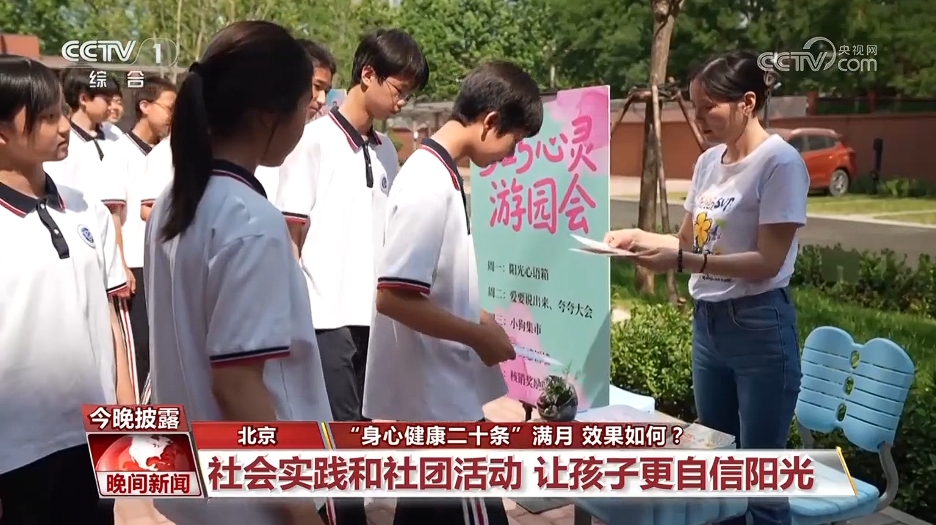
“身心健康二十条”满月 效果如何?
Yang Shi Wang· 2025-06-14 17:18
Core Viewpoint - The "Twenty Measures for Promoting the Physical and Mental Health Development of Primary and Secondary School Students" aims to enhance students' overall development by focusing on their physical and mental well-being, promoting a balanced growth in moral, intellectual, physical, aesthetic, and labor education [1][20]. Group 1: Implementation of Measures - The policy emphasizes the importance of environmental construction at school, home, and society, with a focus on enhancing social practice education as a key measure [2]. - Many schools have allocated additional time each week for extracurricular activities to implement the measures effectively [2]. Group 2: Activities and Programs - Various engaging activities have been introduced, such as a psychological garden event where students express their feelings and a "Heart Monopoly" game that helps them understand emotions [4]. - Schools encourage participation in interest groups and clubs, fostering communication skills and teamwork among students [6]. Group 3: Communication Mechanisms - The initiative focuses on nurturing relationships among peers, teachers, and parents, with many schools establishing communication mechanisms like "Teacher-Student Dialogue Days" and "Heart Mailboxes" [8]. - Schools are also offering "Parent Classes" to help parents understand their children's psychological states and improve communication [11]. Group 4: Peer Support Systems - The "Twenty Measures" promote the establishment of peer support systems, allowing students to share their concerns and interests with each other [14]. - This initiative has led to improved relationships between parents and children, as well as a more supportive school atmosphere [16]. Group 5: Technological Integration - Some schools are utilizing AI technology to promote students' physical health, such as AI smart canteens that provide nutritional advice based on students' BMI [16]. - AI sports teaching systems are also being implemented to enhance students' interest in physical activities and provide precise feedback on their performance [17][18]. Group 6: Long-term Commitment - The "Twenty Measures" are derived from effective practical experiences, emphasizing that changes in students' physical and mental health require sustained and gradual efforts [20].