AI服务生态

Search documents
进入2026年,AI开始显露残酷一面
3 6 Ke· 2026-02-10 23:37
Core Insights - The article discusses the evolving landscape of AI, predicting a shift towards a three-tier ecosystem consisting of AI assistants, vertical AI services, and specialized skills [1][7]. Group 1: Industry Trends - The year 2025 is seen as a turning point for AI, with significant trends emerging, including the rise of AI tools and services that have rapidly gained popularity [2][3]. - New AI habits and models have quickly matured, such as the replacement of traditional search engines with AI assistants for obtaining answers [4]. - The rapid rise and fall of star products and companies in the AI space reflect a dynamic market, where trends can shift dramatically within a year [5][6]. Group 2: Company Strategies - Major companies are expected to continue their strategic shifts towards AI, with significant resource investments to solidify their positions in the AI service ecosystem [10][12]. - ByteDance has made substantial organizational adjustments to focus on AI, achieving significant user engagement with its AI products [10][12]. - Alibaba is integrating AI into its consumer-facing services, leveraging its existing ecosystem to enhance its AI offerings [12][13]. - Tencent is also investing heavily in AI, with expectations for leadership changes to drive its AI strategy [12][13]. Group 3: Future Developments - The emergence of more AI hardware products is anticipated, which will support various vertical AI services and enhance user experiences [9][10]. - The competition among major players for AI service dominance is expected to intensify, with companies like Baidu making organizational changes to remain competitive [13][14]. - The second tier of the AI service ecosystem will see participation from both established and emerging companies, focusing on niche AI services [14][15]. Group 4: Creator Ecosystem - The article highlights the potential for a new ecosystem of creators enabled by AI tools, allowing ordinary individuals to engage in content creation and innovation [18][19]. - The rise of AI-driven platforms is expected to democratize content creation, providing tools that empower users to generate unique outputs [19][20].



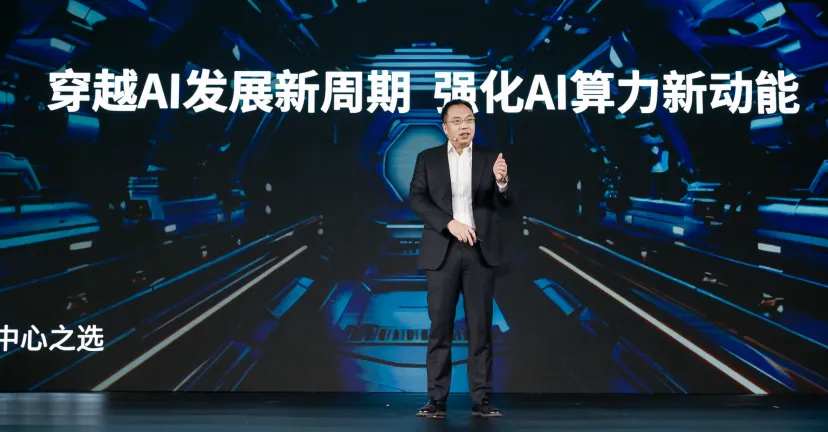
从硬件到服务!联想(00992)发布首款高端大模型训练AI服务器及AI工厂解决方案等四项关键成果
智通财经网· 2025-12-06 08:40
Core Insights - Lenovo has transitioned from a traditional hardware manufacturer to a leader in AI services, marking a strategic shift in its core value from hardware production to standardized AI service capabilities and scalability potential [12] Group 1: AI Solutions and Innovations - Lenovo's "AI Factory" is a strategic solution that transforms complex AI development tasks into a standardized, efficient "AI production line," utilizing customer data as raw materials [3] - The launch of the Lenovo Wanquan Heterogeneous Computing Platform 4.0 enhances AI service efficiency and industry adaptability, achieving a 35% reduction in model training time through long-sequence parallel optimization [4] - The DeepSeek R1 model has achieved a record-breaking throughput of 12,000 Tokens/s, providing Lenovo with a differentiated advantage in AI services [5] Group 2: Market Position and Growth - Lenovo ISG China has experienced a remarkable 175% revenue growth over the past two and a half years, establishing itself as one of the fastest-growing AI infrastructure providers in China [2][11] - The AI server market in China is projected to reach $16 billion in the first half of 2025, doubling year-on-year, with expectations to exceed $140 billion by 2029 [10] Group 3: Strategic Partnerships and Standards - Lenovo has collaborated with industry partners to release the first model training and inference service standard, which fills a gap in the industry and supports the standardized implementation of AI factories [8] - The new service model allows enterprises to access AI capabilities without building complete AI teams, leading to stable recurring revenue for Lenovo [10] Group 4: Valuation Shift - Lenovo is shifting its valuation logic from traditional PE (Price-to-Earnings) metrics focused on hardware sales to PS (Price-to-Sales) metrics that emphasize service revenue growth and customer lifetime value [9][10] - As service revenue increases in proportion to total revenue, Lenovo's profitability is expected to transition from low-margin manufacturing to high-margin technology services, potentially increasing market valuation multiples [11][12]