AI颠覆软件行业

Search documents
做空软件股 对冲基金狂赚240亿美元
Shang Hai Zheng Quan Bao· 2026-02-07 07:53
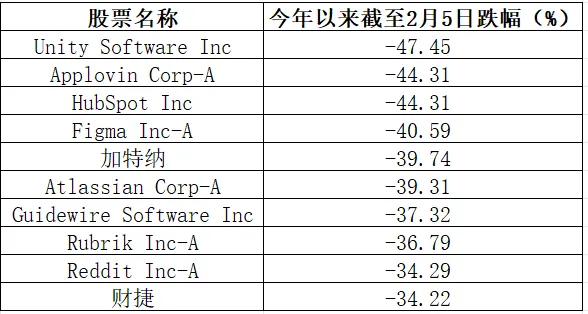
Core Insights - The software sector in the US has experienced a significant downturn, with major companies like Microsoft and Oracle seeing substantial stock price declines, leading to a total market cap loss of $1 trillion [1][4] - The release of a new tool by AI startup Anthropic has heightened investor concerns about the potential disruption of the software industry by AI technologies, triggering a wave of selling and short-selling by hedge funds [1][2][5] Market Performance - As of February 5, multiple software stocks have seen declines exceeding 30% year-to-date, with Unity Software down 47.45%, Applovin down 44.31%, and Figma down 40.59% [2][3] - Major players like Microsoft and Oracle have also faced downward pressure, with declines of 18.6% and 29.79% respectively [3] Short-Selling Activity - Hedge funds have aggressively shorted software stocks, with TeraWulf and Asana experiencing the highest short-selling pressures, at over 35% and 25% of their tradable shares respectively [4] - Hedge funds have profited $24 billion from short-selling activities in the software sector amid the $1 trillion market cap loss [4] Industry Outlook - The software industry is expected to undergo significant differentiation, with only a few companies like Microsoft likely to successfully integrate AI and adapt to the ongoing technological shifts [5] - The transition from traditional SaaS platforms to AI-native platforms is seen as a major paradigm shift, with historical precedents indicating that such transformations occur approximately every 10 to 15 years [6] - The first wave of AI-native companies is anticipated to begin their IPO processes later this year, which may pose challenges for traditional software vendors [6]



"软件-PE"死亡循环的中心,美国PE三巨头持续重挫,KKR和Blue Owl电话会承认财务挑战
Hua Er Jie Jian Wen· 2026-02-06 01:03
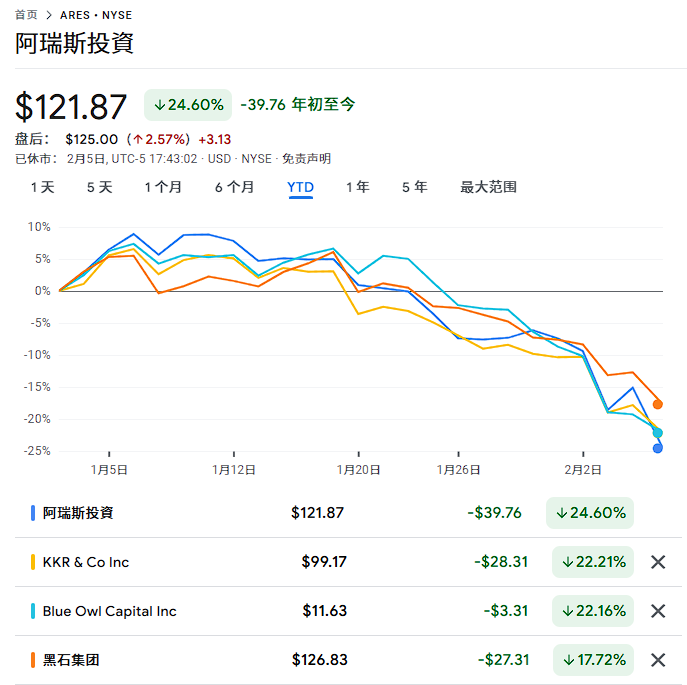
Core Insights - The private equity (PE) industry is facing significant challenges due to a slowdown in fundraising, delayed asset exits, and increased redemption pressures, particularly in the software sector, which has been a core area for investment over the past decade [1][4][10] - Major players like KKR and Blue Owl have issued warnings regarding their financial outlook for 2026, indicating potential delays in asset sales and reduced cash flow [1][5] - The stock prices of leading PE firms have dropped significantly, with Ares falling over 11%, KKR down 5.5%, and Blue Owl down 3.8%, reflecting investor concerns about growth prospects [1][5] Group 1: Market Dynamics - The fundamental market logic has shifted, with the Software as a Service (SaaS) sector, previously favored for its stable recurring revenue, now facing instability due to the rise of AI technologies [3][4] - Over the past four weeks, more than $17.7 billion in loans to tech companies have fallen to non-performing levels, prompting private equity firms to reconsider asset sales [4][11] Group 2: Financial Performance and Projections - KKR's CFO warned that if market conditions worsen, asset sales may be delayed, impacting future profits, although he remains optimistic about the company's long-term prospects [5][8] - Blue Owl's CFO indicated that rising redemption requests would lead to only "moderate" fee growth in 2026, a significant slowdown from previous ambitious targets [5][6] Group 3: Company Responses and Strategies - Executives from KKR, Ares, and Blue Owl faced intense questioning regarding their exposure to software loans and the potential for increased default rates due to AI risks [7][8] - Blue Owl's CEO dismissed concerns about widespread obsolescence in software companies, asserting that their loan portfolio is unlikely to experience a surge in defaults [7][8] - Ares reported that its software-related loans have minimal defaults, and its growth outlook remains unchanged despite AI risks [8][9] Group 4: Broader Implications for Private Credit - The private credit market is undergoing a dual "unwinding" process, with significant pressure on asset valuations and potential tightening of credit conditions as software equity valuations plummet [10][11] - The appeal of private credit is diminishing as public market yields rise, making the promised liquidity premium less attractive [13]