AI Code Generation

Search documents
Oracle Announces Fiscal Year 2026 Third Quarter Financial Results
Prnewswire· 2026-03-10 20:05
Core Insights - Oracle Corporation reported exceptional financial results for Q3 fiscal 2026, with total revenue reaching $17.2 billion, up 22% in USD and 18% in constant currency, marking the first quarter in over 15 years where both organic total revenue and non-GAAP earnings per share grew by 20% or more in USD [1][2][3] Financial Performance - Q3 NetSuite Cloud ERP (SaaS) revenue was $1.1 billion, up 14% in USD and 11% in constant currency - Q3 Fusion Cloud ERP (SaaS) revenue was $1.1 billion, up 17% in USD and 14% in constant currency - Q3 Cloud Application (SaaS) revenue was $4.0 billion, up 13% in USD and 11% in constant currency - Q3 Oracle Cloud Database (IaaS) revenue increased by 35%, with Multicloud Database revenue soaring by 531% in USD - Q3 Cloud Infrastructure revenue (IaaS) reached $4.9 billion, up 84% in USD and 81% in constant currency - Total Cloud revenue (IaaS plus SaaS) was $8.9 billion, up 44% in USD and 41% in constant currency [1][2] Earnings and Income - Q3 GAAP earnings per share increased by 24% to $1.27, while non-GAAP earnings per share rose by 21% to $1.79 - Q3 GAAP net income was $3.7 billion, and non-GAAP net income was $5.2 billion, up 23% in USD and 18% in constant currency [1][2] Remaining Performance Obligations - Remaining Performance Obligations (RPO) at the end of the quarter stood at $553 billion, up 325% year-over-year, primarily driven by large-scale AI contracts [1][2] Capital Funding - In February, Oracle announced plans to raise up to $50 billion in debt and equity financing, successfully raising $30 billion shortly after through investment-grade bonds and mandatory convertible preferred stock [1][2] AI Market and Technology Evolution - The demand for cloud computing for AI training and inferencing is growing faster than supply, with Oracle positioned to exceed revenue growth forecasts for FY27 and beyond - New AI Code Generation technology is enabling Oracle to build more SaaS applications efficiently, enhancing competitiveness and profitability [1][2] Guidance - For Q4 FY26, Oracle expects non-GAAP earnings per share to grow between 15% to 17%, total Cloud revenue to grow between 44% to 48%, and total revenues to grow between 18% to 20% in constant currency [1][2] Dividend Announcement - The board declared a quarterly cash dividend of $0.50 per share, payable on April 24, 2026, to stockholders of record as of April 9, 2026 [1][2]



OpenAI Codex App启示录:当代码可以被白领并行生成,软件迎来“通胀时代”
锦秋集· 2026-02-05 15:01
Core Insights - OpenAI's Codex App represents a significant shift in software development, enabling both developers and non-technical users to create and manage AI agents, marking the transition from linear to parallel development [2][3] - The introduction of Skills functionality allows non-technical users to generate tools, indicating a new era of software supply explosion and redefined value [3] Group 1: Paradigm Shift in Software Development - The development methodology is changing from serial to parallel, breaking the constraints of "man-days" and potentially increasing efficiency by 30%-50% or more [5] - Software is evolving from a "product" to a "service" or "instant response," where code can be generated on demand based on user needs [6] - The scarcity of software is diminishing, leading to a dilution of individual software value, akin to inflation in currency [7][8] Group 2: New Market Dynamics - The SaaS subscription model for SMBs may be challenged as on-demand generation of software becomes more prevalent [12] - Skills represent a low-cost, customizable alternative to traditional SaaS products, potentially disrupting the lower end of the SaaS market [13][16] - The value of software is shifting from functional capabilities to data, relationships, and network effects, as functionalities can be easily replicated [17] Group 3: Changing Roles and Skills - The role of programmers is evolving from code writing to AI collaboration, requiring new skills in AI utilization and output evaluation [23][24] - The demand for code review may become a bottleneck as AI-generated code proliferates, necessitating new quality control processes [28] - The educational focus for programmers may shift from coding to designing reusable skills and understanding business processes [27] Group 4: New Opportunities and Challenges - The emergence of a "Skill market" could create new platforms for sharing and monetizing skills, similar to an App Store [38] - The competitive landscape is shifting as model providers like OpenAI move into application layers, posing threats to intermediate tool companies [43][44] - The geographic arbitrage logic in software development is changing from labor cost to AI efficiency, impacting outsourcing dynamics [37] Group 5: Future Considerations - The value of data and unique insights will become more critical as code generation costs approach zero, with private, real-time, and relational data becoming increasingly valuable [53][54] - The software industry is at the beginning of a transformative phase, comparable to historical shifts brought by the printing press and the internet [55][56]

靠 AI 起死回生,上线5个月后收入4000万美金
Hu Xiu· 2025-07-18 02:15
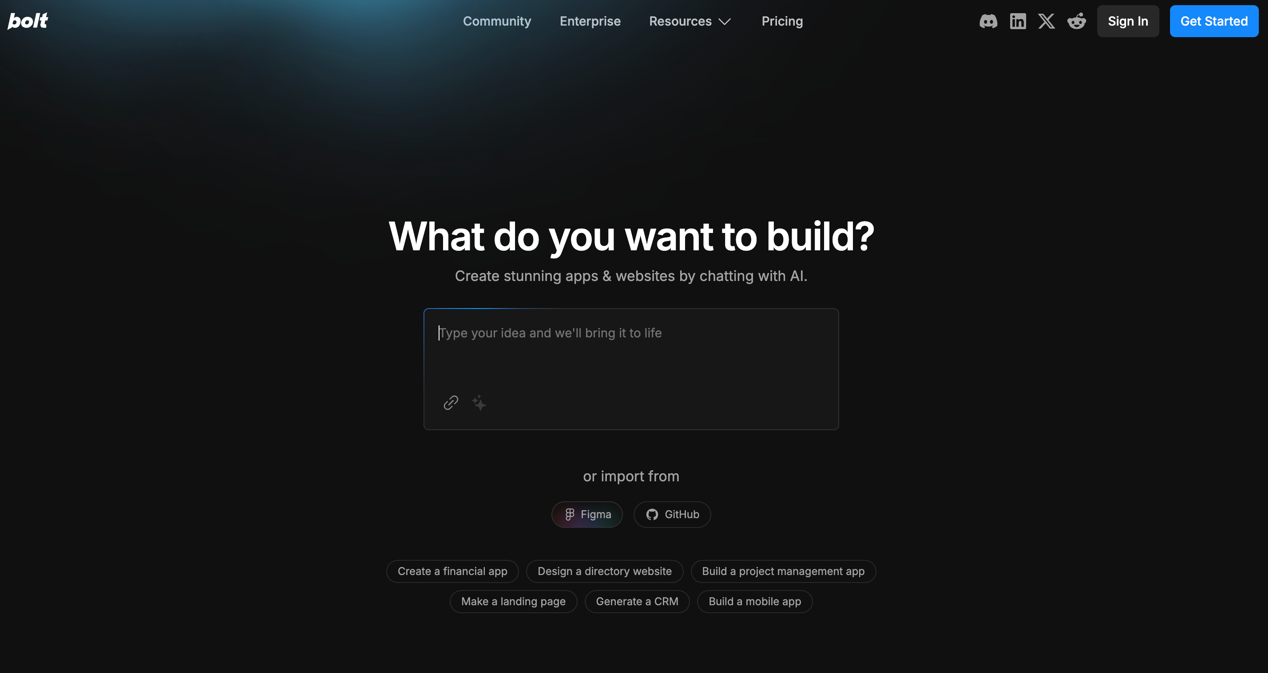
Core Insights - The article discusses the rapid growth and success of Bolt.new, an AI coding assistant that has achieved an annual recurring revenue (ARR) of $40 million within just five months of its launch, making it one of the fastest-growing software products in history [2][8][10]. Company Overview - Bolt.new was launched by StackBlitz, which previously focused on browser-based coding environments. The company pivoted to develop Bolt.new after facing financial difficulties and recognizing the potential of AI in simplifying software development for non-technical users [5][6][8]. - The product allows users to create complete applications by simply describing their needs in natural language, significantly lowering the barrier to entry for software development [3][10][15]. Growth Metrics - Within one week of its launch, Bolt.new's user base doubled compared to all previous users of StackBlitz. In four weeks, its ARR reached $4 million, and by eight weeks, it surpassed $20 million. After five months, the ARR hit $40 million, with over 3 million registered users and more than 1 million monthly active users [2][8][9][10]. Market Context - The AI programming market is rapidly expanding, projected to grow from $4.29 billion in 2023 to $24.46 billion by 2031, with an average annual growth rate of 24.3% [20]. - Bolt.new operates in a competitive landscape with other AI coding tools like Lovable, Cursor, and Windsurf, each targeting different user segments and offering varying functionalities [21][26]. Competitive Advantages - Bolt.new targets a consumer market (BtoC) focused on users with no coding background, differentiating itself from competitors that cater to experienced developers [10][20]. - The product emphasizes community engagement and user feedback for rapid iteration and improvement, which has contributed to its viral growth [28][29]. Financial Performance - The company has successfully raised significant funding, including a recent $83.5 million round led by Emergence Capital and GV, which has substantially increased its valuation [9][22]. - Bolt.new's subscription model is designed to cater to both light and heavy users, allowing for flexible pricing based on token consumption, which aligns with user demand for scalable solutions [29][31]. Future Outlook - The success of Bolt.new highlights a broader trend in the tech industry where simplifying complex processes can unlock new markets and user bases. However, the company faces challenges from larger competitors and the need for continuous innovation to maintain its growth trajectory [35][36].