AI Native App

Search documents
MiniMax、智谱招股书拆解:海外爆款与国内刚需,谁更好赚钱
Sou Hu Cai Jing· 2025-12-23 02:00
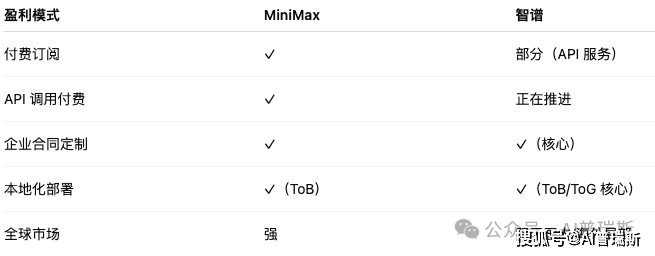
Core Insights - The articles highlight the contrasting business models of two Chinese large model companies, MiniMax and Zhipu, as they disclose their IPO prospectuses, raising the question of how large models can generate revenue [1] Business Models - MiniMax focuses on a consumer-oriented approach, emphasizing "AI Native Apps" with core products like Talkie and Xingye, which are built on large models [3] - Zhipu targets enterprise and institutional clients, building its business around MaaS and localized deployment, rather than consumer applications [10] Revenue Growth - MiniMax's AI native product revenue is projected to grow from $758,000 in 2023 to $21.8 million in 2024, and further to $38.02 million in the first three quarters of 2025, constituting over 70% of total revenue [5] - Zhipu's revenue from localized deployment reached 162 million yuan in the first half of 2025, accounting for 84.8% of total revenue [10] Profitability Metrics - MiniMax's gross margin improved from -24.7% in 2023 to 12.2% in 2024, and further to 23.3% in the first three quarters of 2025 [11] - Zhipu maintains a gross margin around 50% from 2022 to the first half of 2025, with localized deployment margins nearing 60% [11] Research and Development Investment - Zhipu's R&D expenses reached 1.595 billion yuan in the first half of 2025, with an R&D expense ratio exceeding 800%, indicating a capital-intensive approach to gaining SOTA capabilities [13] - MiniMax's R&D expense ratio was over 2000% in 2023 but decreased to 337% by the first three quarters of 2025, reflecting improved operational leverage as revenue grows [13] Market Focus - MiniMax is highly globalized, with less than 30% of its revenue coming from mainland China, while Zhipu remains focused on the domestic market, primarily serving state-owned enterprises and large financial institutions [14][15] Capital Background - Both companies have strong backing from major investors, with MiniMax supported by Alibaba, Tencent, and Sequoia, while Zhipu has backing from Tencent, Meituan, and Ant Group, indicating potential synergies in computing power and ecosystem [16] Conclusion - The contrasting narratives of MiniMax and Zhipu present two distinct paths in the large model business landscape, with MiniMax focusing on consumer engagement and user growth, while Zhipu emphasizes enterprise-level solutions and high-margin localized deployments [17][18]