AI Workflow

Search documents
这套可复制的 AI 工作流,让非技术 PM 从 0 到 1 做出产品
3 6 Ke· 2026-01-20 02:52
Core Insights - The article highlights the innovative approach of Zevi Arnovitz, a product manager at Meta, who successfully developed a profitable AI tool called StudyMate without prior coding experience, by leveraging AI as a collaborative team rather than just a tool [1][2][3]. Group 1: Initial Steps - Zevi's first step was to establish a dedicated dialogue with an AI, assigning it the role of CTO, which allowed for a collaborative environment where the AI could challenge his ideas and provide technical insights [5][6][11]. - The focus for non-technical individuals is on learning to collaborate with AI, emphasizing communication skills over technical knowledge [7][8][12]. Group 2: Building an AI Team - After establishing a dialogue, Zevi expanded from using a single AI to creating a team of AIs, each with specific roles and responsibilities, allowing for a more efficient development process [13][14][19]. - This division of labor among AIs was crucial, as each model had its strengths and weaknesses, enabling them to focus on their areas of expertise [15][16][18]. Group 3: Product Development Process - The development of StudyMate involved a structured process from idea generation to product launch, including defining tasks, analyzing technical risks, and conducting thorough testing [22][24][26][29]. - Zevi emphasized the importance of iterative feedback and documentation throughout the development cycle, allowing for continuous improvement and learning [30][31][32]. Group 4: Replicable Workflow - Zevi's approach resulted in a standardized workflow that can be replicated by others, consisting of clear steps for engaging with AI, executing tasks, and reviewing outcomes [35][36][38]. - The workflow encourages a systematic method for transforming ideas into actionable tasks, ensuring that each stage of development is documented and can be refined over time [41][42].
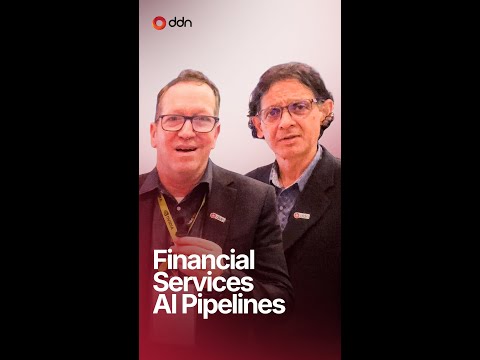
Learn an End-to-End AI Workflow for Financial Services and Beyond
DDN· 2026-01-15 17:15
Hi, we're going to show you two pipelines that are for financial services. I'm here with Moyes. One is a pipeline for news analytics that gets Liv's new feeds and the other is for financial risk simulations that financial services companies can run.What we've developed is an entire AI workflow. This AI workflow is not only for financial services firms. It applies to any AI workflow whether it's for life sciences, automotive, manufacturing.All AI workflows depend on some type of data being ingested. In our c ...

朱啸虎投了一家Vibe Workflow公司
暗涌Waves· 2025-12-10 01:05
Core Viewpoint - The article discusses the emergence of "Vibe Coding" and its application in the workflow automation space, particularly through the company Refly.ai, which aims to simplify the process of creating workflows using AI, making it accessible to non-technical users [2][3]. Group 1: Company Overview - Refly.ai has recently completed a seed funding round of several million dollars, with a valuation close to ten million, backed by prominent investors including GSR Ventures and Hillhouse Capital [3]. - The founder, Huang Wei, is a veteran from ByteDance, having previously worked on workflow products, and aims to create an AI-native workflow solution that is user-friendly for non-programmers [6][7]. Group 2: Product Features - Refly.ai's platform allows users to generate workflows by simply describing their needs in natural language, which the AI then translates into a functional workflow, addressing the complexity of existing tools [3][9]. - The platform is designed to be "white-boxed," meaning users can intervene and modify workflows as needed, enhancing control and usability [9][10]. Group 3: Target Market and Strategy - The initial target users are those seeking to escape complex technical setups, particularly those familiar with existing tools like n8n or Dify, with a feature that allows for easy migration of existing workflows [12]. - The second target market focuses on self-media and content creators, who face challenges in rapidly adapting to new AI models and trends, allowing them to automate content generation and leverage their audience effectively [13][14]. Group 4: Market Positioning - Refly.ai positions itself as a bridge between general-purpose agents and complex workflow tools, aiming to provide an "intelligent assisted driving" experience in workflow automation [9]. - The company emphasizes that its goal is not to replace humans but to enable them to assemble AI capabilities easily, akin to building with LEGO [10].

Gemini CLI 可不仅仅是个命令行工具~附登录问题解决方法
菜鸟教程· 2025-07-03 02:08
Core Viewpoint - Gemini CLI is an AI workflow tool developed by Google that integrates the Gemini model directly into the command line, enabling users to perform coding, debugging, content generation, research, and task management through natural language commands. Group 1: Features and Capabilities - Gemini CLI has received over 50.1k stars, indicating significant interest and adoption in the developer community [2]. - It allows users to write code and solve problems directly in the terminal, eliminating the need to switch between different tools like IDEs or web browsers [3]. - The tool supports a large context window of 1 million tokens, making it capable of handling extensive codebases and documents [3]. - It offers a wide range of functionalities, including writing copy, researching, managing pipelines, and generating media content, effectively serving as a versatile AI assistant within the terminal [3]. - The free usage tier is generous, allowing personal Google accounts to make approximately 60 requests per minute and 1,000 requests per day, which is considered one of the most accommodating preview plans in the industry [3]. - Gemini CLI is fully open-source under the Apache 2.0 license, promoting community contributions and audits [3]. Group 2: Installation and Setup - To use Gemini CLI, users need to ensure that Node.js (version 18 or higher) is installed [7]. - Installation can be done via terminal commands, either using npx or npm, and once installed, users can start the interactive CLI by typing "gemini" [8]. - Users must log in with their Google account to access the free request limit of 1,000 requests per day [12]. - Alternatively, users can authorize using a Gemini API Key, which can be obtained from Google AI Studio [13]. Group 3: Troubleshooting and Configuration - If users encounter issues logging in with their Google account, they can set temporary proxy environment variables to connect to Google login services [14]. - For users facing login errors related to Google Workspace accounts or project configuration, they need to create a project in the Google Cloud Console and set the project ID as an environment variable [15]. - The setup process includes configuring proxy settings for both Windows and macOS/Linux environments to ensure proper connectivity [19].