
Central bank policy

Search documents
Why Are Newmont Shares Sliding On Thursday?
Benzinga· 2026-03-19 10:59
Core Insights - Newmont Corporation shares are experiencing a significant decline due to falling gold prices, which have reached nearly six-week lows [1] - The decline in gold prices is attributed to central bank policies and geopolitical tensions, particularly following missile strikes in the Middle East [2] Gold Price Dynamics - Gold prices dropped to approximately $4,710 per ounce, marking the seventh consecutive session of declines [2] - The Federal Reserve has maintained interest rates at 3.50%–3.75%, contributing to market volatility [2] Geopolitical Factors - Increased tensions in the Middle East, including Iranian missile strikes and Israeli attacks, have influenced market dynamics [2][3] - These geopolitical events typically support safe-haven demand but have also led to rising crude oil prices [3] Economic Indicators - The U.S. GDP growth rate was revised down to an annualized 0.7% for Q4 2025, a significant drop from the initial estimate of 1.4% [4] - Core PCE inflation rose to 3.1% in January, with BlackRock highlighting a "visible global macro shock" from the Middle East [4] Technical Analysis of Newmont - Newmont shares are trading 17.1% below their 20-day simple moving average (SMA) and 5.9% below their 100-day SMA, indicating a pullback phase [5] - Over the past 12 months, shares have increased by 122.00% and are closer to their 52-week highs than lows [5] - The Relative Strength Index (RSI) is at 35.69, indicating neutral territory, while the MACD is at -2.5788 [5] Stock Price Activity - Newmont shares were down 6.65% at $99.46 during premarket trading [6] - Key resistance level is identified at $106.50, while key support is at $97.50 [6]


Week ahead: Investors face busy week as Fed and tech take center stage
Yahoo Finance· 2026-03-16 14:35
Group 1: Federal Reserve and Economic Indicators - The Federal Reserve is expected to maintain interest rates during its upcoming announcement, reflecting a cautious approach amid geopolitical tensions [3][8] - The February Producer Price Index is anticipated to provide insights into inflation trends, which could influence market expectations [3] Group 2: Technology Sector Events - Nvidia's GTC conference in San Jose will feature keynotes from CEO Jensen Huang and appearances from major companies like Microsoft, Meta Platforms, and Tesla, potentially impacting chipmakers such as AMD, Taiwan Semiconductor, Broadcom, and Intel [4] Group 3: Corporate Earnings Reports - Major companies including Micron Technology, FedEx, Alibaba, Lululemon, and General Mills are set to report earnings, which will offer insights into consumer and tech demand [5] Group 4: Oil Market Dynamics - Brent crude oil prices are hovering just below $105 per barrel, with a recent increase of over 1% at the start of the week, influenced by ongoing Middle East conflicts [6] - The closure of the Strait of Hormuz raises concerns about supply disruptions, which could lead to higher oil prices and inflationary pressures [7] - Analysts suggest that while energy prices may exert upward pressure on inflation, potential tax benefits from the One Big Beautiful Bill Act could mitigate some negative impacts on consumer spending [7]


The Iran war is pushing up European energy prices. Here's why a Ukraine-style inflation shock could still be avoided
CNBC· 2026-03-12 06:10
Group 1: Energy Price Trends - The energy price shock following Russia's invasion of Ukraine is still a concern for European policymakers as the conflict in Iran drives oil and gas prices higher, but experts believe the situation may differ this time [1][2] - Brent crude oil prices have retreated from nearly $120 per barrel, and European natural gas prices have also decreased from a three-year high of 63.77 euros per megawatt-hour to under 50 euros per MWh [3] Group 2: Economic Context - The global economic environment is significantly different from the 2022 energy crisis, which occurred during a time of high inflation, fractured supply chains, and tight job markets [4] - Analysts suggest that the impact on inflation in Europe will depend on the duration of the current conflict, with potential inflation increases projected for the eurozone and the U.K. [5][9] Group 3: Supply Chain and Diversification - Qatar has become a crucial source of liquefied natural gas (LNG) for Europe, which has reduced its reliance on Russian gas since the Ukraine invasion [6] - Companies like Uniper have diversified their gas sources to include LNG and pipelines from various countries, aiming to avoid past reliance on a single supplier [7][9] Group 4: Market Reactions and Predictions - The current energy supply situation could lead to a rise in eurozone inflation from 1.9% to 2.5% by the second quarter, with similar increases expected in the U.K. and U.S. [9][10] - The uncertainty in the market is reflected in rising government bond yields in the U.K. and Germany, as investors adjust their expectations regarding interest rate policies [11][12] Group 5: Investor Sentiment - The combination of rising oil prices and a weakening euro may positively impact earnings for European companies, although persistent high energy prices could negatively affect growth expectations [17]

Dow falls 400 points, oil spike moderates amid Middle East tensions
Yahoo Finance· 2026-03-03 15:36
Market Overview - U.S. stocks experienced a decline, with the Dow Jones Industrial Average falling by 403.51 points, or 0.83%, and reaching a low of 1,278 points, or 2.6% during the trading session [1] - The Nasdaq Composite and S&P 500 also saw decreases of 1.02% and 0.94%, respectively [1] Oil Market Dynamics - International benchmark Brent crude rose over 4% to $81 per barrel, while West Texas Intermediate crude increased by over 4% to $74 per barrel [3] - Concerns about rising oil prices potentially fueling inflation and complicating central bank policy decisions were highlighted [2] Geopolitical Factors - President Trump announced measures to ensure the free flow of energy, including potential U.S. Navy escorts for oil tankers in the Strait of Hormuz [4][5] - Tehran's threats to attack vessels in the Strait of Hormuz, along with production halts from Middle Eastern oil and gas producers, have led to increased global shipping rates and crude prices [5] Economic Indicators - The 10-year Treasury yield reached its highest level in over a week, and expectations for a 25-basis-point interest rate cut by the Federal Reserve were pushed back to September from July [6] - Investors expressed concerns about inflation, particularly if oil prices exceed $100 per barrel and remain elevated [7]
Gold Enters Price Discovery as Bulls Hold Control Above the $4,550 Breakout
Investing· 2026-01-13 20:43
Core Viewpoint - Spot Gold (XAU/USD) has entered a price-discovery phase, reaching new records around $4,630, indicating a strong uptrend despite recent volatility [1][4][17] Technical Analysis - XAU/USD is currently in overbought territory with a 4-hour RSI around 65, showing signs of bearish divergence, while MACD indicates cooling upside momentum [2][10] - Immediate support is at $4,555, with further support levels at $4,500 and $4,440, while resistance is noted at $4,625–$4,640 and the next target at $4,714 [3][14] - Major institutions project gold prices to reach between $4,450 and $5,050 over the next 12–18 months, with a consensus around $5,000 for 2026 [9][17] Macro Drivers - The current gold price is influenced by US inflation expectations, with consensus predicting a 0.3% month-on-month rise in CPI, keeping year-on-year inflation near 2.7% [4][14] - Global debt levels are at approximately $346 trillion, about 310% of world GDP, which raises concerns about fiat currency stability and increases gold's appeal as a hedge [6][7] Geopolitical Factors - Civil unrest in Iran and new US tariff threats are contributing to increased demand for gold as a safe haven, reflecting a structural premium in XAU/USD [5][17] - The political landscape surrounding the Federal Reserve, including potential charges against Chair Powell, adds to the uncertainty, further supporting gold prices [4][17] Market Dynamics - Central banks and ETFs are driving demand for gold, with annual purchases reaching around 700 tonnes, establishing a structural floor under demand [8][17] - The shift to percentage-based margins for gold futures by the CME indicates a recognition of increased volatility and the need for more collateral, impacting speculative positions [11][10] Equity Market Response - Gold mining equities are reflecting the gold price movement, with companies like Barrick Mining and Newmont showing significant gains as gold prices rise [12][17] - The upcoming earnings reports from mining companies will be critical in assessing how much of the gold rally translates into free cash flow and dividends [13][17]

TMGM:日本央行连续加息伴随美元/日元高位运行
Sou Hu Cai Jing· 2025-12-31 01:52
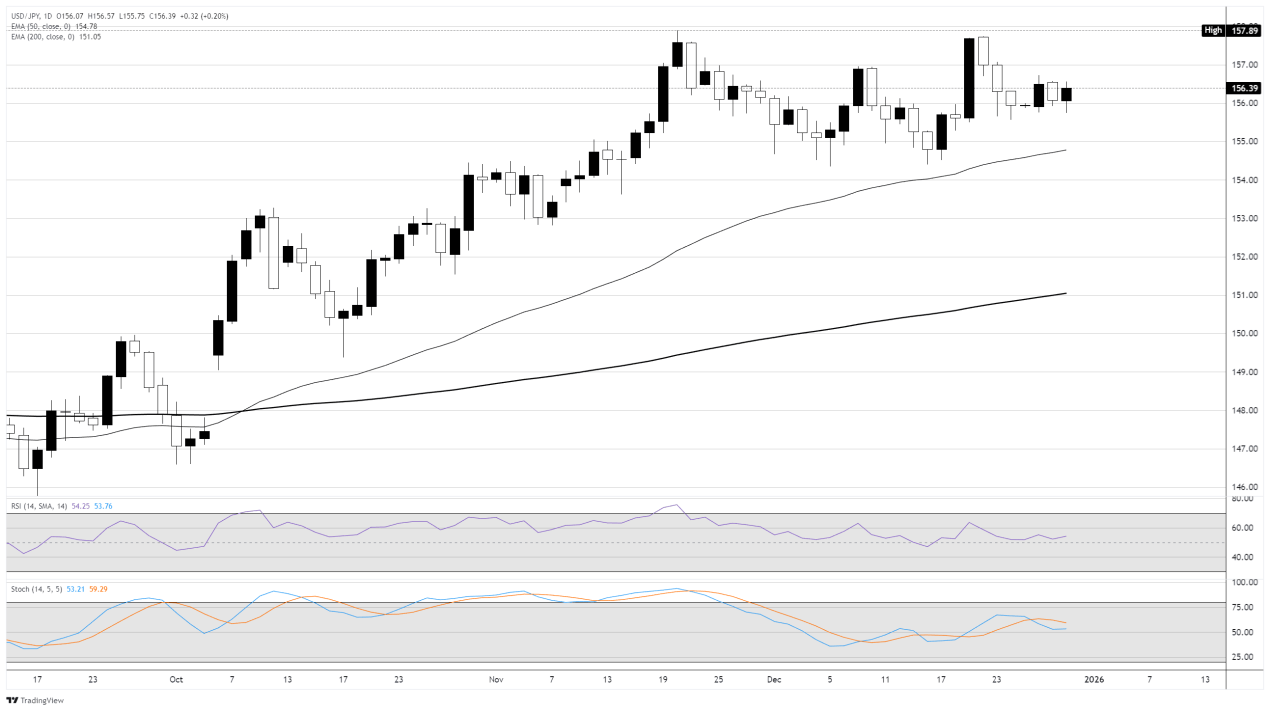
Group 1 - The core issue in the market is the policy divergence between the Bank of Japan (BOJ) and the Federal Reserve, which drives exchange rate fluctuations [2][3] - The BOJ raised interest rates by 25 basis points to 0.75%, marking its third hike of the year, yet the yen remains weak, with USD/JPY rising nearly 12% from its April low of 139.89 [2] - The Federal Reserve shows a cautious dovish stance, with most policymakers expecting further rate cuts contingent on declining inflation indicators, leading to uncertainty in policy direction [2][3] Group 2 - Despite the BOJ's rate hikes, the market may have already priced in these expectations, making it difficult for the yen to strengthen significantly [3] - The uncertainty surrounding U.S. inflation data complicates the Fed's policy decisions, resulting in a lack of clear guidance for the market [2][3] - The USD/JPY is likely to remain within a sensitive range in the short term, with attention needed on potential BOJ market interventions and U.S. inflation data for future policy direction [3]
全球数据观察-Global Data Watch
2025-12-24 12:59
Summary of Key Points from the Conference Call Industry Overview - The focus is on global economic conditions, particularly the impact of central bank policies and trade dynamics on growth and inflation across various regions, including the U.S., Europe, and emerging markets [3][4][17]. Core Insights and Arguments 1. **Global Economic Easing**: There is an expectation of additional easing in global policy rates, with a projected reduction of approximately 40 basis points by the end of the year due to growth and inflation dynamics [3][4]. 2. **U.S. Economic Conditions**: The U.S. is experiencing a mid-year downshift in domestic demand, which, combined with trade war repercussions, is likely to push growth below potential in the second half of 2025 [4][12]. 3. **Inflation Trends**: Global inflation remains sticky, with core inflation in the U.S. rising at an annualized rate of 2.4% over the three months through June 2025, while inflation outside the U.S. is expected to moderate [5][22]. 4. **Central Bank Policies**: The Federal Reserve is anticipated to move cautiously, with potential easing in response to tariff-related inflation spikes and softening labor demand [11][12]. 5. **Western Europe Economic Outlook**: The Euro area and UK are seeing service price inflation, which remains elevated, prompting the ECB to adopt a wait-and-see approach while considering further easing due to expected growth dips below 1% in 2H25 [17][18]. 6. **Emerging Markets (EM) Easing**: EM central banks are expected to continue easing, with recent cuts from Bank Indonesia and anticipated cuts from other countries like Chile and Turkey, driven by global growth concerns and stable currencies [23][24]. Additional Important Insights 1. **China's Economic Imbalances**: China's GDP growth for Q2 2025 was reported at 5.2% year-on-year, but there are concerns about structural imbalances, particularly with weak retail sales and fixed investment growth [22]. 2. **Political Dynamics in Japan**: Upcoming elections could lead to increased political uncertainty, potentially impacting fiscal policy, including discussions around consumption tax cuts [25]. 3. **Trade War Implications**: Recent announcements of increased tariffs on Mexico and Canada could heighten risks for the USMCA review, affecting trade dynamics and economic forecasts [26]. 4. **Manufacturing Output Trends**: Global factory output surged by 6.5% annualized rate in early 2025, but a slowdown is expected as the effects of front-loading tariff hikes diminish [18][20]. This summary encapsulates the critical points discussed in the conference call, highlighting the interconnectedness of global economic policies, inflation trends, and regional growth forecasts.

X @Bloomberg
Bloomberg· 2025-12-09 07:32
India’s longer interest-rate swaps have jumped since the central bank’s policy meeting last week https://t.co/Q7MhmM3ajZ ...
Federal Reserve and Bank of Japan Indicators Hit Crypto, Market Losses Deepen
Yahoo Finance· 2025-12-01 19:40
Market Overview - Bitcoin is currently trading around $85,000 after a significant drop of nearly 6%, marking a decline from its October peak of approximately $125,000 [1] - The Crypto Fear and Greed Index is near 20, indicating extreme fear in the market, following a low of around 10 [1] Central Bank Policies - The Bank of Japan is preparing for a shift away from ultra-easy monetary policy, with a potential policy change meeting scheduled for December, dependent on wage data [2] - In the U.S., Federal Reserve officials, including Boston Fed President Susan Collins, have expressed caution regarding further easing, indicating a high threshold for additional policy changes without clear labor market deterioration [3] Market Dynamics - Recent remarks from the Federal Reserve and the Bank of Japan have led to higher yields and a stronger dollar, which in turn raises funding costs and reduces tolerance for leverage that previously supported market rallies [4] - The crypto market has experienced significant outflows, with over $637 million in long positions liquidated during the recent downturn, and the Altcoin Season Index has fallen to 25, indicating weak market breadth beyond Bitcoin [5] Recovery Indicators - A credible market recovery would require improvements in order-book depth for major BTC and ETH pairs, alongside stabilization of funding without relying on short squeezes [5][6] - An increase in net stablecoin issuance is necessary to signal fresh cash inflows, which would support more sustainable market rebounds [6] Market Sentiment - Central bank actions that push yields higher or strengthen the dollar can keep bids soft, and any relief rallies may fade if market depth thins and exchange-traded flows do not counteract de-risking [7] - Bitcoin remains sensitive to policy headlines, with the potential for another test of support levels [7]
Gold on pace for its best year since 1979 — but one analyst thinks prices have peaked
Yahoo Finance· 2025-11-07 15:41
Core Viewpoint - Gold prices are currently near $4,000 per ounce, showing stability after a significant sell-off last month, but future trends remain uncertain [1] Group 1: Current Market Conditions - Gold is on track for its best year since 1979, driven by central bank purchases and increased inflows into ETFs, as well as bar and coin purchases [1] - Despite this, gold is approximately 9% lower than its all-time high of over $4,350 reached last month [1] - October saw gold's largest daily drop in over a decade, although it ended the month with a roughly 5% gain [5] Group 2: Analyst Predictions - Analysts at Macquarie Group suggest that gold prices have likely peaked, with other central banks cutting rates ahead of the Federal Reserve [2] - Chief economist Ric Deverell indicated that with global growth rebounding and central bank easing cycles nearing an end, gold prices are expected to decline over the coming year, albeit at a slower rate than previous peaks [3][4] - UBS analysts maintain a target of $4,200 per ounce for gold over the next 12 months, citing potential upside to $4,700 per ounce due to rising political and financial market risks [6] - Goldman Sachs analysts predict gold will reach $4,900 per troy ounce by the end of next year, driven by ongoing structural buying and interest in gold as a strategic portfolio diversifier [7]