Consumer Spending Slowdown

Search documents
Middle-class shoppers are pulling back, sending alarms through the retail industry: 'There are signs of real distress on the way'
Yahoo Finance· 2025-11-18 23:29
Core Insights - Home Depot has cut its full-year outlook due to a slowdown in consumer spending, with comparable sales rising only 0.2%, and US comps up by 0.1%, falling short of Wall Street expectations [1][3][7] - The company is experiencing a decline in demand as middle-class shoppers are becoming more cautious, influenced by high borrowing costs and a sluggish housing market [3][4] - External factors such as milder weather and a lack of storms have negatively impacted sales of seasonal products, further contributing to the decline in home improvement demand [4][5] Group 1: Company Performance - Home Depot reported weakening sales growth for Q3, with a significant drop in expected demand [2][3] - The company had anticipated better results due to easing interest rates, but this did not materialize [3][4] - The decline in home improvement projects is estimated at 0.8% from the previous year, particularly affecting big-ticket remodels that require financing [5] Group 2: Industry Trends - The slowdown in consumer spending is part of a broader trend affecting the retail sector, with many retailers facing similar challenges [6][8] - Analysts indicate that the consumer backdrop is deteriorating quickly, moving from "soft to softer" as winter approaches [4][7] - Uneasy consumers are shifting their spending towards travel and leisure rather than home upgrades, impacting overall demand in the home improvement sector [5][6]

Why Buffett's Largest Cash Pile Ever Signals A Shift Coming in Q1 2026 — And What You Should Own Now
Benzinga· 2025-11-14 19:38
Core Insights - Warren Buffett is holding more cash than ever, indicating caution in the current market despite high stock valuations and low unemployment [1][25][34] - Significant increases in student loan defaults and credit delinquencies suggest underlying consumer financial stress, contradicting the narrative of robust consumer spending [2][4][6] Consumer Debt and Defaults - Student loan defaults among prime-credit borrowers have surged 1,753% year-over-year, with serious delinquency rates rising from 0.77% to 14.26% [3][4] - Credit card delinquencies in affluent areas increased by 80%, with 90-day delinquency rates rising from 4.1% to 7.3% [6] Employment and Income Trends - Consumer spending, which constitutes about 70% of U.S. GDP, showed minimal growth in Q2 2025, despite positive employment statistics [7] - Many white-collar job changes involve pay cuts of at least 20%, impacting future consumer spending capacity [9] Wealth Distribution - Wealth distribution has shifted dramatically, with Americans under 40 seeing their wealth share cut in half, while those over 55 control nearly three-quarters of U.S. wealth [11][12] - Millennials and Gen Z hold only about 10.7% of total wealth, affecting their ability to participate in the housing market [13] Housing Market Dynamics - The average first-time homebuyer is now around 40 years old, with the income needed to afford a median-priced home at approximately $141,000 [14] - The introduction of 50-year mortgages indicates a struggle to meet current housing prices, reflecting a disconnect between income and home values [15][18] Credit Market Signals - The Federal Reserve's Senior Loan Officer Opinion Survey indicates "moderate net tightening" in lending standards, which could lead to a consumer credit crunch [20][21] - Regional banks are showing signs of elevated delinquency rates, suggesting ongoing stress in consumer credit [21] Future Outlook - Major layoffs in white-collar sectors are expected to impact consumer credit indicators by Q1 2026, with significant job cuts announced by companies like Amazon and UPS [23][24] - The current market conditions suggest a potential repricing of assets as consumer earning power may not support existing valuations [28][34]



Chipotle says it's lost steam with Gen Z and millennial customers due to unemployment, student loans, and stagnant wages
Business Insider· 2025-10-30 08:03
Core Insights - Chipotle is facing challenges with its core customer base, particularly among Gen Z and millennials, who are reducing their spending due to economic pressures [1][2] - The company reported a 7.5% increase in revenue to $3.0 billion for the third quarter, but same-store sales remained flat, indicating potential issues with customer retention [3][7] - Chipotle's stock price has seen a significant decline, dropping about 16% in after-hours trading and approximately 33% over the past year [3] Customer Demographics - Customers earning less than $100,000, which represent 40% of Chipotle's sales, are pulling back on spending [1] - The 25- to 35-year-old age group, which includes older Gen Zers and younger millennials, accounts for about 25% of total sales and is particularly affected by economic challenges [1][2] Economic Factors - The younger demographic is facing multiple economic headwinds, including unemployment, increased student loan repayments, and slower real wage growth [2] - Instead of shifting to competitors, this group is opting for grocery shopping and preparing food at home, leading to less frequent visits to Chipotle [2] Financial Performance - Chipotle's third-quarter results showed a revenue increase, but flat same-store sales suggest a struggle to attract repeat customers [3][7] - The company reported a 4% decline in same-store sales in July, marking one of its worst quarters since 2020 [7] Strategic Initiatives - To attract new and returning customers, Chipotle has launched a loyalty program aimed at college students and introduced limited-time menu offerings [8] - The company is also planning international expansion, with new restaurants set to open in Singapore, South Korea, and Mexico in the coming years [9]

Apple shutters store in China for first time ever as struggles mount in second-largest market
New York Post· 2025-07-29 15:15
Core Insights - Apple is closing its first store in China, located in Dalian's Parkland Mall, due to struggles in the Chinese smartphone market [1][2] - The closure is part of a broader trend of declining consumer spending in China, affecting various retailers including luxury brands [2] - Apple has reported a significant decline in sales in China, with a total revenue of $66.95 billion last year, down nearly 10% from its peak [5] Group 1: Store Closure and Market Conditions - The closure of the Dalian store marks Apple's first shutdown in China since 2008 [1] - The Parkland Mall has seen several retailers exit, prompting Apple's decision to close its store [2] - The Chinese government has initiated stimulus programs to boost spending on smartphones and electric vehicles [3] Group 2: Sales Performance and Competition - Apple has experienced a sales decline in China for six consecutive quarters, with a 25% drop in the final quarter of the last year [3][5][6] - The company's market share in China fell to 15.5% last year, down from 17.9% the previous year, due to increased competition from local brands like Huawei, Xiaomi, and Vivo [8] - Despite the closure, Apple plans to open a new store in Shenzhen and maintain its other store in Dalian, expecting to end the year with 58 stores in China [8][9]

Macy's slashes profit forecast, warns of ‘surgical' price hikes due to tariffs
New York Post· 2025-05-28 14:48
Core Viewpoint - Macy's has reduced its annual profit forecast due to the impact of tariffs and a slowdown in consumer spending, indicating a cautious outlook for the retail sector [1][3][4] Financial Performance - The company now expects adjusted earnings per share of $1.60 to $2 for 2025, down from a previous forecast of $2.05 to $2.25, with 15 to 40 cents of the drop attributed to tariffs [1][3] - Macy's reaffirmed its annual sales forecast of $21 billion to $21.4 billion, a decline from last year's $22.29 billion [4] - For the three months ended May 3, adjusted earnings per share were reported at 16 cents, beating projections of 14 cents, while revenue was $4.6 billion, above expectations of $4.5 billion [4] Market Challenges - The company faces challenges from a slowdown in consumer spending and increased competition in promotions and discounts across the retail industry [3][8] - Comparable sales at Macy's locations fell 0.8% compared to the same period last year, while same-store sales at Bloomingdale's and Bluemercury increased by 3.8% and 1.5%, respectively [7][9] Strategic Initiatives - Macy's is undergoing a three-year turnaround plan, which includes closing 150 locations by early 2027 and enhancing its Bluemercury and Bloomingdale's businesses [5][6] - The company has invested in staffing, improved displays, and a new merchandise mix at 125 locations, which is about one-third of the stores it plans to keep open [6][11] Stock Performance - Macy's shares have decreased by approximately 27% so far this year [10][13]

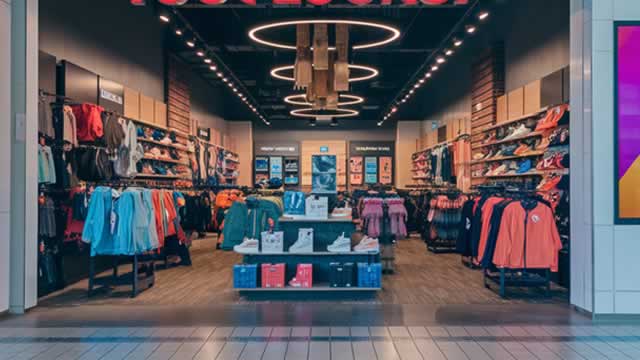
Foot Locker shares surge 85% after Dick's Sporting Goods agrees to buy rival for $2.4B
New York Post· 2025-05-15 15:22
Group 1: Acquisition Details - Dick's Sporting Goods has agreed to acquire Foot Locker for $2.4 billion, offering $24 per share, which represents an 86% premium to Foot Locker's last closing price [1][3] - This acquisition is Dick's largest deal in the sporting goods industry and aims to enhance its presence in malls and expand into international markets for the first time [3][6] - The deal is expected to close in the second half of 2025 and will be financed through a combination of cash-on-hand and new debt [9] Group 2: Market Context - Several US retailers have issued pessimistic forecasts due to the impact of tariffs, leading to reduced consumer spending on various goods [4] - Foot Locker has been losing market share to competitors like Nike and Under Armour, which have expanded their direct-to-consumer business, alongside a decline in customer visits to indoor malls [5][8] - Foot Locker operates 2,400 retail stores across 20 countries, with worldwide sales of $8 billion last year [5]