Critical Minerals Supply Chain Security

Search documents
Silver47 Exploration Invited to Join DARPA-Sponsored Critical Minerals Forum
TMX Newsfile· 2026-03-26 11:00
Core Viewpoint - Silver47 Exploration Corp. has joined the Critical Minerals Forum (CMF), a coalition aimed at building resilient and diversified supply chains for critical minerals [1][4] Group 1: Company Overview - Silver47 Exploration Corp. focuses on uncovering and developing silver-rich deposits in North America, with a total resource of 236 million ounces of silver equivalent (AgEq) at an inferred grade of 334 grams per tonne (g/t) AgEq and 10 million ounces at an indicated grade of 333 g/t AgEq [5] - The company operates in Alaska, Nevada, and New Mexico, which are recognized as some of the most prolific mining jurisdictions in the U.S. [5] Group 2: Industry Context - The CMF includes over 50 companies across the critical minerals value chain, which spans industries such as battery, semiconductor, defense, and aerospace [2] - Critical minerals are essential for advanced defense technologies and large-capacity batteries for electric vehicles and renewable energy storage [3] - Supply chains for many critical minerals are highly concentrated, leading to market manipulation and geopolitical disruption [3] - The CMF aims to improve transparency in production costs and mineral prices to encourage new investments [3] Group 3: CMF Initiatives - The CMF serves as a neutral convener, developing a roadmap for future mineral needs through consultations with the U.S. government and multinational manufacturers [4] - It has been recognized by U.S. government agencies as a key adviser on essential mineral projects and supports investment and blended financing for minerals projects [4]



Saga Metals Acknowledges U.S. Strategic Critical Minerals Reserve “Project Vault” and Highlights Titanium's Strategic Importance to North American Defense Supply Chains
Globenewswire· 2026-02-06 12:30
Core Insights - The announcement of "Project Vault" by the U.S. government aims to establish a strategic stockpile of critical minerals to enhance domestic supply chains and national security [1][2][4] - The initiative includes a Direct Loan of up to USD 10 billion from the Export-Import Bank of the United States to support partnerships in critical mineral production [3] - The focus on critical minerals, particularly titanium, is crucial for defense and aerospace applications, highlighting the need for secure supply chains [7][9] Company Overview - SAGA Metals Corp. is focused on the exploration of critical minerals, particularly titanium, which is essential for defense and aerospace sectors [1][11] - The company's flagship Radar Ti-V-Fe Project in Labrador has shown a 100% drilling success rate in 2025, with high grades of titanium, vanadium, and iron [10] - SAGA's strategic positioning in the critical minerals sector aligns with the U.S. government's initiatives to strengthen supply chains and reduce reliance on foreign sources [11][21] Industry Context - The U.S. is taking steps to counter China's dominance in critical minerals, particularly in refining processes, through initiatives like Project Vault [4][5] - The emphasis on allied coordination and preferential trade frameworks aims to stabilize critical mineral supply chains and mitigate risks associated with price fluctuations and supply disruptions [5][6][17] - Critical minerals are foundational for modern technology, with applications ranging from mobile devices to electric vehicle batteries and defense systems [12]

3 Rare Earths Stocks to Buy as Trump Announces Project Vault
Yahoo Finance· 2026-02-05 14:00
Core Viewpoint - The article discusses the potential of three companies—The Metals Company (TMC), Critical Metals (CRML), and NioCorp Developments (NB)—in the context of U.S. government initiatives to secure domestic critical mineral supplies through "Project Vault" [4][18]. Company Summaries The Metals Company (TMC) - TMC is a pre-revenue developer focused on extracting polymetallic nodules from the deep seafloor, which could provide a non-traditional supply source for critical minerals [3]. - As of September 30, 2025, TMC reported cash reserves of $115.6 million and a net loss of $184.5 million, equating to $0.46 per share [1]. - TMC's stock has increased by 277% over the past 52 weeks and 6% year-to-date [2]. - The company secured a $37 million investment and an $85.2 million strategic investment from Korea Zinc, which indicates strong interest in U.S.-based refining [7]. - Analysts have a consensus "Strong Buy" rating for TMC, with an average price target of $10.60, suggesting a potential upside of about 62% [8]. Critical Metals (CRML) - CRML is a development-stage rare earths company advancing the Tanbreez project in Southern Greenland [9]. - The stock has risen by 54% over the past 52 weeks and 88% year-to-date, reflecting positive market sentiment [10]. - The company closed a $50 million PIPE financing to support its project, extending its operational runway [12]. - U.S. government interest in CRML has been highlighted by discussions of converting a $50 million Defense Production Act grant into an equity stake [13]. - One analyst rates CRML as a "Strong Buy" with a price target of $20, indicating a potential upside of approximately 54% [13]. NioCorp Developments (NB) - NioCorp is focused on developing the Elk Creek Project in Nebraska, targeting scandium, niobium, and titanium materials [14]. - The stock has appreciated by 161% over the past 52 weeks and 26% year-to-date [14]. - For the three months ending September 30, 2025, NioCorp reported a cash balance of $162.8 million and a net loss of $42.7 million, or $0.53 per share [15]. - The U.S. Department of Defense awarded up to $10 million to support NioCorp's domestic scandium supply chain, indicating strategic importance [16]. - Analysts have a consensus "Strong Buy" rating for NioCorp, with an average price target of $13.12, suggesting a potential upside of about 97% [17]. Industry Context - The U.S. government is prioritizing domestic critical mineral supplies due to China's dominance in the sector, controlling approximately 70% of rare earths mining and 90% of processing [6]. - "Project Vault" aims to create a strategic reserve of rare earth elements, with nearly $12 billion allocated to reduce reliance on China [6]. - The demand for critical minerals is projected to double or triple by 2030, emphasizing the urgency of securing domestic sources [6].


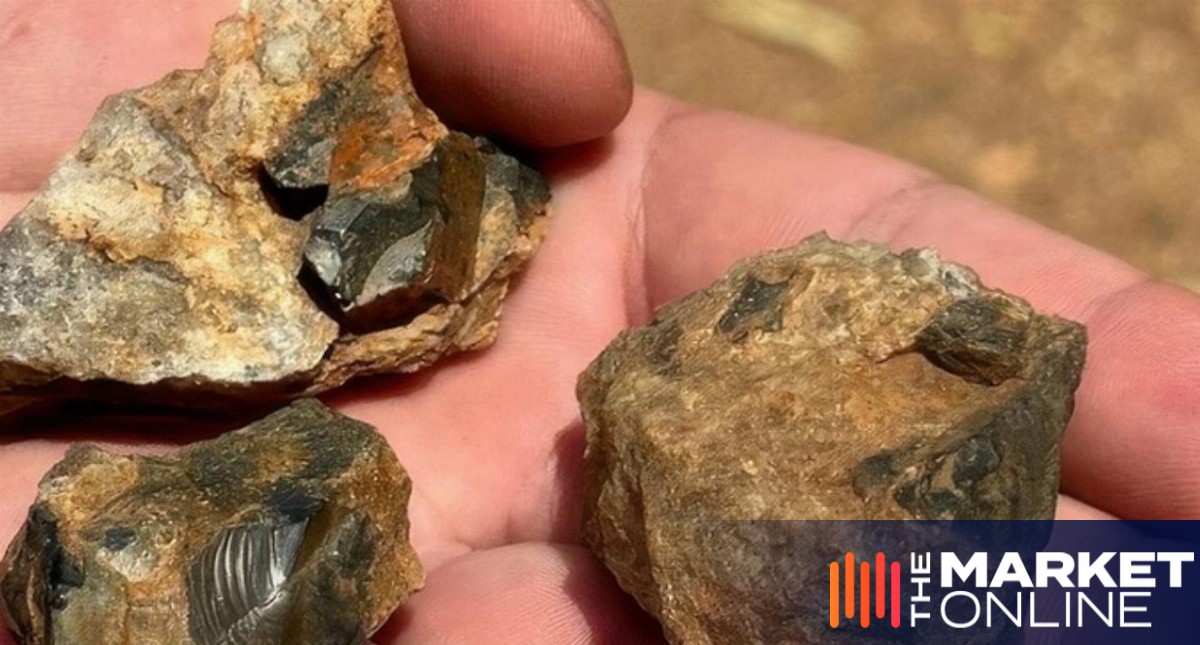
New Frontier Minerals chasing US critmins funds through dual listing
The Market Online· 2026-02-02 23:57
Core Viewpoint - New Frontier Minerals (ASX:NFM) is strategically positioning itself to capitalize on the increasing North American interest in critical minerals through a dual listing on the OTCQB Venture Market, which aims to enhance U.S. investor engagement and access to capital [1][6] Group 1: Company Developments - The company has secured an 85% interest in a key tenement within the Harts Range HRE project in the Northern Territory, with additional tenement grants also recently obtained [2][3] - Inaugural drilling at the Harts Range site is expected to commence in the coming weeks, coinciding with the company's efforts to expand its NWQ copper project in Queensland [3] - The chairman highlighted that both the Harts Range and NWQ copper projects are strategically located within a stable Australian jurisdiction, contributing to secure supply chains for heavy rare earth elements essential for advanced manufacturing, defense, and clean energy transition [4] Group 2: Market Context - There is a growing geopolitical focus on supply chain security for critical minerals, leading to increased interest from U.S. investors, particularly in projects that demonstrate scale, grade, and clear pathways to downstream integration [5] - The U.S. government, under Donald Trump, is investing billions to establish secure domestic and allied critical mineral supply chains, aiming to reduce reliance on Chinese rare earths [5]
New Earth Resources Comments on U.S. Proclamation to Strengthen Critical Minerals Supply Chains
Globenewswire· 2026-01-22 08:05
Core Viewpoint - The U.S. Presidential Proclamation on January 14, 2026, emphasizes the need for secure sources of critical minerals, which is expected to benefit companies in the rare earth sector, particularly those in allied nations like Canada [2][3][4]. Company Overview - New Earth Resources Corp. is a Canadian mineral exploration company focused on acquiring and developing both advanced and early-stage exploration projects, with a flagship project being the Lucky Boy Uranium Property in Arizona, USA [6]. - The company has options to acquire interests in several projects, including the SL Project in Quebec and the Red Wine Rare Earth Project in Labrador, both of which are prospective for rare earth elements [7]. Industry Implications - The proclamation indicates a significant policy shift towards enhancing supply chain security for critical minerals, which may lead to increased exploration and development opportunities for rare earth companies in allied nations [4][5]. - The U.S. investigation revealed that the country is 100% reliant on imports for 12 critical minerals and over 50% reliant for an additional 29, highlighting the urgency for domestic sourcing [2]. - The focus on processing infrastructure investment is expected to drive both government and private sector funding towards North American separation and refining facilities, addressing the critical choke point in processing capacity [9].
2025年保障美国关键矿产供应链安全研究报告
Sou Hu Cai Jing· 2025-10-29 03:34
Core Insights - The report highlights the challenges faced by the U.S. in securing a stable supply chain for critical minerals essential for the energy transition, particularly in sectors like electric vehicles, solar power, and AI data centers [1][2][10] - It emphasizes the need for a balanced approach between domestic production and international cooperation to overcome supply chain vulnerabilities [10][20] Supply and Demand Gap - The U.S. has limited domestic reserves for many critical minerals, leading to a reliance on imports. By 2035, only zinc and molybdenum are projected to achieve supply-demand balance domestically, while significant imports will still be necessary for copper, lithium, and other minerals [2][20] - For copper, the demand is expected to reach nearly 2.92 million tons by 2035, with domestic production only able to meet 180,000 tons, resulting in a shortfall of over 110,000 tons and an import dependency of 62% [2][20] - Lithium demand is projected to exceed 107,000 tons by 2035, with domestic supply only reaching 28,000 tons, leading to an import dependency of over 280% [2][20] Processing and Smelting Challenges - The U.S. faces significant shortcomings in the smelting and processing stages of the supply chain, with only three copper smelting facilities currently operational, which are insufficient to meet domestic processing needs [3][20] - China's expansion in midstream processing capabilities poses a "choke point" risk for the U.S. in the critical minerals supply chain [3][20] Policy Contradictions - Recent U.S. policies, including the One Big Beautiful Bill Act (OBBBA), aim to bolster domestic mining but simultaneously phase out tax credits that could enhance mining competitiveness, creating a structural dilemma [4][21] - Tariff policies have been inconsistent, leading to market volatility and raising questions about the stability of U.S. mineral policies [4][5][21] Proposed Solutions - The report suggests a comprehensive domestic strategy that integrates the entire mining ecosystem, including streamlined permitting, modern equipment, and efficient logistics networks [6][23] - A "friendshoring" approach is recommended, focusing on partnerships with allies and resource-rich developing countries to diversify supply chains and reduce reliance on any single nation [7][23] - Innovative policy mechanisms, such as guaranteed price contracts with miners, are proposed to provide investment certainty while avoiding the pitfalls of blanket tariffs [8][24] Conclusion - The U.S. must enhance its domestic capabilities while fostering international partnerships to secure a stable supply of critical minerals, balancing resource security with manufacturing competitiveness [10][25]
Volato Group's Proposed Acquisition Under Definitive Agreement, M2i Global Launches Initiative to Build Nation's First Strategic Minerals Reserve
GlobeNewswire News Room· 2025-08-21 13:00
Core Viewpoint - Volato Group, Inc. and M2i Global, Inc. are launching a public-private initiative to establish the United States' first Strategic Minerals Reserve (SMR) in Mineral County, Nevada, aimed at securing the supply of critical minerals essential for defense, clean energy, and industrial leadership [2][3]. Group 1: Strategic Minerals Reserve Overview - The SMR will be located at the Hawthorne Army Depot in Nevada and will focus on storing, refining, and distributing critical minerals such as gallium, graphite, and copper, which are vital for defense systems, semiconductors, electric vehicles, and battery technology [3][4]. - The initiative is backed by a report from the Hoover Institution advocating for a U.S.-led multilateral critical minerals stockpile and involves collaboration with federal and state agencies, including the Nevada Governor's Office of Economic Development [4][5]. Group 2: Economic and National Security Implications - The SMR is expected to revitalize the Hawthorne region, create high-quality jobs, and attract federal investment, thereby enhancing national security through a localized supply chain [6]. - The initiative is described as a strategic capability rather than a mere stockpile, emphasizing the importance of innovation, industry, and infrastructure in securing the U.S. economic and national future [7]. Group 3: Public-Private Partnership Model - The SMR is supported by federal agencies such as the Department of Defense, the Defense Logistics Agency, and the Department of Energy, and is actively engaging with private-sector and international partners to enhance domestic refining and recycling operations [8][9]. - This initiative serves as a model for how state governments can align with national priorities to foster innovation, attract long-term investment, and lead in emerging sectors [9]. Group 4: Operational Capabilities - The SMR will feature secure storage and logistics at a federally controlled site with access to rail and intermodal infrastructure, refining and recycling capabilities to address domestic processing gaps, and ethical sourcing from U.S.-allied nations [10]. - The initiative will also incorporate AI forecasting tools to predict future material needs and optimize inventory, alongside workforce development through partnerships with local universities and training centers [10].