Data quality

Search documents
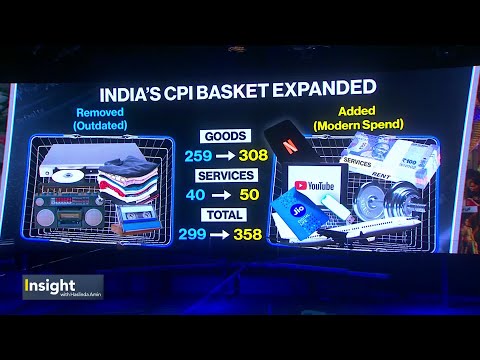
India’s New Inflation Basket Explains India’s New Consumers
Bloomberg Television· 2026-02-13 10:12
Monica, let's just start with that headline number, Inflation appearing to be under control. What are the implications here for the RBI and fiscal plans as well. Good morning, Paula.Well, the implications are that the RBI is expected to remain on hold for an extended period of time. That number, as you pointed out, came in at 2.75%, close to the consensus number of 2.77%. As for the Bloomberg analysts and economists, Paul, and like I said, you know, despite the fact that it is well within the targeted range ...

A Look Ahead: Reaping the Supply Chain Lessons of 2025
Yahoo Finance· 2026-01-09 18:00
Core Insights - The supply chain has been significantly impacted by geopolitical pressures, tariffs, and export controls, highlighting its critical role in industry stability [2][3] Group 1: Supply Chain Disruptions - The U.S. has utilized tariffs in dealmaking, while China has tightened export controls, leading to various disruptions in the supply chain throughout the year [2] - Conflicts in regions such as East Asia, the Middle East, and Eastern Europe have further complicated supply chain operations [2] Group 2: Cybersecurity Concerns - High-profile cybersecurity incidents in 2025, such as attacks on Collins Aerospace and Jaguar Land Rover, have raised the importance of cybersecurity in supply chain management [3] Group 3: Trends for 2026 - Investment in new technologies, including digital-twin models and IoT sensors, is expected to rise, aiding in risk reduction and real-time tracking [5] - The development of AI tools, particularly GenAI and Agentic AI, will focus on creating orchestrators for managing automated processes and decision-making [5] - Emphasis on data quality will be crucial for businesses to leverage AI effectively, requiring investments in data governance and integration [5]
美国经济分-2026 年通胀展望:向目标迈进-US Economics Analyst_ 2026 Inflation Outlook_ Traveling Toward Target
2026-01-06 02:23
Summary of Key Points from the Conference Call Industry Overview - The report focuses on the **US economic outlook**, specifically the **inflation forecast for 2026** and its implications for monetary policy and investment decisions. Core Insights and Arguments 1. **Current Inflation Status**: Core PCE inflation is at **2.8% year-over-year**, above the Federal Reserve's target, primarily due to unexpected tariff impacts rather than strong underlying cost pressures [2][5][6]. 2. **Future Inflation Expectations**: - Core PCE inflation is expected to decrease to **2.1% by December 2026** and **2.2% on a Q4/Q4 basis**, which is **30 basis points below** the Bloomberg consensus and FOMC forecasts [2][26]. - CPI inflation is projected to be **2.1% on a Q4/Q4 basis**, which is **60 basis points below** the Bloomberg consensus [2][26]. 3. **Factors Influencing Disinflation**: - **Tariff Impact**: The contribution of tariffs to inflation is expected to decrease from **0.5 percentage points** currently to **0.2 percentage points** by December 2026, after peaking at **0.8 percentage points** in mid-2026 [6][7]. - **Shelter Inflation**: Anticipated to fall from **3.7% year-over-year** to **2.3%** by December 2026, which is below pre-pandemic levels [10][16]. - **Wage Growth**: Wage growth has slowed to target-consistent levels, which will exert downward pressure on nonhousing services inflation [11][14]. 4. **Risks to Inflation Forecasts**: - The risks appear balanced, with potential for both upward and downward adjustments due to tariffs and consumer cost burdens [31]. - Data quality concerns persist, with a **20% decline** in the number of prices collected for the CPI, leading to increased variability in inflation data [3][45]. Additional Important Insights 1. **Data Collection Issues**: The Bureau of Labor Statistics (BLS) has reduced its price collection efforts, which may affect the reliability of inflation data moving forward [3][45]. 2. **Healthcare Inflation**: Healthcare services inflation is expected to rise from **2.6% in 2025 to 2.9% in 2026**, influenced by higher supply and labor costs [11]. 3. **Monthly Inflation Forecasts**: - For December 2025, core PCE inflation is forecasted at **0.25%** and core CPI at **0.28%**, reflecting distortions from delayed data collection [33][37]. - For January 2026, core PCE inflation is expected to be **0.27%** and core CPI **0.26%**, influenced by typical seasonal price increases [37]. Conclusion - The economic outlook for 2026 suggests a return to near-target inflation levels, driven by a combination of reduced tariff impacts, softening shelter inflation, and moderated wage growth. However, ongoing data collection challenges and potential risks from tariffs remain critical factors for investors to monitor.
全球金属与矿业:中国钢铁生产趋势,分化可解释
2025-08-25 01:40
Summary of Key Points from the Conference Call Industry Overview - The focus is on the **Metals & Mining** industry, specifically the **steel and cement production trends in China** [1][2][7]. Core Insights 1. **Cement Production Decline**: China's cement production is annualizing at the lowest levels since 2009, while steel production is approximately 65% higher than 2009 levels [1][2]. 2. **Net Exports Impact**: The increase in steel net exports is a significant factor in the production divergence. In 2009, steel net exports were 3 million tonnes, while in 2025, they are projected to be 112 million tonnes, which is equivalent to 12% of current steel production [3][4]. 3. **Data Quality Issues**: Historical data quality has affected steel production statistics, with hidden or unreported production being a significant issue from 2009 to 2019. The ratio of cement to steel production dropped from approximately 3x to 2.2x between 2005 and 2016, and further to 1.8x by 2018 [4][5]. 4. **Cement vs. Steel Demand**: Steel is considered a later-cycle material compared to cement, with demand driven more by consumer durables and advanced infrastructure rather than construction. This suggests that steel demand may remain more resilient than cement demand as economies develop [5][6]. Additional Important Points - **Production Ratios**: The cement to steel production ratio has been declining, indicating a shift in the production landscape in China [4]. - **Economic Implications**: The resilience of steel demand in the context of economic development in China suggests potential investment opportunities in the steel sector compared to cement [5][6]. This summary encapsulates the critical insights and data points discussed in the conference call regarding the current state and future outlook of the steel and cement production industry in China.