ETF结构性抛售

Search documents
比特币一度跌破8.1万美元关口,或创2022年来最大月度跌幅
Hua Er Jie Jian Wen· 2025-11-21 21:46
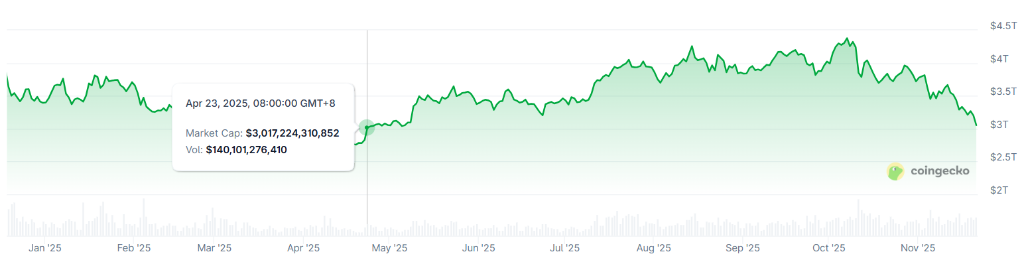
Core Viewpoint - Bitcoin is experiencing its worst monthly performance since the industry collapse in 2022, with a drop of over 30% from its historical high of $126,000 in early October, leading to a monthly decline of approximately 25% in November, marking the worst performance since 2022 [1][2] Market Performance - Bitcoin's price fell to $80,553, while Ethereum also suffered a significant drop of 8.9%, falling below $2,700 [1] - The total market capitalization of the cryptocurrency market has fallen below $3 trillion for the first time since April [2] Market Dynamics - A large-scale liquidation event on October 10 led to the forced closure of $19 billion in leveraged positions, resulting in a market value loss of approximately $1.5 trillion [4] - In the past 24 hours, an additional $2 billion in leveraged positions were liquidated, with open interest in perpetual futures contracts decreasing by 35% from the October peak of $94 billion, indicating a significant reduction in risk exposure by investors [5][4] Investor Sentiment - Institutional investors have shown no interest in buying the dip, with $903 million net outflow from 12 U.S. Bitcoin ETFs, marking the second-largest single-day redemption since their launch in January 2024 [8] - The cryptocurrency investor sentiment index has dropped to its lowest level since the 2022 crash, indicating that traders are in a state of "extreme fear" [8] Selling Pressure - The convergence of forced liquidations and structural sell-offs from ETFs has created a particularly fragile market state, with significant selling pressure from long-term holders [6][3] - A notable wallet, identified as "Owen Gunden," has sold a total of $1.3 billion worth of Bitcoin since the end of October, highlighting a trend of large-scale selling by long-term investors [12][7] Liquidity Concerns - Market liquidity is expected to diminish as the holiday season approaches, which could exacerbate price volatility if investors continue to reduce their positions [7][8] - The mNAV ratio of Strategy companies, which are attempting to replicate Michael Saylor's Bitcoin accumulation strategy, has fallen to just above 1.2, raising concerns about their positions in major indices [10]