Economic slowdown

Search documents
Nasdaq: Tech Stocks Surge as Trump Signals De-Escalation, Lifting Nvidia
FX Empire· 2026-03-31 19:52
Geopolitical Developments - President Trump is open to ending the military campaign against Iran, which has encouraged investors to buy into the market [1] - The initial investor optimism was based on hopes for a peace announcement, but buying became more aggressive as the day progressed [1] Market Conditions - The market was in oversold conditions, and investors were mentally and financially exhausted from the ongoing U.S.-Iran tensions [2] - Despite bearish news regarding crude oil, the market is forward-looking, suggesting that negative news may have already been priced in [2] - Positive developments could allow investors to shift focus from short-term risks to long-term implications such as supply issues and infrastructure repairs [2] Investor Sentiment - The potential for a resolution may have reduced uncertainty regarding the duration of the conflict, which is crucial for investor confidence [3] - Analysts had previously speculated about crude oil prices reaching $150, but uncertainty made it difficult for investors to hedge against such scenarios [3] - A quick resolution could allow investors to focus on inflation, Federal Reserve policy, and upcoming economic reports, while also addressing concerns about $100 crude oil [3] Technology Sector - The return of tech leadership in the market is viewed positively, indicating a potential recovery and growth in this sector [4]



This is a reason the Middle East’s major oil-producing countries have been selling their U.S. Treasurys
Yahoo Finance· 2026-03-30 20:05
Group 1 - Major oil-producing countries in the Middle East have been reducing their holdings of U.S. government debt since the onset of the U.S.-Israel war against Iran on February 28, driven by a need for increased liquidity [1] - The financial market is experiencing a need for liquidity, evidenced by a decline in equities for five consecutive weeks, redemption demands in credit markets, and the use of credit-default swaps in corporate bonds to hedge risks associated with the Middle East conflict [2] - The U.S. Treasury market, valued at $30.6 trillion, is traditionally viewed as a safe haven during uncertain times; however, investors have been pulling back due to rising inflation risks, which were later overshadowed by concerns about an economic slowdown, leading to a rally in Treasurys and lower yields [3] Group 2 - Throughout March, inflation fears dominated the bond market, with ten-year and 30-year Treasury yields increasing by 47.8 basis points and 35 basis points, respectively, reaching their highest levels since mid-July of the previous year [4] - Custodial holdings, which serve as a proxy for foreign official demand, have decreased to their lowest levels since 2012, with a decline of $66 billion since the beginning of March, as reported by BofA strategists [5][4] - Middle East oil exporters, holding approximately 3.5% of total Treasurys owned by foreign investors (over $300 billion), are contributing to the decline in custodial holdings, with Saudi Arabia being a significant player in this context [5][6]
JPMorgan, Pimco Say Bond Market Is Misjudging Slowdown Risk
Yahoo Finance· 2026-03-30 09:40
Core Viewpoint - Financial markets are underestimating the risk of a slowdown in the US economy due to the ongoing conflict in Iran, which could lead to a bond-market rebound and lower yields in the future [1][3]. Group 1: Economic Impact - Oil prices have surged over $116 a barrel, contributing to inflation concerns and leading to significant losses in the US Treasury market, marking the deepest monthly loss since October 2024 [2]. - Economists are revising growth forecasts downward and increasing the likelihood of a recession, with Goldman Sachs estimating a 30% probability of a downturn in the next 12 months, while Pimco sees a chance exceeding one-third [5]. Group 2: Bond Market Dynamics - Major bond fund managers, including those from Pacific Investment Management Co., JPMorgan Chase & Co., and Columbia Threadneedle Investments, anticipate that the economic impact of the conflict will eventually lead to a decline in bond yields [3]. - The recent selloff in the bond market has resulted in a surge in yields, with two- and five-year Treasury rates rising by over 0.5 percentage points since the onset of US bombings, and thirty-year yields nearing 5% [7]. Group 3: Inflation and Consumer Prices - The spike in energy prices is expected to increase the cost of goods, with the OECD warning that US consumer prices could rise by 4.2% this year, prompting investors to seek higher returns to counteract inflation [8].

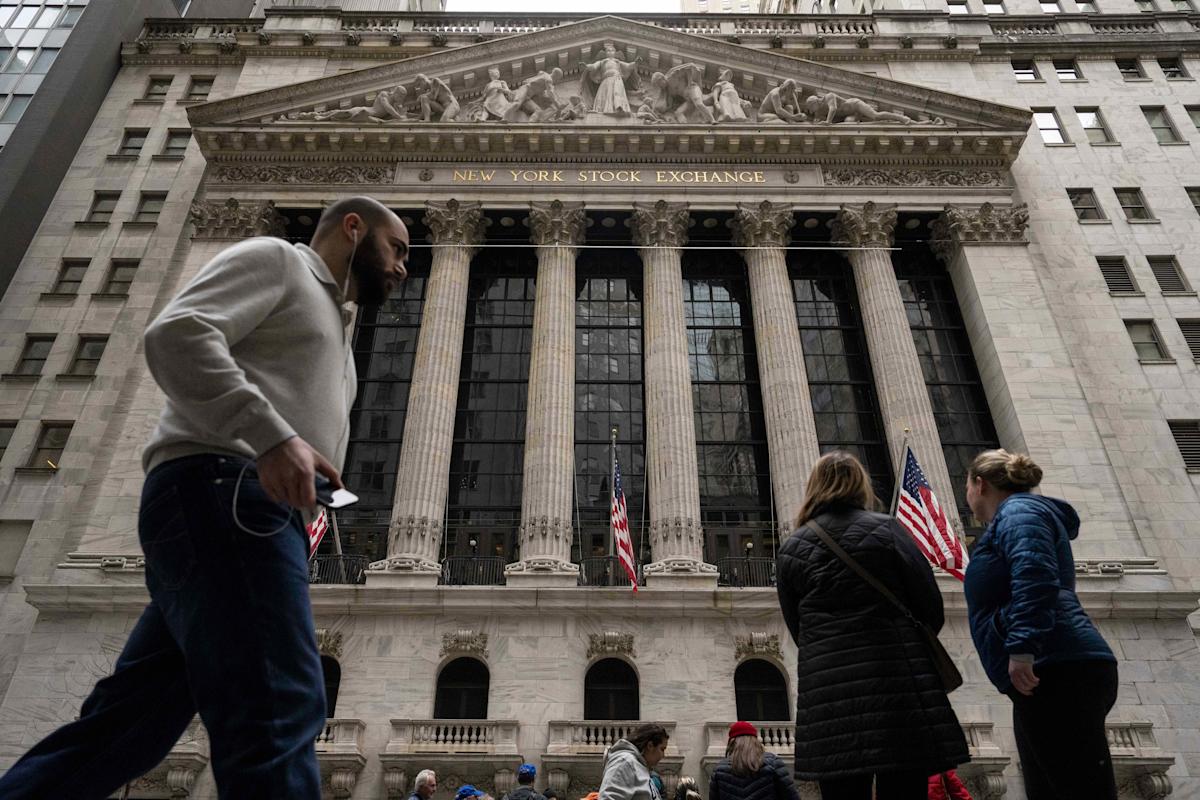
JPMorgan, Pimco say bond market is underestimating slowdown risk
Yahoo Finance· 2026-03-29 19:00
Core Viewpoint - Financial markets are underestimating the risk of a significant economic slowdown due to the ongoing US war in Iran, which could lead to a bond-market rebound as yields decline [1]. Group 1: Economic Impact - Oil prices have surged over $110 per barrel, contributing to inflation concerns and pushing the US Treasury market towards its deepest monthly loss since October 2024 [2]. - Economists are revising growth forecasts downward and increasing the likelihood of a recession, with Goldman Sachs estimating a 30% probability of a downturn in the next 12 months, while Pimco sees a chance exceeding one-third [4]. Group 2: Bond Market Dynamics - Major bond fund managers, including those from Pacific Investment Management Co., JPMorgan Chase & Co., and Columbia Threadneedle Investments, are preparing for an economic hit that could eventually lead to lower bond yields [3]. - The selloff in the bond market has resulted in a significant rise in yields, with two- and five-year Treasury rates increasing by over 0.5 percentage points since the onset of US bombing in late September [8]. Group 3: Inflation and Consumer Prices - The OECD has warned that US consumer prices could rise by 4.2% this year due to elevated energy prices, prompting investors to demand higher yields to offset inflation risks [9]. - Despite the pessimism surrounding growth, some long-time bond investors view the current selloff as an opportunity to secure higher yields, as inflation concerns overshadow growth threats [9].
Why surging oil prices should matter even if you own Apple, Nvidia, and Microsoft
Yahoo Finance· 2026-03-15 12:30
Oil Market Impact - Oil prices are experiencing a significant rise, with reports indicating potential prices reaching $200 per barrel due to tensions in the Strait of Hormuz [2] - Goldman Sachs forecasts that if disruptions continue, oil prices could average $98 per barrel through the end of April, with a more extreme scenario predicting an average of $145 in March and April before declining to $93 by the fourth quarter [3] Technology Sector Implications - The rising oil prices could negatively impact consumer spending, affecting companies like Apple, Microsoft, and Nvidia, which are not directly involved in the oil industry [4] - High gas prices above $4 per gallon may lead consumers to delay purchasing new iPhones, impacting Apple's sales and earnings estimates [6] - Microsoft's gaming division could face challenges as gamers may prioritize spending on fuel and groceries over digital downloads, potentially affecting sales [6] - Nvidia may struggle to meet high gross-margin estimates due to increased supply chain costs driven by rising oil prices, impacting profitability [6]


This Surprising Sector Has Slid During the Iran War
Barrons· 2026-03-13 16:14
Core Viewpoint - The SPDR S&P Metals and Mining ETF has experienced a decline of nearly 6% since the onset of the Iran conflict, driven by rising oil prices and concerns over economic slowdown impacting metals demand [1] Group 1 - The ETF's decline is attributed to higher oil prices, which typically increase production costs for metals [1] - Economic slowdown fears are contributing to reduced demand for metals, further exacerbating the ETF's performance [1]


China Stocks Like Alibaba, NIO, JD.com Tumble As Country Sets Lowest Growth Target Since 1990s - Alibaba Gr Hldgs (NYSE:BABA)
Benzinga· 2026-03-05 13:38
Economic Outlook - China's 2026 GDP growth target is set at 4.5% to 5%, the lowest since the early 1990s, reflecting a "grave and complex" economic climate as described by Premier Li Qiang [2] - This target follows three consecutive years of around 5% goals, which were met despite challenges from COVID-19 and tariffs [3] Market Reaction - U.S.-listed Chinese tech stocks experienced declines, with Alibaba falling 2.55% to $129.87, NIO down 1.24% to $4.78, and JD.com decreasing 1.73% to $24.96 in premarket trading [4] - The Hang Seng TECH Index also retreated by 0.69% to 4,796.33 [4] Industry Challenges - China's factory activity contracted for the second consecutive month in February, influenced by an extended holiday that disrupted production [5] - Energy access is tightening, with the loss of discounted Venezuelan oil and disruptions to Iranian supplies adding pressure [5] Company-Specific Issues - JD.com reported a 1.5% year-over-year revenue increase to $50.38 billion, but marketing expenses surged by 50.6% to $3.6 billion, leading to a decline in adjusted operating margin to negative 0.9% from 3.0% a year earlier due to competitive pressures [7]



Commodities expert warns economic slowdown could hit markets in 2026
Finbold· 2026-02-06 11:22
Economic Outlook - The U.S. economy is showing multiple signs of decline, including a weakening labor market, persistent inflation pressure, and growing political uncertainty, which may lead to heightened volatility across financial markets in 2026 [1][12] - The labor market is losing momentum, evidenced by rising jobless claims and falling job openings, with initial job claims reported at 231,000 against an expectation of 212,000, and job openings at 6.5 million versus an expected 7.1 million [8][9] Interest Rates and Stock Market - Declining interest rates typically support equities; however, this cycle is different as rate cuts driven by slow growth, weak corporate earnings, and layoffs could damage stock prices instead of lifting them [2][3] - The current economic conditions suggest a potential recession or very low economic growth, despite lower stock market valuations being generally positive for interest rates [3] Investment Trends - Rising economic and political anxieties are pushing both individual and institutional investors toward alternative assets, such as industrial and precious metals, with over 20% of global financial assets still in cash [5][6] - Safe haven assets like gold, silver, and industrial metals are experiencing increased demand as investors seek alternatives to traditional stocks and bonds [6] Market Dynamics - Recent equity strength has been concentrated in artificial intelligence and crypto stocks, which are described as increasingly unstable, leading to a more defensive stance among investors [4] - The metals market is influenced by algorithmic trading, with 90% of futures volume generated by automated systems, causing metals to move together in response to price patterns and macro signals [7] Federal Reserve Challenges - The Federal Reserve is described as "stalemated," facing persistent inflation while economic momentum fades, with producer price inflation remaining near 3% [10][11] - The increasing unemployment and layoffs, coupled with smaller companies' reluctance to hire, place the Fed in a difficult position between combating inflation and preventing a recession [11]

Watch These 4 Transportation Stocks for Q4 Earnings: Beat or Miss?
ZACKS· 2026-01-26 15:22
Industry Overview - The Zacks Transportation sector is facing challenges due to increased expenses, inflation-driven high interest rates, a decline in freight demand, and supply-chain issues [2][3] - Geopolitical uncertainties and tariff-related economic tensions are negatively impacting consumer sentiment and growth expectations [2] Oil Prices Impact - A decrease in oil prices, which fell by 7% in the October-December 2025 period, is expected to positively affect the bottom-line growth of transportation companies, as fuel costs are a significant input [4] Company Earnings Expectations Union Pacific Corporation (UNP) - The Zacks Consensus Estimate for UNP's Q4 2025 earnings is $2.89 per share, reflecting a 0.7% decline year-over-year, with revenues estimated at $6.14 billion, indicating 0.3% growth [7] - Cost-cutting measures are anticipated to support bottom-line performance, although geopolitical uncertainties and inflation may negatively impact results [8] - Current predictions do not indicate an earnings beat for UNP, with an Earnings ESP of -1.25% and a Zacks Rank of 3 [9] United Parcel Service (UPS) - The Zacks Consensus Estimate for UPS's Q4 earnings is $2.23 per share, showing a year-over-year decline of 19.27%, with revenues expected at $24.01 billion, down 5.1% [10] - Cost controls and network efficiency are expected to help UPS mitigate lower volumes, with total operating revenues forecasted to decline by 5.4% year-over-year [12] - The model predicts an earnings beat for UPS, with an Earnings ESP of +0.74% and a Zacks Rank of 3 [13] American Airlines Group Inc. (AAL) - The Zacks Consensus Estimate for AAL's Q4 revenues is $14.07 billion, indicating a 3.02% year-over-year growth, while earnings are expected to be 38 cents per share, down 55.81% from the previous year [14][15] - AAL's performance is expected to benefit from increased domestic air-travel demand, although rising labor and airport costs, along with geopolitical uncertainties, may weigh on operations [15] - Current predictions do not indicate an earnings beat for AAL, with an Earnings ESP of -1.21% and a Zacks Rank of 3 [16] JetBlue Airways Corporation (JBLU) - The Zacks Consensus Estimate for JBLU's Q4 loss per share has widened to 45 cents, indicating a significant increase in losses compared to the previous year, with revenues expected at $2.22 billion, reflecting 2.6% growth [17] - JBLU's efforts to expand connectivity in response to demand are likely to support performance, while lower oil prices may also benefit the airline [18] - Current predictions do not indicate an earnings beat for JBLU, with an Earnings ESP of -5.89% and a Zacks Rank of 3 [19]




Economy to remain K-shaped in 2026, says Charles Schwab's Sonders
Youtube· 2025-12-16 19:15
Core Viewpoint - The market is expected to experience increased dispersion among MAG7 stocks in 2026, with a shift in focus from AI infrastructure providers to adopters of AI technology [1]. Market Performance - Over the past 6 months, only 17% of S&P constituents outperformed the index, but this figure rose to 61% in the last month, indicating improved market breadth [2]. - Small-cap stocks, represented by the Russell 2000, have shown the best improvement in breadth compared to both 50-day and 200-day moving averages [3]. Economic Indicators - Recent flash PMI data has been disappointing, suggesting potential challenges for the market narrative [4]. - The economy is showing signs of slowing, which is expected to continue into 2026, although earnings have not yet weakened significantly in line with macroeconomic data [5]. Earnings and Valuation - Since August, there has been a halt in aggressive multiple expansion, with earnings growth continuing to accelerate [6]. - The Russell 2000 index has seen a significant increase in unprofitable stocks, which are up 62% since April 8, compared to a 29% increase in profitable stocks [8]. Investment Strategy - It is recommended to avoid unprofitable lower-quality segments within small caps and to focus on higher-quality profitable segments [9].