
Equity and Inclusion (DEI)

Search documents
BlackRock CEO Larry Fink says Iran war will not derail economy despite surging gas prices
New York Post· 2026-03-12 02:50
Core Viewpoint - BlackRock's CEO Larry Fink believes that the ongoing war with Iran will not have lasting economic consequences, despite the current surge in oil prices [1][2]. Market Impact - Fink noted that short-term volatility in energy prices due to the conflict does not concern BlackRock, as the firm manages $14.5 trillion primarily in long-dated investments [2]. - Gasoline prices have increased by 20% since the U.S. attack on Iran, with the national average now at $3.58 per gallon compared to $2.94 prior to the conflict [3]. Oil Price Predictions - Fink suggested that oil prices could potentially drop below $50 if Iran is neutralized and allowed to reenter the global oil market [4]. Investment Strategy - Fink advised against making drastic investment moves during the current volatility, suggesting that this situation presents a long-term buying opportunity [5]. Corporate Initiatives - Fink discussed the reevaluation of "woke" corporate initiatives, indicating that BlackRock has begun to roll back its diversity, equity, and inclusion (DEI) initiatives due to changes in the U.S. legal and policy environment [6][7]. - He expressed a more pragmatic approach today compared to five years ago, acknowledging a shift in societal perspectives [9].



Target Faces Pushback From Investors on Management Tactics
PYMNTS.com· 2026-03-02 00:04
Core Viewpoint - Target is facing criticism from investors regarding management decisions that have negatively impacted the company's reputation and sales performance [2][7]. Financial Performance - Target's profits have decreased by 14% over the last five years, with its market value dropping nearly 50% since 2021 to $52 billion [2][3]. - In contrast, competitors like Costco and Walmart have seen significant growth, with Costco's market value exceeding $430 billion and Walmart's surpassing $1 trillion [3]. Investor Concerns - A group of 27 investors is seeking answers about perceived missteps that have harmed Target's reputation and sales [7]. - Investors expressed concerns that recent public decisions may have introduced reputational, operational, and financial risks during a challenging competitive environment [8]. Sales Projections - Data from LSEG indicates a projected 2.65% decline in same-store sales for Target in the previous year [8]. Strategic Priorities - Target's primary focus is on returning to growth, emphasizing four strategic priorities: merchandising authority, elevated shopping experience, technology leverage, and community strengthening [9]. - New CEO Michael Fiddelke is expected to outline his priorities, which include enhancing merchandising and improving the guest experience for both in-store and digital shopping [10][11].


Colgate-Palmolive plans to defend DEI criteria for board selection, letter shows
Yahoo Finance· 2026-02-24 20:23
Core Viewpoint - Colgate-Palmolive intends to oppose a proposal from the National Legal and Policy Center (NLPC) that seeks to remove diversity, equity, and inclusion (DEI) criteria from the company's board member selection process [1][2]. Group 1: Company Actions and Responses - Colgate-Palmolive plans to ask investors to vote against the NLPC's proposal, emphasizing the importance of DEI in its board member selection [1][4]. - The company highlighted that approximately two-thirds of its net sales are generated from markets outside the United States, indicating a broader market perspective in its DEI commitments [3]. Group 2: Industry Context - The NLPC's proposal is part of a larger trend where several companies, including Goldman Sachs, Walmart, Target, and Meta, have either dropped or are considering changes to their DEI policies due to pressure from conservative groups and the Trump administration [2][3]. - Since 2020, many companies have strengthened their DEI programs in response to social movements, but there has been a noticeable rollback in commitments over the past year as political pressures have increased [3].

Goldman Sachs scraps diversity rules
Yahoo Finance· 2026-02-17 10:35
Core Viewpoint - Goldman Sachs is planning to eliminate diversity rules for its board of directors, reflecting a broader retreat from diversity, equity, and inclusion (DEI) initiatives in corporate America [1][4]. Group 1: Changes in Diversity Policies - The bank will remove requirements related to race, gender identity, and sexual orientation from its director selection guidelines later this year [1]. - Goldman Sachs previously dropped a rule that prohibited taking companies public without diverse boards, stating that the policy had "served its purpose" [2][5]. - The bank has adjusted its diversity campaign "One Million Black Women," a $10 billion program, by removing references to race from its homepage [6]. Group 2: Board Composition and Shareholder Sentiment - Currently, five out of the bank's 14 board members are women, while 12 members are white [2]. - Only 2% of Goldman Sachs shareholders supported a motion for an audit of its race-based initiatives at the last annual meeting [5]. - The changes in policy follow pressure from the conservative National Legal and Policy Center (NLPC), which has advocated for a shareholder vote on dropping DEI initiatives [4]. Group 3: Leadership Statements and External Influences - David Solomon, the CEO, previously emphasized that DEI was a "top priority" for Goldman Sachs [7]. - The Trump administration's influence has contributed to the pressure on companies, including Goldman Sachs, to reduce DEI initiatives [6].

DEI disclosure participation plummets among major companies as corporate pullback continues
Fox Business· 2026-02-06 01:07
Core Insights - The share of Fortune 500 companies publicly outlining their diversity, equity, and inclusion (DEI) commitments has decreased by nearly two-thirds from the previous year, indicating a significant decline in corporate engagement with DEI policies [1][2]. Group 1: Participation in DEI Initiatives - Only 131 Fortune 500 companies participated in the Corporate Equality Index (CEI) this year, a drop from 377 in 2025, with many non-participating companies being federal contractors [2]. - The decline in participation suggests that corporate leaders are recognizing the risks associated with DEI controversies, which can negatively impact share prices [5]. Group 2: Political and Regulatory Context - The Human Rights Campaign (HRC) president noted that unprecedented pressure from the federal government has led some companies to withdraw from DEI initiatives, citing executive orders and threats of investigations [9]. - An executive order signed by former President Donald Trump aimed to end illegal DEI discrimination and encouraged private sector companies to eliminate illicit DEI policies [8]. Group 3: Public Sentiment and Corporate Response - Activists argue that the decline in DEI participation reflects a disconnect between corporate policies and the views of average Americans, suggesting that such policies may not be popular [5][6]. - Companies that maintain transparency and clear communication regarding their DEI policies tend to earn trust and retain talent, with shareholders largely rejecting anti-DEI measures [13].
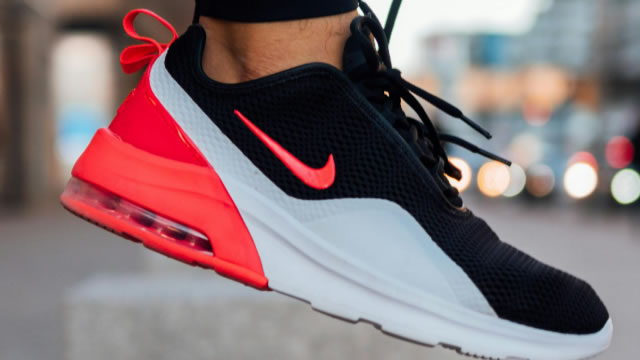
Nike faces federal probe over allegations of 'DEI-related' discrimination against white workers
Yahoo Finance· 2026-02-05 00:22
Core Viewpoint - The Equal Employment Opportunity Commission (EEOC) is investigating Nike for alleged discrimination against white employees through its diversity policies, marking a significant escalation in scrutiny of corporate diversity initiatives [1][2]. Investigation Details - The EEOC is seeking information on Nike's criteria for employee layoffs, how it tracks race and ethnicity data, and details about programs that may provide race-restricted mentoring and career development opportunities [2]. - Nike has stated that it has cooperated with the EEOC by providing thousands of pages of information and considers the subpoena an unusual escalation [2]. Context of the Investigation - Nike is the most prominent company currently under a formal anti-diversity, equity, and inclusion (DEI) investigation by the EEOC, following a similar subpoena issued to Northwestern Mutual [3]. - EEOC Chair Andrea Lucas has emphasized that the agency will take necessary actions, including subpoenas, when there are indications that DEI programs may violate federal discrimination laws [4]. Background of the Complaint - The investigation against Nike was initiated by a commissioner's charge filed by Lucas, rather than stemming from a worker complaint, and was influenced by a letter from America First Legal, a conservative legal group [6]. - This investigation follows Lucas's public call for white men to report experiences of race or sex discrimination, indicating a shift in the agency's focus [5].

A federal agency is probing Nike for discrimination against white employees
Business Insider· 2026-02-04 21:51
Core Viewpoint - Nike is under federal investigation for alleged discrimination against white employees linked to its diversity, equity, and inclusion (DEI) targets [1][2] Group 1: Investigation Details - The Equal Employment Opportunity Commission (EEOC) has requested a federal judge to compel Nike to provide information regarding allegations of racial discrimination, with some requests dating back to 2018 [1] - The investigation was initiated by EEOC Chair Andrea Lucas, who claims Nike violated Title VII of the Civil Rights Act of 1964 through discriminatory employment practices based on race [2][5] - The EEOC is seeking information on Nike's criteria for layoffs, tracking of employee race and ethnicity data, and details on 16 programs that allegedly provide opportunities based on race [3] Group 2: Nike's DEI Initiatives - In 2021, Nike launched a five-year plan aimed at enhancing diversity and inclusion, which included linking executive pay to progress in DEI efforts [4] - One of the goals of this plan is to achieve 35% representation of racial and ethnic minorities in its U.S. workforce by 2025, with a workforce of 76,600 employees as of May 2025 [4] Group 3: Political Context - The investigation aligns with broader efforts by the Trump administration to curtail DEI programs in the workforce, including an executive order signed by Trump to limit DEI initiatives in the federal government [5]
Nike among the first targeted by EEOC for DEI activity
Yahoo Finance· 2026-02-04 17:01
Core Viewpoint - The U.S. Equal Employment Opportunity Commission (EEOC) is seeking to enforce a subpoena against Nike as part of an investigation into alleged discrimination against White employees and applicants [1][2]. Group 1: Investigation Details - The EEOC issued the subpoena in September 2023 following three requests for information from Nike related to a 2024 commissioner's charge [2]. - The investigation is based on allegations that Nike may have engaged in discriminatory practices against White employees in hiring, promotion, and other employment decisions, potentially violating Title VII of the 1964 Civil Rights Act [4]. Group 2: Nike's Response - Nike has reportedly failed to fully provide the requested information, which includes internal documentation and job descriptions, according to an EEOC official [5]. - In response to the subpoena, Nike's legal representatives described the EEOC's requests as "broad, ambiguous, and unduly burdensome," while agreeing to provide information on a rolling basis [6]. - A Nike spokesperson stated that the company is willing to engage with the EEOC and has already shared thousands of pages of information in good faith [8].
Human capital remains key feature in executive incentive plans despite ESG reframing, WTW study
Globenewswire· 2026-01-22 15:42
Core Insights - U.S. investors are increasingly focusing on ESG policies that enhance sustainable business practices and shareholder value, leading companies to refine executive incentive plans with quality metrics centered on human capital [1][6] Group 1: ESG Metrics in Executive Incentive Plans - 76% of S&P 500 companies reported incorporating at least one ESG metric in their executive incentive plans, marking a 1% decline from the previous year [2] - Globally, 80% of companies included at least one ESG metric in their executive incentive plans, with 75% using ESG measures in short-term incentive plans and 32% in long-term incentive plans [3] Group 2: Diversity, Equity, and Inclusion (DEI) Metrics - The prevalence of DEI metrics in the U.S. has significantly decreased due to recent Court rulings and policy changes, with only 34% of S&P 500 companies using these metrics in executive incentives, down from 55% the previous year [4] - 23 companies (5%) of the S&P 500 disclosed plans to remove DEI metrics from their executive incentive plans for the current year, indicating a continuing trend away from these metrics [4] Group 3: Human Capital Metrics - Human capital metrics remain a priority, with 71% of North American companies and 81% of European companies including at least one people-related metric in their executive incentive plans [5] - Common people-related metrics include employee engagement, succession planning, culture, and employee retention, reflecting a focus on governance of people risks and opportunities [6] Group 4: Study Overview - The WTW 2025 ESG Incentive Metrics Study analyzed 1,070 public company disclosures across major stock exchange indices in 18 markets, covering fiscal years ending between May 2024 and May 2025 [7]


Woman blames Trump for $230K business debt. Ramsey Show hosts tell her to 'batten down the hatches' and get a new job
Yahoo Finance· 2026-01-20 18:22
Core Insights - Ashley's consulting firm is facing significant financial challenges due to President Trump's policies, which have led to over $230,000 in debt [1][2]. Group 1: Business Overview - Ashley's consulting firm connects various organizations with charities to repurpose furniture and fixed assets, generating $2.5 million in gross revenue last year [2]. - The firm has been adversely affected by Trump's tariffs and cuts to Diversity, Equity, and Inclusion (DEI) initiatives, as well as funding reductions for universities and public schools [2]. Group 2: Financial Challenges - The sources of Ashley's $230,000 debt include $90,000 in leases for two business vans, $80,000 in credit card debt, and $60,000 owed to a vendor, along with ongoing commitments for office lease and insurance [4]. - The financial strain intensified after Ashley had to lay off all employees, leading to significant payouts for medical expenses, insurance, and vacation time, which depleted available funds [4]. Group 3: Future Outlook - Ashley has secured some contracts for the upcoming spring but is uncertain about her ability to sustain the business until then [3]. - Suggestions were made for Ashley and her husband to consider full-time employment to alleviate financial pressure while waiting for contract fulfillment [5].