
Financial Power

Search documents
2026年度投资策略——莫愁千里路,自有到来风
Sou Hu Cai Jing· 2026-02-14 10:55
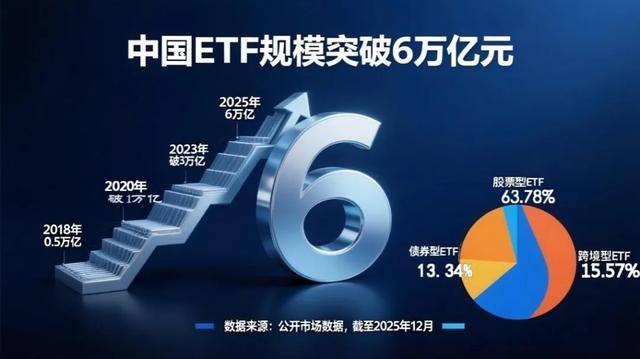
Group 1: 2025 Capital Market Review - The A-share market experienced a significant bull market in 2025, with the Shanghai Composite Index rising over 18% and surpassing the 4000-point mark, achieving multiple historical records [2] - The total trading volume of A-shares exceeded 400 trillion yuan for the first time, and the total market capitalization reached 100 trillion yuan, with margin trading balances returning to over 2 trillion yuan after ten years [2] - The total scale of ETFs in China reached 6.02 trillion yuan by the end of 2025, marking a growth of over 60% from the beginning of the year [2] Group 2: Fund Flows and Dividends - In 2025, there was a notable shift in deposits, with a slight increase of 0.62 trillion yuan in household deposits, while non-bank deposits surged by 4.11 trillion yuan, indicating a significant flow of funds from banks to the stock market [3] - The total cash dividends from A-share companies reached a record high of 2.64 trillion yuan, with 3,766 companies implementing cash dividends [3] - Over 1,300 companies announced stock repurchase plans, with a total repurchase amount exceeding 150 billion yuan [3] Group 3: Policy and Market Dynamics - In May 2025, the central bank and financial regulators introduced a series of policies to support the capital market, including interest rate cuts and measures to enhance market confidence [5] - The introduction of new listing standards for the Sci-Tech Innovation Board aimed to support companies in emerging sectors such as artificial intelligence and commercial aerospace [5] - The central government emphasized the importance of a stable capital market in its economic work meetings, indicating a commitment to enhancing the role of the capital market in economic growth [6][9] Group 4: 2026 Economic Outlook - The central economic work meeting outlined a focus on stabilizing growth and enhancing quality in 2026, with an emphasis on domestic demand and innovation-driven development [6] - A more proactive fiscal policy is expected in 2026, with plans for significant investments in consumer goods and equipment upgrades [7] - The monetary policy is anticipated to remain moderately accommodative, with expectations of 1-2 interest rate cuts throughout the year [7] Group 5: Investment Strategies for 2026 - The A-share market is expected to benefit from policy support, with a slow bull market likely to continue, emphasizing the importance of direction over index levels [18] - Three main investment themes for 2026 include the technology revolution, "anti-involution" strategies to reduce excessive competition, and safe-haven investments in the financial sector [19] - The focus on emerging industries such as AI, new energy, and advanced manufacturing is expected to create substantial investment opportunities [19]

求是网:如何理解我国金融“大而不强”?我国股市债市规模名列世界前茅 但规模优势尚未充分转化为支撑高质量发展的效能
Xin Lang Cai Jing· 2026-02-07 06:20
Core Insights - The article emphasizes that finance is the core of the modern economy and a crucial component of national competitiveness, highlighting that while China is a financial giant, it remains "large but not strong" [1][2] Group 1: Financial System Challenges - There is a disparity between having "scale" and lacking "efficiency," as China's banking sector, stock and bond markets, and foreign exchange reserves are among the largest globally, yet this scale has not effectively supported high-quality development [1] - The country possesses a "network" but lacks "hub" capabilities, with advanced financial infrastructure and a broad domestic financial network that do not sufficiently facilitate global capital allocation or international market influence [1] - Although there are practical experiences in maintaining financial stability and developing inclusive finance, the ability to elevate these practices to international standards and establish global narrative authority is still weak [1] Group 2: Path to Financial Strength - Addressing the deep-seated contradictions of being "large but not strong" is essential for transitioning to a financial powerhouse, which is a fundamental measure of whether finance can fulfill its national responsibilities [2] - There is a call for a strong historical initiative to steadfastly pursue a path of financial development with Chinese characteristics, aiming to build a modern financial system and cultivate a unique financial culture [2]