
Financial Reform

Search documents
25万亿+15万亿!山东金融“双达标”交亮眼答卷
Zheng Quan Shi Bao Wang· 2025-11-19 09:51
Core Insights - Shandong's financial sector has achieved significant milestones, with social financing scale exceeding 25 trillion yuan and foreign and domestic currency loan balance surpassing 15 trillion yuan ahead of schedule, marking a successful implementation of the "14th Five-Year Plan" [1][4] - The province's financing scale growth has consistently outpaced the national average for 25 consecutive quarters, while the loan balance growth has led the nation for 20 quarters, indicating a robust financial support for the real economy [1] Financing Costs and Benefits - Financing costs have decreased, benefiting both enterprises and residents; as of September 2025, the weighted average interest rate for new corporate loans dropped to 3.61%, down 1.06 percentage points from the end of 2020, and personal housing loan rates fell to 3.05%, a significant decrease of 2.2 percentage points [2] - The reduction in housing loan rates has saved individual borrowers approximately 6,000 yuan annually, alleviating financial burdens on households [2] Targeted Financial Support - Shandong's financial sector has focused on key areas such as technological innovation and rural revitalization, securing a total of 864.45 billion yuan in funding; it has also supported 343 cultural tourism projects with 37.8 billion yuan in financing [2] - During the "14th Five-Year" period, inclusive finance for small and micro enterprises increased by 1.27 trillion yuan, with an annual growth rate of 24.69%, while inclusive agricultural loans rose by 480.24 billion yuan, growing at 15.67% annually [2] Financial Innovation and Risk Management - The province has leveraged its three financial reform pilot zones to drive innovation, with loans to tech enterprises in Jinan increasing by 176.7% since the pilot's approval [3] - Shandong has effectively managed financial risks, resolving 815.98 billion yuan in non-performing loans over five years, with total industry capital and provisions exceeding 1.1117 trillion yuan [3] - The foreign exchange hedging ratio for enterprises increased from 16.83% in 2020 to 30.39% by September 2025, aiding foreign trade companies in navigating market fluctuations [3] Future Outlook - Shandong's financial sector aims to continue deepening supply-side structural reforms and optimizing the financial ecosystem to ensure that financial resources are directed more precisely into key areas of the real economy, supporting the construction of a modern socialist strong province [4]
回望“十四五”|稳健筑基,活力跃动:数览大国金融“十四五”答卷
Shang Hai Zheng Quan Bao· 2025-10-15 00:30
Core Insights - The Chinese financial industry has demonstrated significant growth and resilience during the "14th Five-Year Plan" period, with total banking assets reaching nearly 470 trillion yuan, making it the largest in the world [2][3] - The financial sector has seen a robust increase in total assets, with an annual growth rate of 9% over the past five years, and the number of financial institutions has expanded significantly [3][4] - The financial services have deepened and broadened, with institutions extending their reach across the country to meet diverse financial needs [3][4] Financial Sector Growth - As of mid-2023, the total assets of the banking and insurance sectors exceeded 500 trillion yuan, with trust, wealth management, and insurance asset management institutions managing nearly 100 trillion yuan, doubling since the end of the "13th Five-Year Plan" [3] - The number of banking institutions surpassed 4,000, insurance institutions exceeded 230, and securities companies numbered around 150, indicating a mature and diversified institutional framework [3][4] Internationalization and Attractiveness - The "14th Five-Year Plan" period has seen an increase in foreign financial institutions entering the Chinese market, with 13 new foreign-controlled securities and fund futures institutions approved to operate in China [5] - By mid-2023, the number of foreign institutions in the interbank bond market grew from over 200 in early 2016 to 1,171, reflecting an annual growth rate of approximately 6.5% [5] Support for the Real Economy - The banking and insurance sectors provided an additional 170 trillion yuan in funding to the real economy over the past five years, with infrastructure loans increasing by 62% [6] - The capital market has become a crucial source of funding for enterprises, with total financing through stock and bond markets reaching 57.5 trillion yuan [6] Insurance Sector Developments - The insurance industry has significantly enhanced its role in social stability and economic resilience, with total claims paid reaching 9 trillion yuan, a 61.7% increase from the previous five-year period [7] - Agricultural insurance has provided risk coverage for 800 million households, and commercial health insurance has accumulated reserves of 11 trillion yuan [7] Technological Innovation Support - The banking sector's loans for scientific research and technology have grown at an annual rate of 27.2%, with high-tech enterprise loans nearing 19 trillion yuan [8] - The capital market has increasingly supported technology-driven companies, with over 90% of new listings being tech-related [8] Financial Risk Management - The establishment of the National Financial Supervision Administration marks a significant step in enhancing financial regulation and risk management [10] - The financial system has effectively managed risks, with a notable reduction in high-risk institutions and a significant decrease in financial debt levels [11][12] - The banking sector's capital adequacy ratios have improved, with non-performing loan rates decreasing to approximately 1.49% [12]


New York Financial Services Regulator Harris to Depart
Insurance Journal· 2025-09-30 13:07
Core Points - New York Governor Kathy Hochul announced the departure of Superintendent Adrienne Harris from the Department of Financial Services (DFS) and appointed Kaitlin Asrow as the acting superintendent effective October 18, 2025 [1] - During her tenure, Harris implemented significant regulatory measures, including guidelines for artificial intelligence in insurance, mandated insulin coverage without cost sharing, and established a virtual currency unit [3][4] - Under Harris's leadership, DFS recovered over $725 million in restitution for New Yorkers since 2021 and issued 102 regulatory guidance letters while amending 57 regulations [4] Background of Adrienne Harris - Harris was nominated by Hochul in August 2021 and has a background in law, having worked at Sullivan & Cromwell LLP and the U.S. Department of the Treasury [5][6] - She contributed to financial reform efforts and consumer protections during her time at the White House as part of the National Economic Council [6] Background of Kaitlin Asrow - Asrow has served as executive deputy superintendent of the Research & Innovation division at DFS for the past four years, focusing on virtual currency regulation and technological infrastructure [8][9] - Prior to joining DFS, Asrow worked at the Federal Reserve System and the Center for Financial Services Innovation, holding roles that involved innovation policy and consumer financial health [10][11] Overview of DFS - DFS was established in 2011 and regulates over 3,000 financial institutions with nearly $10 trillion in assets, including more than 1,900 insurance companies and over 1,300 banks [12]

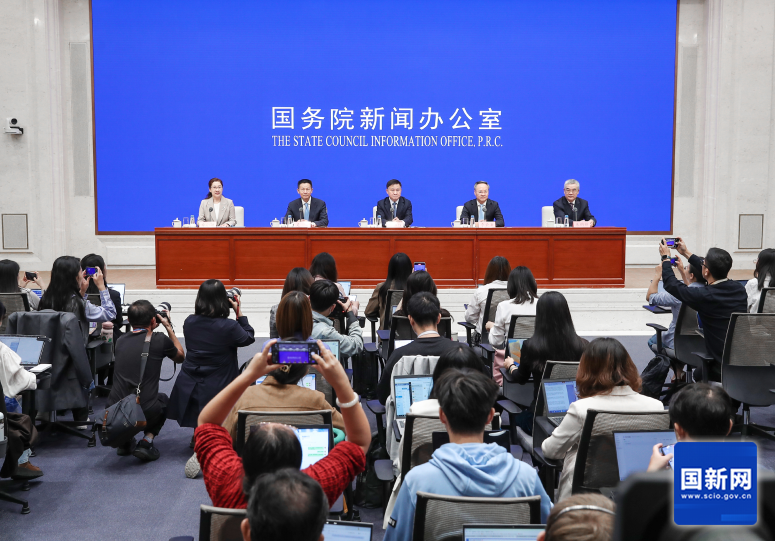
四部门详解“十四五”金融答卷
2 1 Shi Ji Jing Ji Bao Dao· 2025-09-22 15:02
Core Insights - The "14th Five-Year Plan" has seen significant achievements in China's financial sector, including deepened reforms, improved financial services, and enhanced international competitiveness [3][4][5] Financial System Reform - Financial system reforms have been comprehensively deepened, with improved governance and a more robust financial institution and product system [3][4] - The banking sector's total assets reached nearly 470 trillion yuan, ranking first globally, while the stock and bond markets are second in size [3] Financial Services to the Real Economy - Over the past five years, the banking and insurance sectors provided 170 trillion yuan in new funds to the real economy, with significant growth in loans for technology and infrastructure [6] - The balance of inclusive small and micro enterprise loans reached 36 trillion yuan, 2.3 times that of the end of the 13th Five-Year Plan [6] Risk Management - Financial risks have been kept under control, with a focus on macroeconomic stability and the health of financial institutions [4][5] - The number of high-risk institutions has been significantly reduced, and over 3,600 illegal shareholders have been removed [6][7] Regulatory Enhancements - Regulatory capabilities have been strengthened, with 20,000 institutions penalized and 36,000 individuals held accountable for violations [7] - The capital market has seen a rise in direct financing, with a total of 57.5 trillion yuan raised through stock and bond markets [7][8] Capital Market Developments - The proportion of direct financing has increased, reaching 31.6%, with a notable rise in the market capitalization of technology companies [8][9] - Companies have returned 10.6 trillion yuan to investors through dividends and buybacks, reflecting a growing awareness of shareholder value [8] International Financial Integration - The capital market has expanded its openness, with the removal of foreign ownership limits and the establishment of new foreign investment mechanisms [10] - The foreign exchange market has seen improvements in efficiency and stability, with cross-border transactions reaching 14 trillion dollars in 2024, a 64% increase from 2020 [12][13]
周红波主持召开市委金融委员会全体会议
Nan Jing Ri Bao· 2025-06-06 01:51
Group 1 - The meeting emphasized the importance of balancing risk prevention, strong regulation, and promoting development in the financial sector, with a focus on serving the real economy as the fundamental purpose [2] - The financial committee aims to enhance the financial industry's aggregation power by optimizing the spatial layout of the financial industry and accelerating financial reform and development tasks [2] - The meeting highlighted the need to support economic recovery by focusing on investment expansion, consumption growth, stable foreign trade, and employment, utilizing a comprehensive set of financial policies [2] Group 2 - The meeting underscored the political and public nature of financial work, stressing the importance of the Party's comprehensive leadership over financial activities [3] - Key officials from the People's Bank of China Jiangsu Branch and Jiangsu Financial Regulatory Bureau attended the meeting to provide guidance [4] - The meeting was attended by senior officials including the Executive Vice Mayor and members of the financial committee [5]
信长星主持召开省委金融委员会全体会议扎实推动金融高质量发展 为扛好挑大梁责任提供有力金融支撑许昆林出席
Xin Hua Ri Bao· 2025-05-13 23:23
Core Insights - The meeting emphasized the need for a comprehensive approach to financial reform and development in response to significant changes in the internal and external economic environment [2] - The focus is on enhancing financial support for key areas such as employment stability, foreign trade, consumption promotion, and investment expansion [2] - There is a strong emphasis on improving financing services for technology-driven enterprises and private businesses to foster economic growth [2] Group 1 - The meeting acknowledged the achievements of the Provincial Financial Committee since its establishment and highlighted the importance of continuing to push for high-quality financial development [2] - It was stated that targeted policy measures should be introduced to support economic recovery and growth [2] - The need for better coordination of various policies and enhanced financial services for critical strategies and sectors was emphasized [2] Group 2 - The meeting discussed the 2024 work plan of the Provincial Financial Committee and reviewed this year's work priorities [3] - Key financial institutions, including the People's Bank of China Jiangsu Branch and Jiangsu Financial Regulatory Bureau, participated in the discussions [3] - The meeting also highlighted the importance of strengthening the party's leadership within the local financial system [2]