
Financial Resilience

Search documents
Political scholar who fled US says Canada’s cost-of-living is worse, now wants free or cheap housing. What the data says
Yahoo Finance· 2026-02-26 13:03
“Because there are two adults, a cat and a dog, we are looking for more than a room, but one bedroom, two bedroom for free or below market rates,” they said, adding “If we can't find housing, we're going to have to leave and I don't know where we'll go.”“So we are currently surviving off of what savings we could get together before we fled the United States and that's not terribly much,” they said.Their financial situation is further complicated by their immigration status. Brigade said they and their partn ...
Asset Sales, debt reduction and gas growth mark some Q4 E&P moves
Yahoo Finance· 2026-02-19 22:30
Core Insights - The U.S. energy sector is increasingly focused on capital discipline, emphasizing asset sales, debt reduction, and selective growth strategies [1][6]. Group 1: Asset Sales and Portfolio Management - SM Energy has agreed to sell its South Texas assets to Caturus Energy for $950 million, reflecting a trend of concentrating capital in core operating areas while monetizing non-core positions [3]. - Occidental Petroleum reported strong quarterly results and highlighted its progress on debt reduction following the sale of its OxyChem business, prioritizing balance sheet strength to manage commodity price volatility [4]. Group 2: Growth Strategies and Market Outlook - Expand Energy posted solid fourth-quarter results and plans to increase natural gas production in 2026, indicating confidence in long-term gas fundamentals amid expanding U.S. LNG export capacity and resilient power generation demand [5]. - The overall announcements from various companies indicate a sector-wide focus on capital efficiency, balance sheet strength, and selective growth aligned with durable demand trends rather than aggressive expansion [5].
Encompass Health Corporation (NYSE:EHC) Insider Transaction and Financial Performance Overview
Financial Modeling Prep· 2026-02-11 03:00
Core Insights - Encompass Health Corporation is a leading provider of inpatient rehabilitation services in the U.S., recognized for its clinical quality and capital management, with a focus on sustainable double-digit EBITDA growth driven by demographic trends and regulatory barriers [1] Financial Performance - In Q4 2025, Encompass Health reported an adjusted EPS of $1.46, reflecting a 24.8% increase year-over-year and exceeding the Zacks Consensus Estimate by 13.2% [3] - The company's net operating revenues reached $1.5 billion, representing a 9.9% year-over-year growth, attributed to higher net revenue per discharge and an increase in discharges [3] Financial Metrics - Encompass Health has a P/E ratio of 19.29, indicating that investors are willing to pay $19.29 for every dollar of earnings [4] - The price-to-sales ratio stands at 1.85, and the enterprise value to sales ratio is 1.88, reflecting the market's valuation of the company [4] - The company maintains a low debt-to-equity ratio of 0.08, showcasing a conservative leverage approach that enhances financial resilience [4] Operational Strength - The company owns 79% of its real estate, which supports its operational leverage and efficient hospital development [5] - Encompass Health's current ratio is 1.08, indicating its capability to meet short-term liabilities [5] - The company is recognized as a strong growth stock, with Zacks Style Scores assisting investors in identifying stocks with high short-term market outperformance potential [5]


Sustain CFO Develops Financial Resilience Framework for Maryland Businesses Experiencing “Growth-Induced Cash Crunch”
Globenewswire· 2026-02-08 23:38
Core Insights - Many Maryland business owners are experiencing revenue growth but facing cash constraints, prompting the development of a financial resilience framework by Sustain CFO to assist growth-stage companies in scaling without compromising liquidity [1][4][10] Financial Challenges - Recent data from the Fed Small Business' 2025 Report highlights that 74% of businesses report increased operating costs, 61% face weak or uneven sales, and 51% struggle with inconsistent cash flow, making growth-related cash crunches more likely if not proactively managed [5] - Growth-related cash strain is often caused by multiple operational factors, including accelerated expenses and lagging cash inflows as businesses scale [6][13] Financial Resilience Framework - Sustain CFO's framework helps businesses understand the financial mechanics behind cash flow challenges, guiding leadership teams through cash readiness, growth capacity, and downside risk exposure before making expansion decisions [4][11] - The framework emphasizes adopting a cash flow operating system approach, encouraging businesses to implement forward-looking financial processes that make cash impacts visible in advance [7][8] Cash Flow Management - Regularly updated rolling cash forecasts enable businesses to anticipate obligations and understand how growth decisions affect liquidity over time, allowing for informed decision-making regarding initiatives and capital needs [8][11] - The framework aims to reduce panic-driven decisions and align growth investments with actual cash availability rather than just revenue expectations [9][10] Fractional CFO Services - Sustain CFO offers fractional CFO-level support to provide financial insight without the cost of a full-time hire, helping businesses understand the cash implications of expansion decisions [10][12] - The services focus on establishing reliable forecasts and financial operating rhythms within a 90-day visibility horizon to support informed decision-making [11][12]
GeoPark renews oil offtake deal with Vitol in Colombia
Yahoo Finance· 2026-01-29 10:50
Core Viewpoint - GeoPark has renewed its offtake and prepayment agreement with Vitol to supply all crude oil production from Colombia's Llanos basin, enhancing financial resilience and cash flow predictability [1][5]. Group 1: Agreement Details - The renewed agreement, originally established in May 2024, will now expire on 31 December 2028, covering production from the Llanos 34 block (45% working interest), Llanos 123 block (50% working interest), and CPO-5 block (30% non-operated working interest) [2]. - Deliveries under the new terms will start in January 2026 for Llanos 34 and in May 2026 for CPO-5 and Llanos 123 [2]. Group 2: Financial Implications - The revised agreement is expected to enhance GeoPark's price realizations by $0.33 per barrel on a weighted-average basis compared to the recent six-month average, aiming to improve profit margins [3]. - GeoPark will benefit from a prepayment facility from Vitol of up to $500 million, including a firm commitment of $330 million, with an option to increase by $170 million through prepaid future oil sales [4]. - Interest rates for borrowed amounts will be based on a one-month secured overnight financing rate plus a margin of 3.50% per annum, reflecting a reduction from previous terms [5]. Group 3: Strategic Context - The agreement is part of GeoPark's strategy to bolster financial resilience and flexibility amid current market conditions, supporting strategic objectives for the years 2026–28 [5]. - In 2025, GeoPark announced the divestment of non-core assets and the implementation of cost-effective initiatives [6].
Fed Data Shows the Consumer Holding up Until the Next $2,000 Emergency
PYMNTS.com· 2026-01-21 00:33
Core Insights - Consumer spending shows resilience despite inflation and economic uncertainty, with a median 4.9% year-over-year increase in nominal monthly spending reported in December, up from 4.1% in August [3] - There is a growing bifurcation in consumer behavior, with spending increasingly focused on necessities rather than discretionary items [4] - Higher-income households maintain spending activity, while lower-income households are more selective and cautious in their spending [8][9] Consumer Spending Trends - Households expect higher spending growth in essential categories: food at 5.4%, medical care at 5.3%, and housing at 4.1%, indicating a focus on essential costs [5] - Expected growth for transportation and recreation has declined, while clothing spending has edged higher but remains subdued, reflecting a shift towards non-discretionary needs [6] - The share of households reporting large purchases has declined, indicating a more targeted approach to spending rather than broad-based confidence [6] Income Disparities - Among households earning less than $50,000, the share reporting large purchases fell from 46% in August to 40% in December, while those earning between $50,000 and $100,000 saw a decline from 66% to 61% [8] - Higher-income households (earning $100,000 or more) reported a stable 77% participation in large purchases, maintaining the highest spending activity across income groups [9] Financial Resilience - Only 48% of consumers feel confident they could cover a $2,000 emergency within 30 days, despite half reporting over $2,500 in liquid savings, highlighting fragile financial cushions for many [11] - There is a disconnect between consumer expectations and reality, with 52% expecting to save more in the coming year, but only 24% having increased their savings in the past six months [12] Economic Outlook - The Fed's survey and additional data suggest that consumer spending will likely remain a stabilizing force for the economy in 2026, but the foundations of this spending are uneven, with higher-income households driving discretionary purchases while lower-income consumers focus on essentials [13]

Canadians' Financial Outlook Divided as Inflation and Recession Fears Appear to Shape Behaviours – TransUnion Canada Study
Globenewswire· 2026-01-13 11:00
Core Insights - Canadians' financial optimism is declining due to rising living costs, with 53% stating their household income is not keeping pace with inflation [1][5] - A significant portion of Canadians (31%) are pessimistic about their financial situation in the next year, despite 20% reporting an income increase in the last three months [1][5] - Economic uncertainty is prompting Canadians to adjust their spending habits, with 67% seeking sales and discounts more frequently [4][5] Financial Strain - 25% of Canadians are unable to pay at least one current bill or loan in full, with credit card payments (63%) and personal loans (55%) being the most affected [2][3] - Over half (51%) of Canadians have cut back on discretionary spending, while 19% plan to reduce contributions to retirement funds [4][5] Recession Sentiment - 27% of Canadians believe the country is currently in a recession, and 32% expect one within the next year, leading 84% to prepare for potential economic downturns [3][4] Spending Adjustments - Canadians are increasingly prioritizing essential goods, with 85% changing shopping habits in response to economic conditions [5] - Common adjustments include reducing spending (61%), building savings (38%), and shopping at more affordable retailers (44%) [6] Credit Access and Intentions - 82% of Canadians view access to credit as essential for achieving financial goals, but only 56% feel they have sufficient access [7][10] - 21% plan to apply for new credit or refinance existing credit, with younger generations (47% of Gen Z and 31% of Millennials) leading this trend [8][9] Fraud Concerns - Nearly half (46%) of Canadians reported being targeted by fraud in the past three months, with younger Canadians being the most vulnerable [12][13] - Despite the risks, 36% of Canadians took no action to address cybersecurity concerns, highlighting a need for better education on fraud prevention [13]


The shift from finite capital to infinite resilience | Leanne Emery-Hunter | TEDxJohannesburg
TEDx Talks· 2025-12-11 17:12
Key Arguments - The current financial architecture is not designed for a world of constant crisis, reacting instead of anticipating risks [6] - South Africa needs hundreds of trillions of US dollars by mid-century to tackle climate change [7] - The Just Energy Investment Plan estimates a need of $98 billion over the next 5 years to transition to a low-carbon economy [7] - Of the $11.5 billion secured for the Just Energy Transition, only 7% is in the form of grants, while over half are loans [8] Financial Resilience & Investment Strategies - Financial resilience is defined as the ability of markets to adapt to and absorb shocks while maintaining sustainability and growth [6] - Catalytic capital is essential for absorbing risks and unlocking further investment [8] - The Galapagos Islands debt-for-nature swap demonstrates how layered funding models (donor grants, concessional loans, institutional investment) can turn debt into climate action [15][16] - South Africa's Green Outcomes Fund has leveraged 100 million rand in public money to create four times that amount in private sector funding for small green jobs [19] Recommendations for Systemic Change - Build capacity in communities for governance and finance, and in investors for local context [20] - De-risk resilience investments through guarantees, public funding, and concessional loans [21] - Make resilience attractive by lowering interest rates for climate outcomes and rewarding long-term sustainable views through policy and pricing [21] - Governments need to provide clear policy signals, structure catalytic funds, and simplify processes to facilitate the flow of funds to investable projects [23]
X @Circle
Circle· 2025-12-02 23:01
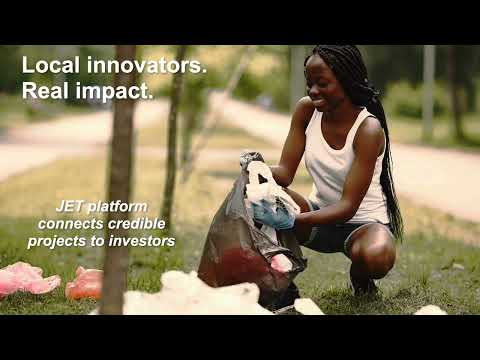
Circle Foundation Launch - Circle Foundation 在纳斯达克交易所启动,旨在提升金融韧性和包容性[1] - Circle's Pledge 承诺 Circle 公司 1% 的股权用于支持 Circle Foundation [1] Mission and Impact - Circle Foundation 的使命是促进国内外金融韧性和包容性[1] - 数字美元使救济更快、更安全、更透明,为流离失所的家庭和一线工作人员提供重要资源[1] - Circle Foundation 致力于实现普惠金融[1]