
GST reforms

Search documents
'Not hatchbacks, not sedans, SUVs still king post-GST cut'
Rediff· 2025-11-12 07:17
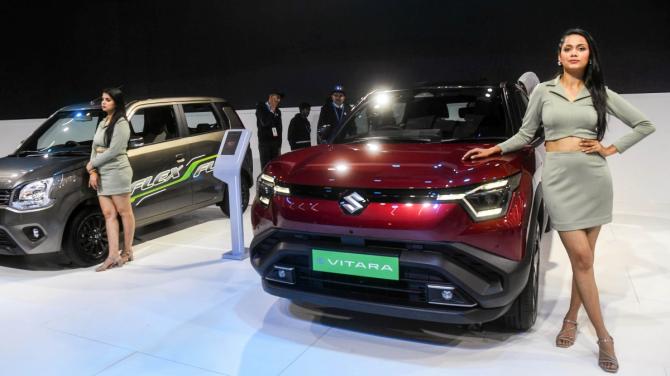
Core Insights - The share of hatchbacks in the overall passenger vehicle (PV) industry sales has decreased from 22.4% in January-August to 20.4% in September-October, and further down to 20% in October, indicating a declining trend in this segment [1][5][6] - In contrast, the share of SUVs has increased from 54% in January-August to 56.9% in September-October, reaching 57% in October, highlighting a strong demand for SUVs [7][8] - The mid-SUV segment has also seen growth, with its share rising from 12.8% in January-August to 15% in October [8] Industry Trends - The GST reforms have positively impacted SUV sales while small cars, including hatchbacks and sedans, continue to lose market share [3][4] - The share of sedans has also declined from 8.5% in January-August to 7.9% in October [6] - The trend indicates that consumers are upgrading to larger vehicles rather than opting for smaller cars, driven by aspirations for bigger cars [9] Company Strategies - Hyundai plans to focus on the SUV segment for future launches, with expectations that the share of SUVs and MPVs in its PV sales will increase from 71% to 80% by 2030 [10] - Maruti Suzuki is open to adjusting its product launch strategy based on the recent surge in small car sales, which have risen to over 25% of its overall sales since the GST reduction [11][12] - The new GST regime has reduced the tax on small cars, but larger vehicles are still taxed at a lower rate compared to previous levels, influencing consumer purchasing behavior [13]

Road divergence: Car loans race ahead post-GST cuts, but CVs stuck in slow lane
MINT· 2025-11-06 00:30
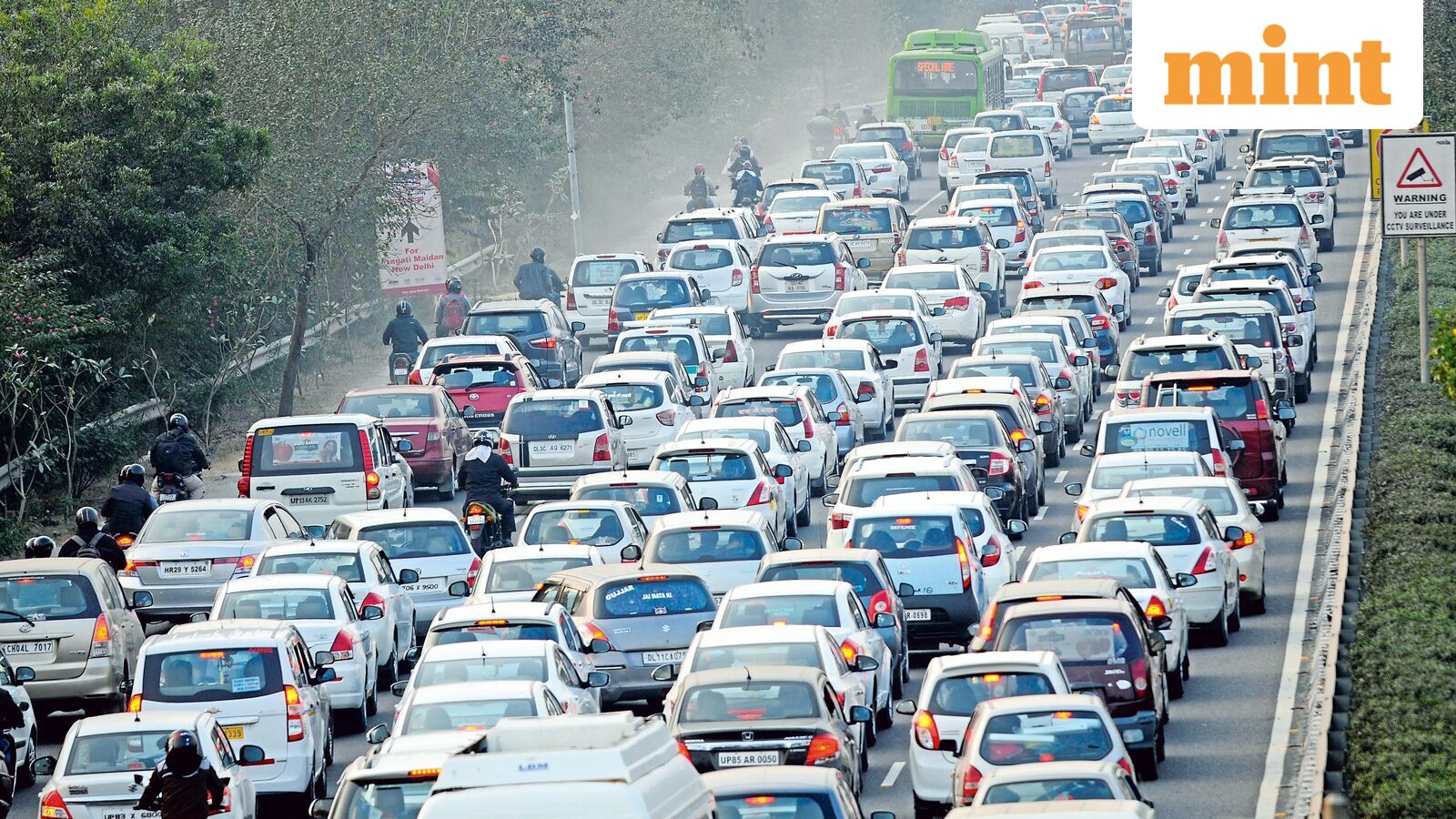
Core Insights - The reduction in GST rates on select vehicles has revitalized retail sentiment, leading to increased demand for auto loans and passenger vehicle sales [1][3][6] Vehicle Loan Growth - In September, India's banking sector experienced a vehicle loan growth of 7.3% year-on-year, a decline from the 14% growth seen in the same month the previous year [2] - For the first half of the current financial year, vehicle loan growth ranged from 7.3% to 10.8%, compared to a rise of 13.9% to 17.2% in the same period last year [2] Impact of GST Reform - The GST reforms effective from September 22 created a two-slab tax system, significantly reducing rates on certain vehicle categories, which has led to a recovery in vehicle demand [3][8] - State Bank of India reported a nearly 10% year-on-year growth in auto loans to ₹1.28 trillion during the September quarter, attributing this to the GST cuts [8] Segment Performance - Commercial vehicle sales increased by over 8% year-on-year to 240,000 units, while passenger vehicle sales fell by 1.5% to 1.04 million units, although there were signs of recovery towards the end of the quarter [9] - The two-wheeler segment saw over 7% year-on-year growth, totaling 5.56 million units sold in the July-September period [12] Market Sentiment and Future Outlook - Bankers noted that the recent uptick in vehicle loans is still in early stages, with sustainability dependent on continued demand through the festive season [6] - IndusInd Bank reported a significant rebound in vehicle loan disbursements post-GST implementation, with expectations of continued demand momentum supported by the festive season and improved economic activity [17][16] Commercial Vehicle Segment Challenges - Despite some growth in commercial vehicle sales, lenders remain cautious due to borrower over-leverage and economic sluggishness, leading to tightened underwriting standards [21][23] - The effective cost for customers in the commercial vehicle segment has not changed significantly, as manufacturers have reduced discounts rather than passing on the full benefits of GST cuts [20][21]
PM to inaugurate, lay foundation stone for projects worth Rs 13,430 cr in Andhra Pradesh
The Economic Times· 2025-10-16 03:54
Core Insights - Prime Minister Narendra Modi is set to inaugurate and lay the foundation for development projects worth over Rs 13,430 crore in Andhra Pradesh, covering key sectors such as industry, power transmission, roads, railways, defence manufacturing, and petroleum and natural gas [3][13]. Infrastructure Development - The foundation will be laid for the Transmission System Strengthening at Kurnool-III Pooling Station, with an investment exceeding Rs 2,880 crore, which includes a 765 KV double-circuit transmission line to enhance transformation capacity by 6,000 MVA for renewable energy transmission [7][13]. - Foundation stones will be laid for the Orvakal Industrial Area in Kurnool and the Kopparthy Industrial Area in Kadapa, with a combined investment of over Rs 4,920 crore, aimed at creating modern industrial hubs with plug-and-play infrastructure [8][9]. - A six-lane greenfield highway from Sabbavaram to Sheelanagar will be initiated at a cost of over Rs 960 crore to alleviate congestion in Visakhapatnam [9][10]. Railway and Energy Projects - Railway projects worth over Rs 1,200 crore will be inaugurated, including the Kothavalasa-Vizianagaram Fourth Railway Line and the Rail Flyover between Pendurti and Simhachalam North [11][13]. - The Srikakulam-Angul Natural Gas Pipeline, built at a cost of around Rs 1,730 crore, will also be inaugurated, enhancing energy infrastructure in the region [11][13]. Economic Impact - The industrial hubs are projected to attract investments of Rs 21,000 crore and create approximately 100,000 jobs, significantly boosting industrial development and global competitiveness in the Rayalaseema region [9][8].

Sony India expects premium LED TV segment to see strong traction with GST reforms
BusinessLine· 2025-09-17 15:09
Core Insights - Sony India anticipates strong growth in the premium LED TV segment during the upcoming festival season due to recent GST reforms [1][2] - The company expects a 10% increase in value for LED TVs sized 55 inches and above, driven by the reduction in GST tax rates from 28% to 18% for TVs larger than 32 inches [2][3] - Sony India plans to pass on the effective benefit of 7.8% from the GST reforms to customers, resulting in significant price reductions across its Bravia television portfolio [3] Pricing Impact - Price reductions for various screen sizes are expected: ₹8,000-32,000 for 55-inch TVs, ₹11,000-40,000 for 65-inch TVs, ₹19,000-51,000 for 75-inch TVs, and ₹47,000-70,000 for 85-inch TVs [4] - The company anticipates that consumers will upgrade to larger screen sizes or choose better technology within the same size due to these price cuts [4] Market Strategy - Sony India is collaborating with trader partners to prepare for the transition to the new GST rates [4] - The company aims to achieve a turnover of ₹10,000 crore in the next 2-3 years, indicating a strong growth strategy in the market [5]

