Geopolitical Risk Premium

Search documents
Middle East Conflict Intensifies: Trump Eyes Hormuz Naval Escorts as Israel Extends Combat Timeline
Stock Market News· 2026-03-14 16:38
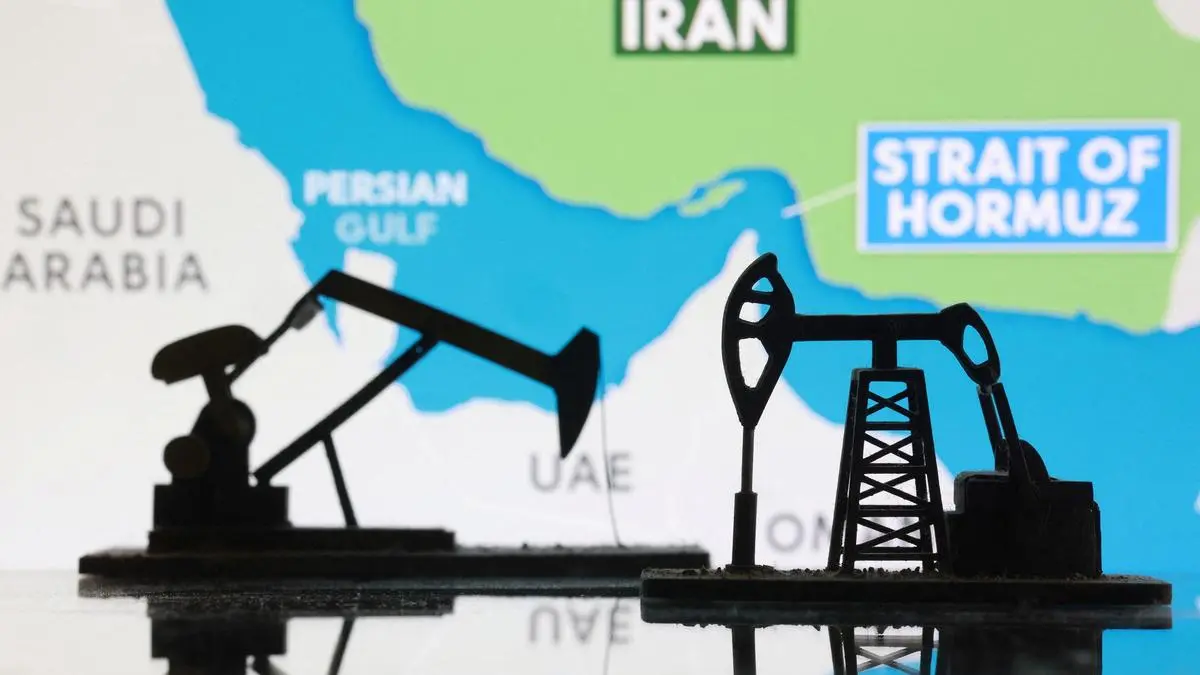
Geopolitical Developments - President Trump is considering deploying U.S. Navy warships to the Strait of Hormuz to secure global energy flows as oil prices have surged nearly 40% over the last two weeks [2][11] - The Israeli Army Chief of Staff has indicated that military operations will continue through at least mid-April 2026, rejecting calls for a ceasefire [4][11] - The conflict is expanding into neighboring states, with Kuwait reporting the interception of hostile drones targeting critical infrastructure [6][11] Energy Market Impact - Energy markets have experienced significant volatility, with Brent Crude and WTI prices fluctuating sharply due to the instability in the Strait of Hormuz, which carries approximately 20% of global oil supply [3][11] - Major energy producers like ExxonMobil and Chevron are under close scrutiny as the potential for maritime confrontation with Iran increases [3] Defense Sector Outlook - The extended timeline of military operations has improved the outlook for defense contractors such as Lockheed Martin and Raytheon, as the Israeli Defense Forces transition to a multi-year strategic plan [5] - Analysts suggest that the lack of a near-term exit strategy may keep geopolitical risk premiums elevated for the foreseeable future [5] Technology Sector Developments - ByteDance has suspended the global launch of its Seedance 2.0 AI video model due to copyright disputes with Hollywood organizations [8][11] - This suspension offers a temporary advantage to Western AI competitors like Adobe, Alphabet, and OpenAI amid growing tensions over intellectual property rights in the generative AI space [9]



Coal, aluminium, gold will likely gain from Iran war
BusinessLine· 2026-03-04 14:36
Core Insights - Coal prices have risen by 18%, aluminium rates by 6%, and gold is expected to reach new highs due to geopolitical tensions in the Persian Gulf involving the US, Israel, and Iran [1][4] - Gold prices initially surged to over $5,350 per ounce but fell below $5,200 due to a strong dollar and interest rate hike fears [2] - Analysts indicate that recent gold selling is driven by investors needing cash for liquidity, although structural drivers for gold remain strong [3] Gold Market - BMI forecasts gold could reach an all-time high above $5,600 per ounce if geopolitical tensions persist [1][4] - The uncertainty regarding the duration of the geopolitical risk premium is a key factor driving gold prices higher [5] - Potential disruptions in the bullion market due to flight restrictions through Dubai could bolster bullish sentiment for gold [6] Aluminium Market - The escalation of conflict in the Persian Gulf has increased upside risks for physical aluminium premiums, with the Middle East accounting for about 8% of global aluminium capacity [8] - BMI expects aluminium prices to remain near $3,350 per tonne, with significant upside risks if tensions escalate further [11][12] - Qatar's production halt due to regional tensions is expected to impact aluminium supply, potentially leading to price increases [11] Coal Market - Disruptions in the Strait of Hormuz could lead to increased demand for seaborne thermal coal, particularly in Japan and South Korea [13] - Gas prices have spiked, and if Qatari LNG availability is constrained, thermal coal may benefit as a substitute [14] - Newcastle thermal coal futures reached $138 per tonne, a 16-month high, with Australian and Indonesian coal prices rising by 15% since the beginning of the week [15][16]
原油追踪:哈萨克斯坦供应中断下库存累积放缓-Oil Tracker_ Stock Builds Moderate on Kazakhstan Disruptions
2026-01-23 15:35
Summary of Key Points from the Conference Call Industry Overview - The report focuses on the oil industry, particularly the disruptions in Kazakhstan's oil production and the implications for global oil prices and stock levels [1][5][11]. Core Insights and Arguments - **Crude Prices Stability**: Crude prices have remained stable as attention shifted from Iranian supply risks to disruptions in Kazakhstan production and CPC pipeline flows [1]. - **CPC Pipeline Exports**: Oil flows via the CPC pipeline have decreased significantly, dropping below 0.7 million barrels per day (mb/d), the lowest level in over nine years. Month-to-date average CPC exports are nearly 1 mb/d lower than the initial loading program due to delays in mooring repairs and production halts in Kazakhstan [1][3]. - **Kazakhstan Production Disruption**: An estimated disruption of 0.5 mb/d in Kazakhstan's January production is noted, which is 0.3 mb/d below the baseline expectations [1]. - **Global Stock Builds**: Global visible stock builds have slowed to 0.7 mb/d over the last two weeks, down from 1.7 mb/d over the previous four weeks, attributed to Kazakhstan disruptions and higher heating demand [1][11]. - **OECD Stocks**: OECD commercial stocks accounted for nearly all of the global visible builds in the last two weeks, indicating a negative price impact [1][11]. - **Oil on Water**: The volume of oil on water peaked in early January but remains at the 94th percentile of its historical distribution. Sanctioned suppliers (Russia, Iran, Venezuela) now account for two-thirds of current storage on water [1][6]. - **Venezuela Production Decline**: Venezuela's oil production from the Orinoco Belt decreased by 120 kb/d (23%) in early January, but disruptions are expected to be short-lived due to potential easing of US sanctions [1][2]. Additional Important Insights - **Brent Spot Prices**: Spot Brent is trading at $64-65, which is $4-5 per barrel above January expectations. Disruptions in Kazakhstan production account for about half of this price increase [5]. - **Geopolitical Risk Premium**: The remaining price increase is attributed to a rise in geopolitical risk, particularly related to Iran [5]. - **Market Sentiment**: The options market indicates an 18% probability that Brent futures will expire above $70 per barrel, reflecting ongoing geopolitical concerns [8]. - **Refining Margins**: US diesel margins increased by $8 last week due to cold weather, while average crude tanker freight rates jumped by 35% ($1.4/bbl) over the last two weeks [13][51]. - **Production Forecasts**: The report includes forecasts for new supply projects expected to come online through the summer, with significant contributions from Brazil and Saudi Arabia [25]. Conclusion - The oil industry is currently facing significant disruptions, particularly from Kazakhstan and Venezuela, which are impacting global supply and prices. The geopolitical landscape remains a critical factor influencing market dynamics, with potential implications for future production and stock levels.


Mhmarkets迈汇:贵金属牛市 金价冲刺7000美元
Xin Lang Cai Jing· 2026-01-21 11:34
Core Viewpoint - The current bullish momentum in the precious metals market, particularly gold and silver, is attracting global investor attention, with expectations that key price levels may serve as temporary resistance rather than endpoints by 2026 [1][3]. Gold Market Summary - Gold prices are approaching significant psychological levels of $5000, with analysts raising the average price expectation for this year to $4741.97, a 38% increase from last year, driven by expectations of lower U.S. real interest rates and a dovish Federal Reserve policy [1][3]. - The market anticipates a volatility range for gold this year of $3700, with extreme bullish views suggesting a potential surge to $7150, fueled by geopolitical risk premiums [4]. - Institutions expect 2026 to be a year of heightened global risk aversion, particularly in regions like Latin America, leading to increased asset allocation towards gold [4]. Silver Market Summary - Following a nearly 150% increase in 2025, silver is projected to have the potential to double in 2026, driven by industrial demand from the electrification revolution, semiconductors, and artificial intelligence, despite concerns of the market entering an overbought territory [2][4]. - The smaller market size and lower entry barriers for silver make it more resilient during periods of rising gold prices [2][4]. Platinum Group Metals Outlook - The performance of platinum is expected to surpass that of palladium in the current macro environment characterized by shifting geopolitical themes and diminishing effectiveness of currency hedges [5]. - Precious metals are solidifying their status as core safe-haven assets, with gold targeting $7000 and silver aiming for $150, highlighting the importance of monitoring Federal Reserve policy shifts and geopolitical developments for investment opportunities in the ongoing commodity bull cycle [5].

Venezuela Shock 2026: Defense, Tech, Healthcare Stocks Set to Benefit
ZACKS· 2026-01-05 21:01
Core Insights - The U.S. military action to capture Venezuela has created significant geopolitical implications for global equity markets, particularly in the energy sector [1][10]. Energy Sector - Venezuela possesses the world's largest proven oil reserves at approximately 303 billion barrels, representing about 17-18% of global oil reserves, yet its crude production has plummeted to below 2 million barrels per day from 3.5 million barrels per day due to infrastructure issues and sanctions [3][4]. - The potential for increased Venezuelan crude exports to U.S. refineries exists, but analysts caution that any significant output recovery will require years of investment and political stabilization, rather than immediate supply increases [4][5]. - Chevron, the only major U.S. oil company operating in Venezuela, has limited exposure to the country's oil production, with its Venezuelan operations contributing only a small portion to overall revenues [6]. Defense Sector - Defense stocks are expected to benefit from heightened geopolitical tensions, as historical patterns show increased military spending during such periods [8][9]. - The recent U.S. intervention is likely to establish a higher baseline for defense spending, particularly in aerospace and surveillance, benefiting major defense contractors like Lockheed Martin and Northrop Grumman [9]. Technology Sector - Technology stocks typically respond to geopolitical shocks through risk sentiment rather than direct revenue exposure, with initial pressure on high-value stocks as investors shift to defensive sectors [11]. - Over the medium term, certain technology companies, such as CrowdStrike and Palo Alto Networks, may benefit from increased demand for cybersecurity solutions driven by heightened security concerns [11]. Healthcare Sector - Healthcare equities tend to remain resilient during geopolitical uncertainty due to the inelastic nature of demand, with pharmaceutical and medical device companies largely insulated from disruptions [12]. - Large healthcare firms, including Johnson & Johnson and Abbott, may benefit from increased government focus on medical preparedness and biosecurity during global instability [12]. Conclusion - The evolving geopolitical landscape suggests that defense stocks will see the most immediate benefits, while select technology firms may gain over time through security-related demand, and healthcare will continue to act as a stabilizing force in volatile markets [13][14].



油价跌至近五年谷底,绝地反击的机会仍存?
Jin Shi Shu Ju· 2025-12-17 13:20
Core Viewpoint - The international crude oil prices have dropped to near five-year lows due to a global supply surplus, which may help slow production growth and boost demand, potentially alleviating the expected supply surplus by 2026 [1] Group 1: Current Market Conditions - As of December 12, the active oil rig count in the U.S. has decreased by approximately 14% compared to the same period last year, indicating a potential reduction in supply [1] - The WTI crude oil contract for January delivery closed at $55.27 per barrel, while the Brent crude contract for February delivery closed at $58.92 per barrel, marking the lowest levels since February 2021 [2] - The decline in oil prices this year is primarily attributed to a supply surplus combined with weak market sentiment, exacerbated by OPEC+ policies [2] Group 2: OPEC+ Influence - OPEC+ has accelerated the increase of production quotas earlier and faster than expected, contributing to the oversupply in the market and driving down oil prices [4] - Non-OPEC supply, particularly from the U.S., has remained strong due to improved efficiency among shale oil producers, further expanding the supply surplus [4] - OPEC+ aims to prevent further loss of market share and address the issue of excess idle capacity, which is projected to be 4.6 million barrels per day in 2024, more than double the 2.3 million barrels per day in 2023 [4] Group 3: Future Outlook - The expectation of continued global supply surplus is putting pressure on oil prices, with the International Energy Agency (IEA) predicting a surplus of approximately 2.3 million barrels per day this year, increasing to 3.8 million barrels per day by 2026 [7] - The initial phase of oil trading in 2026 is expected to be dominated by rising inventories, which will continue to exert pressure on prices in the short term [8] - The market may face challenges in achieving supply-demand balance, with potential for significant price volatility, contingent on meaningful changes in supply, demand, or policy [8]
Natural Gas, WTI Oil, Brent Oil Forecasts – Oil Retreats As Geopolitical Risk Premium Declines
FX Empire· 2025-11-20 19:00
Core Viewpoint - The content emphasizes the importance of conducting personal due diligence and consulting competent advisors before making any financial decisions, particularly in the context of investments and trading activities [1]. Group 1 - The website provides general news, personal analysis, and third-party content intended for educational and research purposes [1]. - It explicitly states that the information should not be interpreted as a recommendation or advice for any financial actions, including investments or purchases [1]. - The content is not tailored to individual financial situations or needs, highlighting the necessity for users to apply their own discretion [1]. Group 2 - The website includes information about complex financial instruments such as cryptocurrencies and contracts for difference (CFDs), which carry a high risk of losing money [1]. - Users are encouraged to perform their own research before making investment decisions and to avoid investing in instruments they do not fully understand [1].

石油市场周报_警惕九月危机-Oil Markets Weekly_ Beware the Ides of September
2025-09-15 13:17
Summary of J.P. Morgan Oil Markets Weekly Industry Overview - The report focuses on the oil market, highlighting recent geopolitical tensions and their impact on oil prices, which rose by 2% to $67 per barrel due to events such as an Israeli airstrike on Hamas leaders and NATO actions against Russian drones [1][2]. Key Points and Arguments 1. **Oil Price Forecasts**: - The 2023 outlook anticipated oil prices to be around $6 per barrel in 2025, but current prices are $3-5 above fair value and the Q3 forecast of $63 [2]. - Crude prices have decreased by approximately 10% this year, yet price structures remain resilient, with Brent and WTI in backwardation throughout 2025 [2][4]. 2. **Conditions for Price Adjustments**: - Five conditions were identified in June for crude prices to reflect expected year-end weakness, with September expected to be a turning point for the oil market [4][10]. - Global oil liquids inventories have increased by 210 million barrels since the start of the year, but the build in OECD stocks has been modest [8][9]. 3. **Refining Margins and Capacity**: - Refining margins surged in Q3, although they have come down from their highs but remain robust [4][33]. - The report notes a significant decline in refining capacity, with an estimated loss of 270 kbd of gasoline and 215 kbd of diesel supply in 2025 due to refinery closures [17][19]. 4. **Geopolitical Risks and Sanctions**: - The report advises a cautious approach to sanctions enforcement, noting that recent deliveries from US-sanctioned facilities to China have gone unchallenged by the White House [4][38]. - The geopolitical risk premium is expected to fade, as US administrations show low tolerance for inflation, impacting sanctions enforcement [6][37]. 5. **Market Dynamics**: - The crude prompt term structure has flattened and shifted into contango, indicating a mismatch between current prices and future oversupply forecasts [14][11]. - If demand remains stable, refining margins should support increased run rates, leading to product inventory accumulation [11][16]. 6. **Future Projections**: - The report projects that stock builds will accelerate as refinery runs decline due to maintenance, with demand softening seasonally [10][34]. - OECD commercial stocks remain 33 million barrels below the five-year seasonal average, indicating potential for price pressure as inventories build [27][34]. Additional Important Content - The report highlights the impact of geopolitical events on oil prices and the resilience of refining margins despite supply disruptions [1][33]. - It emphasizes the importance of monitoring OECD inventory builds and refining capacity constraints as key indicators for future price movements [8][17]. - The analysis includes detailed forecasts for oil supply and demand balances for 2024, 2025, and 2026, indicating a potential oversupply situation in the coming years [40][41][42]. This comprehensive overview captures the essential insights and forecasts from J.P. Morgan's analysis of the oil market, providing a detailed understanding of current trends and future expectations.
Natural Gas, WTI Oil, Brent Oil Forecasts – Oil Gains Ground Amid Rising Geopolitical Risk Premium
FX Empire· 2025-08-21 18:21
Core Viewpoint - The content emphasizes the importance of conducting personal due diligence and consulting competent advisors before making any financial decisions, particularly in the context of investments and trading activities [1]. Group 1 - The website provides general news, personal analysis, and third-party content intended for educational and research purposes [1]. - It explicitly states that the information does not constitute any recommendation or advice for investment actions [1]. - Users are advised to perform their own due diligence checks and apply their discretion when making financial decisions [1]. Group 2 - The website includes information about complex financial instruments such as cryptocurrencies and contracts for difference (CFDs), which carry a high risk of losing money [1]. - It encourages users to carefully consider their understanding of these instruments and their ability to afford potential losses [1]. - The content does not guarantee real-time accuracy or completeness of the information provided [1].


Natural Gas, WTI Oil, Brent Oil Forecasts – Oil Markets Pull Back As Geopolitical Risk Premium Declines
FX Empire· 2025-08-19 18:30
Core Viewpoint - The content emphasizes the importance of conducting personal due diligence and consulting competent advisors before making any financial decisions, particularly in relation to investments and financial instruments [1]. Group 1 - The website provides general news, personal analysis, and third-party content intended for educational and research purposes [1]. - It explicitly states that the information does not constitute any recommendation or advice for investment actions [1]. - Users are advised to perform their own research and consider their financial situation before making decisions [1]. Group 2 - The website includes information about complex financial instruments such as cryptocurrencies and contracts for difference (CFDs), which carry a high risk of losing money [1]. - It encourages users to understand how these instruments work and the associated risks before investing [1].