
Green Development

Search documents
Xinhua Silk Road: 34. East China Fair unterstreicht Widerstandsfähigkeit und Vitalität des Außenhandels
Prnewswire· 2026-03-15 03:04
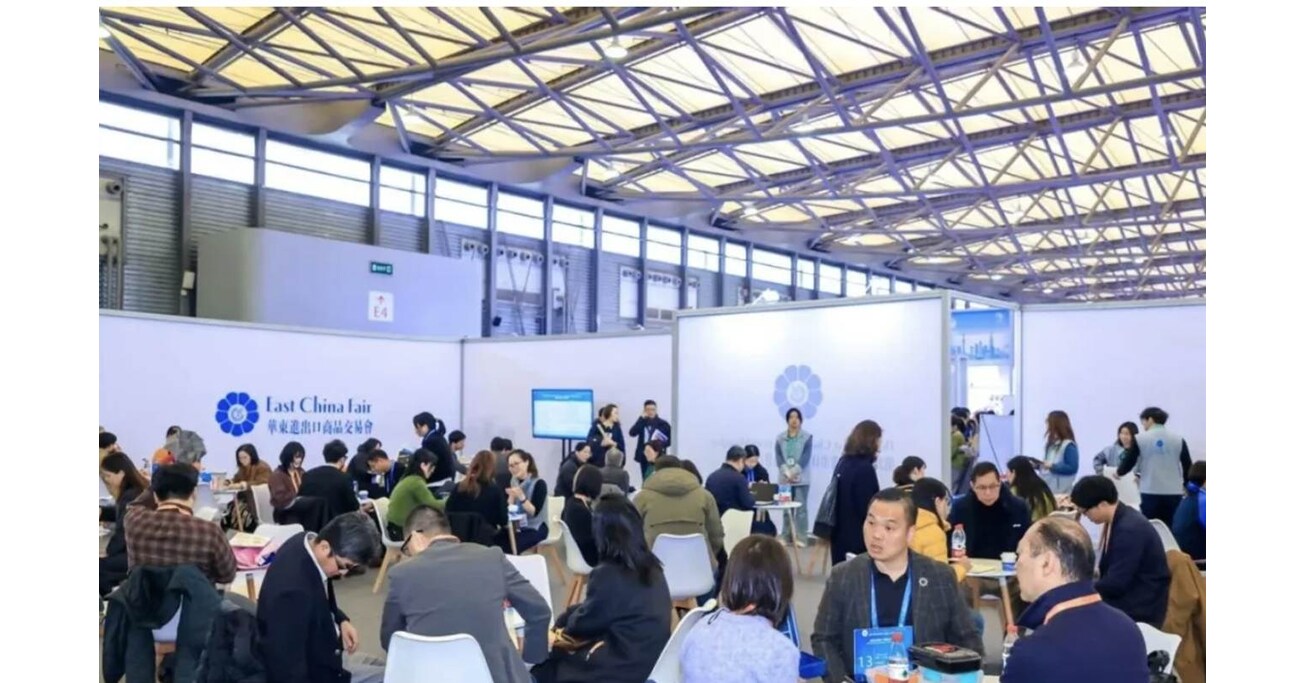
Core Insights - The 34th East China Fair (ECF) highlighted the resilience and vitality of Chinese foreign trade, with order intentions reaching approximately 2.2 billion USD, attracting 46,450 buyers from 126 countries and regions, marking a 2.9% year-on-year increase in foreign buyers [1] Group 1: Trade Dynamics - The number of buyers from Europe and North America increased by 5.5% compared to the previous year, while buyers from Southeast Asia surged by 24.1% [1] Group 2: Technological Innovations - The fair showcased innovative products integrating new technologies such as AI, IoT, and 3D printing, including an AI Magic Mirror, hydrogen-oxygen devices, plant protection drones, and 3D-printed slippers [2] Group 3: Environmental Sustainability - The use of new materials like X-TEX fabric, plant-dyed fabrics, and recycled RPET materials contributed to the environmental friendliness and functionality of the exhibits, reflecting a shift towards greener manufacturing in Chinese foreign trade [3][4] Group 4: Market Trends - The event addressed new consumption trends by featuring exhibits in pet economy, emotional economy, sports economy, and sleep economy, promoting trade in these segments [4] Group 5: Exhibition Scale - The total exhibition area covered 115,000 square meters with 5,291 booths, including special areas for cross-border e-commerce and foreign exhibitors, along with 14 procurement groups inviting 1,154 qualified buyers [5]

山西:生态筑基绘锦绣 表里山河谱新篇
Jing Ji Wang· 2026-02-12 09:54
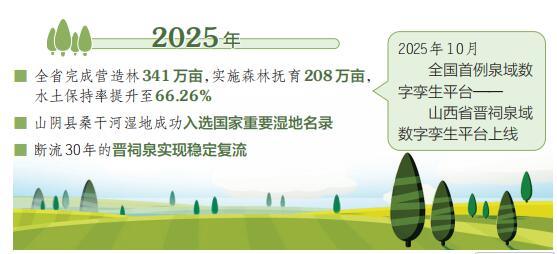
Core Viewpoint - Shanxi province is focusing on ecological protection and high-quality development by promoting carbon reduction, pollution control, and green expansion, aiming for a harmonious coexistence between humans and nature by 2025 [2]. Group 1: Ecological Protection and Restoration - Shanxi prioritizes ecological protection and restoration, utilizing a systematic approach to enhance the ecological environment, with a focus on water and forest management [3]. - The province has completed afforestation of 3.41 million acres, exceeding the annual target by 131.15%, and improved soil and water conservation rates to 66.26% [4]. - Biodiversity efforts have led to the province being the only one in China approved for a World Bank loan for sustainable ecosystem restoration and biodiversity protection projects [4]. Group 2: Water Management and Improvement - The province implements a comprehensive water management strategy, focusing on the ecological improvement of rivers and lakes, with specific plans for groundwater management in 32 counties [5]. - The restoration of the Jinxi Spring, which had been dry for 30 years, exemplifies successful water management efforts [5]. - The ecological flow monitoring rate for key rivers has reached over 90%, indicating significant progress in water management [5]. Group 3: Green Transition and Technological Innovation - Shanxi is advancing its green transition through innovation and reform, with a focus on carbon neutrality and sustainable development [6][7]. - The province has seen a significant reduction in pollution, with PM2.5 levels dropping to 30 micrograms per cubic meter and the number of heavily polluted days reaching zero for the first time [7]. - The introduction of digital platforms for ecological management enhances precision in environmental protection efforts [8]. Group 4: Community Engagement and Quality of Life - The province emphasizes community involvement in ecological initiatives, fostering a culture of shared responsibility for environmental protection [9]. - Urban and rural ecological governance improvements have led to enhanced living conditions, with projects aimed at water conservation and urban greening [9]. - The integration of ecological protection with rural revitalization has resulted in increased economic benefits for local communities, exemplified by the success of strawberry farming in Hequan Village [10][11].
AI数说新疆丨绿色成为高质量发展靓丽底色
Ren Min Wang· 2026-01-29 13:01
"十四五"以来,新疆牢固树立和践行"绿水青山就是金山银山"的理念,将绿色厚植为高质量发展的底色,取得喜人成 绩:环塔克拉玛干沙漠边缘全长3046公里的绿色阻沙防护带合龙,入选"2025全球十大工程成就";完成"三北"工程建设 任务6063万亩,荒漠化及沙化土地面积实现"双缩减";天山北坡城市群空气质量持续改善,达到历史最优……通过协同 推进降碳、减污、扩绿、增长,以高水平保护增强绿色发展动能,以高质量发展降低资源环境代价,山更绿、水更清、 天更蓝的美丽新疆正向您走来。 ...
视频丨十年守护换来绿色蝶变 东西协作产业协同释放长江经济带新活力
Yang Shi Xin Wen Ke Hu Duan· 2026-01-09 14:19
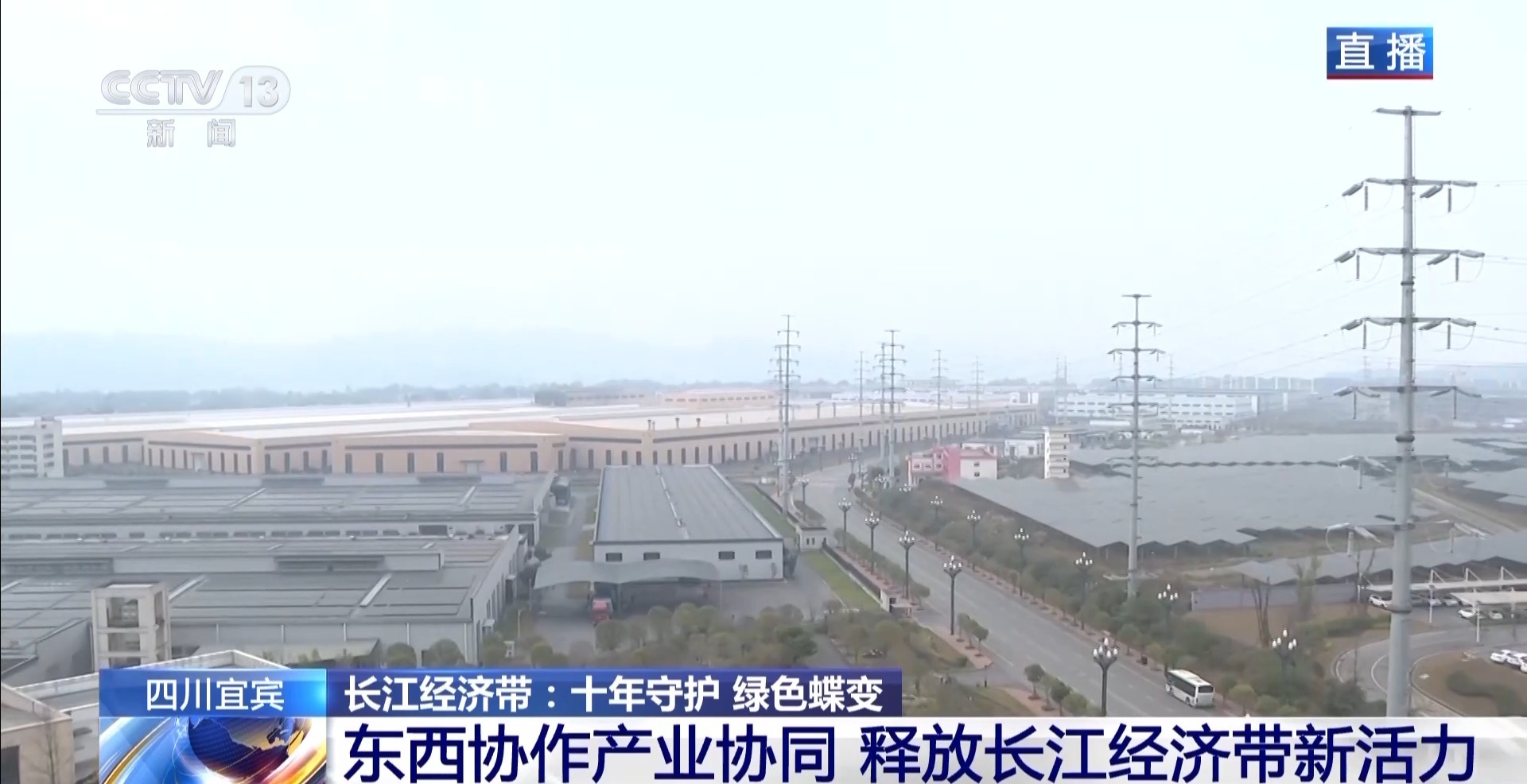
Core Viewpoint - The Yangtze River Economic Belt, covering 11 provinces and cities, accounts for about half of the national population and economic total, emphasizing ecological protection and sustainable development over large-scale exploitation [1]. Group 1: Development Strategy - The development strategy of the Yangtze River Economic Belt has been implemented for ten years, focusing on ecological preservation and sustainable growth [1]. - The "Zhechuan Industrial Cooperation Demonstration Park" in Yibin, Sichuan, has transformed the textile industry into a key component of the Yangtze River Economic Belt, promoting green and coordinated regional development [1]. Group 2: Industrial Growth - The park covers an area of 6.91 square kilometers, with approximately 5 square kilometers completed, housing 39 operational enterprises, 6 under construction, and 1 planned [3]. - The park has established itself with a focus on green development, transitioning the textile industry from labor-intensive to technology-intensive [5][9]. Group 3: Technological Advancements - The enterprises in the park utilize multi-story factory designs to optimize land use and enhance logistics efficiency, while adhering to higher environmental standards for enterprise admission [7]. - Modern production lines exceeding 10,000 square meters require only a small workforce, with innovations and collaborations with educational institutions driving further advancements [11]. Group 4: Collaborative Efforts - The protection of the Yangtze River requires upstream and downstream collaboration, as well as east-west cooperation to develop the economic belt effectively [13].
全省生态环境质量实现历史性改善
Xin Lang Cai Jing· 2026-01-06 16:24
Core Insights - Jiangsu Province has achieved historic improvements in ecological environment quality during the "14th Five-Year Plan" period, with significant reductions in PM2.5 concentration and improvements in water quality metrics [1][2] Group 1: Ecological Quality Improvement - By 2025, PM2.5 concentration in Jiangsu is projected to decrease to 31.3 micrograms per cubic meter, a 16.5% improvement from the end of the "13th Five-Year Plan" [2] - The proportion of national monitoring sections with water quality rated as Grade III reached 94.8%, an increase of 11.5 percentage points, maintaining high-quality levels for four consecutive years [2] - Over 1 billion tons of steel production capacity underwent ultra-low emission transformations, and the province completed the elimination of diesel trucks meeting National III standards or below ahead of schedule [2] Group 2: Green Development Initiatives - Jiangsu integrates ecological protection into economic and social development, focusing on industrial access, technological innovation, and green finance [3] - The province has updated and delineated 4,570 ecological environment control units, implementing differentiated management [3] - The total scale of "environmental protection loans" reached 31.86 billion yuan, with over 10 billion yuan in credit supporting ecological infrastructure construction [3] Group 3: Regional Innovation Practices - Jiangsu has established 41 national ecological civilization construction demonstration zones and 14 "Green Water and Green Mountains are Golden Mountains and Silver Mountains" innovation practice bases, ranking first in the country [4][5] - Collaborative protection across regions has made breakthroughs, exemplified by the partnership between Wujiang District in Suzhou and neighboring areas [4] - Innovative water environment governance has been implemented, including the introduction of pollution "heat maps" and smart platforms for the Taihu Lake basin [4]
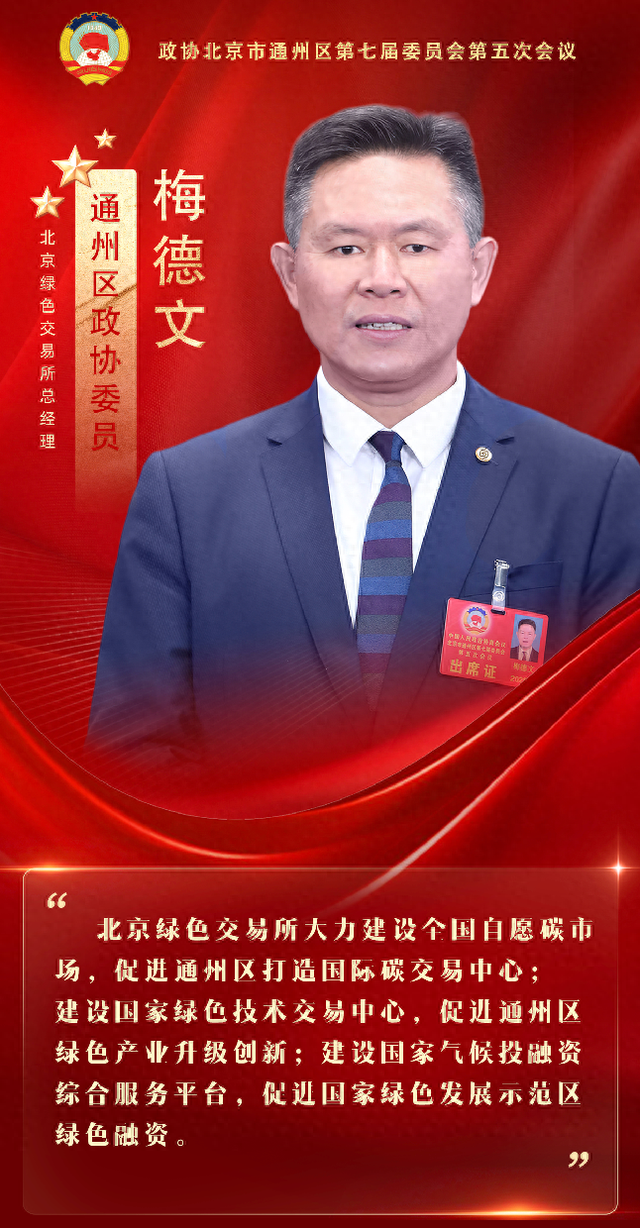
北京通州区政协委员履职实践赋能副中心“十五五”发展
Xin Lang Cai Jing· 2026-01-04 11:44
Group 1 - The core focus of the Beijing Tongzhou District's development during the 14th Five-Year Plan period is on high-quality growth, with an emphasis on green transformation and social governance [1][2][5] - The district aims to establish itself as a national model for green development, leveraging its status as a core area for climate investment and financing [2] - The integration of carbon trading, green technology transactions, and climate financing is being prioritized to support the district's green development initiatives [2] Group 2 - Social governance efforts are being enhanced through community engagement and collaborative problem-solving to create a participatory urban governance model [5] - Urban planning initiatives focus on improving transportation networks, public service distribution, and green energy applications to elevate the district's functional capabilities [5] - Legal services are being extended to grassroots levels to prevent conflicts and enhance the legal foundation of social governance in the district [5][6]
截至2025年年底,西藏公路通车总里程预计达到12.52万公里
Zhong Guo Xin Wen Wang· 2026-01-04 00:39
Group 1 - The core viewpoint of the news is that the Tibet Autonomous Region aims to significantly enhance its transportation infrastructure by 2025, with a total road mileage expected to reach 125,200 kilometers, including 110,000 kilometers of graded roads and 95% of national highways at level three or above [1] - The region will accelerate the construction of high-grade roads and focus on resolving bottlenecks, with major projects like the improvement of the national highways 109 and 318, and the commencement of the construction of the national highway 345 from Naqu to the Qinghai-Tibet border [1] - By 2025, Tibet plans to implement 167 rural road projects, achieving 100% accessibility for towns and 92.48% for administrative villages, while also enhancing safety with the renovation of 171 dangerous bridges and 1,624 kilometers of safety protection projects [1] Group 2 - The transportation department in Tibet is committed to green development, planning to retire 704 old operational trucks and update 106 new energy buses, achieving full coverage of new energy buses [2] - The region has established 102 charging stations and 151 charging parking spaces along the G4218 and national highway 318, creating a beautiful highway demonstration route of 1,093 kilometers [2] - During the 14th Five-Year Plan period, Tibet has completed the construction of the G4218 Lhasa to Shigatse and G6 Naqu to Lhasa expressways, forming a comprehensive expressway network centered around Lhasa, facilitating a "Five Cities, Three Hours" traffic circle [2]
把握五个关键,助推零碳园区实现闭环降碳
Zhong Guo Huan Jing Bao· 2025-12-23 00:34
Core Viewpoint - The construction of zero-carbon parks is a key strategy for China to achieve its dual carbon goals and promote green industrial transformation, as emphasized by the 20th National Congress of the Communist Party of China [1][3]. Group 1: Policy and Strategic Direction - The 20th Central Committee's Fourth Plenary Session highlights the importance of carbon peak and carbon neutrality as a guiding principle for ecological security and green development [1]. - The establishment of zero-carbon parks is included in the government work report as a significant step towards achieving the dual carbon goals [1]. Group 2: Industrial Transformation and Competitiveness - Zero-carbon parks serve as advanced scenarios for the green transformation of industrial parks and act as powerful engines for sustainable industrial development [2]. - Shared green infrastructure within these parks can help companies reduce energy consumption and green governance costs, enhancing their competitiveness in both domestic and international markets [2]. Group 3: Systematic Approach to Carbon Reduction - The construction of zero-carbon parks requires a systematic approach, focusing on five key areas: foundational support, green energy, low-carbon manufacturing, end-of-pipe governance, and regulatory assurance [4]. - Strengthening infrastructure is essential for establishing a solid foundation for carbon reduction in parks, including the promotion of low-carbon facilities and energy systems [4]. Group 4: Energy System Optimization - The energy structure in zero-carbon parks should be tailored to local conditions, emphasizing the development of distributed energy sources such as solar and geothermal energy [5]. - A smart energy management platform is crucial for real-time monitoring and intelligent scheduling of energy consumption and carbon emissions [5]. Group 5: Innovative Production Processes - The adoption of low-carbon production processes and advanced technologies is necessary to control pollution emissions effectively [6]. - The concept of "circular symbiosis" should be implemented to reshape the ecological environment of industrial parks, maximizing resource utilization and minimizing pollution [6]. Group 6: End-of-Pipe Governance and Risk Management - Advanced technologies such as carbon capture, utilization, and storage (CCUS) should be explored to manage difficult-to-eliminate carbon emissions [7]. - A collaborative governance model involving government guidance, market operations, and enterprise participation is essential for effective carbon management [7]. Group 7: Institutional Support and Long-term Operations - A comprehensive service system for green and low-carbon initiatives should be established, providing one-stop services for carbon accounting and green financing [8]. - Multi-party collaboration mechanisms should be developed to ensure effective support for the development of zero-carbon parks [8].
Global Panda Partners Conference 2025 Commences in Shuangliu District, Chengdu
Globenewswire· 2025-11-25 05:01
Core Points - The Global Panda Partners Conference 2025 was held in Chengdu, China, focusing on giant panda conservation and global ecological protection [1][5] - The conference gathered over 600 participants from more than 30 countries to discuss ecological development and cultural exchanges [1][5] Group 1: Giant Panda Conservation - The giant panda's threat level has been downgraded from "Endangered" to "Vulnerable" due to collaborative conservation efforts [2] - The captive giant panda population has reached 808, indicating a sustainable species status [4] Group 2: Ecological Civilization - The conference emphasized the importance of ecological civilization and China's commitment to harmonious development between nature and human activities [3] - The establishment of the Giant Panda National Park and relevant laws has optimized panda habitats significantly [4] Group 3: International Cooperation - The conference served as a platform for international dialogue on ecological protection and cultural exchange [5][6] - Participants engaged in various forums and activities to promote consensus on green development globally [6] Group 4: Venue and Local Significance - Shuangliu District, the conference venue, is recognized for its rapid economic growth and cultural heritage, contributing to its reputation as "China's happiest district" [7]
瞰贵州丨荒山披“铠甲” 绿电送万家
Yang Guang Wang· 2025-11-21 02:23
Core Insights - Guizhou Province's Bijie City is actively promoting green development by integrating emerging industries with the management of rocky desertification areas [1] Group 1: Green Development Initiatives - Qianxi City is exploring green development paths by constructing photovoltaic power generation projects in towns such as Dingxin, Wuli, and Guanyindong [1] - The initiative aims to transform rocky desertification areas into valuable resources, contributing to rural revitalization [1] Group 2: Clean Energy Industry Growth - The focus on clean energy is part of a broader strategy to develop the clean energy industry in the region [1] - The deployment of thousands of solar panels on the rocky terrain reflects a commitment to sustainable energy solutions [1]