
High-tech Manufacturing

Search documents
览富年终数据盘点:2025年A股IPO发审会通过率97.35%
Sou Hu Cai Jing· 2025-12-31 04:32
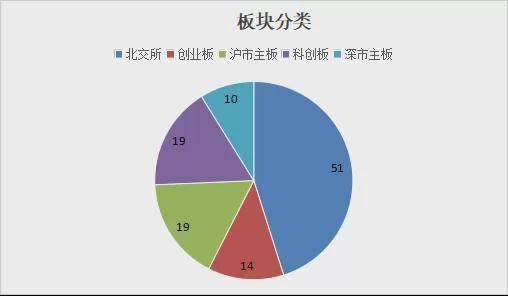
Core Insights - The A-share IPO review process for 2025 concluded with a high-quality performance, featuring a total of 113 companies reviewed and an overall approval rate of 97.35%, marking a record high in recent years [1] Group 1: Market Performance - The main board and the ChiNext board showed the most stable performance, with the Shanghai main board (19 companies), Shenzhen main board (10 companies), and ChiNext (14 companies) achieving a 100% approval rate, indicating precise support for mature and innovative growth enterprises [1] - The Beijing Stock Exchange emerged as the primary venue for reviewing innovative small and medium-sized enterprises, with 51 companies reviewed and 49 approved, resulting in a 96% approval rate, reflecting sustained market vitality [1] - The Sci-Tech Innovation Board maintained stringent selection criteria for "hard technology," with 19 companies reviewed and 18 approved, yielding a 94.7% approval rate [1] Group 2: Underwriting Institutions - The leading underwriting institutions demonstrated a significant "winner-takes-all" effect, with Guotai Junan Securities leading with 16 approved projects, followed by CITIC Securities (12) and CITIC Jianan Securities (11), solidifying their positions in the top tier [3] - Other institutions such as Dongwu, Guojin, Guotou, Huatai United, and China Merchants Securities each contributed 5 approved projects, forming the backbone of annual IPO underwriting [3] Group 3: Industry Distribution - The capital market's effectiveness in serving the real economy has significantly improved, with resources accelerating towards high-tech manufacturing. The computer, communication, and other electronic equipment manufacturing sectors led with 20 companies reviewed, followed by specialized equipment manufacturing (17 companies), and automotive and electrical machinery manufacturing (10 companies each), highlighting the financing dominance of "hard technology" and high-end manufacturing sectors [5]

高盛中国经济展望-2025 年 10 月GS China Economic Outlook_ October 2025 [Presentation]
Goldman Sachs· 2025-11-01 13:47
Investment Rating - The report raises the 2025 real GDP growth forecast for China from 4.9% to 5.0% based on government spending acceleration and commitment to economic targets [6][10]. Core Insights - The report emphasizes the importance of China's manufacturing push in driving economic growth and highlights the expected annual growth of Chinese export volumes by 5-6% [9][10]. - It notes that the fiscal deficit is projected to widen by 1.0 percentage point of GDP in 2026, with total social financing stock growth expected to rise [9][10]. - The report discusses the ongoing focus on high-tech manufacturing and AI investment as a counterbalance to demographic and local government debt challenges [9][10]. Summary by Sections Current State of the Economy - The 2025 real GDP growth forecast has been raised to 5.0% due to increased government spending and commitment to economic targets [6]. 2026 Macro Views - The report anticipates a real GDP growth of 4.8% in 2026, which is significantly above market consensus [9]. - It expects the fiscal deficit to widen and further cuts in the reserve requirement ratio (RRR) and policy rates [9]. Medium- to Long-Term Views - Chinese export volumes are expected to grow by 5-6% annually, contributing to overall economic expansion [9]. - The report highlights the prioritization of manufacturing, technology, and security in China's 15th Five-Year Plan [9]. Economic Indicators - The report provides a detailed forecast of various economic indicators, including GDP growth, domestic demand, consumption, and inflation rates for the years 2025 to 2027 [13]. - It notes that household consumption is expected to grow at a rate of 4.6% in 2025, with government consumption at 4.0% [13]. Policy Measures - The report outlines several policy measures aimed at boosting consumption and investment, including a consumer goods trade-in program and increased government spending on infrastructure [81][82].
