Hippocampus

Search documents
A Neurosurgeon’s Fascinating Ride Inside Your Brain | Dr Chandan ys | TEDxElliots Beach
TEDx Talks· 2025-10-29 15:58
Let me begin by asking you a simple question. Where do we live. Do we live in a city. Do we live in a town. Do we live in a house with walls and windows.If you really think about it, we live inside our brain. And everything we experience from the people we love, the choices we make and even the way we look at ourselves, it's quietly filtered a small organ sitting inside your skull. I'm Dr.. Chandan. I'm a neurosurgeon and my job gives me a rare privilege of not only seeing this organ but even holding it. An ...


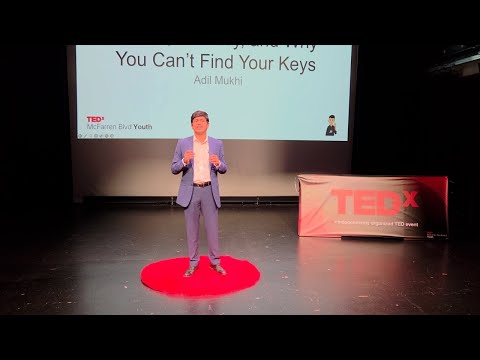
Stress, Memory, and Why You Can’t Find Your Keys | Adil Mukhi | TEDxMcfarren Boulevard Youth
TEDx Talks· 2025-10-13 16:40
Um, we'll be giving you off to the next person. We'll be talking about uh stress, memory, and why you can't find your keys. Give it up for Adel.[Applause] >> What would you think if I told you that every exam you take might actually be making your memory worse. Just think about that for a second. Not just your mood, not just your anxiety, but your actual ability to remember.Sounds like an excuse I made up in grade nine, right. But it's true. And there is a whole science behind this.Today, I'm going to walk ...
Neurofitness: Exercising the Brain | Juan Pablo Barea | TEDxYouth@AICS
TEDx Talks· 2025-08-20 14:56
Cognitive Benefits of Exercise - Physical exercise optimizes cognitive functions like memory and focus, providing a mood boost for around 3 hours [1][14] - Long-term, repetitive exercise can have benefits against Alzheimer's, dementia, and depression [1][15] - Exercise increases BDNF growth factors in the brain, optimizing neurogenesis [14] - Physical activity thickens the prefrontal cortex, improving processing speed, planning, and emotional regulation [15][16][17] Neurological Impact of Exercise - Exercise increases heart rate, delivering more oxygen and BDNF growth factors to the brain [13][14] - Neurogenesis, the production of new brain cells, is increased through movement [10][11] - Physically active individuals can double or triple the number of brain cells compared to inactive individuals [11] - Exercise strengthens the hippocampus, protecting against Alzheimer's and dementia [9][15] Practical Recommendations - 150 minutes of moderate-intensity cardio per week is recommended to see benefits [23] - Maintaining heart rate around 60-75% of maximum heart rate during exercise is beneficial [23] - Incorporating complex motor skills and repeating patterns can increase gray matter in the brain [25][26]

The neurobiology of sport | Natalia Monkiewicz | TEDxTrilo Youth
TEDx Talks· 2025-08-14 16:09
Health & Wellness - Over 80% of adolescents worldwide do not meet the World Health Organization's standard of at least one hour of daily physical activity [2] - A 2011 study showed that regular physical activity can increase the volume of the hippocampus, a brain region crucial for memory [7][8] - Participants who exercised regularly experienced a 2% increase in hippocampus volume over a year, while inactive adults typically see a 1% decrease [10] - Physical activity aids in the synthesis of brain-derived neurotrophic factor (BDNF), which supports learning and memory [11][12] Stress Management & Cognitive Function - Physical exercise can help regulate the hypothalamic-pituitary-adrenal (HPA) axis, reducing the negative impacts of chronic stress and cortisol [17][19] - Regular physical activity can improve performance under pressure and enhance the ability to cope with stressful situations [28][29] Evolutionary Biology & Learning - From an evolutionary perspective, physical exertion and heightened brain activity are interconnected for survival, aiding in analyzing situations and adapting to stressors [5][6]