Housing Market Downturn

Search documents
中国地产 -1 月房价跌幅收窄;复苏可持续性存疑-China Property-Softer Home Prices Decline in January; Sustainability in Doubt
2026-02-03 02:49
Summary of Conference Call on China Property Market Industry Overview - The conference call focused on the **China Property** market, specifically discussing trends in home prices and market dynamics in January 2026 [1][8]. Key Points Home Price Trends - Secondary home prices in major cities fell by **0.7% month-on-month (m-m)** and **14.1% year-on-year (y-y)** in January 2026, showing a softer decline compared to previous months [2][14]. - **98%** of the sample cities experienced m-m decreases, but only **9%** saw faster declines, indicating a slight improvement in market conditions [2][16]. - Tier 1 cities reported a milder drop of **-0.3% m-m** compared to **-1.3% in December**, attributed to a pickup in secondary home sales due to mild policy easing [2][5]. Listings and Market Activity - Total listings remained stable, with an average decrease of **0.2% m-m** across approximately **50 sample cities** [3]. - New secondary listings decreased by **10% m-m** but increased by **40% y-y** due to the Chinese New Year (CNY) calendar effect, marking the tenth consecutive month of decline [3]. - Visits to agent shops decreased by **1% m-m** but rose **80% y-y** on average in January, suggesting a seasonal effect [4][11]. Future Expectations - The company expects further home price declines, projecting **8%** and **6% y-y** declines in secondary home prices for 2026 and 2027, respectively [5]. - The sentiment-driven outperformance in the industry is viewed as unsustainable, with expectations of near-term headwinds affecting companies like Greentown, Jinmao, Longfor, and Vanke [6]. Investment Recommendations - The report favors quality companies with credible self-help stories for 2026, such as **CR Land** and **Seazen**, which are expected to benefit from the focus on consumption and supportive policies for Real Estate Investment Trusts (REITs) [6]. - **C&D International** is highlighted as a consolidator in the residential market with an optimized land bank supporting margins and positive earnings growth [6]. Additional Insights - The analysis indicates that **67%** of the sample cities had higher total listings compared to pre-easing levels in September 2024, with about **30%** reaching record-high levels [3]. - The physical market downtrend is expected to continue but at a softer pace, with potential stabilization in tier 1 and select tier 2 cities by the second half of 2027 if the macro environment remains resilient [5]. Conclusion - The China Property market is experiencing a challenging environment with declining home prices and high secondary listings impacting buyer sentiment. The outlook remains cautious, with expectations of continued price declines and a focus on quality companies for investment opportunities.
中国地产:1 月房企销售额跌幅仍较大;预计一季度将进一步下滑-China Property-Developers‘ Sales Decline Remained Deep in January; We Expect Further Drop in 1Q
2026-02-02 02:42
Summary of Conference Call on China Property Market Industry Overview - The conference call focused on the **China Property** market, specifically the performance of major property developers in January 2026 and expectations for the first quarter of 2026 [1][2]. Key Points Sales Performance - Contracted sales for the 25 major developers tracked fell **32% year-on-year (y-y)** in January 2026, despite a low base due to the Chinese New Year (CNY) calendar effect [1][2]. - The top 50 and top 100 developers experienced declines of **26% and 29% y-y**, respectively, in January, compared to **-22% and -29%** in December [2]. Divergence in Developer Performance - State-Owned Enterprises (SOEs) outperformed other developers with milder declines. Notable performers included: - **China Overseas Land & Investment (COLI)**: +20% y-y - **Jinmao**: +14% y-y - **CR Land**: +0.4% y-y - Conversely, developers like **Sunac**, **Shimao**, **CIFI**, **Midea RE**, and **GZ R&F** reported declines exceeding **50% y-y** [3]. Market Outlook - The physical property market is expected to continue its downtrend in 2026-27, with projected declines of **8% and 6% y-y** in secondary home prices [4]. - A meaningful nationwide housing policy is anticipated to remain muted in the coming months, contributing to fragile buyer sentiment and increased inventory [4]. Investment Sentiment - Recent sentiment-driven outperformance in the China property industry is viewed as unsustainable, with expectations of a sector pullback as results season approaches [5]. - The focus remains on quality names with credible self-help stories, such as: - **CR Land (1109.HK)** - **Seazen (601155.SS)** - **C&D International (1908.HK)**, which is seen as a consolidator in the residential market with optimized landbanks [6]. Additional Insights - The analysis indicates that home prices in tier 1 and select tier 2 cities could stabilize in the second half of 2027 if the macro environment remains resilient [4]. - The overall sentiment in the market is cautious, with expectations of continued challenges for developers, particularly those with weaker brand recognition and fewer saleable resources [5][6].



中国地产-2026 展望:住房市场持续疲软催生新不确定性-China Property_ 2026 Outlook_ New uncertainties from continued weak housing market
2025-12-18 02:35
Summary of Conference Call on China Property Market Industry Overview - The conference call focuses on the **China Property** market, highlighting ongoing challenges and forecasts for 2026 and beyond. Key Points and Arguments Market Conditions - **Weak Construction Activity**: Primary housing market construction is expected to remain weak in 2026E-2027E due to persistent liquidity stress and high inventory levels in the industry [1] - **Property Fixed Asset Investment (FAI)**: A potential deceleration in the current double-digit year-on-year decline in property FAI may occur if it reaches 85% of property sales by 2027E, as property FAI primarily reflects the cost of property sales [1] - **Secondary Housing Market**: The supply/demand imbalance in the secondary housing market is anticipated to take longer to adjust, delaying price stabilization [1] Financial Stress and Developer Challenges - **Loan Maturity Extensions**: There is uncertainty regarding the scope for further loan maturity extensions for developers, as high debt levels and declining property sales have offset benefits from interest rate reductions [1] - **Interest Expense**: Interest expenses for privately owned enterprises (POE) developers account for approximately 70% of total developer industry expenses, significantly higher than the 5-6% for larger state-owned enterprises (SOEs) [1] - **Liquidity Stress**: The liquidity stress in the industry is deepening, with increasing risks of credit defaults [1][36] Mortgage Market Dynamics - **Elevated Loan-to-Value Ratios (LTVs)**: The ongoing decline in property prices is raising LTVs for mortgages and operating loans, with a base-case scenario estimating Rmb5.2tn and Rmb0.8tn in outstanding mortgages and operating loans meeting the 80% LTV threshold [2][86] - **Bear-case Scenario**: A potential 30% decline in property prices could lead to Rmb14.7tn in mortgages meeting the 80% LTV threshold, indicating significant risk in the mortgage market [86] Economic Implications - **Household Debt Service Burden**: The household debt service burden in China is projected to remain high at over 15% in 2025E-2027E, raising concerns about a negative feedback loop affecting home prices and credit availability [5][77] - **Policy Stimulus**: Key factors to watch include any new policy stimulus aimed at reviving demand and targeted liquidity injections to developers with land banks in tier-1 and tier-2 cities [6] Adjusted Forecasts - **EPS Estimates**: The underlying EPS estimates for developers have been cut by 7-31% on average for 2025E-2027E, reflecting a weaker fundamental outlook [10] - **ASP Trends**: The average selling price (ASP) forecast for the secondary housing market has been revised down due to ongoing price cuts and weak transaction volumes [9] Developer Liquidity and Debt Restructuring - **Distressed Developers**: The report highlights the ongoing liquidity pressures faced by developers, with 28 major listed developers experiencing significant declines in asset turnover ratios and increasing numbers of distressed developers [42][52] - **Debt Restructuring Progress**: As of October 2025, 19 companies have had their debt restructuring plans approved, with a total estimated debt reduction exceeding Rmb1.2tn [69][70] Market Outlook - **Overall Market Weakness**: The overall outlook for both primary and secondary markets is expected to weaken further, with sell-through rates declining [22][25] - **Land Sales and Construction**: Land sales and construction activities are projected to remain weak until property FAI aligns more closely with property sales [27] Additional Important Insights - **Rental Price Stabilization**: Rental price stabilization is viewed as a key driver for property price stabilization in higher-tier cities [13] - **Fair Value Gap**: There is an estimated 10%-15% property price gap to fair value, which could widen to 30% if deflationary pressures persist [16] This summary encapsulates the critical insights and forecasts regarding the China property market, emphasizing the ongoing challenges and potential risks for investors and stakeholders in the industry.
保定楼市那些事儿:房价持续下跌,普通人该怎么办?
Sou Hu Cai Jing· 2025-07-18 16:34
Core Viewpoint - The real estate market in Baoding is experiencing a continuous decline in housing prices, leading to various strategies for ordinary people to cope with the situation [3][10]. Market Conditions - Housing prices in Baoding have been steadily decreasing over the past few years, with new developments often seeing a drop in value once they transition to the secondary market [3][10]. - The decline in property values is significant, with reports indicating that some properties lose over 100,000 yuan annually [4]. Selling Strategies - Individuals looking to sell their homes must adopt a pragmatic approach, letting go of emotional attachments and recognizing that prices may continue to fall [3][5]. - A case is mentioned where a homeowner sold their only property to rent a larger and better place for a lower annual cost [4]. Buying Strategies - Buyers should prepare for ongoing price declines, understanding that the moment a purchase is made, the property begins to depreciate [5][6]. - The article emphasizes the importance of recognizing the current market reality, where properties bought in the last three years have not appreciated in value [6]. Market Dynamics - The market is undergoing a cleansing process, with high leverage and speculative bubbles being eliminated, which is essential for the healthy development of the real estate sector [10][13]. - The demand for improved living conditions remains strong, but the constraints of land availability must be respected [10]. Investment Opportunities - Families with sufficient resources are encouraged to consider upgrading their properties during this downturn, as the current market conditions may provide favorable negotiation opportunities [10][13]. - Patience is advised for those with tighter budgets, as waiting for the market to stabilize could yield better investment conditions in the future [11]. Policy Implications - The introduction of property taxes is seen as a tool to balance the market, discouraging excessive speculation and promoting fairer resource distribution [11][13]. - The article suggests that property taxes can be viewed as a necessary cost for those who see real estate as a key asset in their financial strategy [11].

一线城市房价或迎补跌,45%多套房家庭如何应对?给您4点建议
Sou Hu Cai Jing· 2025-05-05 07:50
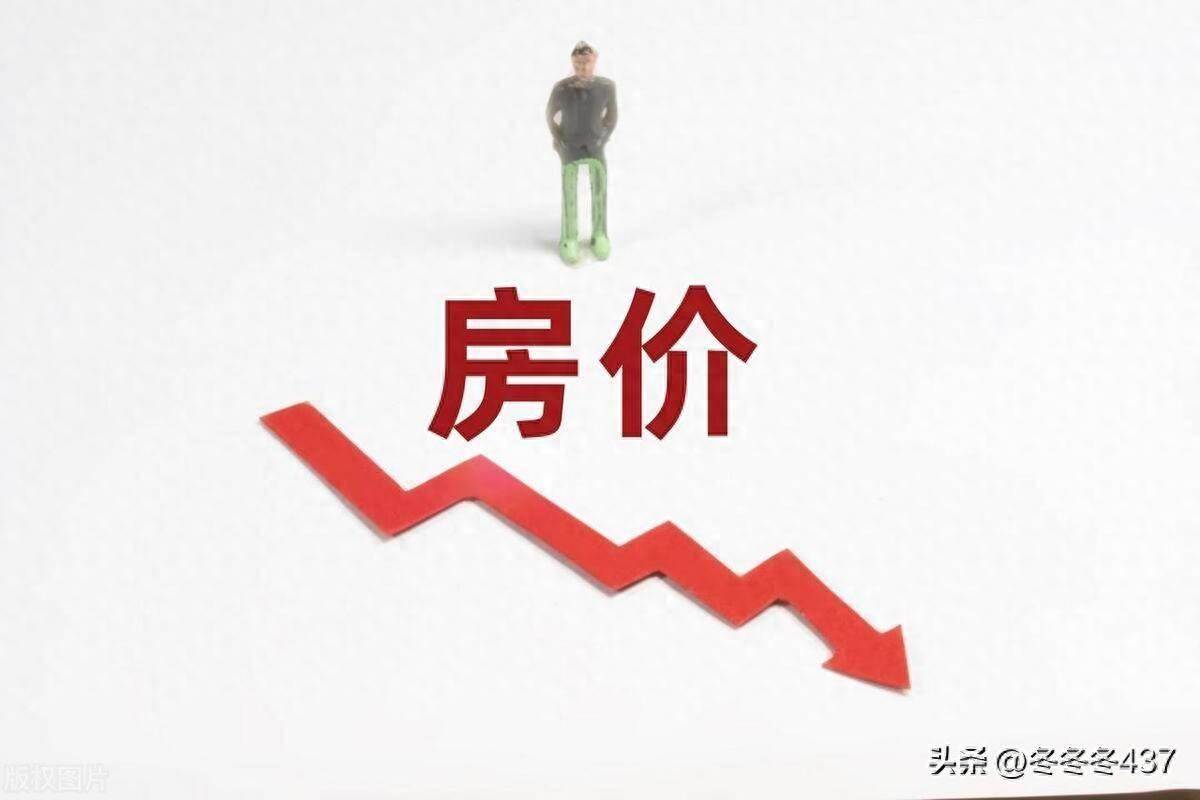
Core Insights - The average price of commercial housing in China is projected to decline by 32% from its historical peak by 2025, with the total number of second-hand homes listed exceeding 120 million [1] - A significant portion of families owning two or more properties (45%) are facing unprecedented asset protection challenges due to the ongoing real estate market downturn [1] Market Dynamics - Since 2022, the domestic housing market has entered a technical bear market, with prices in cities like Langfang halving and Yanjiao experiencing a 58% drop [1] - Even first-tier cities are affected, with prices outside Beijing's Fifth Ring Road falling by 18% from their 2021 peak, and second-hand home prices in suburban Shanghai often below cost [1] Asset Impact - A central bank survey indicates that 45% of families have over 70% of their total assets tied up in real estate, meaning a 10% drop in housing prices results in a 7% decrease in total assets [1] - For a typical family with two properties valued at 5 million yuan each, a price drop to 4 million yuan would lead to a loss of 200,000 yuan in total assets [1] Supply and Demand Imbalance - As of March 2025, major cities in China have recorded unprecedented second-hand home listings, including: - Chongqing: 338,000 units - Wuhan: 196,000 units - Guangzhou: 172,000 units - Beijing: 134,000 units [3] - This supply-demand imbalance has significantly extended transaction cycles, with the average transaction period for second-hand homes reaching 278 days in Q1 2025, an increase of 93 days from 2021 [3] Cost Pressures on Property Owners - Multi-property owners are facing a "triple squeeze" on costs, including: - Rising property management fees, with fees in a mid-range community in Beijing increasing from 2.8 yuan to 4.2 yuan per square meter [5] - Expansion of property tax trials, with rates in Shanghai and Chongqing reaching 0.4% [4] - These challenges exacerbate the survival environment for multi-property owners, intensifying the pressure to protect their assets and necessitating the search for viable strategies to navigate future uncertainties [6]