Korea Discount(韩国折价)

Search documents
韩国人赚麻了?
虎嗅APP· 2026-02-04 00:15
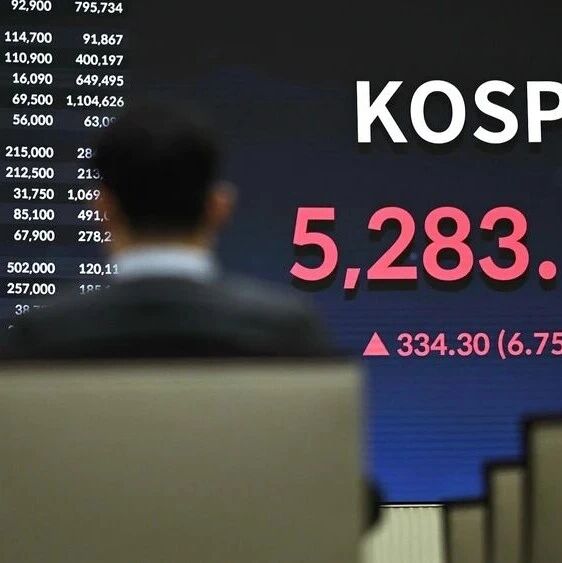
Core Viewpoint - The article discusses the remarkable performance of the South Korean stock market, highlighting its significant gains and the factors driving this growth, including key industries and government reforms [5][38]. Group 1: Market Performance - On February 2, the KOSPI index fell below 5000 points, with foreign investors selling 25.2 trillion KRW and institutions selling 22.1 trillion KRW, while retail investors bought over 50 trillion KRW, setting a historical record [5][6]. - The following day, the market rebounded, rising 6.84%, nearly recovering from the previous day's losses [7]. - Since April of the previous year, the KOSPI has increased by over 130%, surpassing 5300 points [9]. Group 2: Key Industries - The South Korean stock market is heavily weighted, with the top 20 stocks accounting for over 60% of the KOSPI, particularly in semiconductors, shipbuilding, and battery sectors, which contributed over 70% to the recent gains [17][18]. - The semiconductor sector saw a staggering 280% increase, driven by a supply-demand imbalance expected to peak in 2025, with a projected 78% year-on-year growth in semiconductor exports [19][23]. - The shipbuilding industry experienced a 190% increase, with global new ship orders expected to rise by 45% in 2025, with South Korean companies capturing 48% of these orders [29][30]. - The battery sector grew by 120%, focusing on high-end electric vehicles and energy storage, despite a decrease in market share [34][35]. Group 3: Government Reforms - The South Korean government implemented significant reforms in April 2025, including easing foreign investment restrictions and reducing transaction taxes, which led to a net foreign purchase of 38.6 trillion KRW in stocks from April to December 2025 [43][46]. - The National Pension Service (NPS) significantly increased its holdings in domestic stocks, reaching a market value of 247.4 trillion KRW by the end of 2025, focusing on key sectors [50]. - Reforms also included improving short-selling regulations, which increased market participation and led to a surge in retail investor activity, with retail trading accounting for 78% of total trading [60][61]. Group 4: Retail Investor Dynamics - The number of active retail investors surged from 72 million in April 2025 to 98 million by February 2026, indicating widespread participation in the stock market [67]. - Retail investors' total holdings increased from 380 trillion KRW to 920 trillion KRW, reflecting a 142% growth [71]. - Despite the overall market gains, the average profit for retail investors was only about 255,000 KRW, highlighting that many investors did not benefit proportionately from the market's rise [75][78].