造船

Search documents
环球市场动态:中国制造业景气有所改善
citic securities· 2026-04-01 05:33
Market Overview - A-shares opened high but closed lower, with the Shanghai Composite Index down 0.80% at 3,891.86 points, while the Shenzhen Component fell 1.81%[14] - U.S. stocks saw significant gains, with the Dow Jones rising 2.49% to 46,341 points, the S&P 500 up 2.91% to 6,528 points, and the Nasdaq increasing 3.83% to 21,590 points[8] Economic Indicators - China's manufacturing PMI for March was 50.4, up 1.4 from the previous month, indicating improved manufacturing conditions[5] - The non-manufacturing PMI was 49.3, an increase of 1.1, suggesting a recovery in service sectors[5] Commodity and Currency Markets - The U.S. dollar index fell 0.5% after five consecutive days of gains, while gold prices rose 3.48% to $4,668.06 per ounce[24] - Crude oil prices dropped, with WTI down 1.46% to $101.38 per barrel and Brent down 3.18% to $103.97 per barrel[24] Fixed Income Market - U.S. Treasury yields decreased by 0-4 basis points, with the 2-year yield at 3.79% and the 10-year yield at 4.32%[27] - Asian credit markets showed stability, with bond spreads narrowing by 1-2 basis points amid light buying activity[27] Sector Performance - In the U.S., 9 out of 11 S&P sectors rose, with telecommunications and information technology leading gains at 4.41% and 4.24% respectively[8] - In Hong Kong, the Hang Seng Index rose 0.15%, while the Hang Seng Tech Index fell 0.86%[10] Global Political Context - The U.S. and Iran signaled a willingness to de-escalate tensions, positively impacting market sentiment and contributing to the stock market rebound[8] - Trump indicated that the U.S. could end military actions in the Middle East within two to three weeks, which may influence upcoming elections[5]
交运行业2026Q1业绩前瞻:重视海外油轮股Q1对Q2TCE指引,通达系反内卷下高业绩弹性
Shenwan Hongyuan Securities· 2026-03-31 05:46
Investment Rating - The report maintains an "Overweight" rating for the transportation industry, indicating a positive outlook compared to the overall market performance [3]. Core Insights - The report highlights that the current high freight rates for oil tankers need to be realized in Q2, with a focus on overseas oil tanker stocks' Q1 performance as guidance for Q2 expectations. The VLCC freight rates in Q1 2026 are projected to average $111,492 per day, representing a year-on-year increase of 232% and a month-on-month increase of 17% [3][4]. - The report anticipates a strong demand for oil transportation due to geopolitical tensions and the need for energy stockpiling post-conflict, which will enhance the pricing power in the VLCC market [3]. - The dry bulk shipping market is expected to remain stable, with the impact of geopolitical events on the market being neutral. The report forecasts an improvement in the fundamentals for 2026-2027, driven by increased production capacity from new projects [3]. - Container shipping rates are expected to rebound post-Spring Festival, supported by geopolitical sentiments, particularly in Southeast Asia [3]. - The shipbuilding sector is projected to enter an acceleration phase in Q1 2026, with high-value orders leading to increased revenue recognition [3]. - The freight forwarding sector is expected to see improved profitability per unit due to steady growth in cross-border trade and increased demand from the Asia-Pacific region [3]. - The domestic aviation sector is projected to see a significant increase in passenger transport volume, with a year-on-year growth of 6% expected in Q1 2026 [3]. - The express delivery sector is anticipated to show strong performance due to price stability and the ability to pass on increased fuel costs to consumers [3]. Summary by Sections Shipping - The report emphasizes the strong performance of oil tanker freight rates, with VLCC rates expected to average $111,492 per day in Q1 2026, marking a 232% year-on-year increase [3]. - The dry bulk market is expected to remain stable, with geopolitical tensions having a neutral impact [3]. - Container shipping rates are projected to rebound, particularly in Southeast Asia [3]. Shipbuilding - The shipbuilding sector is expected to see accelerated performance in Q1 2026, driven by high-value order deliveries [3]. - The report notes that the pricing of new ships is expected to rise, particularly for oil tankers, which will positively impact overall ship price indices [3]. Freight Forwarding - The freight forwarding sector is expected to benefit from steady growth in global container trade and improved profitability per unit [3]. Aviation - The domestic aviation sector is projected to achieve a record high in passenger transport volume, with a 6% year-on-year increase expected in Q1 2026 [3]. Express Delivery - The express delivery sector is expected to maintain high pricing levels, with the ability to pass on increased fuel costs to consumers [3]. Rail and Road - The report anticipates growth in highway traffic and railway passenger volume in Q1 2026, driven by improved coal demand and rising oil prices [3].





造船行业跟踪报告:把握底部机遇,继续看好中国船舶的三大理由
GF SECURITIES· 2026-03-31 04:28
Investment Rating - The industry investment rating is "Buy" [2] Core Viewpoints - The report emphasizes three main reasons for optimism regarding the Chinese shipbuilding industry: 1. Overall recovery in the shipbuilding industry with improving ship prices. New ship orders in February reached 19.13 million deadweight tons, a year-on-year increase of 111%, indicating a strong upward trend. The ship prices for VLCC and Capesize vessels increased by 1.5% year-on-year in March, driven by orders for oil tankers and bulk carriers [8]. 2. New supply has been significantly absorbed, alleviating concerns about the threat of new supply. The report notes that the order saturation for global ship types is around three years, with major shipyards like Hengli and Yangzijiang having their orders scheduled until 2029. This indicates that the demand for orders has adequately absorbed the recovery in supply, and ship prices have stabilized [8]. 3. The profitability of the company is being released, and the internal momentum from management improvements is underestimated. The company is expected to achieve a net profit of 7-8.4 billion CNY in 2025, representing a year-on-year growth of 66%-99%. The report suggests that the synergies from the merger of two companies and management improvements are beginning to materialize [8]. Summary by Sections - **Market Performance**: The stock price of China Shipbuilding has recently adjusted significantly, with a cumulative decline of over 19% as of March 30. The market's reaction is seen as excessive, overlooking the overall improvement in the shipbuilding industry [8]. - **Investment Recommendations**: The report recommends continued investment in China Shipbuilding, China Power, China Shipbuilding Defense, and Yaxing Anchor Chain, while suggesting to pay attention to ST Songfa [8]. - **Valuation and Financial Analysis**: The report provides a valuation table for key companies, indicating the latest closing prices and expected earnings per share (EPS) for 2025 and 2026, along with price-to-earnings (PE) ratios and return on equity (ROE) metrics [9].

全球大公司要闻 | 苹果拟推AI应用商店,Anthropic最强模型意外泄露
Wind万得· 2026-03-30 00:56
Group 1 - SoftBank Group announced a $40 billion bridge loan to increase investment in OpenAI and for general corporate purposes, indicating its ongoing strategic focus on the artificial intelligence sector [2] - Anthropic's new AI model "Claude Mythos" was accidentally exposed due to data leaks, described as the most powerful model to date, but raises concerns over cybersecurity risks [2] - Four major state-owned banks in China reported their 2025 financial results, with total net profits exceeding 900 billion yuan, reflecting modest growth in revenue and profit across the board [2] Group 2 - Samsung Electronics is encouraged by Artisan Partners to consider listing American Depositary Receipts (ADRs) as part of its ongoing evaluation of costs and benefits [3] - Sony announced a price increase for its PlayStation consoles, citing ongoing pressures from the global economic environment [3] Group 3 - Tianshan Aluminum expects a 107.92% year-on-year increase in net profit for Q1 2026, driven by rising aluminum prices and improved capacity utilization [5] - Zijin Mining's shareholder changes have sparked market interest in resource sector allocation, while the company maintains steady production and expansion [5] - Luoyang Molybdenum reported a 2.98% decrease in revenue for 2025 but a 50.30% increase in net profit, attributed to rising prices of core metals [5] - TSMC announced plans to expand its 2nm wafer fabrication capacity to meet AI chip demand, with new capacity expected to be released gradually by 2027 [5] Group 4 - Xiaomi's CEO introduced advancements in the company's robotic team, showcasing a new dexterous robotic hand capable of high-precision tasks [6] - Tencent Cloud unveiled its upgraded MaaS platform and enterprise-level governance solutions at its Shanghai summit [6] - XPeng Motors changed its name to XPeng Group, signaling a strategic shift towards a diversified technology group [6] - China Mobile launched a key laboratory focused on the integration of quantum technology and artificial intelligence [6] Group 5 - SK Hynix achieved a profit of 430 billion won, surpassing Samsung in the storage sector, while addressing helium price surges [12] - Toyota's GAC Toyota launched the Platinum 7 electric sedan with significant pre-order interest, targeting the core market for electric vehicles [12] - LG opened reservations for a new gaming monitor, emphasizing high cost-performance [12] - Emirates Global Aluminium's production facility was damaged in an attack, potentially impacting global aluminum supply chains [13] Group 6 - Fincantieri Group reported a 13.1% year-on-year revenue increase for 2025, with a significant rise in net profit and new orders [15] - Nestlé reported a theft of 12 tons of KitKat chocolate during transport in Europe, with the vehicle and cargo currently missing [15] - Chevron's Gorgon LNG project resumed normal operations after disruptions caused by a storm [15]


2026年3月造船观察:油运高景气传导至造船,新造船价有望结束分化整体回升
Shenwan Hongyuan Securities· 2026-03-24 05:38
Investment Rating - The report indicates a positive investment outlook for the shipbuilding industry, particularly benefiting from the high demand in the oil tanker segment [4][17]. Core Insights - The shipping market is experiencing a significant upturn, with high spot rates for oil tankers and increasing second-hand ship prices, indicating a robust market environment [5][13]. - Hengli Heavy Industry is identified as the primary beneficiary of the surge in oil tanker orders, showcasing strong order intake capabilities [4][17]. - The report highlights a potential recovery in new ship prices, driven by the oil tanker segment, which may lead to an overall increase in ship price indices [28]. Summary by Sections 1. Core Changes in the Shipbuilding Sector - The oil tanker market is transmitting high demand to shipbuilding, with owners accelerating orders, particularly for VLCCs [14][17]. - The VLCC spot rates have reached historical highs, with one-year time charter rates increasing to $140,000 per day, reflecting a tight supply situation [5][13]. 2. Shipbuilding Market Volume and Price Updates - New ship price indices showed a mixed trend, with oil tankers leading the recovery, while second-hand ship prices have been on the rise for 12 consecutive months [23][28]. - The second-hand ship price index has increased by 17% for 5-year-old VLCCs, indicating a positive sentiment among shipowners [13][23]. 3. Major Shipyard Order Analysis - Hengli Heavy Industry has secured over 40 VLCC orders since the beginning of 2026, with its order book value rising from $19.5 billion to $26 billion [17][37]. - The report notes that the majority of mainstream shipyards are currently at full capacity, with Hengli Heavy Industry positioned to capitalize on this demand due to its ongoing capacity expansion [17][37].
中国汽车出海,为什么从造船开始?
创业邦· 2026-03-21 15:57
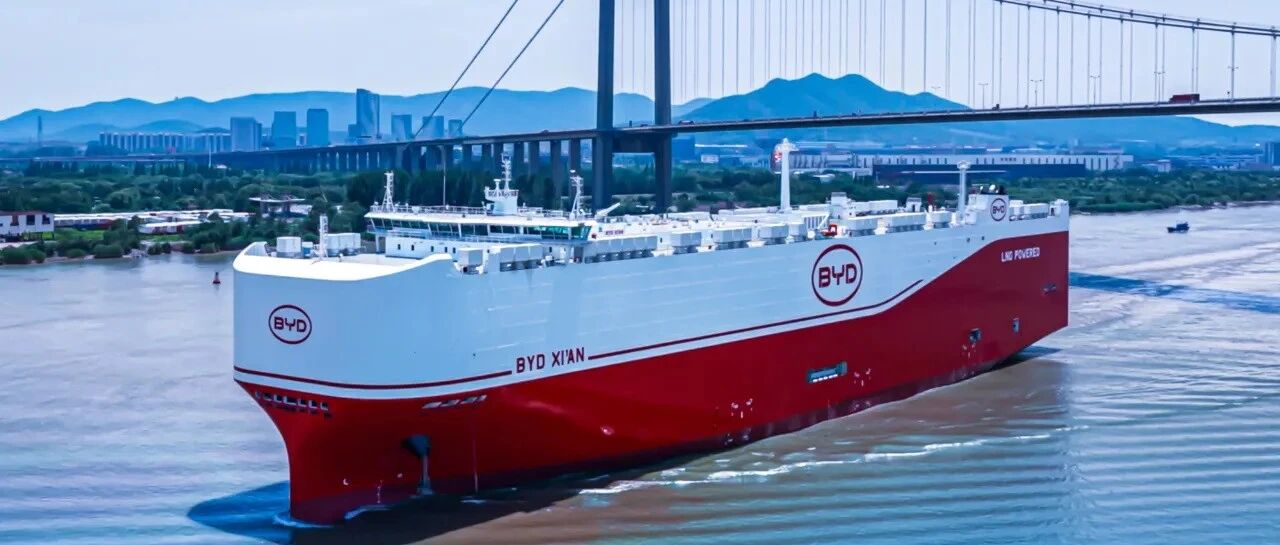
Core Viewpoint - The article discusses the transformation of Chinese automotive companies as they shift from relying on external shipping services to developing their own shipping capabilities, marking a significant step in the globalization of the Chinese automotive industry [6][8]. Group 1: Current State of Chinese Automotive Exports - From 2020 to 2023, China's automotive export volume surged from 1.08 million to 5.22 million units, nearly a fivefold increase in just three years [8]. - By 2025, China's automotive export volume is projected to reach 7.095 million units, maintaining its position as the world's largest automotive exporter [8]. - Despite the rapid growth in export volume, the shipping capacity has not kept pace, leading to increased shipping costs and logistical challenges for automotive companies [9][12]. Group 2: Shipping Challenges - The daily rental price for a 6,500-car capacity roll-on/roll-off (RoRo) ship skyrocketed from approximately $10,000 in August 2020 to $115,000 by November 2023, an increase of 1,150% [8]. - Shipping costs to Europe averaged around $1,400 per vehicle at peak prices, significantly impacting profit margins for automotive companies [9]. - The shortage of available ships has led to delays, with vehicles often waiting at ports for weeks due to a lack of transportation options [9][11]. Group 3: Structural Issues in Shipping - As of 2023, only about 700 specialized automotive transport ships exist globally, with the majority owned by Japanese, Korean, and Norwegian companies, leaving Chinese companies with limited access [13][16]. - China's share of the global automotive transport fleet was only 39 ships, representing less than 3% of total capacity, highlighting a significant gap in shipping capabilities [13][16]. - The automotive shipping industry has developed a stable network over decades, primarily serving established players like Japan and Korea, making it difficult for newer entrants like China to gain a foothold [14][16]. Group 4: Strategic Shifts by Chinese Automotive Companies - Companies like BYD have begun investing heavily in their own shipping capabilities, with BYD investing approximately 5 billion RMB to build eight RoRo ships, the first of which, "Pioneer 1," is set to launch in 2024 [18][20]. - SAIC Group has also expanded its shipping fleet, investing over 10 billion RMB and currently operating 14 RoRo ships, significantly enhancing its logistics capabilities [20][22]. - The establishment of self-owned shipping fleets allows companies to better control their logistics, reduce costs, and create new revenue streams by offering transportation services [22][23]. Group 5: Future Developments and Local Production - Chinese automotive companies are not only focusing on shipping but are also establishing local production facilities to mitigate shipping costs and tariff risks, with BYD planning a factory in Hungary [25][27]. - SAIC aims to increase its overseas sales to 1.5 million units by 2025, with a growing proportion of production occurring locally [27]. - The shift towards local production and enhanced logistics infrastructure is expected to transform the export model from simple vehicle sales to a more integrated global operation [29][30].


交通运输春季策略:中东变局下航运船舶展望:海峡受限类比弹簧压缩,重视释放后全板块弹性
Shenwan Hongyuan Securities· 2026-03-18 14:13
Core Insights - The report emphasizes the importance of the shipping sector's resilience in the face of geopolitical tensions, particularly in the context of the Middle East, highlighting the potential for significant demand recovery in the oil tanker segment [4][71] - It identifies a long-term upward cycle in shipping assets, driven by a combination of demand marginal pricing and supply constraints, with a focus on the implications of inflation and geopolitical conflicts on trade dynamics [5][8] - The report suggests that the shipping industry is entering a phase where asset prices are expected to rise, particularly for oil tankers and related companies, as the market adjusts to new geopolitical realities [21][26] Long Cycle - The shipping sector is currently in a demand marginal pricing state, with a long cycle extending until 2037-2038 due to previous high delivery peaks [5][6] - The report notes that the shipbuilding sector is experiencing a simultaneous increase in orders and profits, alleviating concerns about new ship orders [5][8] - Key companies to watch include China Merchants Energy Shipping, COSCO Shipping Energy, and China Shipbuilding Industry Corporation [4][70] Mid Cycle - The report highlights that inflation expectations and geopolitical conflicts are driving up trade profits, with a focus on the mismatch of agricultural and energy commodities [5][32] - It draws parallels to historical periods of high oil prices driving demand for dry bulk shipping, suggesting a potential golden era for dry bulk shipping [5][71] - Companies such as COSCO Shipping Holdings and China Merchants Energy are recommended for their strong positioning in the current market [5][70] Short Cycle - The report indicates that short-term impacts from fuel crises and food supply issues could lead to increased volatility in shipping rates, with a focus on the efficiency losses from fuel shortages [5][72] - It emphasizes the need for additional capacity to manage seasonal demand fluctuations, particularly in the dry bulk and oil tanker segments [5][72] - The report suggests that the current high utilization rates in shipping may lead to significant price fluctuations due to supply-demand mismatches [5][72] Investment Opportunities - The report identifies specific stocks to watch, including oil tankers like China Merchants Energy and COSCO Shipping, as well as dry bulk companies such as Haitong Development and China National Offshore Oil Corporation [4][70] - It highlights the potential for significant returns in the shipping sector, particularly as asset prices for second-hand ships are expected to rise above newbuilding prices [21][26] - The report suggests that the shipping sector's strategic importance is increasing, making it a critical area for investment as geopolitical tensions continue to shape global trade [49][71]

瑞达期货热轧卷板产业链日报-20260318
Rui Da Qi Huo· 2026-03-18 10:11
1. Report Industry Investment Rating - Not mentioned in the provided content 2. Core View of the Report - The weekly output of hot-rolled coils continued to decline, and the capacity utilization rate dropped to around 75%. Terminal demand rebounded, and inventory decreased slightly. Overall, the decrease in hot-rolled coil output alleviated the supply pressure. The international situation was volatile with many uncertainties, and the international oil price corrected from its high level, weakening the support for furnace materials and steel prices. Technically, the 1-hour MACD indicator of the HC2605 contract showed that DIFF and DEA were operating above the 0 axis, with green bars expanding. It is recommended to conduct short-term trading and pay attention to risk control [2] 3. Summary According to Different Categories 3.1 Futures Market - The closing price of the HC main contract was 3,310 yuan/ton, a decrease of 3 yuan; the trading volume was 1,171,958 lots, a decrease of 7,990 lots. The net position of the top 20 in the HC contract was -12,695 lots, an increase of 3,937 lots. The HC5 - 10 contract spread was -1 yuan/ton, unchanged. The HC warehouse receipt on the Shanghai Futures Exchange was 478,788 tons, an increase of 600 tons. The HC2605 - RB2605 contract spread was 170 yuan/ton, an increase of 5 yuan [2] 3.2 Spot Market - The price of 4.75 hot-rolled coils in Hangzhou was 3,320 yuan/ton, an increase of 10 yuan; in Guangzhou, it was 3,290 yuan/ton, an increase of 10 yuan; in Wuhan, it was 3,340 yuan/ton, an increase of 10 yuan; and in Tianjin, it was 3,230 yuan/ton, an increase of 10 yuan. The basis of the HC main contract was 10 yuan/ton, an increase of 13 yuan. The price difference between hot-rolled coils and rebar in Hangzhou was 30 yuan/ton, an increase of 10 yuan [2] 3.3 Upstream Situation - The price of 61.5% PB powder ore at Qingdao Port was 799 yuan/wet ton, an increase of 8 yuan. The market price of quasi-primary metallurgical coke in Hebei was 1,490 yuan/ton, unchanged. The price of 6 - 8mm scrap steel in Tangshan (tax-excluded) was 2,190 yuan/ton, unchanged. The price of Q235 billet in Hebei was 2,980 yuan/ton, unchanged. The inventory of iron ore at 45 ports was 171.918 million tons, an increase of 690,800 tons. The inventory of coke at sample coking plants was 561,000 tons, a decrease of 69,300 tons. The inventory of coke at sample steel mills was 6.8762 million tons, an increase of 160,900 tons. The inventory of billets in Hebei was 2.4051 million tons, an increase of 78,600 tons [2] 3.4 Industry Situation - The blast furnace operating rate of 247 steel mills was 78.36%, an increase of 0.67 percentage points; the blast furnace capacity utilization rate was 82.9%, a decrease of 2.40 percentage points. The weekly output of hot-rolled coils at sample steel mills was 2.9526 million tons, a decrease of 58,500 tons; the capacity utilization rate of hot-rolled coils was 75.43%, a decrease of 1.49 percentage points. The inventory of hot-rolled coils at sample steel mills was 892,800 tons, a decrease of 8,000 tons; the social inventory of hot-rolled coils in 33 cities was 3.8231 million tons, an increase of 7,000 tons. The monthly output of crude steel in China was 6.818 million tons, a decrease of 169,000 tons; the net export volume of steel was 747,000 tons, an increase of 18,000 tons [2] 3.5 Downstream Situation - The monthly output of automobiles was 1.6724 million, a decrease of 777,400; the monthly sales of automobiles was 1.8052 million, a decrease of 541,300. The monthly output of air conditioners was 21.6289 million, an increase of 6.6029 million; the monthly output of household refrigerators was 10.0115 million, an increase of 569,500; the monthly output of household washing machines was 11.975 million, a decrease of 38,000 [2] 3.6 Industry News - In February 2026, China exported 740,000 automobiles, a year-on-year increase of 75.1%; from January to February, the cumulative export was 1.53 million, a year-on-year increase of 57.9%. In February, China imported 30,000 automobiles, a year-on-year decrease of 11.6%; from January to February, the cumulative import was 70,000, a year-on-year increase of 24.7%. In February, China exported 408 ships, a year-on-year increase of 35.5%; from January to February, the cumulative export was 930, a year-on-year increase of 9.2% [2] 3.7 Key Points to Watch - The weekly output, in-plant inventory, and social inventory of hot-rolled coils on Thursday [2]
日本选定物理AI等61项产品和技术实施集中扶持
日经中文网· 2026-03-14 00:33
Core Viewpoint - Japan is focusing on 61 selected products and technologies across 17 strategic fields, including AI, semiconductors, quantum technology, and shipbuilding, to drive economic growth and reduce domestic risks [2][4]. Group 1: Strategic Focus - The Japanese government has prioritized 27 technologies and products for immediate advancement, including physical AI and next-generation shipbuilding technologies using ammonia and hydrogen as fuel [4][5]. - The selection of these 61 products and technologies is based on the necessity to lower domestic risks, the potential for accessing overseas markets, and the innovation of related technologies [4]. Group 2: Economic Goals - The government aims to increase domestic semiconductor sales to 40 trillion yen by 2040 as part of its strategic roadmap [5]. - A budget mechanism will be established for crisis management and growth investment, with a roadmap to be developed by summer 2026 [4].

South Korea passes special bill to implement its $350 billion U.S. investment pledge
CNBC· 2026-03-12 07:56
Core Viewpoint - South Korea's parliament has passed a special bill to create a state-run investment corporation to manage a $350 billion investment into the U.S., establishing a legal framework for this commitment in exchange for favorable tariff rates [1][2]. Group 1: Investment Details - The investment package includes $150 billion allocated for shipbuilding and $200 billion for strategic sector projects, with an annual cap of $20 billion [3]. - The establishment of the investment corporation is fully government-financed and aims to implement the investment package effectively [2]. Group 2: Trade Relations and Tariffs - The investment commitment was made in response to U.S. President Trump's threat to increase tariffs on South Korea from 15% to 25% [3]. - Following a U.S. Supreme Court ruling that struck down a significant portion of Trump's tariffs, new duties of 10% were imposed under Section 122, although overall export conditions from the Korea-U.S. tariff agreement remain largely intact [4]. - The passage of the bill coincides with U.S. Section 301 investigations into 16 trading partners, including South Korea, which could lead to the imposition of new tariffs [5].