
Memory Super Cycle

Search documents
DRAM,巨变前夜
半导体行业观察· 2026-03-18 00:50
Core Viewpoint - The global semiconductor industry is undergoing a fundamental structural reorganization due to the explosive growth of artificial intelligence (AI) and large-scale language models (LLMs), with a significant shift towards 3D DRAM architectures to meet increasing demands for bandwidth and memory capacity [2][3]. Group 1: Current Challenges in DRAM Technology - Traditional 2D DRAM faces critical physical and engineering limitations as it approaches the limits of miniaturization, particularly below 10nm nodes, leading to issues such as electron tunneling and gate leakage [2][3][5]. - The current planar 1T1C architecture of DRAM is limited by physical and electrical defects, with the aspect ratio of capacitors exceeding 40:1, leading to structural instability and manufacturing challenges [5][6]. - Electrical leakage paths and the need for frequent refresh cycles due to charge loss are significant contributors to the "memory wall" phenomenon, which degrades system performance and increases power consumption [7]. Group 2: Transition to 3D DRAM - The industry is exploring vertical channel transistors (VCT) as an intermediate step to enhance integration density while leveraging existing planar process infrastructure [8][10]. - The 4F2 VCT architecture offers structural advantages, reducing chip area by over 30% compared to the 6F2 structure, but faces challenges such as floating body effects and parasitic capacitance [10][12]. - The next step is the development of vertical stacked DRAM (VS-DRAM), which aims to increase bit density by stacking memory cells vertically, similar to 3D NAND flash technology [14][16]. Group 3: Innovations in 3D DRAM - The emergence of capacitor-less 3D DRAM architectures, such as 2T0C and 3T0C structures, allows for single-chip integration by utilizing parasitic capacitance for charge storage, significantly enhancing integration density [19][20]. - Innovations in materials, such as IGZO for channel transistors, are being explored to reduce leakage currents and improve data retention times, addressing the limitations of silicon-based transistors [21][22]. - The development of advanced bonding techniques, such as wafer-to-wafer (W2W) hybrid bonding, is crucial for achieving high-density integration while maintaining yield and performance [30][31]. Group 4: Competitive Landscape and Strategic Directions - Major players in the DRAM market, including Samsung, SK Hynix, and Micron, are investing heavily in R&D to secure leadership in the 3D DRAM space, each adopting distinct strategies [42][43]. - Samsung is pursuing a gradual transition to 3D DRAM through the validation of 4F2 VCT structures, aiming for commercialization by 2030 [43][44]. - SK Hynix is focusing on maintaining its HBM dominance while developing vertical gate (VG) technology and leveraging IGZO materials for future 3D DRAM applications [45][46]. - Micron is taking a high-risk approach by skipping the transitional 4F2 stage and directly advancing to 3D DRAM development, capitalizing on its extensive patent portfolio [47][48]. - Kioxia is targeting low-power applications with its OCTRAM technology, which utilizes oxide semiconductor channels to achieve ultra-low leakage currents [49][50]. Group 5: Future Outlook - The transition to 3D DRAM is not merely a change in form factor but represents a convergence of technologies, including new materials, packaging innovations, and capacitor-less architectures, which will be critical for survival in the semiconductor industry [51][52]. - The upcoming semiconductor supercycle from 2024 to 2026 will serve as a testing ground for the physical limits of data bandwidth and integration density required for advanced computing systems [53][54].


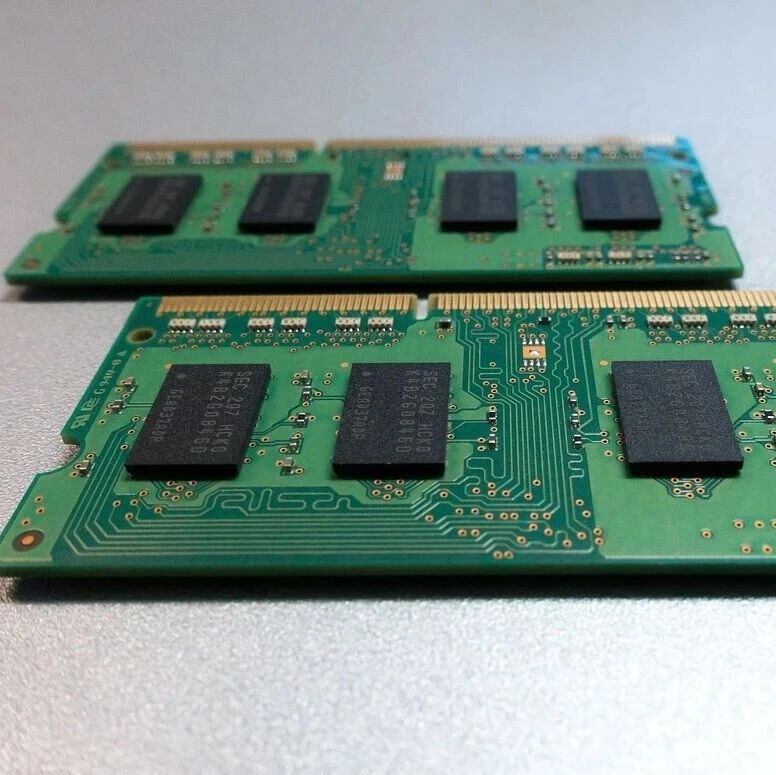
Dell earnings send blunt Micron message
Yahoo Finance· 2025-11-27 00:24
Core Insights - Dell Technologies is experiencing significant growth in AI server demand, with a reported 150% increase in server orders for AI, reaching $30 billion in fiscal 2026 [4] - The company anticipates continued strength in AI server shipments, with projections of a 50% increase to $37 billion in fiscal 2027 [5] - Rising demand for AI servers is expected to create a memory super cycle, impacting memory prices across the industry [5][6] Group 1: Dell's Performance - Dell's third-quarter results highlighted a surge in server demand driven by AI, contributing to higher sales and orders [1] - The momentum in AI server demand has accelerated in the second half of the year, building on a strong first half [2] - Dell's CFO indicated that the company will ship $25 billion in AI servers this fiscal year, with expectations of continued growth [4] Group 2: Industry Implications - The increase in AI server demand is likely to benefit companies like Micron, as they supply high-bandwidth memory needed for these servers [2][4] - Current memory supply chain concerns may lead Micron into another memory super cycle, driven by hyperscaler and enterprise spending [3] - Dell's management acknowledged that rising memory prices will affect all product categories, indicating a broader industry trend [5][6]

Morgan Stanley Sees Risk in Hardware, Tailwinds in Memory Stocks
Youtube· 2025-11-17 16:30
Core Viewpoint - Morgan Stanley has issued downgrades for Dell, HP, and HP Enterprise due to rising memory costs and weakening demand for non-hardware products, while maintaining a bullish outlook on the memory sector [1][3][5]. Summary by Category Market Reaction - Dell, HP, and HPE stocks are down between 3% and 7% following the downgrades from Morgan Stanley [1][2]. - Dell experienced a double downgrade, leading to a decline of over 7% in its stock price [6]. Downgrade Details - Dell's price target was reduced from $144 to $110, with concerns over increased memory costs and a shift towards AI servers impacting margins [6][7]. - HP's rating was downgraded from equal weight to underweight, with a price target decrease from $26 to $24, citing potential margin compression despite a possible PC refresh cycle [7][8]. - HPE's rating was adjusted from overweight to equal weight, with a price target reduction from $28 to $25, acknowledging rising component costs as a profitability constraint [8][9]. Industry Trends - The memory sector is experiencing a "super cycle," with ND and DRAM spot prices increasing by 50% to 300% over the past six months, which is expected to impact hardware companies' earnings in 2026 [3][4]. - Historically, hardware OEMs face gross margin compression 6 to 12 months after memory costs rise, with expectations for this trend to affect earnings in 2026, contrary to previous forecasts of slight expansion [4][5].

投资者演示文稿 - 存储超级周期、SPE 与中国数据中心-Investor Presentation- Memory Super Cycle, SPE and China Data Centers
2025-11-04 01:56
Summary of Key Points from the Conference Call Industry Overview - **Industry**: South Korea Technology, specifically focusing on memory semiconductor market including DRAM and NAND flash memory [2][6][65] Core Insights and Arguments - **Memory Super Cycle**: The memory market is expected to experience a significant upcycle, similar to the cycle observed in 2016, with potential for substantial earnings growth into 2026 [6][9] - **Pricing Forecasts**: - DRAM prices are projected to increase significantly, with DDR4 expected to rise by 38-43% in Q3 2025 and 23-28% in Q4 2025 [12] - NAND flash prices are also expected to see increases, with total NAND flash projected to rise by 20-25% in Q4 2025 [12] - **Supply and Demand Dynamics**: - DRAM supply vs. demand sufficiency ratio is anticipated to turn significantly negative, indicating a tightening supply situation [9] - NAND supply is headed towards unprecedented tightness, which could further drive prices up [9][12] Company-Specific Insights - **Samsung Electronics and SK Hynix**: - Both companies are highlighted as key players in the memory market, with their share prices and earnings revision breadth being closely monitored [13][14] - Samsung's foreign ownership has been increasing, reaching 51% by April 2025, while SK Hynix's foreign ownership is at 49% [17] - **Valuation Metrics**: - The report discusses the valuation metrics of Samsung and SK Hynix, indicating a competitive landscape with varying earnings revision trends [14][15] Additional Important Information - **Investment Banking Relationships**: Morgan Stanley has managed or co-managed public offerings for companies like LG Electronics and SK Hynix, indicating potential conflicts of interest [25][26] - **Analyst Ratings**: The report includes a distribution of stock ratings, with a significant portion rated as Overweight, indicating a positive outlook for the sector [37][39] - **Market Sentiment**: The overall sentiment in the memory market is shifting towards optimism, with expectations of continued price increases and strong demand [6][9] This summary encapsulates the critical insights from the conference call, focusing on the memory semiconductor industry and the performance outlook for key players like Samsung and SK Hynix.
投资者演示_存储超级周期与 OCP 影响-Investor Presentation_ Memory Super Cycle and OCP Implications
2025-10-23 13:28
Summary of Key Points from the Conference Call Industry Overview - The conference call focused on the **Memory Super Cycle** and its implications for the **semiconductor industry**, particularly in the Asia Pacific region [7][8][33]. Core Insights - **Memory Price Upside**: There is a potential **32% upside** for memory share prices if the current cycle mirrors the **2016 cycle**, with significant earnings growth expected into **2026** [8][16]. - **Earnings vs. AI Narratives**: The emphasis is on earnings driving returns rather than solely relying on narratives surrounding artificial intelligence [16][20]. - **Samsung vs. SK Hynix**: Recent month-over-month consensus earnings per share (EPS) revisions indicate that **Samsung Electronics** is outpacing **SK Hynix** in terms of EPS revision changes [17][22]. Market Dynamics - **Lithography Equipment Orders**: Orders for **EUV lithography equipment** from **ASML** were robust, totaling **€5.4 billion**, with **€3.6 billion** specifically for EUV equipment. However, orders from China are declining [33]. - **Memory Maker Orders**: An increase in orders from memory makers poses a potential risk to earnings, indicating a cautious outlook for the semiconductor production equipment sector [33]. Price Trends - The price trends for **DRAM** and **NAND** memory products were discussed, highlighting the competitive landscape among suppliers and OEMs [12][14][15]. Company Ratings - The report includes stock ratings for various companies in the semiconductor sector, with **Samsung Electronics** and **SK Hynix** rated as **Overweight** [94]. Additional Insights - **Foreign Ownership**: The report notes the foreign ownership levels of **Samsung** and **SK Hynix**, which may impact their stock performance and investor sentiment [23]. - **Emerging Technologies**: The potential for **immersion cooling technology** is expected to see significant growth by **2028**, indicating a shift in cooling solutions for semiconductor manufacturing [35][36]. Conclusion - The semiconductor industry, particularly memory manufacturers, is poised for growth driven by earnings and market dynamics, with a focus on technological advancements and competitive positioning among key players like **Samsung** and **SK Hynix** [7][8][33].