
Oil supply shock

Search documents
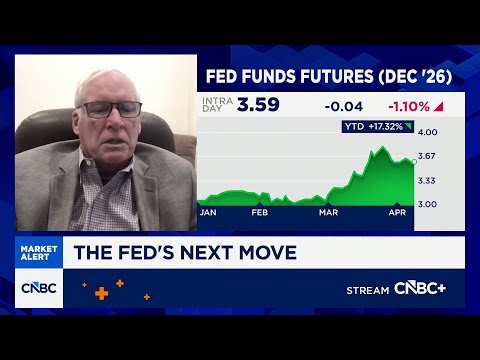
Fmr. Boston Fed Pres.: Until the Strait of Hormuz fully opens there will still be oil supply shock
CNBC Television· 2026-04-08 21:35
the tools to trade in any market environment. >> WELCOME BACK TO OVERTIME. WEST TEXAS OIL SEEING ITS STEEPEST ONE DAY DECLINE SINCE THE DEPTHS OF COVID IN 2020.BUT THAT'S STILL ABOUT $30 PER BARREL HIGHER THAN BEFORE THE IRAQ WAR BEGAN. SO WHAT ARE THE RIPPLE EFFECTS OF THIS SHOCK GOING TO BE ON THE ECONOMY AND THE CONSUMER. JOINING ME NOW IS ERIK ROSENGREN, FORMER BOSTON FED PRESIDENT AND CURRENTLY A VISITING SCHOLAR AT THE MIT GALLUP CENTER FOR FINANCE AND POLICY.AND ERIKA, IT'S GREAT TO SEE YOU. I GUESS ...

Fossil fuels as a “weapon of war”: Investigative journalist Antonia Juhasz and Chris Hayes
MSNBC· 2026-04-07 13:01
There’s a lot to unpack about the risk of a historic global oil supply shock amid the U.S. war with Iran. Disruptions in the Strait of Hormuz and other regions continues to drive fuel hoarding, panic buying and a marked rise in costs. Meanwhile, significant hurdles continue to impede efforts to transition to more green energy. Antonia Juhasz is an investigative journalist specializing in energy, author and politics reporter for Rolling Stone. She joins Chris Hayes to discuss the impact the war in Iran is ha ...

Goldman Sachs draws 3 major conclusions from oil supply shocks
Yahoo Finance· 2026-03-29 15:07
Core Insights - The ongoing Iran war has caused oil supply shocks, destabilizing the global economy and affecting oil prices, which are crucial for economic stability [1][3] - Goldman Sachs has analyzed the impact of rising oil prices on the U.S. labor market, drawing three key conclusions [4][6] Group 1: Oil Price Impact - Brent crude futures have risen to approximately $111 per barrel, nearing levels last seen in June 2022, due to potential U.S. troop deployments in the Middle East [4] - The last significant spike in gas prices occurred after Russia's invasion of Ukraine in 2022, when Brent crude prices peaked at $123.64 per barrel [5] Group 2: Labor Market Analysis - Higher oil prices are expected to reduce job growth and increase unemployment, but the impact is now about one-third as significant as it was from 1975 to 1999, attributed to lower oil intensity in U.S. GDP and increased domestic shale production [6] - Goldman Sachs estimates that the oil price shock could raise the unemployment rate by 0.1 percentage points, contributing to an expected total rise of 0.2 percentage points to 4.6% by Q3 2026 [7] - The effect of higher gas prices on the labor market is less pronounced than in the past, with job loss estimates aligning with the Federal Reserve's model, indicating that traditional job gains in certain sectors will be more subtle this time [8]

Trump Signals Iran Ceasefire Talks: Should You Buy Risk-On ETFs?
ZACKS· 2026-03-24 13:02
Geopolitical Developments - President Trump has delayed potential U.S. strikes on Iranian energy infrastructure for five days, citing ongoing discussions aimed at resolving the conflict [1] - Trump described the talks as "very good and productive," indicating a possible path toward a resolution, but emphasized that any pause in escalation depends on the success of negotiations [2] - Iran's Fars news agency reported no communication with Trump, raising doubts about the status of the talks [2] Market Outlook - The S&P 500 has lost about 3% over the past month, with JPMorgan strategists lowering their year-end target for the index from 7,500 to 7,200 due to geopolitical risks [3][4] - A potential oil supply shock linked to disruptions in the Strait of Hormuz is a significant concern, with crude oil prices around $110 per barrel potentially reducing S&P 500 earnings per share estimates by 2-5% [4][5] Investment Strategies - JPMorgan advises investors to remain invested in equities while maintaining downside hedges, noting that historically, four out of five major oil shocks since the 1970s have led to recessions [6] - Several exchange-traded funds (ETFs) are highlighted as potential investment options amid rising volatility and the need for downside protection [7] ETFs Overview - The Invesco S&P 500 Downside Hedged ETF (PHDG) aims for positive total returns in various market conditions, charging 39 bps in fees and yielding 2.07% annually [8] - The NEOS Nasdaq-100 Hedged Equity Income ETF (QQQH) seeks high monthly income with downside protection, charging 68 bps in fees and yielding 8.42% annually [9] - The Invesco QQQ Income Advantage ETF (QQA) provides exposure to the Nasdaq-100 Index with an active option income overlay, charging 29 bps in fees and yielding 10.16% annually [11] - The FT Vest Laddered Buffer ETF (BUFR) aims for capital appreciation while limiting downside risk, charging 95 bps in fees [12]

Goldman Boosts Oil Price Forecast by $8 for Brent and $7 for WTI
Yahoo Finance· 2026-03-23 09:10
Price Outlook - Brent crude is projected to average $85 per barrel and West Texas Intermediate (WTI) at $79 per barrel this year, an increase from previous estimates of $77 and $72 respectively [1] - Current trading prices are $112.69 per barrel for Brent and $99.60 per barrel for WTI, reflecting a rise as geopolitical tensions escalate [2] Geopolitical Tensions - President Trump issued an ultimatum to Iran, demanding the reopening of the Strait of Hormuz within 48 hours or face severe military consequences [3] - Iran has threatened to target the energy and water infrastructure of U.S. allies in the region in response to the ultimatum [3] Supply Disruption - Goldman Sachs anticipates that the disruption in tanker traffic through the Strait of Hormuz will last for six weeks, followed by a gradual recovery of crude shipments [4] - The closure of the Strait has resulted in a significant impact, cutting off 20% of global oil flows [4] Market Implications - The current oil supply shock is expected to highlight structural risks associated with the concentration of oil production and spare capacity in the Middle East [5] - Analysts express concerns that the disruption could extend for months, even if military actions cease [4]
Oil prices whipsaw as Trump's Hormuz ultimatum and Iran threats keep markets on edge
CNBC· 2026-03-23 06:07
Core Viewpoint - Oil prices are experiencing volatility due to geopolitical tensions, particularly regarding the Strait of Hormuz, which is critical for global oil supply [1][5][7]. Oil Price Movements - International benchmark Brent crude increased by 0.23% to $112.42 per barrel, while U.S. West Texas Intermediate (WTI) crude rose by 0.28% to $98.51 per barrel [2]. - Goldman Sachs has raised its oil price forecasts significantly, predicting Brent to average $110 in March and April, a 62% increase from the 2025 annual average [3]. Geopolitical Impact - The situation in the Middle East is described as "very severe," with potential impacts worse than the oil shocks of the 1970s and the Russia-Ukraine war combined [9]. - Iran has threatened to target electric plants and water facilities if its electrical grid is attacked, indicating a potential escalation in conflict [2][6]. Supply Chain Concerns - The Strait of Hormuz, which typically handles about 20% of global oil supplies, remains largely blocked, contributing to fears of a supply shock [7]. - Goldman Sachs analysts suggest that if Hormuz flows remain at 5% of normal levels, Brent prices could exceed their 2008 record levels [4][5]. Strategic Responses - The International Energy Agency (IEA) member nations agreed to release a record 400 million barrels of oil from strategic stockpiles to mitigate supply disruptions caused by the conflict [11]. - The widening price gap between Brent and WTI, exceeding $14 per barrel, reflects greater geopolitical risks affecting international crude oil compared to U.S. crude [12]. Market Outlook - Analysts suggest that the U.S. is relatively insulated from the impacts of the Middle East conflict due to its status as the world's largest oil producer and ongoing shipments from strategic reserves [13]. - The market may be nearing the peak intensity of the current oil crisis, with expectations that Brent crude prices will remain elevated for an extended period [14].

原油追踪-海上受制裁原油:霍尔木兹海峡中断的部分缓冲-Oil Tracker_ Sanctioned Oil on Water_ A Partial Offset to Hormuz Disruptions
2026-03-22 14:24
Summary of Key Points from the Conference Call Industry Overview - The report focuses on the oil and gas industry, particularly the impact of geopolitical tensions in the Middle East on oil production and prices. Core Insights and Arguments - **Escalation of Attacks**: Recent attacks on energy facilities in the Middle East, including Iranian retaliation, have significantly impacted oil production. Notable facilities affected include: - Two Kuwaiti refineries with a combined capacity of 0.8 million barrels per day (mb/d) - Saudi Arabia's Samref refinery with a capacity of 0.4 mb/d - UAE's Bab oil field, leading to gas facility suspensions [3][4][5] - **Production Shut-ins**: Total crude production shut-ins are estimated at 9.2 mb/d, primarily due to precautionary measures and storage management [3][31][90]. - **Long-term Risks**: The escalation of attacks poses risks not only to immediate oil exports but also to long-term production capacity. For example, attacks may have reduced Qatar's LNG capacity by 17% for 3-5 years [3][4]. - **Oil Prices**: Oil prices have shown volatility, with WTI trading at a $13 per barrel discount to Brent, the highest since the US oil export ban was lifted in 2015 [3][6]. - **US Policy on Oil Exports**: The US Treasury has authorized sales of Russian oil on water and is considering similar measures for Iranian oil. The current overhang of oil on water is estimated at 236 million barrels (mb), which could offset only about two weeks of disrupted flows through the Strait of Hormuz [3][4][5]. - **Market Focus**: The market is closely monitoring potential restrictions on US oil exports, which could significantly impact supply in regions like Northwest Europe and South Korea [3][8][10]. Additional Important Insights - **Physical Risks for Tankers**: The risk to oil tankers in the Middle East remains high due to ongoing attacks, which could further disrupt oil supply chains [3][25][28]. - **Refinery Outages**: Refinery outages in the Middle East are currently 2.0 mb/d above seasonal norms, indicating heightened operational challenges [3][32]. - **Global Demand Trends**: US gasoline demand is currently 0.4 mb/d lower than the previous year, reflecting changing consumption patterns amid rising prices [3][77]. - **Energy Price Dynamics**: European jet fuel prices are reported to be nearly double that of Brent crude prices, indicating significant regional price disparities [3][48]. - **Market Sentiment**: The probability of the conflict in Iran ending soon has decreased significantly, with market participants now estimating a 4% chance of resolution by March 31 [3][38][40]. This summary encapsulates the critical points discussed in the conference call, highlighting the current state of the oil and gas industry amidst geopolitical tensions and market dynamics.

Wall Street just gave Devon Energy investors a big surprise
Yahoo Finance· 2026-03-19 03:33
Core Viewpoint - Devon Energy is experiencing a positive shift in market sentiment due to analyst upgrades and rising oil prices amid geopolitical tensions, particularly the Iran conflict [1][2][6]. Analyst Upgrades - Raymond James raised its price target for Devon Energy to $62 from $52, maintaining an outperform rating [1]. - TD Cowen increased its target to $50 from $46 while keeping a hold rating [1]. Oil Market Dynamics - The ongoing conflict involving the U.S., Israel, and Iran is causing significant disruptions to global oil supply, particularly through the critical Strait of Hormuz, which carries about 20% of the world's oil supply [2][3]. - Brent crude prices have surged above $100 per barrel, reaching as high as $126, marking the largest energy supply shock since the 1970s [4]. Political Context - A notable political development occurred with the departure of Joe Kent from the U.S. National Counterterrorism Center, which has raised concerns about the direction of the conflict and its economic implications [5]. Impact on Devon Energy - Higher oil prices are positively impacting energy stocks, with Devon Energy positioned to benefit from this trend [6]. - The rise in crude prices is improving the financial health of several oil companies, including Devon, which was already performing well operationally [7][8].

How Will Tesla Sales, TSLA Stock Be Impacted By Crude Oil Prices Due To Iran War? Gary Black Says Lays Down The Math
Yahoo Finance· 2026-03-17 13:30
Core Insights - Brent crude prices have surpassed $100 per barrel due to the ongoing Iran war, which could impact Tesla's sales and stock performance [1][2] - The potential increase in Tesla's sales is linked to rising crude oil prices, as demand for electric vehicles (EVs) may rise relative to gas-powered vehicles [2][6] - However, inflationary pressures from higher oil prices could negatively affect long-duration stocks like Tesla, potentially lowering their valuation [5][8] Group 1: Oil Price Impact on Tesla - Higher oil prices could boost demand for Tesla's electric vehicles, theoretically leading to increased sales if Brent crude remains above $100 per barrel [2][6] - The geopolitical situation has led to significant disruptions in oil supply, contributing to what Goldman Sachs describes as the largest oil supply shock on record [6][7] - The overall impact on Tesla's stock will depend on whether the positive demand from rising oil prices outweighs the negative effects of inflation and higher interest rates [5] Group 2: Market Performance and Resilience - Despite challenges from rising oil prices and inflation, Tesla has shown resilience in key markets, breaking a 13-month losing streak in Europe with significant sales gains in France, Spain, and Norway [8] - The current situation presents a dual impact on Tesla's stock value, with both potential demand increase and inflationary pressures at play [4][8]

Oil at the Edge: Markets brace for the largest supply shock in decades: Oil & Gas 360
Yahoo Finance· 2026-03-12 21:30
Core Insights - Oil markets are facing a significant supply shock due to escalating tensions in the Middle East, particularly concerning the Strait of Hormuz, which could lead to oil prices nearing $100 per barrel [1][2] - The International Energy Agency has indicated that the current conflict could result in the largest oil supply disruption in modern history if exports from Gulf producers are affected [2] - There is a mix of alarm and restraint in market responses, with U.S. energy officials downplaying predictions of oil prices reaching $200 per barrel, citing global spare capacity and strategic reserves as buffers [3] Market Dynamics - Traders are assessing potential supply losses and the duration of any disruptions, with temporary interruptions likely causing price spikes that may stabilize as supply adjusts [4] - The Strait of Hormuz is critical to global energy flows, and its stability is essential given the geopolitical fragility of the region [5] - Historical patterns show that markets typically do not remain stagnant for long, as producers seek alternative routes and shipping patterns adapt [5] Future Implications - The current situation raises questions about whether this is a temporary geopolitical spike or the onset of a structural energy shock that could have lasting effects on the global economy [7] - The market has already begun to react to the situation, indicating that the impact is being felt [6]