P.A.C.E模型

Search documents
轻盈新食代体重管理背后的消费新势能-Flywheel飞未
Sou Hu Cai Jing· 2025-10-16 17:43
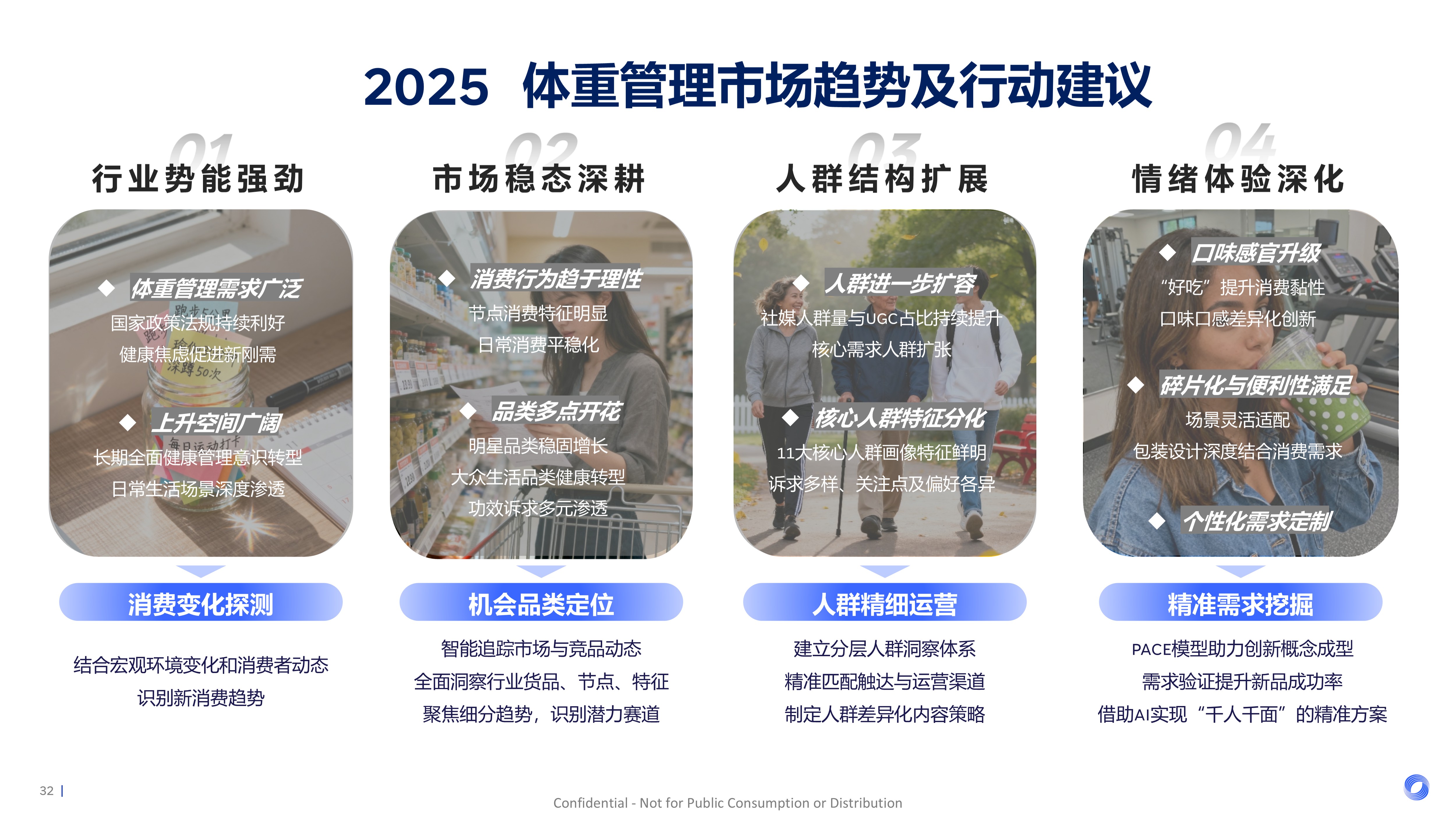
Core Insights - The report focuses on the weight management food and beverage market, highlighting its evolution through various phases and projecting significant growth in the coming years, with the Chinese market expected to reach 326 billion by 2025, reflecting a compound annual growth rate (CAGR) of 15.8% from 2020 to 2024 [1][17]. Market Evolution - The weight management market has transitioned through four phases: 1. Aesthetic-driven phase (pre-2010, focused on dieting) 2. Scientific enlightenment phase (2010-2015, focused on body shape management) 3. Health awakening phase (2016-2020, integrating healthy eating with exercise) 4. Current integration phase (2021-2025, focusing on a balance of diet, exercise, lifestyle habits, and mental state) [1][14]. Consumer Behavior - 70% of practitioners have integrated weight management into their daily lives, with consumer goals shifting from fat loss and body shaping to overall health improvement (72%) and enhancing vitality (67%) [1][17]. - The market is driven by societal factors such as increased health anxiety, a growing sense of agency among consumers (60% of young people view it as a self-management method), and a focus on emotional value [1][18]. Market Performance - The market is expected to experience rapid growth in 2024, with stabilization in the first half of 2025. Key consumption peaks occur post-Chinese New Year and during summer, with significant promotional effects observed during events like the 618 shopping festival [1][21]. - The food and beverage categories, including instant coffee and tea drinks, are showing positive growth, while meal replacement powders are identified as a potential growth category [1][21][24]. Product Development - The P.A.C.E and START models are recommended for product development, addressing consumer needs from single-point management to holistic well-being. The core demographic is women aged 25-40 in first and new first-tier cities (85%), with opportunities for growth among men and lower-tier cities [1][27]. - Consumer preferences emphasize taste (with low satisfaction regarding health foods), packaging transparency, and convenience, leading to successful products like low-GI milk and other health-oriented items [1][27]. Industry Outlook - The industry is poised for strong momentum, necessitating a focus on detailed consumer engagement and emotional experience enhancement to create products that combine scientific efficacy with enjoyable experiences [1][28].


《体重管理食饮创新报告》:探索“有效且好吃”的产品研发思路
3 6 Ke· 2025-10-10 08:37
Core Insights - The weight management market is evolving from a focus on mere weight loss to a comprehensive health management approach that emphasizes metabolic health, body shape, and psychological well-being [1] - The main challenge in the current market is to create effective and marketable solutions that integrate scientific components, precise targeting, and innovative expression to open new growth avenues [1] Market Trends - The P.A.C.E model, derived from the Flywheel's START product evaluation framework, focuses on analyzing the alignment between product development and consumer trends [6] - The weight management market is experiencing a significant shift in consumer expectations, moving from single-dimensional body management to a holistic approach to health balance [13] Consumer Demographics - Women account for 85% of the weight management market demand, with the primary demographic being young to middle-aged individuals (ages 25-40) [18][23] - The demand is concentrated in first-tier cities like Beijing, Shanghai, and Guangzhou, indicating a strong interest in health management across various lifestyle dimensions [23] Emerging Consumer Needs - There is a notable increase in related health needs such as health care, emotional regulation, and energy activation, indicating that consumers are integrating weight management into broader life scenarios [17] - The "sugar control" demand remains the most significant among target groups, with the "intermittent fasting" demographic showing a remarkable growth rate of 228% [26] Consumption Patterns - The traditional three meals a day model is being disrupted by a 24/7 consumption demand, with late-night consumption growing by 83% [32] - Outdoor activity consumption has surged by 257%, reflecting the trend of portable health foods accompanying fitness activities [37] Product Experience - Consumer satisfaction is heavily influenced by taste and packaging design, with a high level of dissatisfaction regarding taste despite good efficacy ratings [42] - The market is shifting towards flavor innovations that balance health benefits with sensory enjoyment, leading to four main flavor innovation directions: "health consciousness," "sensory satisfaction," "natural freshness," and "enjoyable balance" [43] Packaging Innovations - To address consumer pain points, innovative packaging solutions are being developed to reduce decision fatigue, enhance convenience, and boost motivation for sustained weight management [73] - Successful packaging is seen as a tool to lower decision costs, improve user experience, and encourage adherence to health management goals [73]