PERM(永久劳工认证)

Search documents
H-1B彻底变天,高薪加权三重绞杀,90%留学生恐出局
3 6 Ke· 2025-12-24 11:17
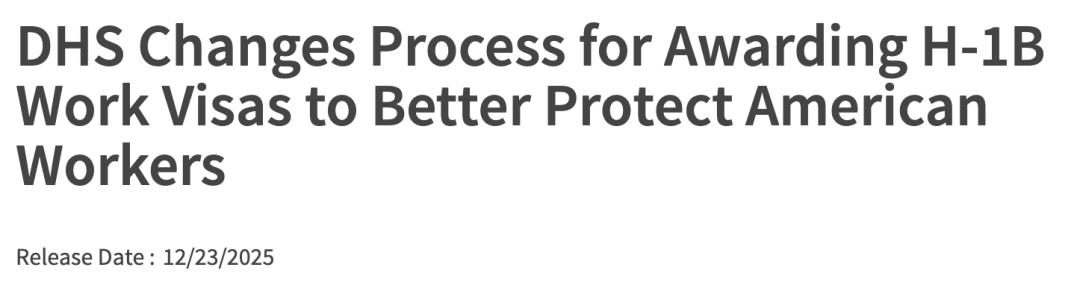
Core Points - The U.S. Department of Homeland Security (DHS) has announced a significant reform to the H-1B visa selection process, shifting from a random lottery system to a weighted selection based on wage levels, prioritizing higher-skilled and higher-paid foreign workers [1][2][10] - This new rule will take effect on February 27, 2026, and will first apply to the FY2027 H-1B registration season [2][10] - The reform introduces a "three-tier" system for H-1B applications, including a $100,000 application fee, mandatory social media reviews, and a focus on high-skill, high-wage positions [7][26] Summary by Sections H-1B Visa Reform - The H-1B visa selection process will now prioritize applicants based on their wage levels, with higher wage levels receiving more chances in the selection pool [1][10] - The total number of H-1B visas remains at 65,000, with an additional 20,000 reserved for applicants with advanced degrees from U.S. institutions [10] Weighted Selection Process - Applicants will be categorized into four wage levels, with Level IV applicants receiving four entries in the selection pool, Level III three entries, Level II two entries, and Level I one entry [14][15] - The probability of selection for Level IV applicants is expected to increase by 107%, while Level I applicants may see a decrease of 48% in their chances [16] Impact on International Students - The new rules are expected to severely impact recent international graduates, as approximately 90% of H-1B applicants fall into the lower wage levels (I and II) [21][22] - The focus on higher wages may deter companies from hiring recent graduates, who often command lower starting salaries despite having relevant skills [24] Social Media Review and Application Challenges - A mandatory social media review process will be implemented, requiring applicants to make their online presence public for scrutiny [26][29] - Delays in processing applications have been reported, particularly affecting Indian applicants, with many appointments being canceled or rescheduled [31][33] Corporate Responses - Major tech companies, including Google, are adapting to these changes by expanding their Permanent Labor Certification (PERM) processes to facilitate H-1B employees transitioning to green cards [42][46] - The new regulations are seen as a challenge for tech giants in attracting talent, particularly from international markets [41]