Regenerative agriculture

Search documents
Saving Insects by Rethinking Plastic | Melian Dott | TEDxGeorge
TEDx Talks· 2026-03-16 15:16
Do you believe in aliens. Life forms vastly different from humans and other animals, creatures with multiple legs and eyes, wings, tongues, and antenna thrice the length of their bodies. Well, they're here and they've lived in harmony with every previous generation of humans until now.These aliens are insects, bugs, creatures, or as we call them in South Africa, hos. But they are disappearing faster than we can discover them. Global insect populations are rapidly declining, bringing with it the six mass ext ...


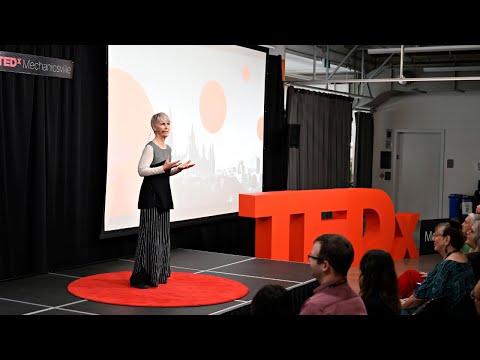
Ottawa: Canada's Natural Capital | Rebecca Aird | TEDxMechanicsville
TEDx Talks· 2026-03-02 17:29
I'm only half joking when I refer to Ottawa as a city state. In land area, our city is half the size of the province of Prince Edward Island. If this is a surprise to you, please raise your hand.This poll is not just a TEDex engagement strategy. It is um a test of reality because if so many of you who care enough about big picture thinking to come to TEDex talks are unaware how vast our city is, it's certain you're not alone. Yet this reality, if embraced as part of our identity, could transform the future ...
We’re Not Running Out of Resources | Chiara Cecchini | TEDxBerlin Women
TEDx Talks· 2026-02-18 17:41
Let me begin with a stark reality. We reshaped our planet to an unimaginary scale. We wiped out 99.9% of the species we once shared this planet with.70% of primary forest ecosystems that took millions millions of years to form gone in one single generation. We're using 50% of the planet of our habitable land just for agriculture. 80% of fresh water goes to feed ourselves.This is both devastating and honestly amazing. We have empowered our own species through that to get to 8 billion people. And despite my d ...

Sabrina Dhowre Elba: Food systems need to be an ‘always-on economic issue'
Youtube· 2026-01-28 13:30
Core Insights - The connection between rural producers and food systems is often overlooked, despite their crucial role in biodiversity and global food supply [1][2] - Strengthening the "first mile" of food systems is essential for ensuring food security, especially in the face of conflicts and climate shocks [2] - Investment in small-scale producers transitioning to regenerative agriculture is necessary to support soil health and biodiversity [3][4] Investment Models - Supporting small-scale producers during their transition period is vital, as they may not see returns for several years [4] - Partnerships with local financial institutions can provide essential funding, such as 0% loans, to help farmers adapt to climate challenges [4][5] - Evidence shows that investments in rural communities can lead to a 30% increase in income, production, and market connectivity [6] Challenges in Food Systems - One in ten people globally cannot feed themselves, with many lacking access to water, finance, and insurance [7] - Governments often struggle to support small-scale farmers due to macroeconomic issues, including debt [7][8] - Establishing trust and relationships between larger businesses and rural producers is a complex challenge that needs addressing [8] Broader Implications - Food security should be viewed as a continuous economic issue rather than only during crises, as it impacts various sectors [9][10] - The interconnectedness of food systems with economic and political factors necessitates ongoing attention and investment [9][10]

The hidden plastics in your closet | Phoebe Yu | TEDxGreatPacificGarbagePatch
TEDx Talks· 2025-12-16 16:19
Problem Statement & Impact - The fashion industry relies heavily on polyester, a plastic derived from fossil fuels, which constitutes 60% of all textiles [1] - Synthetic textiles contribute to 35% of global microplastic pollution [3] - Polyester production reached 78 million tons last year, enough for 10 new polyester t-shirts for everyone on Earth [3] - Microplastics from textiles are found in water, air, food, and even human bodies, including lungs, bloodstreams, and placentas [4] - Failure to address fashion's plastic problem will hinder efforts to fix overall plastic pollution by 2040 [4] Innovation & Solutions - Companies are developing elastic made from bamboo fiber and natural rubber, certified by the Forest Stewardship Council, offering 11% better stretch without fossil fuels [5][6] - Alternative leathers are being created using grain to mimic collagen, avoiding PU and PVC plastics [6] - Seaweed is being transformed into antimicrobial and flame-resistant textiles [7] - Enzymes are used to capture carbon dioxide and convert it into cellulose fibers [7] - Some brands demonstrate that high-performance sportswear can be made entirely of natural fibers [7] Sustainable Practices & Considerations - New materials must be assessed to ensure they are not more harmful than existing ones [8] - Diverse farming systems that restore and enrich the soil are needed, avoiding monocropping [9] - Sourcing should prioritize existing farmlands, waste streams, and regenerative crops, avoiding deforestation [9] - Harmful chemicals should be avoided, seeking safer alternatives [9] - Materials should be designed for a full life cycle, with biodegradability as a starting point [10] Scaling & Adoption - Solutions must be easy, affordable, and desirable for both consumers and brands [11] - Innovations should fit into existing systems, avoiding massive overhauls or costs [11] - Governments should provide incentives and regulations to support true transformation [11] - Collaboration is essential among innovators, brands, manufacturers, and policymakers [11] Company's Approach - The company uses biomimicry and green chemistry to accelerate natural processes [12] - Regenerative crops and agricultural waste are converted into high-cellulose biomass using enzymes and bacteria [12] - Green chemistry is used to transform biomass into fully biodegradable fibers [13] - This closed-loop system creates value for farmers, fiber makers, and brands [13]

EQS-News: Naturally Amish (SMEV) Secures Supply of 20,000 Cattle Per Year For Wholesale and Direct-To-Consumer Sales
Markets.Businessinsider.Com· 2025-12-16 15:23
Core Insights - Naturally Amish has established a reserve of at least 20,000 cattle annually, aiming for a minimum profit margin of 10%, which translates to over $70 million in revenue and a minimum annual profit of $7 million [1][5] Group 1: Company Operations - Each cow in the reserve is raised with a focus on ethical standards, prioritizing animal welfare and environmental stewardship, which enhances the quality of the livestock [3] - Naturally Amish is actively seeking USDA-certified meat processing facilities in Michigan, Ohio, and Indiana to expand its beef offerings into the wholesale market [5] - The company has achieved Beef Quality Assurance (BQA) Certification, reflecting its commitment to high standards in cattle care and beef safety [6][7] Group 2: Industry Context - The U.S. beef industry is facing challenges, with a 17% decline in family farms since 2017, resulting in over 100,000 operations lost, while consumer demand for beef has risen by 9% [4] - The national cattle herd is at its lowest level in 75 years, prompting the USDA to implement initiatives to stabilize markets for ranchers and make beef more affordable for consumers [4]

From Canada to 50 States: CEO Interview with Neil Wiens on Replenish Nutrients' U.S. Breakout Strategy
Prnewswire· 2025-12-01 16:19
Core Insights - Replenish Nutrients is transitioning from a regional fertilizer producer to a global regenerative fertilizer licensing platform, with a target price of CAD 0.44 (USD 0.31) [1][2] - The company has formed an exclusive U.S. licensing agreement with Farmers Union Enterprises, which spans approximately 70 million acres, providing a significant entry point into the U.S. market [3][9] - Replenish's products can reduce CO₂ emissions by 0.4517 tonnes for every tonne of fertilizer produced compared to traditional synthetic methods [1][24] Group 1: Business Model and Strategy - Replenish Nutrients focuses on a high-margin, capital-light licensing model as the primary driver of value, with plans to scale operations globally [2][8] - The company aims to operate 10–15 pelletizing units globally, each producing 50,000–100,000 tonnes, positioning itself as a leader in regenerative agriculture [6][17] - Licensing royalties are projected to generate significant EBITDA, with each 50,000-tonne facility contributing approximately USD 200,000–300,000 per month in cash flow [10][19] Group 2: Operational Developments - The Beiseker facility is ramping up production to over 2,000 tonnes per month, with plans to add a second shift to sustain output [11] - The Debolt project is shovel-ready and will benefit from a CAD 7 million non-dilutive grant from Emissions Reduction Alberta, enhancing project economics [4][15] - Logistics is identified as the main operational risk, with a strong focus on securing partnerships to manage supply chain challenges [13] Group 3: Market Expansion and Demand - There is growing international interest in Replenish's products, particularly in Brazil and Africa, where demand for regenerative fertilizers is increasing [5][16] - The U.S. expansion strategy through Farmers Union Enterprises is expected to commission a plant by June/July, aiming for 25,000 tonnes in the first year [9][10] - North America has the potential to support over 50 pelletizing facilities, given the vast arable land available [17] Group 4: Future Vision and Goals - The long-term vision includes becoming a recognized leader in regenerative agriculture, operating in 6–7 countries with 10–20 licensed facilities [24] - The company is actively developing next-generation formulations to expand its product offerings and strengthen its market position [23] - The focus on yield increases, improved soil health, and reduced chemical inputs is central to attracting farmers to Replenish's products [22]

Kellanova, Walmart and Indigo Ag Partner to Advance Farmer Prosperity in Arkansas through Regenerative Agriculture
Prnewswire· 2025-11-24 13:00
Core Insights - A new partnership has been formed between Kellanova, Walmart, and Indigo Ag to promote regenerative agriculture practices among rice farmers in Arkansas, aiming to enhance farmer prosperity and environmental sustainability [1][2][3] Partnership Overview - The collaboration builds on four years of previous partnership efforts, which have already led to significant reductions in emissions (over 37,000 metric tons of CO2e), conservation of over 11 billion gallons of water, and financial benefits exceeding $900,000 for farmers [2][3] - Kellanova's involvement aims to expand these initiatives, aligning with the company's commitment to sustainable sourcing and community well-being [2][4] Financial Incentives and Practices - Farmers participating in the program will receive a financial premium for every pound of rice produced using regenerative methods, which supports practices like improved water management, optimized fertilizer application, and crop rotation [3][4] - The partnership is designed to create cost savings for both Kellanova and Walmart while ensuring that environmental and economic benefits are realized by farmers and their communities [5][6] Environmental Impact - The initiative focuses on advancing water conservation, improving soil health, and reducing emissions, thereby contributing to a more sustainable agricultural ecosystem [5][6] - Regenerative agriculture is recognized as a viable approach for companies to lower emissions in their supply chains while benefiting farmers and enhancing land quality [4][7] Call to Action - The partnership serves as an invitation for other leaders in the agricultural value chain to join efforts in expanding opportunities for farmers and fostering a more resilient and prosperous future for the region [7]



ESGFIRE Reinitiates Coverage on Canadian Fertilizer Innovator Replenish Nutrients, Highlighting Exclusive U.S. Licensing Strategy; Target Price CAD 0.44 (USD 0.31)
Prnewswire· 2025-11-17 14:14
Core Insights - Replenish Nutrients has announced a significant licensing deal with Farmers Union Enterprises (FUE), allowing exclusive rights to produce and sell its patented "SuperKS" pellet fertilizer across a vast Midwest market in the U.S. [1][2] - This partnership is expected to generate substantial revenue, estimated between CAD$2.8 million to CAD$8.4 million, as it opens access to a market covering approximately 70 million acres [1][6] - The demand for sustainable fertilizers is increasing, positioning Replenish to capitalize on this trend and potentially unlock faster growth due to its small market cap [3][4] Company Overview - Replenish Nutrients is a small-cap clean-tech fertilizer company based in Alberta, Canada, focusing on regenerative agriculture products that enhance soil health [4][11] - The company’s products are designed to reduce carbon emissions and improve soil health compared to conventional fertilizers, with studies indicating a reduction of 0.4517 tonnes of CO₂ emissions for every tonne of fertilizer produced [4][35] - Replenish's business model has shifted from production to a licensing platform, allowing it to earn per-ton royalties without heavy capital investment [11][44] Recent Developments - The Beiseker facility is nearing completion, expected to reach a capacity of 2,000 tonnes per month by the end of 2025, potentially generating CAD$13 million to CAD$16 million in annual revenue [6][29] - Replenish has also secured a CAD$7 million grant from Emissions Reduction Alberta to support the construction of the DeBolt facility, further enhancing its financial position [9][20] - The company has successfully closed a licensing deal with MJ Ag Solutions, allowing for the installation of a pellet line in Alberta, which is expected to generate additional royalty income [7][8] Market Opportunity - The U.S. fertilizer market is significantly larger than Canada’s, with estimates suggesting it exceeds CAD$44 billion, providing a substantial addressable market for Replenish's products [38][41] - The regenerative agriculture sector is growing at an annual rate of 10-15%, driven by sustainability mandates, indicating a favorable environment for Replenish's offerings [39][40] - Replenish's licensing model allows for scalable growth, with potential expansions into international markets such as South America, Europe, and India, where demand for sustainable fertilizers is rising [21][22][23] Financial Projections - For 2026, Replenish is projected to achieve approximately CAD$3.1 million in EBITDA, with significant contributions expected from its licensing agreements [56] - By 2027, EBITDA is expected to scale to approximately CAD$9.4 million, reflecting the full ramp-up of its licensing strategy [57] - The company’s valuation could increase significantly, with projections suggesting an enterprise value of CAD$282 million by 2027 based on a 30× EV/EBITDA multiple [59] ESG Impact - Replenish's products align with ESG themes by reducing greenhouse gas emissions and improving soil sustainability, making it attractive to investors focused on sustainable practices [35][37] - The company’s approach to regenerative agriculture not only addresses environmental concerns but also supports farmer-owned networks, enhancing rural economies and food security [36][37]


How to Embody Fungi's Wisdom | Harriet Trower | TEDxCabarete
TEDx Talks· 2025-10-20 15:44
Core Message - Fungi possess ancient wisdom that can guide reconnection, regeneration, and resilience [5] - Fungi act as first responders after crises, bridging death and rebirth through interconnected networks [8] - True resilience is rooted in adaptability and the courage to transform [19] Ecological Regeneration - Fungi connect forests, sharing nutrients and water through the mycelial network [8][9] - Regenerative agriculture, mimicking natural processes, increases soil health and fertility [11] - Nature takes approximately 500 years to create 1 cm of topsoil, but regenerative practices can accelerate this process significantly [13] Community & Interdependence - The Cabarete Sen project demonstrated the importance of relationships, networks, and mutual aid in crisis response [7][8] - The project highlighted the shift from self-sufficiency to community resilience, emphasizing resource sharing and collaboration [10] - Interdependence is crucial for thriving together, reminding us to support one another [10] Personal Resilience & Transformation - Healing inner ecosystems (mind, body, spirit) is essential for healing the earth [14] - Transforming pain and trauma into "sacred fertilizer" can nourish the present [15] - Adaptability and transformation are key to resilience in a rapidly changing world [19]