Repetition

Search documents
people quit too soon
20VC with Harry Stebbings· 2026-03-18 05:00
The biggest mistake I see people make is they say, "That's just not me. I'm not a good speaker. That's just not me. I'm not good at social media. That's just not me." What they don't understand is everything is like the gym. No one walks into the gym and goes, "Treadmill, my old friend. I love going on you." The first time it's really hard. You suck. You sweat.It's tough. But you go again and you go again and again and you get better and better and better. And through repetition you drive quality.And a year ...

Brands Hijack Our Memory, And That's Not a Bad Thing | Blesson Varghese | TEDxBITD
TEDx Talks· 2026-01-28 16:45
Brands hijack our memory. And maybe that's not a bad thing. You see, we think of our brains as something we can control. We have a expectation of our brain.We think that it's neat. We think that it's organized. We think that it's intentional.But in reality, it's totally different. Our brains are messy. They are emotional. They they have sensory elements and they are biased.We have so many things in our brains going on at the same time. Our brains keep what's familiar and forgets what not. And great brands, ...

Are we teaching against the brain? | Julia Volkman | TEDxApex
TEDx Talks· 2025-11-25 17:38
Brain Development & Learning - The brain's efficiency increases with repetition, transforming connection jungles into neuronal superhighways [8] - Interest is learning's superpower, driving repetition and making practice easier [10][11] - Brains are uniquely sculpted by individual interests and experiences [12] - Neuroscience indicates the benefits of interest-driven deep learning for robust brains [21] Educational Implications - Traditional, teacher-led schools may lead to different brain development compared to student-led, interest-driven schools [19][20] - Student-led, interest-driven schools are associated with greater neuronal stability, network integration, creativity, attention, self-regulation, and social interaction [18][20] - Educators should be flexible with timelines, encourage repetition, and foster student interests to optimize learning [22] Cognitive Load & Brain Function - Learning involves a heavy cognitive load, requiring significant brain resources [2] - The brain prunes unnecessary connections to create shortcuts and improve efficiency [6] - Brains are constantly learning and changing, even rapidly [7]
Believe It, Achieve It: Self-Efficacy | Guanmou L | TEDxYouth@NIS
TEDx Talks· 2025-08-15 16:30
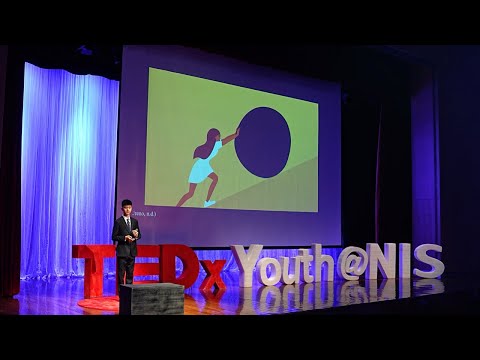
Core Concept - Self-efficacy, defined as belief in one's abilities, is crucial for setting challenging goals and persisting through failures [2] - Self-efficacy is a skill that can be learned through repetition and practice [3][4] Strategies for Building Self-Efficacy - Repetition is key to building self-efficacy, as demonstrated by neuroplasticity studies from the National Institute of Health [5][6] - Persistence is essential; failures should be viewed as learning opportunities rather than permanent roadblocks [8][9][10] - Positive self-talk and affirmations are important for overcoming self-doubt [13][14] - Surrounding oneself with supportive people increases the likelihood of persisting in challenging tasks, with a study showing a 23% increase in self-efficacy [16] - Selectively filtering feedback to focus on useful concepts can aid improvement [19][20] Examples of Self-Efficacy in Action - Overcoming initial struggles with learning piano through consistent practice [4][5] - Thomas Edison's numerous attempts to invent the light bulb demonstrate persistence [9] - Colonel Sanders's perseverance in selling his fried chicken recipe led to the creation of KFC [10]
The only Question to Answer | Gaurav Chintamani | TEDxAshokaUniversity
TEDx Talks· 2025-07-31 15:22
Core Idea - The speaker reflects on the challenges of maintaining authenticity and finding personal meaning in music and sound creation, amidst external pressures and internal conflicts [1][2][3][4] - The speaker emphasizes the importance of focusing on personal feelings and experiences as the foundation for creating genuine and impactful music [3][4] - The speaker advocates for continuous self-questioning and embracing discomfort to break through emotional barriers and achieve artistic expression [4] Musical Journey & Evolution - The speaker recounts early musical experiences in Agartala, India, and the pivotal moment of discovering a profound connection to sound [1] - The speaker describes the transition from playing popular music to pursuing original compositions, despite initial challenges and lack of recognition [1] - The speaker details the experience of studying sound engineering in Chennai and realizing the subjective nature of musical perception [1] - The speaker discusses the competitive nature of the music industry and the struggle to maintain artistic integrity amidst client expectations and peer comparisons [1] Artistic Philosophy & Creative Process - The speaker highlights the significance of an "Agartala moment" – a personal and transformative experience with sound that shapes one's artistic path [1] - The speaker shares an anecdote about his son's art, illustrating the power of naming and defining one's creative vision [3] - The speaker asserts that there are no inherently "bad" sounds or songs, only inappropriate ways of presenting them [4]