Robotaxi概念

Search documents
中泰国际每日动态-20251202
ZHONGTAI INTERNATIONAL SECURITIES· 2025-12-02 02:18
Market Performance - The Hang Seng Index closed at 26,033 points, up 0.7%, while the Hang Seng China Enterprises Index rose 0.5% to 9,173 points[1] - Total turnover in the Hong Kong stock market reached HKD 200.9 billion, higher than HKD 146.2 billion on the previous Friday, indicating increased market confidence[1] - Key sectors such as materials, industrials, and energy saw increases of 5.2%, 1.5%, and 1.1% respectively, while utilities, finance, and healthcare rose only 0.5%, 0.3%, and 0.3%[1] Stock Highlights - Sunny Optical Technology (2382 HK) and Zijin Mining (2899 HK) led the blue-chip stocks with gains of 6.2% and 5.3% respectively[1] - Bubble Mart (9992 HK) and Meituan (3690 HK) were the biggest losers, falling 4.3% and 2.9% respectively[1] Metal Sector Dynamics - The metal sector performed strongly, with Zijin Mining (2899 HK), Jiangxi Copper (358 HK), and Luoyang Molybdenum (3993 HK) rising between 5.3% and 10.2%[2] - Gold and London copper prices reached recent highs of USD 4,250 and USD 11,190 respectively, driven by market expectations of U.S. interest rate cuts[2] Real Estate Insights - In mainland China, new home sales in 30 major cities fell by 34.9% year-on-year to 2.42 million square meters, a decline from the previous week's 28.2%[3] - Hong Kong's retail sales in October increased by 6.9% year-on-year, surpassing market expectations of 4.7%[3] Industry Trends - The autonomous taxi market in China is expected to see increased competition by 2026, with companies like XPeng Motors (9868 HK) and Didi (DIDIY US) entering the fray[4] - The healthcare sector saw a slight increase of 0.3%, with flu cases rising significantly, indicating potential growth for related companies[4]
特斯拉Robotaxi首秀!无人驾驶万亿赛道谁主沉浮
Zheng Quan Zhi Xing· 2025-06-24 07:45
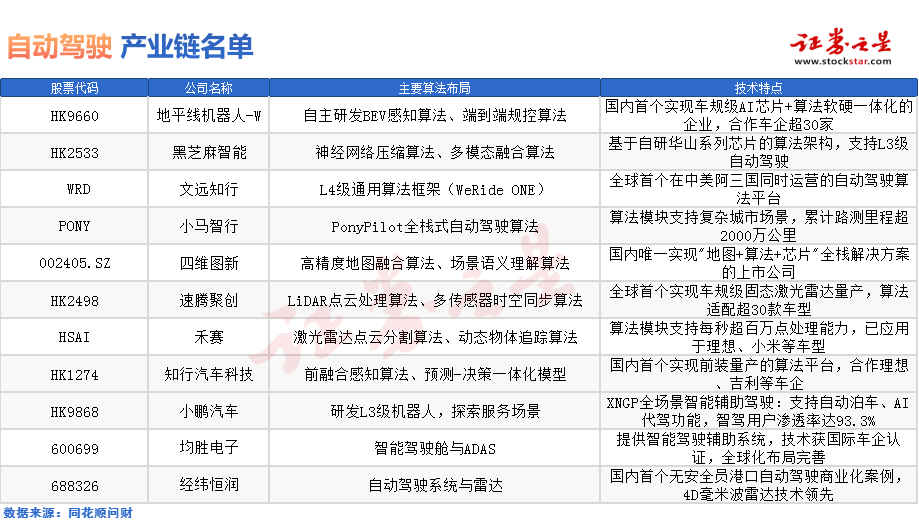
Core Insights - Tesla's Robotaxi initiative marks a significant step towards Level 4 autonomous driving, transitioning from concept to real-world testing in Austin, Texas [1][2] - The cautious approach taken by Tesla highlights the ongoing challenges in achieving full autonomy, including regulatory hurdles and technical limitations [2][5] - The global Robotaxi market is experiencing exponential growth, with companies like Waymo and Cruise expanding their operations significantly [1][4] Industry Overview - The autonomous driving industry is at a critical juncture for commercial scalability, with technological advancements and market validation driving growth [1][4] - Tesla's testing reveals limitations in its fully autonomous capabilities, as operational parameters are restricted to a defined area and time, with safety personnel still present [2][3] - The competition among different technological approaches, such as Tesla's pure vision system versus multi-sensor solutions from other companies, is reshaping the industry landscape [3][4] Market Dynamics - The Chinese autonomous driving supply chain is positioned to capitalize on the regulatory challenges faced by foreign companies, leveraging local technological advancements and policy adaptations [5][8] - New regulations in China are pushing companies to clarify their capabilities, which may lead to a more structured and realistic approach to autonomous driving technology [5][8] - Domestic companies are making significant strides in core components, with firms like Tuopu Group and 4D Millimeter Wave Radar leading in cost-effective solutions [6][7] Competitive Landscape - Key players in the Chinese market are innovating rapidly, with companies like WeRide and Pony.ai achieving significant operational milestones and testing capabilities [6][7] - The collaboration between automakers and supply chain partners is fostering a new ecosystem that enhances the speed of innovation and market readiness [7][8] - The shift from a follower to a leader position for Chinese suppliers in the Robotaxi sector is becoming increasingly evident as they adapt to market demands and regulatory environments [8]