智能驾驶芯片

Search documents
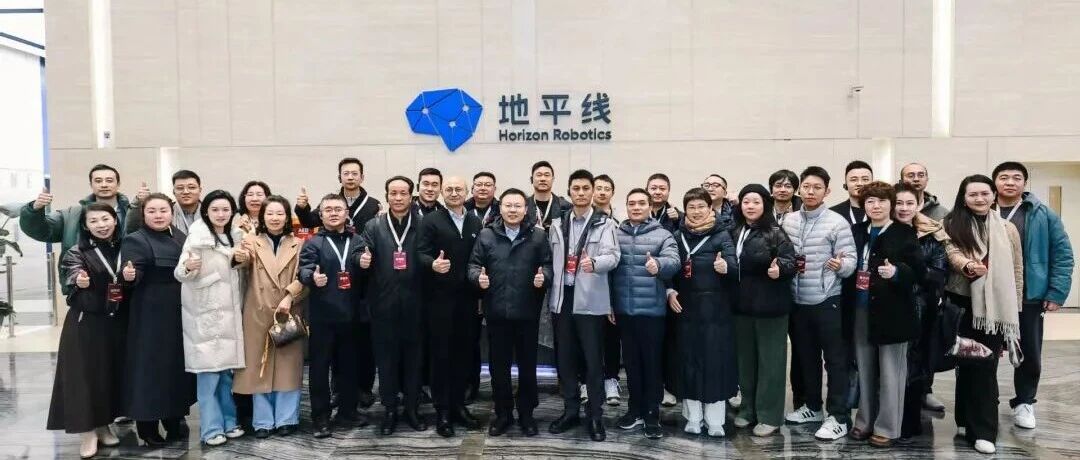
游学地平线、北京人形机器人创新中心(天工机器人):泽平宏观商学2月站
泽平宏观· 2026-03-07 16:00
Group 1: Horizon Robotics - The smart driving industry is at a critical turning point, with China's smart vehicle penetration rate reaching high levels, shifting from basic ADAS to advanced NOA, expected to double by 2025 [6] - The market is transitioning from configuration competition to user value creation, with consumers willing to pay a premium for features that significantly reduce commuting effort [6] - Horizon Robotics emphasizes "soft and hard collaboration" in chip performance, focusing on actual output efficiency rather than just raw computational power, achieving competitive vehicle performance at lower power and cost [8] - The diverse demand in the automotive sector leads to a moderately concentrated market, allowing independent third-party service providers like Horizon to thrive [8] - Horizon Robotics is expanding into the commercial robot market, leveraging its AI architecture and models to transition from automotive applications to broader use cases [10] Group 2: Beijing Humanoid Robot Innovation Center - The Beijing Humanoid Robot Innovation Center aims to define a new height in fully autonomous robotics, focusing on the "3D" scenarios: Dirty, Dangerous, and Dull [21] - The center has rapidly built a high-level innovation team since its establishment in November 2023, with over 70% of its 380 employees in R&D, many with overseas backgrounds [17] - The center's humanoid robot, "Embodied Tiangong 2.0," is the world's first full-size, all-electric humanoid robot capable of running, which has garnered significant market attention [17] - The center is developing a comprehensive data collection and training facility, expected to produce over 10 million data points annually to support technology iteration and application [13] - The global humanoid robot market is projected to reach $5 trillion by 2050, driven by increasing social demand and technological breakthroughs [23] - The center's strategy includes open-sourcing core technologies to lower industry barriers and promote collaboration among developers and small enterprises [21] - The center's software platform, "Wisdom Open," supports multi-scenario applications and is designed to be compatible with various robotic systems [26] - The center has demonstrated superior performance in industry tests, with its models achieving high task completion rates and winning competitions, showcasing its technological capabilities [28]

神玑技术完成22.57亿元天使轮融资;千寻智能完成近20亿元A轮融资;通宝光电登陆北交所,最新市值19.62亿港元丨全球投融资周报02.21-02.27
创业邦· 2026-03-01 01:08
Core Insights - The article provides an overview of the latest trends in investment and financing activities in the domestic market, highlighting key sectors and notable companies involved in significant funding rounds [5][6]. Group 1: Financing Overview - This week, there were 43 disclosed financing events in the domestic primary market, an increase of 12 compared to the previous week, with a total financing amount of 7.558 billion RMB and an average financing amount of 472 million RMB [7]. - The most active sectors in terms of financing events were intelligent manufacturing (13 events), artificial intelligence (10 events), and healthcare (6 events) [9]. - The artificial intelligence sector led in total financing scale, with approximately 4.331 billion RMB, including nearly 2 billion RMB in Series A funding for the humanoid robot company Spirit AI [9][11]. Group 2: Industry Distribution - The intelligent manufacturing sector disclosed a total financing amount of 2.857 billion RMB, with the smart driving chip company Shenji Technology receiving 2.257 billion RMB in angel round funding [11]. - Spirit AI focuses on developing humanoid robots and next-generation embodied models, aiming to bring intelligent robotic partners into households [11]. Group 3: Regional Distribution - The majority of disclosed financing events were concentrated in Jiangsu (8 events), Beijing (7 events), and Shanghai (7 events) [14][17]. - In Jiangsu, 8 events were reported, with 1 event disclosing a total financing of 90 million RMB, while Beijing had 7 events with a total of 2.17 billion RMB disclosed [17]. Group 4: Stage Distribution - The distribution of disclosed financing events by stage showed 34 early-stage events and 9 growth-stage events [18]. Group 5: Major Financing Events - Notable financing events included the angel round funding of 2.257 billion RMB for Shenji Technology and the Series A funding of nearly 2 billion RMB for Spirit AI [11][21]. Group 6: Mergers and Acquisitions - There were 9 disclosed completed M&A events this week, an increase of 6 from the previous week, with significant transactions in traditional industries, energy, and enterprise services [37].
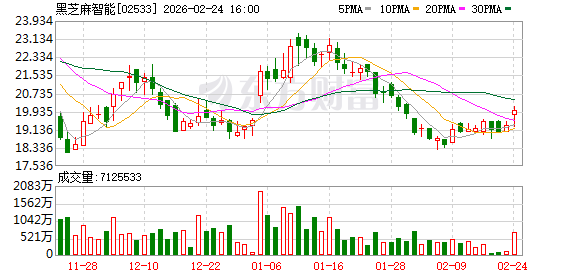
黑芝麻智能携手国汽智控 斩获首个华山A2000芯片量产方案项目定点
Zheng Quan Ri Bao· 2026-02-24 11:35
Group 1 - The core viewpoint of the article highlights the strategic partnership between Hezhima Intelligent and Guoqi Zhikong, marking a significant milestone in the development of intelligent driving solutions based on the Huashan A2000 chip [3] - The collaboration aims to develop a smart driving solution that encompasses L2+ to L3 level full-scene intelligent driving functions, indicating a focus on advanced autonomous driving capabilities [3] - The first mass-produced models equipped with this solution are expected to be launched by 2026, signaling the transition of the Huashan A2000 chip platform into a phase of large-scale implementation [1]

地平线来了新总裁,朱威如何带团队冲刺商业化?
3 6 Ke· 2026-02-13 12:54
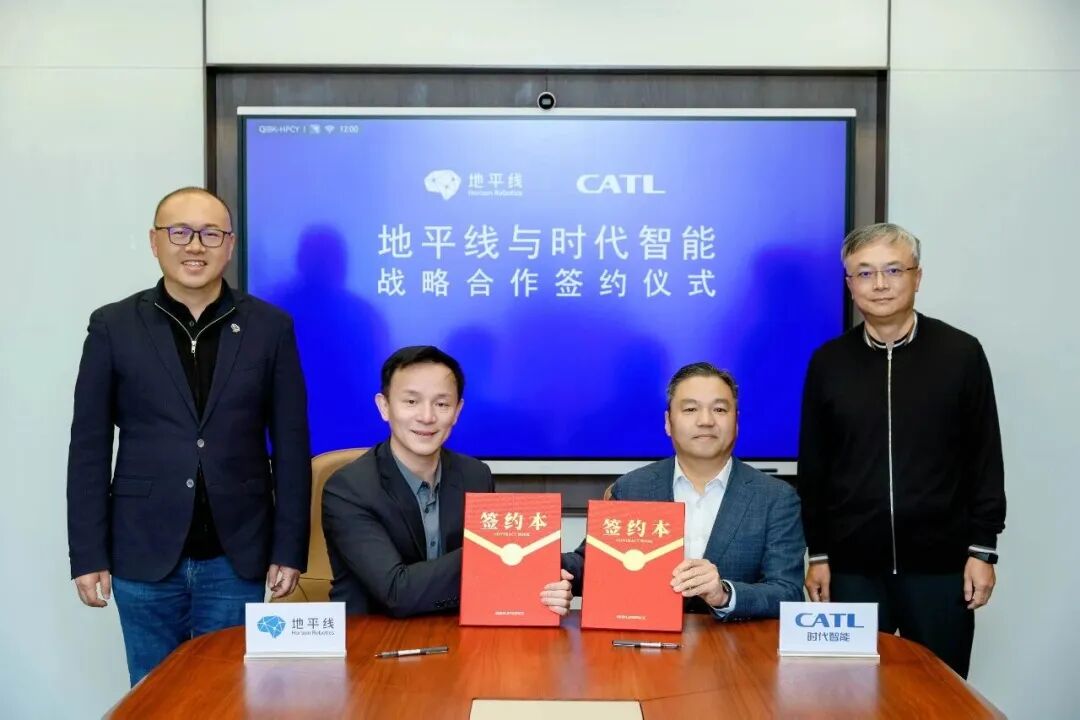
Core Viewpoint - Horizon has announced a strategic partnership with CATL's subsidiary, Times Intelligent, which signifies a significant collaboration in the automotive technology sector, particularly in smart driving and battery systems [1][12]. Group 1: Strategic Partnership - The partnership involves Times Intelligent providing its Rock Solid chassis products and technology, which enhances battery integration efficiency and allows for concurrent development with vehicle body and smart driving modules [13]. - Horizon will contribute its full-scene assisted driving products and solutions, including the recently launched Horizon HSD, marking a significant step in automotive intelligence [13][14]. - This collaboration is expected to help both companies reduce costs and improve competitiveness in the industry [14]. Group 2: Leadership Changes - Zhu Wei has been appointed as the new president of Horizon, previously serving as the executive president at CATL, indicating a strategic shift towards commercialization [3][19]. - The former president, Chen Liming, will transition to the role of vice chairman, focusing on major strategic decisions and governance improvements [3][19]. - Zhu Wei's extensive experience in sales and partnerships within the electric vehicle sector is anticipated to accelerate Horizon's market penetration and enhance its operational capabilities [16][19]. Group 3: Market Position and Challenges - Horizon has achieved a market share of approximately 46% in the ADAS market as of the first half of 2025, becoming the first domestic brand to exceed a cumulative shipment of 10 million smart driving chips [22]. - Despite this success, Horizon faces challenges such as increasing competition, price wars, and dependency on major clients, with 71.8% of its revenue in 2024 coming from its top five clients [28][29]. - The company is also under pressure to innovate and reduce costs, as competitors are rapidly advancing in technology and pricing strategies [24][31]. Group 4: Future Outlook - Horizon aims to expand its presence in the international market, leveraging Zhu Wei's experience to navigate competitive landscapes against global giants like Qualcomm and NVIDIA [18][31]. - The company has set ambitious goals for the next few years, including a target of producing 10 million HSD units and significantly enhancing smart driving capabilities in urban environments [34]. - To achieve these objectives, Horizon will need to invest in research and development, streamline costs, and accelerate the commercialization of its products [34].

智驾巨头迎来新总裁
Hua Er Jie Jian Wen· 2026-02-11 09:38
Core Insights - Horizon has made a significant personnel change by appointing Zhu Wei as the new president, succeeding Chen Liming, who will now serve as vice chairman [1][2] - Zhu Wei's experience at CATL, particularly in passenger vehicle and overseas energy storage businesses, positions him to lead Horizon's transition from a technology company to a commercial powerhouse [5][8] Company Strategy - The strategic partnership with CATL's Times Intelligent aims to enhance Horizon's capabilities in the smart driving market, focusing on the integration of hardware and software [6][7] - Horizon's goals for the next 3-5 years include producing 10 million units of HSD (Horizon SuperDrive) and increasing the average mileage for urban MPI (manual takeover intervals) by tenfold by 2026 [4][8] Market Context - The smart driving market is evolving from production capability to a competitive landscape focused on scalability, cost reduction, and efficiency [4][8] - The collaboration with CATL represents a strong alliance in the Chinese new energy vehicle sector, combining CATL's supply chain expertise with Horizon's smart technology [7] Leadership Transition - Chen Liming's tenure established a solid engineering foundation for Horizon, while Zhu Wei's role will focus on scaling operations and expanding market share [3][5] - Zhu Wei's entry is seen as a strategic move to enhance Horizon's competitive edge amid increasing competition from companies like Huawei and NVIDIA [8][9]
地平线霸榜ADAS市场,高阶全面爆发,2026高阶智驾竞争或迎大变局
Zhi Tong Cai Jing· 2026-01-30 05:00
Core Insights - The autonomous driving chip market is experiencing a significant concentration of market share among leading players, with Horizon Robotics dominating the ADAS market with a 47.66% share, followed by Mobileye [1] - The high-end autonomous driving computing chip market is set for explosive growth in 2025, with urban NOA vehicle deliveries in China reaching 2.0709 million units, a year-on-year increase of 155.83% [1] Group 1: Market Dynamics - The overall market is showing a "Matthew Effect," where leading players are gaining significant advantages, particularly in the high-level autonomous driving market [1] - Horizon Robotics has secured over 10 partnerships with major automotive brands, further solidifying its market position [1] Group 2: Competitive Landscape - In the urban NOA chip market, the top three players—NVIDIA, Huawei, and Horizon—hold a combined 90% market share, with NVIDIA leading by approximately 26% over Huawei [2] - Horizon Robotics is rapidly increasing its market share in the urban NOA segment, thanks to the mass production of its Journey 6M/6P chips [2] Group 3: Future Outlook - The high-end autonomous driving market is expected to undergo significant changes in 2026, driven by mature end-to-end technology, improved product experiences, and decreasing costs [2] - Companies that adopt an integrated hardware-software approach are likely to gain long-term competitive advantages, as they can leverage synergies between chips, algorithms, systems, and ecosystems [2]
英伟达正在被中国车企抛弃
阿尔法工场研究院· 2026-01-20 00:08
Core Viewpoint - The automotive industry is shifting from reliance on NVIDIA's chips to self-developed solutions, as companies like Xiaopeng and NIO are moving towards their own chip development to reduce costs and enhance performance [2][5][20]. Group 1: Market Dynamics - Xiaopeng has released four new models equipped with its self-developed Turing driving chip, marking a complete departure from NVIDIA's chips [2]. - NIO is transitioning to its self-developed Shenqi chip, which is expected to significantly reduce costs compared to purchasing NVIDIA chips [2][8]. - NVIDIA's market share in China's high-end driving chip sector is projected to decline from 39% in 2024 to 25% in 2025, indicating a significant shift in the competitive landscape [2][9]. Group 2: Competitive Landscape - In 2024, NVIDIA's Orin-X chip held a 39.8% market share with 2.1 million units, but competitors like Horizon are gaining ground with lower-cost alternatives [5][6]. - Horizon's J5 chip has secured contracts with over nine automakers, including major brands like BYD and SAIC, highlighting the increasing competition in the market [6][9]. - By 2025, NVIDIA's partnerships with major clients like NIO and Xiaopeng have diminished, indicating a loss of influence in the market [6][8]. Group 3: Financial Performance - In the first three quarters of fiscal year 2025, NVIDIA reported $147.8 billion in total revenue, with only $1.7 billion (approximately 1%) coming from automotive business, underscoring the limited impact of automotive sales on overall performance [14][16]. - The automotive segment's revenue is significantly overshadowed by NVIDIA's data center business, which accounts for nearly 90% of its income [14][16]. Group 4: Future Outlook - NVIDIA is attempting to pivot from being a chip supplier to a comprehensive smart driving solution provider, but this transition faces challenges as competitors strengthen their positions [20]. - The launch of NVIDIA's open-source VLA model, aimed at assisting automakers lacking full-stack development capabilities, reflects its strategy to maintain relevance in the evolving market [20][21]. - However, the practical utility of the VLA model has been questioned, indicating potential hurdles in its adoption and effectiveness [21].



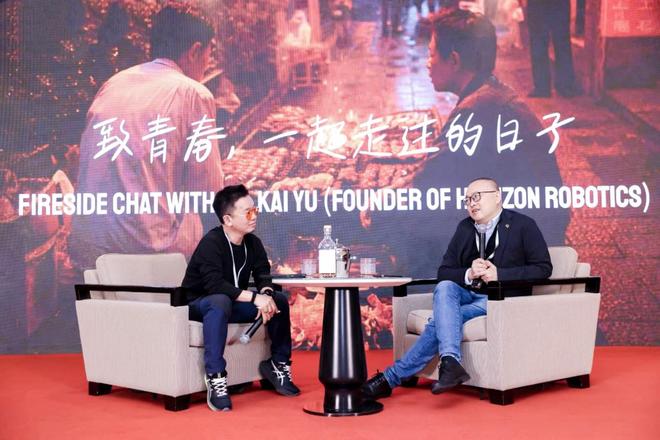
地平线余凯:巴菲特芒格是绝对偶像,创业本质也是一种投资
创业邦· 2026-01-14 03:38
Core Viewpoint - The article emphasizes the journey of Horizon Robotics, led by CEO Yu Kai, highlighting the importance of resilience, optimism, and a long-term investment mindset in entrepreneurship [4][5][10]. Group 1: Company Development and Philosophy - Horizon Robotics has grown from a startup to a company with a market value exceeding 100 billion HKD, showcasing its successful trajectory in the tech industry [4]. - The company prioritizes a "boring" yet sustainable business model over flashy success, focusing on long-term survival and consistent performance [5][15]. - Yu Kai admires investment legends like Warren Buffett and Charlie Munger, believing that entrepreneurship is fundamentally about making long-term investment decisions [5][14]. Group 2: Challenges and Resilience - Yu Kai discusses the numerous dark moments faced during the company's journey, emphasizing the need for mental strength and the ability to forget past difficulties to focus on the present and future [8][9]. - The concept of "mindless optimism" is highlighted as a crucial trait for entrepreneurs to overcome challenges and maintain motivation [9][11]. - The company adopts a risk-averse strategy, focusing on identifying potential pitfalls rather than solely chasing opportunities, which has been integral to its survival [22][15]. Group 3: Market Position and IPO Strategy - Horizon Robotics has maintained a market-driven and product-oriented approach, which has positioned it favorably in the competitive landscape of AI and robotics [17][18]. - Despite a challenging IPO environment in Hong Kong, the company successfully attracted significant international investment, demonstrating confidence in its long-term vision [18]. - The firm believes in the fairness and transparency of the Hong Kong market, which aligns with its strategy to attract global capital [18]. Group 4: Entrepreneurial Mindset and Advice - The article stresses the importance of continuous personal growth and adaptability in entrepreneurship, encouraging a focus on daily progress rather than comparisons with others [25][26]. - Yu Kai advises entrepreneurs to maintain unwavering faith in the future and to prepare for crises during prosperous times, emphasizing the cyclical nature of business [26][27]. - The need for a strong company culture and values is highlighted as essential for navigating challenges and ensuring team cohesion [27].

威士忌、活鱼与千亿牌桌:王淮余凯十年对谈中的硬科技企业成长指南
Zhong Guo Jing Ying Bao· 2026-01-14 01:23
Core Insights - The conversation between Wang Huai and Yu Kai highlights the evolution of Horizon Robotics from a roadside chat to a billion-dollar company, emphasizing the importance of long-term survival over short-term gains [2][3] - Yu Kai's philosophy of "boring" success focuses on avoiding competition in crowded markets and maintaining a risk-averse approach, which has guided Horizon's strategic decisions [6][7] Company Development - Horizon Robotics was founded in 2015 by Yu Kai, who initially proposed deploying AI capabilities on edge devices rather than cloud computing, a forward-thinking idea at the time [5] - The company underwent significant restructuring in 2019, pivoting from AIoT to focus solely on smart driving chips, a decision driven by Yu Kai's insights from investment legends like Warren Buffett and Charlie Munger [5][6] Market Positioning - Horizon's strategy involves competing in areas with little competition and avoiding high-risk scenarios, which reflects a deep-seated aversion to risk [6] - The company is aware of the increasing trend of automakers developing their own chips but chooses to maintain a distance from potential threats while fostering a collaborative ecosystem [6][7] IPO and Investment Strategy - Horizon's IPO discussions occurred amidst a challenging market environment, yet the team believed in the long-term potential of Chinese innovation and its alignment with global trends [7] - The company attracted significant international investment, distinguishing itself from others that relied on local support, showcasing its appeal to major global investors [7][8] Entrepreneurial Philosophy - Yu Kai emphasizes the importance of resilience and optimism in entrepreneurship, suggesting that successful entrepreneurs must navigate through cycles of good and bad times [8] - The advice for current entrepreneurs includes unwavering belief in the future and maintaining a cautious outlook during challenging periods, as better times will eventually return [8]
14家生物科技,3家AI芯片企业上市,香港制度创新有多敢?
Sou Hu Cai Jing· 2025-12-16 11:25
Group 1 - The core viewpoint of the article highlights the remarkable resurgence of the Hong Kong capital market in 2025, with a total of 100 IPOs raising $34.3 billion, surpassing major exchanges like New York and Nasdaq [2][3] - The structure of the IPOs shows a significant shift, with 82 companies listed on the main board and 18 on the growth enterprise market, predominantly featuring emerging technology firms [3][5] - The market's appetite has changed, with a notable increase in listings from sectors such as biotechnology, AI, and smart driving chips, contrasting with the previous dominance of real estate and finance [5][7] Group 2 - The number of companies waiting to go public has surged, with 316 firms on the main board's queue by the end of 2025, nearly tripling from 2023, indicating a strong demand for IPOs [8][9] - Over 60% of the queued companies are in technology and biotechnology sectors, reflecting a significant market shift [9] - The Hong Kong Stock Exchange has introduced a "technology validation" pathway for unprofitable companies, allowing them to list if their core technology is recognized by third-party institutions, which has changed investor attitudes towards unprofitable biotech firms [11][13] Group 3 - The introduction of the 18A chapter in 2018 has facilitated the IPO process for unprofitable biotech companies, with 14 such companies going public in 2025, raising 45 times more capital than in 2018 [13][15] - The 18C chapter, introduced in 2023, allows unprofitable hard tech companies to list, covering various cutting-edge sectors, and has already seen successful IPOs, including a smart driving chip company that surged 70% on its debut [15][17] - The financial ecosystem in Hong Kong is evolving towards "hard tech services," with increased demand for professionals who understand technology valuation and patent assessment [19][21] Group 4 - The transformation of Hong Kong's capital market is attributed to its willingness to reform, with the 18A and 18C chapters demonstrating a commitment to continuous improvement in regulations [21][23] - The article suggests that Hong Kong's unique approach to accommodating emerging tech companies may provide a competitive edge over other global financial centers like New York and London [21][23] - Looking ahead, there are expectations for more AI and quantum computing firms to list in Hong Kong, with regulatory bodies exploring dedicated pathways for green technology companies [23]