Same - Store Sales Growth

Search documents
Domino's Revenue Rises on U.S. Same-Store Sales Growth
WSJ· 2026-02-23 11:13
Core Insights - Domino's Pizza reported increased revenue in its fourth quarter, driven by a rise in same-store sales in the U.S. [1] - The growth was attributed to performance improvements in both company-owned and franchise locations [1] Financial Performance - The fourth quarter saw a notable increase in revenue compared to previous periods, indicating strong market demand [1] - Same-store sales growth reflects positive consumer sentiment and effective operational strategies [1]


Wingstop(WING) - 2025 Q4 - Earnings Call Transcript
2026-02-18 16:00
Financial Data and Key Metrics Changes - In Q4 2025, system-wide sales increased to $1.3 billion, approximately 9.3% compared to 2024, driven by 124 net new restaurants, despite a decline of 5.8% in domestic same-store sales [26][27] - Adjusted EBITDA in Q4 increased approximately 10% versus 2024 to $61.9 million, highlighting the durability of the company's model [30] - The company-owned same-store sales increased by 1.6% in Q4, showcasing the effectiveness of new operational standards [27] Business Line Data and Key Metrics Changes - The company opened 493 restaurants globally in 2025, a significant achievement against the long-term goal of 10,000 restaurants [18] - Royalty revenue, franchise fees, and other revenue increased by 8% year-over-year to a total of $81.9 million [26] - Company cost of sales in Q4 were 75.6%, an improvement of 200 basis points compared to 2024, indicating strong unit-level economics [28] Market Data and Key Metrics Changes - The company expanded into six new international markets in 2025, opening over 100 restaurants outside the U.S. [19] - The average unit volume (AUV) for domestic restaurants is at $2 million, with a target of reaching $3 million AUVs [5][31] - The company anticipates global unit growth to be between 15% and 16% in 2026, driven by broad-based demand across brand partners [34] Company Strategy and Development Direction - The company aims to leverage the Wingstop Smart Kitchen to enhance operational efficiency and customer experience, with a focus on achieving a consistent 10-minute speed of service [6][9] - The launch of the loyalty program, Club Wingstop, is expected to deepen customer engagement and increase visit frequency [16][17] - The company is focused on expanding brand awareness and capturing a larger share of the off-premise dining market, currently estimated at only 2% [7][14] Management's Comments on Operating Environment and Future Outlook - Management acknowledges the macroeconomic pressures affecting core consumers but remains optimistic about returning to same-store sales growth in 2026 [33][36] - The company is confident in its strategies, including the rollout of the Smart Kitchen and the national launch of the loyalty program, to drive future growth [36][34] - Management highlighted the importance of operational consistency and accountability as critical components for success in the upcoming year [24][22] Other Important Information - The company returned over $250 million to shareholders in 2025 through dividends and share repurchases [31][32] - The board of directors declared a quarterly dividend of $0.30 per share, totaling approximately $8.3 million [32] - The company has a digital database of over 60 million users, providing a strong foundation for the loyalty program [17] Q&A Session Summary Question: Signs of improvement in comps for Q1 - Management noted that trends have stabilized and they anticipate sequential improvement as strategies come together, despite some impact from winter storms [39][40] Question: Percentage of system achieving 10-minute ticket time - Approximately 50% of restaurants are currently achieving the 10-minute service time, with ongoing initiatives to improve this metric [44][46] Question: Long-term guidance and potential adjustments - Management remains focused on execution and believes that the combination of operational improvements and the loyalty program will drive growth, maintaining their long-term guidance [50][51] Question: Impact of Smart Kitchen on staff and labor productivity - The Smart Kitchen has led to lower turnover rates in corporate restaurants, indicating a positive impact on staff experience and productivity [56][58] Question: Performance of the new advertising campaign - The "Wingstop Is Here" campaign is delivering record brand recall and has contributed to a 20% growth in the digital customer database [60][63]
Boot Barn Q3 Earnings & Sales Meet Estimates, FY26 Guidance Up
ZACKS· 2026-02-05 16:46
Core Insights - Boot Barn Holdings, Inc. (BOOT) reported strong third-quarter results for 2026, with both revenue and earnings meeting expectations and showing year-over-year growth, leading management to raise its fiscal 2026 guidance [1][9] Quarterly Performance - BOOT's earnings per share (EPS) for the quarter was $2.79, an increase from $2.43 in the same period last year, which had included a 22-cent benefit from the former CEO's resignation [2] - Net sales reached $705.6 million, reflecting a 16% year-over-year increase, driven by new store openings and same-store sales growth [2] Same-Store Sales and Expansion - Consolidated same-store sales grew by 5.7% year over year, with retail same-store sales increasing by 3.7% and e-commerce same-store sales rising significantly by 19.6% [3] - The company opened 25 new stores during the quarter, bringing the total to 514 stores [3] Margin and Cost Performance - Gross profit increased by 17.7% year over year to $281.2 million, with gross margin improving by 60 basis points to 39.9% [4] - Selling, General and Administrative (SG&A) expenses rose to $166.5 million from $139.4 million, primarily due to higher payroll and operational costs associated with more stores [5] - Income from operations was $114.8 million, up from $99.5 million, although operating margin contracted by 10 basis points to 16.3% [6] Financial Health - At the end of the quarter, BOOT had $200 million in cash and cash equivalents and total shareholders' equity of $1.28 billion [7] - The company repurchased 67,279 shares for $12.5 million during the quarter and anticipates capital expenditures of $125-$130 million, net of estimated landlord tenant allowances [7] Future Guidance - For the fourth quarter, BOOT plans to open 15 new stores and expects net sales between $525 million and $535 million, indicating year-over-year growth of 16% to 18% [8] - Consolidated same-store sales are projected to increase by 3% to 5%, with retail and e-commerce same-store sales expected to grow by 2.2%-4.2% and 11%-13%, respectively [8] Updated Fiscal 2026 Guidance - BOOT now anticipates fiscal 2026 net sales between $2.24 billion and $2.25 billion, representing a 17% to 18% year-over-year growth, an increase from the previous guidance of $2.20 billion to $2.23 billion [12] - Consolidated same-store sales growth is now forecasted between 6.5% and 7%, improved from the earlier estimate of 4%-6% [12] - Retail same-store sales are expected to be in the range of 5.5%-6%, while e-commerce same-store sales are projected to be 14.5%-15% [12] Earnings Projections - The company expects merchandise margin of $1.138 billion to $1.144 billion, representing about 50.8% of sales, with gross profit projected between $850 million and $855 million [13] - Income from operations is expected to be in the range of $297 million to $301 million, with projected earnings per share between $7.25 and $7.35, an improvement from $5.82 reported in fiscal 2025 [13]


Valvoline(VVV) - 2026 Q1 - Earnings Call Transcript
2026-02-04 15:02
Financial Data and Key Metrics Changes - The company reported net sales of $462 million, an increase of 11% on a reported basis and 15% when adjusted for refranchising impacts from the previous year [13] - The gross margin rate increased by 50 basis points year-over-year to 37.4%, driven by labor and product cost leverage, despite increases in other service delivery costs [13][14] - Adjusted EBITDA margin increased by 60 basis points to 25.4%, with both adjusted EBITDA and EPS growing double digits year-over-year [10][14] Business Line Data and Key Metrics Changes - System-wide same-store sales grew by 5.8% and 13.8% on a two-year stack, with ticket prices being the largest contributor to this growth [7][10] - Franchise store performance was slightly above the system average, indicating strong growth in the franchise segment [8] - The company added 162 stores from the Breeze transaction and 38 net new stores, with 10 from franchise, contributing to network expansion [9][10] Market Data and Key Metrics Changes - Customer demand for nondiscretionary services remains strong, with no signs of trade-down or deferral observed [8] - The company achieved a 4.7-star rating across its network and NPS scores over 80%, reflecting high customer satisfaction [8] Company Strategy and Development Direction - The company is focused on integrating the Breeze acquisition while continuing to drive productivity and margin expansion in its core business [10][17] - Plans to establish a national advertising fund in fiscal 2027 to enhance marketing efficiency as the network grows [85] - The company aims to reduce its leverage ratio to 2.5x as quickly as possible to resume share repurchase activities [16][80] Management's Comments on Operating Environment and Future Outlook - Management expressed confidence in meeting fiscal year 2026 guidance, citing strong fundamentals and customer demand [17] - The impact of Winter Storm Fern on Q2 performance was acknowledged, but management remains optimistic about recouping lost transactions as conditions normalize [35][111] - The company is monitoring macroeconomic factors affecting consumer spending but continues to see trade-up activity and premiumization in its services [46] Other Important Information - The company raised over $1.8 million for local children's hospitals through fundraising efforts, marking a nearly 40% increase over the prior year [12] - The company is working on improving internal controls and expects to resolve material weaknesses by the end of the fiscal year [50][51] Q&A Session Summary Question: Impact of non-oil change revenue on same-store sales - Management confirmed that non-oil change revenue contributed around 20 basis points to same-store sales this quarter [19] Question: Franchise store growth pipeline - Management indicated a robust pipeline for franchise openings, with nine units opened in January, suggesting strong momentum [20] Question: Sales composition trends - Management noted balanced growth in ticket and transaction contributions, with ticket being a larger contributor in Q1 [25][26] Question: Integration focus on Breeze - Management emphasized that Breeze represents less than 10% of financial commitments for FY 2026, allowing focus on core business growth [27] Question: Gross margin performance - Management highlighted that gross margin improved due to labor and product cost management, with expectations for continued progress [56] Question: Customer acquisition and advertising strategies - Management discussed sophisticated marketing strategies aimed at optimizing customer acquisition costs and improving return on ad spend [104] Question: Material weakness in internal controls - Management provided an update on the progress of addressing material weaknesses, indicating good progress but ongoing work is required [50][51]

RxSight (NasdaqGM:RXST) FY Conference Transcript
2025-12-03 18:02
Summary of RxSight Conference Call Company Overview - **Company**: RxSight - **Event**: 2025 Piper Sandler Healthcare Conference - **Management Team Present**: Ron Kurtz (President and CEO), Shelley Thunen (CFO), Oliver (Investor Relations) Industry Context - **Industry**: Cataract surgery and premium intraocular lenses (IOLs) - **Market Size**: The premium IOL market is projected to be around $26 billion to $27 billion globally, with significant growth opportunities in international markets [29][32] Key Challenges and Market Dynamics - **Market Contraction**: The general cataract market contracted early in 2025, which is unusual, but has since normalized [4] - **Increased Competition**: Several competitive IOLs were introduced in the premium space, impacting market dynamics. Major players launched new presbyopia-correcting IOLs, leading to enhanced marketing efforts [4][5] - **Adoption Focus**: The company is concentrating on the adoption of its differentiated LAL technology, which currently represents about 10% of the premium IOL space, up from zero a few years ago [6] Financial Guidance and Performance - **Q4 Guidance**: The company anticipates a sequential revenue step down in Q4, which is typically its strongest quarter. Q3 performance exceeded expectations, particularly in LDD sales [7][9] - **2026 Revenue Expectations**: The company has not provided specific guidance for 2026 but expects sequential growth quarter over quarter, with a street estimate of $135 million, representing a 5% year-over-year growth [11][12] Competitive Landscape - **Market Positioning**: The company believes it has a unique position in the premium IOL market, with no direct competition for its LAL technology in the near term [16][17] - **Future Competitors**: While new entrants are expected, they are not anticipated to significantly impact RxSight's market share in the immediate future [14] Sales and Commercial Strategy - **Sales Force Alignment**: The company has aligned its sales and clinical teams to enhance same-store sales growth and utilization of LAL technology [20][21] - **Training and Adoption**: Efforts are focused on training physicians and addressing pushback against adopting LAL technology, emphasizing the clinical outcomes and return on investment [23][25] International Expansion - **International Strategy**: The company has hired a VP of International and is focusing on expanding its presence in Europe and Asia, with recent approvals in the EU and several Asian countries [29][30] - **Market Potential**: The international markets represent a significant growth opportunity, potentially doubling the U.S. market size [32] Financial Metrics - **Gross Margin Insights**: The company reported a high gross margin in Q3, driven by LAL sales, but does not expect this level to be sustainable. Gross margin is influenced by product mix and production volume [38] - **Operational Expenses**: The company is cautious with OpEx but is investing in sales, marketing, and R&D to drive future growth [39] Conclusion - RxSight is navigating a challenging market environment with increased competition and a focus on technology adoption. The company is strategically positioning itself for growth in both domestic and international markets while managing operational efficiencies and financial performance.

Cato's Q3 Loss Narrows Year Over Year as Same-Store Sales Drive Growth
ZACKS· 2025-11-26 18:40
Core Insights - Cato Corporation's shares have increased by 1.2% since the earnings report for the quarter ended Nov. 1, 2025, underperforming the S&P 500 index which rose by 1.5% during the same period. However, the stock has seen a significant decline of 20.7% over the past month, contrasting with a 1.6% drop in the broader market, indicating ongoing investor concerns despite improvements in financial metrics [1] Financial Performance - For Q3 2025, Cato reported a net loss of $0.28 per share, a significant improvement from a net loss of $0.79 per share in the same quarter of the previous year [2] - The company incurred a net loss of $5.2 million, a notable reduction from a net loss of $15.1 million in the prior year [3] Revenue and Sales - Retail sales increased by 6% year-over-year to $153.7 million, up from $144.6 million in Q3 2024, driven by a 10% rise in same-store sales. Total revenues, including finance and late fees, reached $155.4 million compared to $146.2 million a year earlier [2] Operational Efficiency - Cato achieved improvements in gross margin, which rose to 32% from 28.8%, primarily due to reductions in freight, distribution, buying, and occupancy costs, although higher markdowns partially offset these gains [4] - Selling, general and administrative (SG&A) expenses decreased to $57 million from $57.9 million a year ago, representing 37.1% of sales compared to 40% previously. Cost savings were attributed to reduced payroll, professional fees, and insurance costs [5] Management Commentary - The CEO attributed revenue growth partly to a weak comparable base from 2024, which was affected by hurricanes and supply chain disruptions. The company anticipates challenges in Q4 due to slowing employment growth and lower expected economic growth, and plans to manage expenses and inventory tightly while maintaining sales momentum [6] Tax Benefits - The reduction in net loss was supported by a favorable cost structure and operational improvements, including a $1.2 million tax benefit in the quarter compared to a $0.3 million tax expense last year, stemming from reduced foreign income taxes and the roll-off of uncertain tax position reserves [7] Store Footprint - Cato has continued to rationalize its store footprint, closing 16 stores year-to-date, resulting in 1,101 stores across 31 states as of Nov. 1, 2025, down from 1,167 stores a year earlier, reflecting efforts to optimize retail operations amid changing consumer behavior [8]


Jack in the Box outlines 2026 rebuilding year with up to 1% same-store sales growth target amid Del Taco divestiture and aggressive restaurant refresh (NASDAQ:JACK)
Seeking Alpha· 2025-11-20 01:45
Group 1 - The article does not provide any specific information or insights regarding a company or industry [1]

Wingstop(WING) - 2025 Q3 - Earnings Call Transcript
2025-11-04 16:02
Financial Data and Key Metrics Changes - System-wide sales grew by 13%, exceeding $5 billion on a trailing 12-month basis [5] - Total revenue increased by 8.1% to $175.7 million compared to the prior year [24] - Adjusted EBITDA reached $63.6 million in Q3, marking a 19% year-over-year increase and the highest single quarter on record [26] - Adjusted earnings per diluted share rose by 15.6% to $1.09, despite a 24% impact from additional interest expense [26] Business Line Data and Key Metrics Changes - Domestic same-store sales declined by 5.6% in Q3, following two years of strong growth [7][24] - Company-owned restaurants outperformed the broader system with same-store sales growth of 3.8% [25] - Domestic average unit volumes (AUVs) reached $2.1 million, with industry-leading unlevered cash-on-cash returns exceeding 70% [24] Market Data and Key Metrics Changes - The company opened 369 net new restaurants in the first three quarters of 2025, achieving a 19% unit growth rate [5][24] - The Southwest region, which has the highest concentration of the new kitchen operating platform, showed mid-single-digit same-store sales growth compared to the U.S. average [9] Company Strategy and Development Direction - The company aims to expand to over 10,000 restaurants globally, with a focus on executing a national rollout of the new kitchen operating platform [5][19] - A new marketing campaign is designed to increase brand awareness and attract new customers, targeting a demand space where the company currently captures only 2% [11][12] - The launch of a loyalty program, Club Wingstop, is expected to enhance customer engagement and drive sales [13][15] Management's Comments on Operating Environment and Future Outlook - Management acknowledged a temporary decline in same-store sales due to broader industry trends but expressed confidence in the brand's fundamentals and strategies [7][28] - The company expects to return to same-store sales growth in 2026, supported by the new kitchen operating platform and marketing initiatives [28][39] - Management highlighted the strong demand from brand partners for new restaurant openings, indicating confidence in the unit economic model [24][29] Other Important Information - The company has raised nearly $3.5 million for St. Jude Children's Research Hospital as part of its community engagement efforts [18] - SG&A expenses decreased by $1.6 million to $30.7 million, reflecting lower headcount-related expenses [26] Q&A Session Summary Question: What is the outlook for same-store sales in Q4? - Management acknowledged near-term choppiness but noted stabilization in trends as they entered Q4, with a focus on long-term investments [34][35] Question: What are the key drivers for returning to positive same-store sales in 2026? - Management cited the impact of the Smart Kitchen rollout, the upcoming loyalty program, and a new advertising campaign as catalysts for growth [36][39] Question: How is the Smart Kitchen performing in terms of sales? - The Southwest region, with the highest concentration of Smart Kitchen, is seeing positive comps and improved guest satisfaction scores [41][43] Question: What is the cannibalization impact from new restaurant openings? - Cannibalization has been around 1% in comps, with recent openings in new markets affecting performance due to high initial sales [46][47] Question: How does the company plan to emphasize value in the current environment? - Management stated that the company does not need to rely heavily on promotions, focusing instead on protecting unit economics and long-term strategies [53][55] Question: What is the strategy for the new advertising campaign? - The campaign aims to showcase how Wingstop fits into everyday life moments, targeting a broader audience to increase brand awareness [60][62]
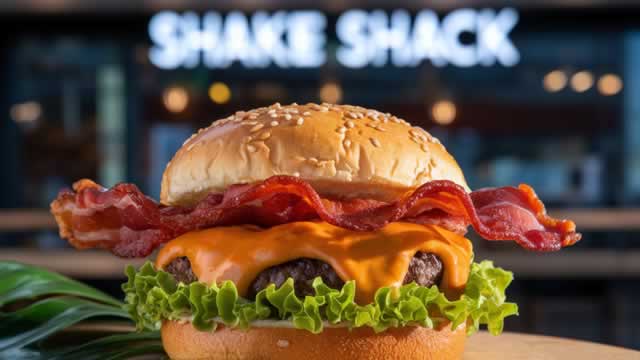
Is Shake Shack's Expansion Dream A Recipe For Disaster?
Benzinga· 2025-10-06 18:45
Core Viewpoint - Shake Shack Inc. is experiencing margin pressure and slowing same-store sales growth due to rising beef costs and competitive pricing in the fast-casual sector, leading to a downgrade by Bank of America [1][4]. Financial Performance - Bank of America downgraded Shake Shack to Underperform from Neutral and reduced its price target from $148 to $86, indicating an 11% downside from the current share price of $96.79 [1]. - Analyst Sara Senatore has lowered earnings estimates for Shake Shack, projecting $1.19 per share for 2025 (down from $1.26), $1.53 for 2026 (down from $1.68), and $2.06 for 2027 (down from $2.13) [6]. - The 2026 EBITDA forecast was also cut to $235.8 million from $245.8 million [6]. Market Trends - The fast-casual sector is seeing aggressive pricing strategies, with Shake Shack's menu prices rising approximately 19% since Q3 2023, compared to an 8.6% increase by competitors like Chipotle [4]. - Fast-food hamburger restaurants are focusing on price-led value deals, while casual dining restaurants emphasize quality and portion size [5]. Growth Strategy - Shake Shack plans to accelerate domestic development by approximately 15% year-over-year, aiming for 1,500 U.S. locations despite concerns about market saturation and potential sales cannibalization [5][6]. - The company has seen a slowdown in unit growth from 44% in 2014 to a projected 12% in 2024 [5]. Sales Projections - Bank of America projects same-store sales growth to slow, estimating 2% growth in Q3 versus a 2.7% consensus, 2% in Q4 versus 2.8%, and 1.5% for fiscal 2026 compared to a 2.4% consensus [7]. Valuation - The $86 price forecast is based on the assumption that Shake Shack will grow its store base by 13% annually to about 3,000 global locations in 10 years, with modest average unit volume growth of 1.5% [8].

CAVA's Comp Story: Can Engagement & Efficiency Power the Next Leg?
ZACKS· 2025-09-18 17:16
Core Insights - CAVA Group, Inc. is focusing on disciplined execution to stabilize same-store sales, reporting a 2.1% year-over-year increase in Q2 2025, driven by menu price and mix gains while guest traffic remained steady [1][9] - The company reaffirmed its full-year guidance for 4%-6% same-store sales growth, supported by a measured innovation pipeline and the rollout of new menu items [3][9] Sales Performance - CAVA's same-store sales growth was influenced by transitory factors, including tough comparisons against last year's successful steak launch and strong volumes from the 2024 restaurant cohort [2][9] - Despite the modest growth figure, management indicated that the trend improved as the quarter progressed, suggesting resilient consumer demand [1][2] Future Outlook - CAVA plans to launch a tiered rewards program to enhance guest loyalty and drive frequency, which is expected to sustain comp momentum through the remainder of 2025 [4] - The company is introducing chicken shawarma and seasonal pita chip offerings to align with consumer preferences for health and flavor [3] Peer Comparisons - Chipotle Mexican Grill reported a 4% decline in comparable restaurant sales in Q2 2025 but expects full-year comps to be roughly flat due to near-term consumer volatility [5] - Sweetgreen posted a 7.6% decline in same-store sales, impacted by difficult comparisons and a transition in loyalty programs, but anticipates recovery in the second half of 2025 [6] Valuation and Estimates - CAVA shares have declined 16.2% over the past three months, compared to a 5.1% decline in the industry [7] - The company trades at a forward price-to-sales ratio of 5.28X, above the industry's average of 3.64X [11] - The Zacks Consensus Estimate for CAVA's 2025 and 2026 earnings per share implies a year-over-year increase of 33.3% and 18.8%, respectively [12]