
Systemic risk

Search documents
Private Credit Woes Not a Systemic Threat: Powell - BlackRock (NYSE:BLK)
Benzinga· 2026-03-30 21:21
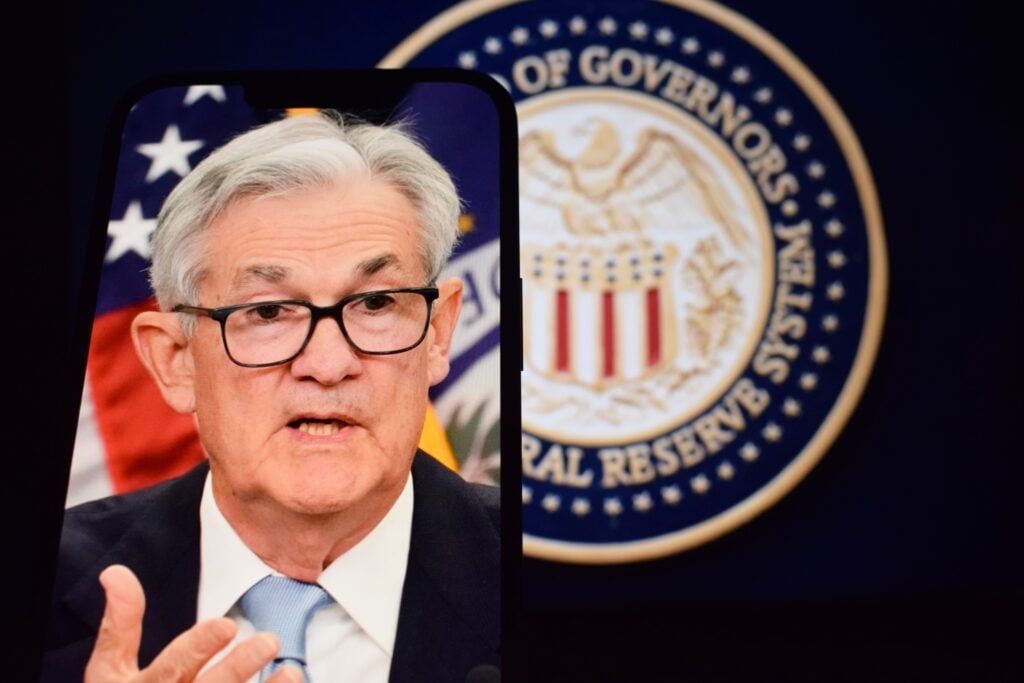
Core Viewpoint - The recent turmoil in the private credit sector is not seen as a broader risk to the financial system, according to Federal Reserve Chair Jerome Powell [1][2]. Group 1: Private Credit Market Conditions - The private credit market has faced increasing pressure due to rising rates, tighter liquidity, and a risk-off environment, which has affected a sector that had previously expanded rapidly [2]. - Oaktree Capital Management has fully satisfied all redemption requests, amounting to 8.5% of its private credit fund for the first quarter, and plans to repurchase approximately 13.9 million shares, representing 6.8% of its outstanding shares [3]. Group 2: Regulatory Insights - Regulators are aware of banks' exposure to the private credit market and are gathering information from the management of these organizations [2]. Group 3: Market Outlook and Comparisons - Unlike the housing/mortgage crisis of 2007-2008, the current private credit situation has a viable solution: accepting losses, as most companies in private credit portfolios are solvent and operational [4]. - CNBC's Jim Cramer has cautioned investors with exposure to the private credit market, emphasizing the need for caution [3].


Private credit noise to continue, Deutsche Bank CEO predicts
Reuters· 2026-03-17 11:05
Core Viewpoint - Concerns regarding private credit will continue, but they do not pose a systemic risk according to CEO Christian Sewing [1] Group 1 - The CEO emphasized that fears surrounding private credit are valid but manageable [1] - The statement reflects a broader sentiment in the financial industry regarding the stability of private credit markets [1] - The company aims to reassure investors and stakeholders about the resilience of the financial system despite these concerns [1]


Tether Nets Record Profit as US Debt Hoard Hits $141 Billion
Yahoo Finance· 2026-01-31 11:30
Core Insights - Tether reported a net profit of $10 billion for 2025, highlighting aggressive expansion and positioning as a major holder of US government debt [1] - The profit is attributed to a $50 billion liquidity injection into the crypto ecosystem, raising total USDT circulation above $186 billion, marking the second-largest annual expansion in Tether's history [2][3] Expansion and Demand - USDT's expansion of $50 billion was driven by increasing global demand for dollars outside traditional banking systems, particularly in regions with slow or fragmented financial systems [3] - Tether's CEO emphasized that USDT has become the most widely adopted monetary social network in history due to its network effect and growth [3] Financial Position - Tether's total reserve assets reached a record $193 billion, with $141 billion exposure to US Treasuries, positioning the company among the top global creditors to the US government [4][5] - The profit was primarily a result of the "higher-for-longer" interest rate environment rather than high-risk investments in sectors like AI and biotech [4] Systemic Risk and Scrutiny - Despite significant growth, Tether faces scrutiny regarding the true liquidity of its $17.4 billion in gold and $8.4 billion in Bitcoin holdings, especially during market downturns [5][6] - The company claims to have over $6.3 billion in excess reserves, but the lack of an audit from a "Big Four" accounting firm raises concerns about transparency [5][6]
Bitcoin Attracts Capital Flight As Silver Futures Margin Call Crisis Triggers Liquidity Shock | US Crypto News
Yahoo Finance· 2025-12-29 14:06
Core Insights - Silver markets experienced extreme volatility, with prices surging to record highs near $84 before collapsing by over 10% in just over an hour, indicating significant leverage issues in the commodities market [2][4] - Unverified reports suggested a major bank failed to meet a substantial silver margin call, leading to forced liquidation and emergency liquidity demands exceeding $2 billion, although no confirmations from major news outlets or regulators were available [3] - The rapid price movements in silver triggered margin hikes and raised concerns about systemic risks, while Bitcoin showed resilience by quietly gaining traction during this turmoil [2][6] Market Reactions - The price of silver jumped to $83.75 shortly after futures opened, only to plummet to $75.15 within 70 minutes, showcasing extreme market reactions [4] - Analyst Shanaka Anslem noted that approximately $4 billion in silver longs were wiped out in just over an hour, highlighting the rapid loss of liquidity during the price drop [5] - The CME Risk Management Team responded to the volatility by announcing significant margin maintenance increases across nearly all precious metals products, indicating a proactive approach to manage leverage [5][6]
Mega PSU bank merger plan: Can India do it without amplifying risks?
MINT· 2025-12-01 07:16
Core Viewpoint - The Indian government is preparing for another round of public sector bank consolidation to create larger institutions capable of meeting the country's growing investment and credit needs, following a previous consolidation that reduced the number of state-owned banks from 27 to 12 [1][5]. Group 1: Current State of Indian Banking - The Indian banking system is considered small by global standards, with only two banks, State Bank of India (SBI) and HDFC Bank, ranking among the world's 100 largest banks at 43rd and 73rd respectively [2][5]. - The 12 public sector banks (PSBs) collectively manage assets worth approximately $1.95 trillion, significantly smaller than major Chinese banks [5]. - PSBs have recently shown strong financial performance, recording a net profit of ₹1.78 trillion in 2024-25, supported by improved loan books and a gross non-performing asset (NPA) ratio that has declined to a ten-year low of 2.6% [6][7]. Group 2: Implications of Consolidation - The government aims to leverage the current financial strength of PSBs to facilitate consolidation without risking instability, as profitable banks can better absorb transition costs [10]. - A Reserve Bank of India (RBI) study indicates that past bank mergers have generally improved balance-sheet strength, with 70% of acquirers showing better loan-to-assets and loan-to-deposits ratios [11]. - However, operational efficiency improvements have been mixed, with only one-third of mergers strengthening the cost-to-income ratio, suggesting that integration synergies may take time to realize [12]. Group 3: Risks of Increased Concentration - Consolidation may lead to the creation of "too big to fail" institutions, with the potential for a single large bank's failure to impact the entire banking system, eroding capital buffers and triggering liquidity stress [15][18]. - The concentration of banking power raises concerns, as the top three lenders already control around 41% of total assets, which could increase further with consolidation [22]. - The experience of other countries suggests that scale and depth in banking can be achieved without high concentration, indicating that a more diversified banking system could mitigate systemic risks [19][22].

AI is too risky to insure, say people whose job is insuring risk
Yahoo Finance· 2025-11-23 17:45
Core Insights - Major insurers are seeking permission to exclude AI-related liabilities from corporate policies due to the perceived risks associated with AI outputs being "too much of a black box" [1][2] - The industry has experienced significant incidents involving AI, such as a $110 million lawsuit triggered by Google's AI Overview and a $25 million fraud case involving a digitally cloned executive [1] - Insurers are particularly concerned about systemic risks that could arise from widespread AI model failures, which could lead to thousands of simultaneous claims [2] Group 1: Insurer Actions - Insurers like Great American, Chubb, and W. R. Berkley are requesting regulatory permission to exclude AI-related liabilities from their policies [1] - AIG has clarified that it is not currently seeking to implement these exclusions [1] Group 2: Industry Concerns - The fear among insurers is not just about large individual payouts but the potential for systemic risks that could result in numerous claims at once [2] - An Aon executive highlighted that while insurers can manage a $400 million loss to a single company, they struggle with scenarios where an AI mishap leads to 10,000 losses simultaneously [2]

UBS chair warns of 'systemic risk' from private credit ratings. Apollo CEO fires back: 'He's just wrong.
Business Insider· 2025-11-04 18:23
Core Viewpoint - The tension between large banks and private credit firms is escalating, particularly highlighted by UBS chair Colm Kelleher's warnings about systemic risks in the US insurance industry due to private financing [1][2]. Group 1: Industry Concerns - Kelleher emphasized the "lack of effective regulation" in the insurance sector, which he believes is leading to a "looming systemic risk" as small rating agencies proliferate [1]. - He noted that the insurance industry, traditionally a major institutional investor favoring investment-grade debt, is increasingly investing in private credit assets [2]. - Kelleher's comments draw parallels to the 2007 subprime crisis, suggesting that the current situation involves significant rating agency arbitrage [2]. Group 2: Responses from Private Credit Firms - Apollo CEO Marc Rowan countered Kelleher's claims, stating that 70% of Athene's assets are rated by major rating agencies like S&P, Moody's, and Fitch, indicating a strong compliance with established standards [3]. - Rowan acknowledged that while Kelleher's concerns about systemic risk are valid, the focus should not solely be on private ratings but rather on the quality of underwriting and asset management [4][10]. - He pointed out that Athene's balance sheet is over 90% investment grade, contrasting with banks that hold only 60% investment grade assets [9]. Group 3: Broader Industry Perspectives - Ares CEO Michael Arougheti expressed skepticism about the concerns surrounding structural risks in credit, suggesting that while smaller players may take excessive risks, the majority of the industry maintains high standards [12]. - Arougheti noted that 65% of the assets raised and deployed in the private credit market are concentrated among large incumbents, who are focused on managing risks appropriately [13].


X @Cointelegraph
Cointelegraph· 2025-09-17 07:29
Regulatory Concerns & Systemic Risk - Bank of England considers stablecoins a systemic risk and suggests a £20,000 limit on holdings [1] - Regulatory institutions are perceived as limiting individual financial decision-making capabilities [2] Fiat Currency & Digital Assets - Financial institutions are viewed as pushing draconian laws regarding fiat money usage [1] - The push for restrictive fiat currency laws may increase anger and potentially drive adoption of alternative assets [1]