TCG(集换式卡牌)

Search documents
遭疯抢,售罄,这个行业突然爆火,多路巨头杀入
Hu Xiu· 2025-10-22 00:47
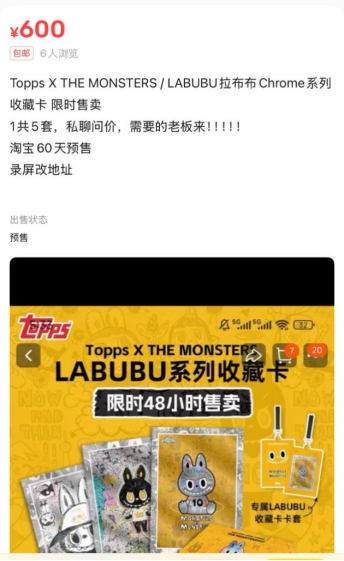
Core Insights - The LABUBU card series launched by TOPPS has seen significant demand, selling out quickly despite a high price point of 469 yuan, with resale prices reaching up to 600 yuan, indicating a 30% premium [1][6][12] - The card market in China is experiencing rapid growth, with major players like Pokémon and various entertainment giants entering the space, leading to increased competition and market dynamics [4][9][10] Group 1: Market Dynamics - The card market is characterized by a high overlap between users of collectible cards and trendy toys, with both demographics often being adults [5][12] - The traditional IP licensing model for cards is becoming saturated, leading to increased competition primarily based on price and volume, which may harm market stability [5][12] - The global collectible trading card market is projected to grow significantly, reaching $7.267 billion by 2025 and $15.433 billion by 2032, with a compound annual growth rate of 11.36% [6][9] Group 2: Company Performance - Bubble Mart reported a substantial increase in revenue, with a projected growth of 245%-250% year-on-year for Q3 2025, driven by both domestic and international sales [4][9] - The LABUBU card series is a collaboration with TOPPS, and while it has generated initial excitement, the long-term success of such products remains uncertain [7][12] Group 3: Consumer Behavior - The current Chinese card market is primarily driven by hobbyists, with a younger demographic and less focus on investment potential compared to international markets [11][12] - The sustainability of the card market relies on maintaining scarcity and managing supply effectively to avoid oversaturation [12][13] Group 4: Future Trends - The industry is expected to evolve towards trading card games (TCG) that offer gameplay and competitive events, which could enhance user engagement and market longevity [13][14] - As adult players become the main consumer group, the card industry is transitioning from a "toy economy" to an "interest asset" economy, emphasizing the collectible and investment aspects of cards [14]



遭疯抢,售罄!这个行业突然爆火,多路巨头杀入
Mei Ri Jing Ji Xin Wen· 2025-10-21 16:42
Core Insights - The focus of the "Double 11" shopping festival has unexpectedly shifted to collectible cards, particularly the TOPPS X THE MONSTERS/LABUBU series, which sold out quickly despite a high price point and purchase limits [1][5] - The collectible card market in China is experiencing significant growth, with major players like Pokémon and various entertainment giants entering the space, leading to increased competition and market dynamics [4][8] Market Dynamics - The LABUBU card's popularity reflects a broader trend in the collectible card market, with a notable increase in sales and interest from consumers [4][5] - The collectible card market is projected to reach $7.267 billion by 2025 and $15.433 billion by 2032, with a compound annual growth rate of 11.36% [6] - China is becoming a major player in the global card market, with projected market sizes of 26.3 billion yuan in 2024, indicating substantial growth potential [6] Consumer Behavior - There is a significant overlap between the user bases of collectible cards and other products like those from Pop Mart, challenging the perception that card users are primarily students [4][7] - The current demographic of card consumers is shifting, with a growing number of adult collectors, although the market still primarily caters to younger audiences [11] Competitive Landscape - The competitive landscape is intensifying, with over 2,000 card-related companies in China, and major brands like Pokémon actively expanding their presence [7][8] - The market is characterized by a mix of traditional IP-based cards and newer, more dynamic offerings that include gameplay elements, which are essential for long-term engagement [7][11] Future Trends - Analysts suggest that the future of the card market in China may lean towards trading card games (TCG) that incorporate gameplay and competitive elements, as opposed to purely collectible cards [11] - The transition from a hobbyist market to one with investment potential will require improved infrastructure, including credible grading systems and secondary market platforms [11]