VLA任务

Search documents
VLA任务的成本已经越来越低了~
具身智能之心· 2026-01-24 01:05
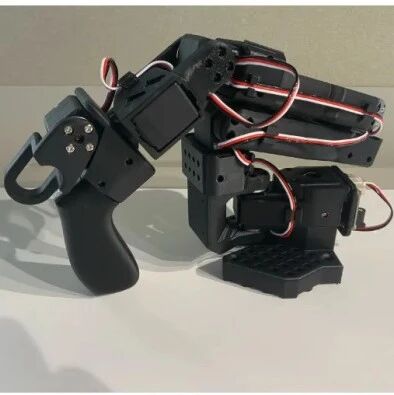
Core Viewpoint - The cost of robotic arms has significantly decreased, with prices now below 5000 yuan, making them more accessible for various VLA tasks [1][2]. Group 1: Cost Trends - Two years ago, the price for a single robotic arm for VLA tasks was over 30,000 yuan, which has now dropped to around 15,000 yuan last year, and currently below 5000 yuan [2]. - This price reduction allows for easier implementation of various VLA tasks such as pi0 and pi0.5 [2]. Group 2: Challenges for Beginners - Many beginners face difficulties in replicating VLA tasks due to high costs and lack of effective data collection methods [3][4]. - A significant amount of time is wasted by beginners on troubleshooting and overcoming obstacles in data collection and model training [4]. Group 3: Educational Initiatives - The company has developed a comprehensive course aimed at addressing the challenges faced by beginners in the VLA field, covering hardware, data collection, algorithms, and practical experiments [9][14]. - The course includes a free SO-100 robotic arm for participants, enhancing hands-on learning [19]. Group 4: Target Audience and Requirements - The course is designed for individuals seeking practical experience in VLA, including students and professionals transitioning from traditional fields [26]. - Participants are expected to have a foundational knowledge of Python and Pytorch, as well as experience with real machines and data collection [26].

用低成本复现这几个Git上最受欢迎的VLA任务
具身智能之心· 2026-01-11 03:02
Core Viewpoint - The article discusses the challenges faced by beginners in the field of VLA (Vision-Language Alignment) tasks due to high costs and the complexity of data collection and model training, while introducing a comprehensive course aimed at addressing these issues and providing practical skills for aspiring professionals in the field [3][5][9]. Group 1: Challenges in VLA Tasks - Many beginners express frustration over the high costs associated with mechanical arms and sensors, which can exceed 15,000 yuan, making it difficult for self-learners or those without equipment to engage in VLA tasks [3]. - Open-source low-cost mechanical arms are available, but many beginners struggle to achieve effective results due to difficulties in data collection and model training [4]. - A significant amount of time is wasted by beginners on common pitfalls, particularly with models like π0 and π0.5, which require specific tricks for data collection and training [5]. Group 2: Course Offerings - The "Embodied Intelligence Heart" platform has successfully replicated methods such as ACT, GR00T, π0, and π0.5 using SO-100 and LeRobot, aiming to help those lacking access to expensive equipment [8]. - A new practical course titled "VLA Small Class for Practical and Job-Seeking" has been developed in collaboration with VLA experts to assist learners in effectively utilizing VLA technologies [9]. - The course covers a wide range of topics, including hardware for robotic arms, data collection, VLA algorithms, evaluation, simulation, deployment of mainstream VLA models, and various real-machine experiments [14]. Group 3: Course Details and Requirements - The course is designed for individuals seeking practical experience and projects in the VLA field, including students at various academic levels and those transitioning from traditional fields like computer vision and robotics [25]. - Participants will receive a SO-100 robotic arm as part of the course package, which includes both teaching and execution arms [18]. - The course aims to equip learners with skills equivalent to 1-2 years of experience as algorithm engineers upon completion [27].
开发者福利!一台机器搞定人形运控、强化学习、VLN/VLA
具身智能之心· 2025-07-25 07:11
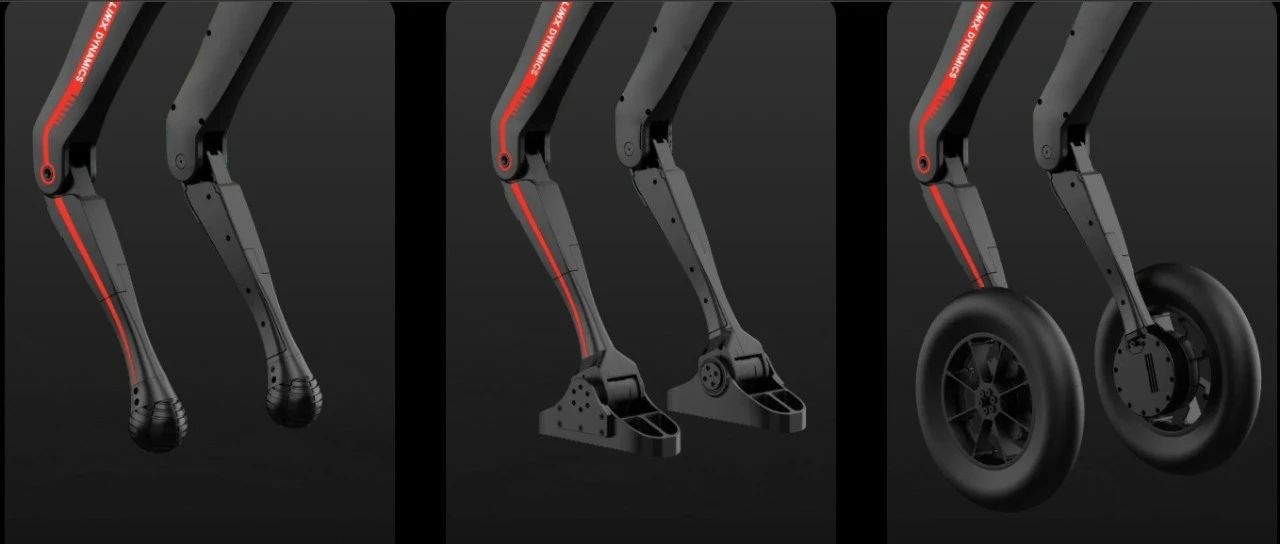
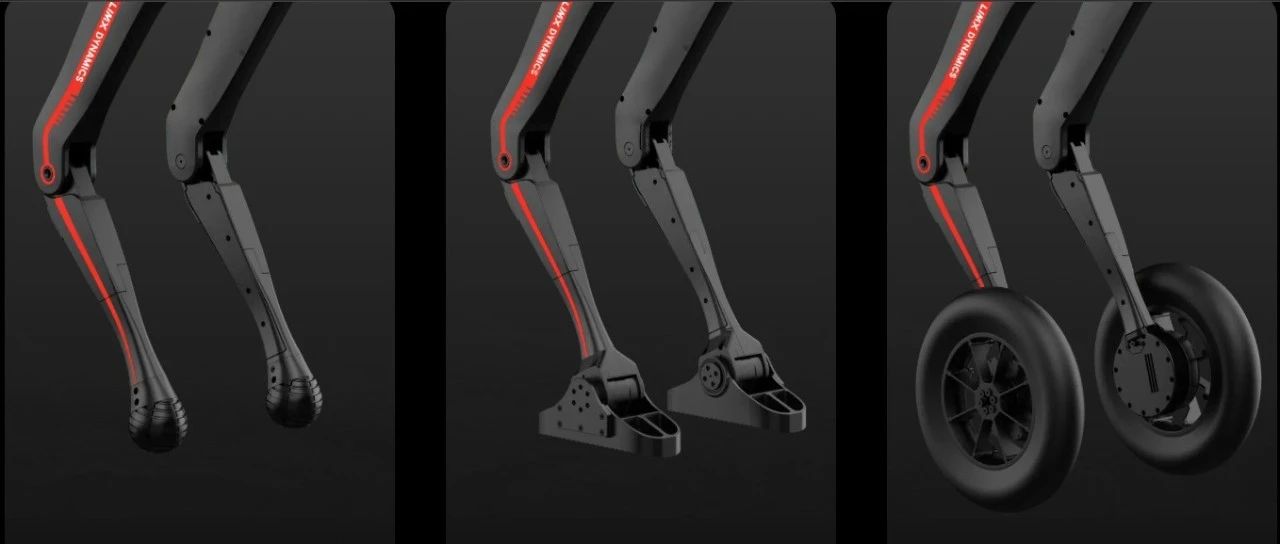
Core Viewpoint - TRON1 is a cutting-edge research platform designed for educational and scientific purposes, featuring a modular design that supports multiple robotic forms and algorithms, catering to diverse research needs [1]. Group 1: Product Features - TRON1 supports humanoid gait development and is ideal for reinforcement learning research, with the EDU version allowing for external camera integration for navigation and perception tasks [6][24]. - The platform supports C++ and Python for development, making it accessible for users without C++ knowledge [6]. - It features a "three-in-one" modular design that allows for quick switching between bipedal, point-foot, and wheeled locomotion [1]. Group 2: Technical Specifications - The platform is compatible with major simulation platforms like NVIDIA Isaac, Mujoco, and Gazebo, enhancing validation efficiency and lowering research barriers [9]. - TRON1 can be equipped with a robotic arm for various mobile operation tasks, supporting both single-arm and dual-foot configurations [11]. - It integrates LiDAR and depth cameras for 3D mapping, localization, navigation, and dynamic obstacle avoidance [13]. Group 3: Hardware and Performance - The TRON1 standard version and EDU version share similar mechanical parameters, with a weight limit of approximately 10 kg and a maximum speed of 5 m/s for wheeled locomotion [26]. - The platform is powered by an 8-core Arm Cortex-A78AE CPU and features NVIDIA Ampere architecture GPU with AI computing power of 157 TOPS (sparse) and 78 TOPS (dense) [16][19]. - The battery supports a maximum power of 1000W, with a runtime of over 2 hours under rated conditions [26]. Group 4: User Support and Development - Comprehensive user manuals and development guides are provided, ensuring ease of use and support for new users [29][33]. - The platform offers a one-year after-sales service post-acceptance, with paid maintenance and parts support available thereafter [40].
真香!一台机器搞定人形运控、强化学习、VLN/VLA
具身智能之心· 2025-07-18 02:28
Core Viewpoint - TRON1 is a cutting-edge research platform designed for educational and scientific purposes, featuring a modular design that supports multiple locomotion forms and algorithms, maximizing research flexibility [1]. Group 1: Product Features - TRON1 supports humanoid gait development and is suitable for reinforcement learning research, with the EDU version allowing for external camera integration for navigation and perception tasks [6][4]. - The platform supports C++ and Python for development, making it accessible for users without C++ knowledge [6]. - It features a "sim2real" capability with minimal discrepancies, enhancing validation efficiency and lowering research barriers [9]. - TRON1 can be equipped with robotic arms for various mobile operation tasks, supporting both single-arm and dual-leg control modes [11]. - The platform integrates LiDAR and depth cameras for 3D mapping, localization, navigation, and dynamic obstacle avoidance [13]. Group 2: Technical Specifications - The TRON1 platform includes advanced hardware specifications such as NVIDIA Ampere architecture GPU with 1024 CUDA cores and 32 Tensor cores, providing AI computing power of 157 TOPS (sparse) and 78 TOPS (dense) [16][19]. - It operates on an 8-core Arm Cortex-A78AE CPU with a maximum frequency of 2.0GHz and has 16GB of LPDDR5 memory [16]. - The platform supports a maximum load capacity of approximately 10kg and can achieve speeds of up to 5m/s with its wheeled legs [26]. Group 3: User Support and Development - The company provides comprehensive user manuals and development guides, ensuring ease of use and support for new users [30][37]. - TRON1 SDK is well-documented, facilitating secondary development and allowing users to troubleshoot and expand their research capabilities [34][40]. - The platform offers one year of after-sales service post-acceptance, with paid maintenance and parts support available thereafter [40].