Value Investment

Search documents
A 15% Pullback Is Coming — Here's Where To Buy The Dip
Youtube· 2026-03-16 17:26
Market Overview - The S&P 500 has experienced its third consecutive week of losses, but stocks are showing signs of recovery at the start of the new week [1] - Current market valuations are considered relatively expensive, leading to a cautious outlook [2] - The market has only pulled back 5% from its peak, transitioning from an upward trend to a sideways and now downward movement due to geopolitical tensions and weak economic indicators [3] Risks Identified - The primary risk is related to private credit exposure, which remains uncertain and could negatively impact the broader market [4] - Rising oil prices pose an inflationary risk that could undermine the benefits of recent fiscal stimulus measures [6] - The Federal Reserve's limited ability to cut interest rates in response to soft macroeconomic data exacerbates the situation [6] Market Predictions - Historically, midterm election years see a market pullback of around 15%, but the current stimulus may cushion potential declines [8] - A further market sell-off of 10-15% could occur if the Iran conflict persists without resolution [9] - The consensus earnings forecast for the S&P 500 in 2026 is approximately $35 per share, with current trading at about 22 times that figure [10] Investment Strategy - The focus is on high-quality companies with secular growth stories, particularly those leveraging artificial intelligence to improve operational efficiency [15] - Companies like Wesco and Ferguson in distribution, as well as Comcast and Airbnb, are highlighted as potential investment opportunities [16] - A defensive investment posture is maintained, with a preference for sectors like energy, staples, and utilities, while also considering cyclical value sectors if the market declines further [21] Economic Indicators - Oil prices have fluctuated around $95 per barrel, with potential implications for consumer spending and inflation if prices remain high [22] - The expected stimulus from tax refunds may be offset by rising gas prices, which could diminish the anticipated economic benefits [25] - The Federal Reserve is expected to maintain its current policy stance, with no immediate surprises anticipated in their upcoming communications [26]


Brighthouse Financial Inc. (NASDAQ:BHF) Earnings Preview: A Value Investment Opportunity?
Financial Modeling Prep· 2026-02-23 20:00
Core Viewpoint - Brighthouse Financial Inc. is positioned as an undervalued investment opportunity in the financial services sector, particularly in life insurance and annuities, with strong projected earnings and financial health indicators [1][2][4]. Financial Performance - The anticipated earnings per share (EPS) for Brighthouse Financial is $5.19, with projected revenue of approximately $2.24 billion [1][5]. - Analysts have revised their forecasts, expecting higher earnings for the fourth quarter, indicating positive market sentiment [2]. Valuation Metrics - The company's low price-to-earnings (P/E) ratio of 3.77 suggests it is undervalued compared to its earnings, making it attractive for value investors [2][5]. - Brighthouse Financial's price-to-sales ratio of 0.62 indicates that the stock is trading at a low price relative to its sales, further supporting the notion of undervaluation [3]. - The enterprise value to sales ratio of 0.03 reflects a modest valuation, suggesting a potential buying opportunity for investors [3]. Financial Health - The strong earnings yield of 26.55% highlights a solid return on investment, underscoring the company's financial health [4][5]. - The enterprise value to operating cash flow ratio of 1.22 indicates efficient cash flow generation, which is crucial for maintaining operations and supporting future growth [4]. - The debt-to-equity ratio of 0.50 suggests a moderate level of debt, manageable given the company's strong liquidity position, positioning it well for future growth and investment opportunities [4].


满仓亏3.7万割肉、重仓亏15.7万硬扛!价值回归太惨烈
Sou Hu Cai Jing· 2026-02-16 08:49
Core Viewpoint - The current A-share market has seen a significant decline, leading to a high loss rate among retail investors, with 78.7% experiencing losses, particularly those with investments between 500,000 to 1,000,000 yuan [1][5] Group 1: Retail Investor Experiences - One retail investor lost 37,000 yuan from an initial investment of 190,000 yuan, resulting in a nearly 20% loss, leading to emotional distress and a decision to sell [3] - Another investor, who invested 950,000 yuan, faced a floating loss of 157,000 yuan, which is over 16%, causing significant psychological strain and indecision about whether to sell or hold [4] Group 2: Market Dynamics and Investor Behavior - The belief in "value recovery" has led many retail investors to hold onto losing stocks, often resulting in them becoming "the last buyers" as institutional investors shift their strategies [5] - The current market environment is characterized by rapid changes in institutional capital allocation and sentiment, making it difficult for retail investors to rely on traditional value investing strategies [5] Group 3: Investment Strategies and Lessons - Retail investors are advised against full investment in a single stock, emphasizing the importance of maintaining a cash reserve and diversifying investments to mitigate risks [6] - Key investment principles include setting stop-loss limits, avoiding the mindset of "holding on for recovery," and recognizing that not all stocks will return to previous values [6][7]

头部私募实控人高校背景大揭秘!这些大佬们竟都是校友!
私募排排网· 2026-02-13 08:03
Core Insights - The A-share market has shown a significant upward trend since 2025, with major indices recording gains and a noticeable profit-making effect, leading to a continuous increase in the scale of private equity management [2] - As of January 2026, there are 243 leading private equity firms in China, accounting for less than 4% of the total 7501 private equity institutions [2] Group 1: Head Private Equity Firms - The development trends and backgrounds of the actual controllers of leading private equity firms are of great interest to the market [3] - Among the leading private equity firms, 23 controllers are from Tsinghua University, representing about 9.5% of the total, with 13 being from firms managing over 10 billion [3] - The average industry experience of Tsinghua controllers is approximately 19 years, with a majority focusing on stock strategies [4] Group 2: Tsinghua University Controllers - Tsinghua University controllers predominantly operate in Beijing (9), followed by Shanghai (7) and Shenzhen (4) [5] - Notable figures include Wu Weizhi from Zhongou Ruibo, who has over 30 years of experience and emphasizes fundamental research for growth stock selection [5][6] Group 3: Peking University Controllers - There are 23 controllers from Peking University, also about 9.5%, with 15 managing over 10 billion [6] - The average industry experience for Peking University controllers is around 18 years, with a strong focus on stock strategies [7] Group 4: Fudan University Controllers - Fudan University has 21 controllers, accounting for approximately 8.6%, with 11 managing over 10 billion [8] - The average industry experience for Fudan controllers is about 23 years, with a majority focusing on stock strategies [9] Group 5: Renmin University Controllers - Renmin University has 7 controllers, representing about 2.9%, with 6 managing over 10 billion [11] - The average industry experience for Renmin controllers is around 27 years, primarily focusing on stock strategies [12] Group 6: Zhejiang University Controllers - Zhejiang University has 9 controllers, accounting for about 3.7%, with 3 managing over 10 billion [15] - The average industry experience for Zhejiang controllers is approximately 18 years, with a mix of strategies including multi-asset and stock [16] Group 7: Shanghai Jiao Tong University Controllers - Shanghai Jiao Tong University has 6 controllers, representing about 2.5%, with an equal split between those managing over and under 10 billion [18] - The average industry experience for these controllers is around 20 years, with a majority focusing on stock strategies [19] Group 8: Nankai University Controllers - Nankai University has 9 controllers, also about 3.7%, with 5 managing over 10 billion [20] - The average industry experience for Nankai controllers is approximately 22 years, with a focus on stock strategies [21]

Is PayPal an Underrated Financial Stock Investment Play?
The Motley Fool· 2026-02-07 08:46
Core Viewpoint - PayPal is facing significant challenges in recovering to its pandemic highs, with a drastic slowdown in growth leading to a decline in share prices and investor confidence [1][11]. Financial Performance - PayPal's stock is currently trading 86% below its peak as of February 3, with a forward price-to-earnings ratio of 9.2, attracting value investors [2]. - In Q4 2025, online branded checkout experienced only a 1% increase in total payment volume compared to Q4 2024, indicating weakness during a critical holiday season [5]. - The company reported a gross margin of 41.78% and a dividend yield of 0.35%, having paid its first quarterly dividend of $0.14 in December, totaling $130 million in Q4 [9][10]. Management and Strategic Changes - The board of directors has decided to replace CEO Alex Chriss with HP's Enrique Lores, effective March 1, reflecting a lack of confidence in current leadership [1]. - Management's guidance for adjusted earnings per share in 2026 indicates a "low-single digit decline to slightly positive," which was not well received by investors [9]. Market Position and Competition - PayPal's focus on discretionary and online spending, particularly among middle-income demographics, has not been favorable, especially in light of retail weakness in the U.S. [6][7]. - Intense competition from tech giants like Apple Pay and Google Pay is impacting PayPal's market position, as these competitors integrate seamlessly with smartphones [6]. Investment Considerations - Despite its low valuation, PayPal is not currently viewed as an underrated investment opportunity, with investors seeking fundamental improvements before considering the business [11].

Is Baxter International an Underrated Healthcare Investment Play?
Yahoo Finance· 2026-02-06 15:35
Company Overview - Baxter International manufactures essential medical products such as surgical sealants and hospital beds, which are crucial for the healthcare industry [2] - The aging baby boomer generation is expected to increase demand for healthcare, thereby boosting demand for Baxter's products [2] Recent Performance - Baxter has faced inconsistent revenue and has reported losses, leading to a significant stock decline of approximately 75% over the past five years [5] - The company recently cut its dividend from $0.17 per share per quarter to a token penny, reflecting its current financial struggles [1][5] Investment Considerations - Despite recent challenges, Baxter's products are deemed necessary, suggesting the company may navigate through its current difficulties [5] - The company maintains a manageable level of debt, covering its interest costs two times over, which provides some financial stability [5] - The stock's valuation appears attractive, with price-to-sales and price-to-book ratios below their five-year averages, indicating it may be undervalued [6] Future Outlook - There is potential for turnaround investors to find value in Baxter, as the demand for its products is expected to grow in the long term [7] - However, recovery may take time and could be uneven, particularly given the recent dividend cut which may deter income-focused investors [7]

基金信披新规来了!财报需增加盈利投资者占比、7-10年业绩等
2 1 Shi Ji Jing Ji Bao Dao· 2026-01-30 12:32
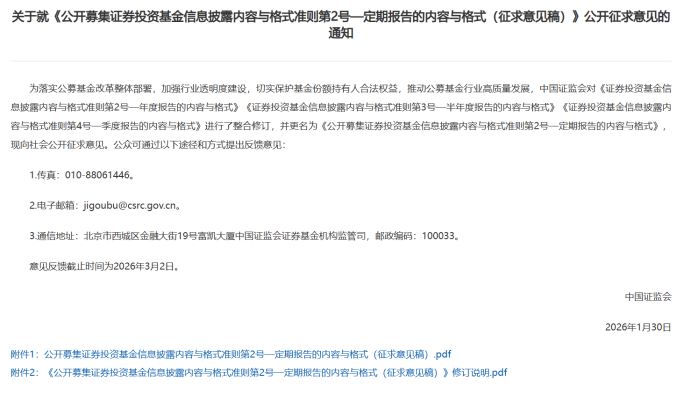
Core Viewpoint - The China Securities Regulatory Commission (CSRC) is seeking public opinion on the updated disclosure standards for public funds, emphasizing a more investor-centric approach in the new regulations [1][2]. Group 1: Key Updates on Disclosure Standards - The new guidelines consist of 3 chapters and 36 articles, integrating similar disclosure items across annual, semi-annual, and quarterly reports while providing tailored requirements based on different functions [1]. - The revisions aim to simplify and adjust certain disclosure requirements based on higher-level regulations and industry practices, drawing from experiences in mature overseas markets [1][3]. - The CSRC's action plan for promoting high-quality development in public funds includes enhancing transparency and revising disclosure templates for actively managed equity funds [3][4]. Group 2: Investor-Centric Focus - The revised regulations require funds to display long-term performance metrics (7-year and 10-year) in their reports, shifting focus from short-term performance [2][6]. - Fund managers are now mandated to disclose the proportion of profitable investors in actively managed equity and mixed funds in their annual and semi-annual reports, promoting a focus on investor interests [2][6]. Group 3: Regulatory Emphasis on Stability - The new rules address high turnover rates in actively managed equity and mixed funds, which contradict the principles of value and long-term investing, by requiring disclosure of turnover rates in annual reports [7]. - This regulatory shift aims to encourage fund managers to adopt more prudent investment strategies, thereby enhancing the stability of investment behaviors [7]. Group 4: Systematic Revisions - The integration of existing disclosure requirements into a single normative document aims to streamline the disclosure process while maintaining authority and flexibility [4][5]. - The removal of redundant disclosure items is expected to alleviate the burden on industry institutions [5].
Kroger: Value Investment In An Expensive Market
Seeking Alpha· 2026-01-27 09:52
分组1 - The investment philosophy emphasizes the importance of financial performance and valuation, classifying potential investments into long-term, medium-term, and value traps based on Return on Invested Capital (ROIC) [1] - Long-term investments are defined as those with ROIC greater than 9% and the ability to grow intrinsic value, while medium-term investments have ROIC between 6% and 9% and can maintain intrinsic value [1] - Value traps are identified as investments with ROIC less than 6% that cannot meet their cost of capital, indicating a lack of financial viability [1] 分组2 - The investment strategy is influenced by Warren Buffett's focus on long-term moats and value creation, combined with Peter Lynch's approach to identifying growth opportunities [1] - The goal is to acquire value opportunities at a 30% discount to intrinsic value, targeting a return on equity (ROE) of over 9% adjusted for the equity value per share at purchase [1] - Growth is viewed as a subjective variable, estimated through retained earnings and the company's return on equity, reflecting historical variability [1]


GameStop stock rockets 8% as Burry reveals stake, calls investment long-term bet
Invezz· 2026-01-26 18:11
Core Viewpoint - Michael Burry has been purchasing shares of GameStop, viewing it as a long-term value investment rather than a speculative play on meme-stock volatility [1][2] Group 1: Investment Thesis - Burry expects to buy GameStop shares at a valuation close to 1x tangible book value and 1x net asset value, indicating a focus on the company's underlying assets [2][3] - Burry's investment thesis does not depend on a resurgence of meme-stock dynamics or a short squeeze, differentiating his approach from past speculative trading [3][4] Group 2: Company Performance and Strategy - GameStop has leveraged periods of heightened investor enthusiasm to raise billions through equity offerings, which has significantly improved its balance sheet [5] - Burry acknowledges the challenges faced by GameStop, describing it as having a "crappy business," but notes that CEO Ryan Cohen is effectively utilizing the current situation to strengthen the company [5] Group 3: CEO's Commitment - Ryan Cohen, GameStop's CEO, has increased his personal stake in the company by purchasing 1 million shares at an average price of approximately $21.36, totaling around $21.4 million [6][7] - Cohen emphasizes the importance of executives buying shares with their own money to align better with stockholders, reflecting a commitment to the company's long-term success [7]


这个城市涨疯了!
Xin Lang Cai Jing· 2026-01-26 01:56
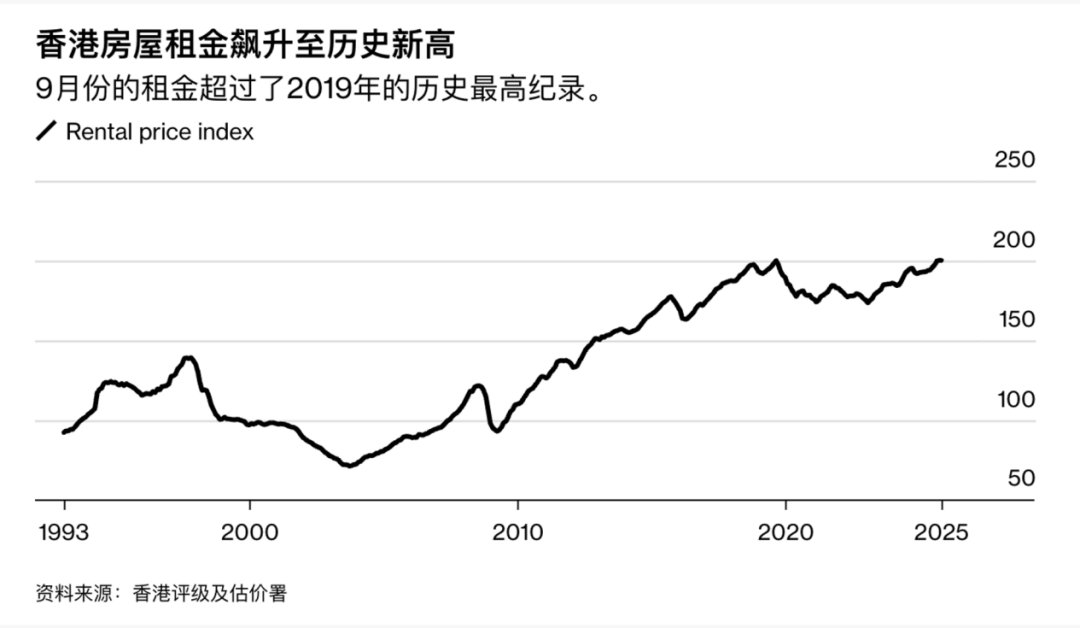
Group 1 - Hong Kong's real estate market is experiencing a rebound after four years of decline, with prices increasing by 8% in 2025 due to stimulus policies and a decrease in US interest rates [1][35] - Rental prices in Hong Kong have reached their highest level since 1993, indicating a strong upward trend in both rental and property prices [1][35] - The phenomenon of rising rents and property prices is not isolated to Hong Kong, as cities worldwide, including Tokyo, are also witnessing similar trends [4][38] Group 2 - The upward trend in property prices and rents creates a positive feedback loop, further driving both metrics higher [4][40] - Cities like Hanoi, Ho Chi Minh City, Singapore, and Brisbane are also experiencing significant property price increases, with some markets seeing growth exceeding 50% over recent years [9][41] - The increase in overseas property investments, particularly in Australia, has helped offset losses in domestic real estate markets for many investors [41][44] Group 3 - In 2024, 40% of Hong Kong's transaction volume and 52.5% of transaction value were supported by mainland buyers, with the first half of the year seeing mainland transactions reach 90% of the previous year's total [18][19] - High-end properties in Hong Kong, priced over 50 million, are predominantly purchased by mainland buyers, showcasing the strength of affluent investors [20][52] - The principles for overseas investment emphasize value investing, targeting areas with real demand, policy support, and low supply markets to mitigate risks [54][63] Group 4 - Brisbane's real estate market is projected to see an average price increase of 14.5% in 2025, driven by population growth and significant infrastructure developments ahead of the 2032 Olympics [60][62] - The supply-demand imbalance in Brisbane is acute, with an average annual demand of 16,000 units against a supply of only 4,600 units, leading to a projected vacancy rate of just 0.7% [57][60] - Melbourne's property market is expected to recover as supply constraints are implemented, with current prices not reflecting the city's true value compared to Brisbane [61][63]