WTO争端解决机制

Search documents
斯洛文尼亚前总统答一财:是时候考虑新一轮贸易自由化了
第一财经· 2026-03-26 15:05
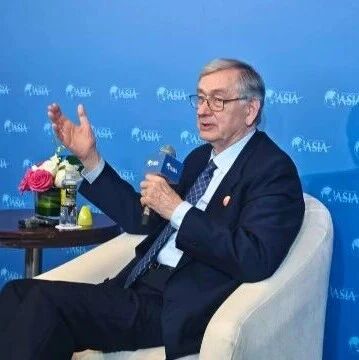
Core Viewpoint - The article discusses the implications of the recent U.S.-EU trade agreement and the challenges posed by the reliance on tariffs, emphasizing the need for a new round of trade liberalization and the restoration of the WTO's dispute resolution mechanism [3][4][5]. Group 1: U.S.-EU Trade Agreement - The European Parliament is set to vote on the U.S.-EU trade agreement nearly nine months after its initial announcement [3]. - The agreement requires the EU to eliminate tariffs on U.S. industrial goods and provide preferential market access for U.S. seafood and agricultural products in exchange for the U.S. imposing a 15% tariff on most EU goods [4]. - The EU has delayed the approval of the agreement multiple times due to political uncertainties, including comments from former President Trump and a Supreme Court ruling against his tariff policies [4]. Group 2: Tariff Dependence and Trade Liberalization - The former Slovenian President Turk criticized the U.S. for its increasing reliance on tariffs, which he views as a significant regression from the historical trend of trade liberalization led by the U.S. since the late 1950s [3][4]. - Turk suggests that a new approach to trade liberalization is necessary, which may involve adjustments to existing mechanisms and the introduction of new arrangements [3][5]. Group 3: WTO and Global Trade Relations - Turk advocates for the empowerment of the WTO as a solution to current trade uncertainties, emphasizing the need to restore its dispute resolution mechanism, which has been stalled due to U.S. actions [5]. - The EU has been actively pursuing new trade agreements with countries like Indonesia, India, and Mercosur, and recently signed a bilateral free trade agreement with Australia, which is expected to increase exports significantly [5].

美国第89次否决!WTO上诉机构恢复仍陷僵局,越南选择加入MPIA
Di Yi Cai Jing· 2025-07-27 10:30
Core Viewpoint - Vietnam is actively advancing domestic procedures to join the Multi-Party Interim Appeal Arrangement (MPIA) amid the ongoing deadlock in the WTO Appellate Body, which has been unable to function since 2019 due to a lack of judges [1][3]. Group 1: WTO Dispute Resolution Mechanism - The United States has once again vetoed a proposal to initiate the selection process for judges in the WTO Appellate Body, marking the 89th time this proposal has been rejected [3]. - Colombia, representing 130 member countries, expressed regret over the failure to initiate the selection process and emphasized the need for continued dialogue on reforming the dispute resolution mechanism [3]. - The Appellate Body is considered the "supreme court" of international trade, with the authority to review initial reports from WTO expert panels and issue binding decisions [3]. Group 2: Vietnam and MPIA - Vietnam has indicated its intention to actively join the MPIA, which serves as a temporary measure during the Appellate Body's suspension, with the ultimate goal of restoring the selection of Appellate Body members [1][5]. - The UK has also recently joined the MPIA, marking a shift in its stance on the WTO dispute resolution system [5][6]. - The MPIA was established in 2020 by several WTO members, including China and the EU, as a temporary mechanism to address the deadlock in the Appellate Body [6]. Group 3: Recent Developments and Reactions - The most recent MPIA ruling was announced on July 21, regarding the EU's case against China's standard essential patent injunction, which was welcomed by China despite some dissatisfaction with the ruling's implications [7]. - The Chinese Ministry of Commerce acknowledged the value of the MPIA in effectively resolving trade disputes and expressed commitment to its proper implementation [7].