debt-to-equity ratio

Search documents
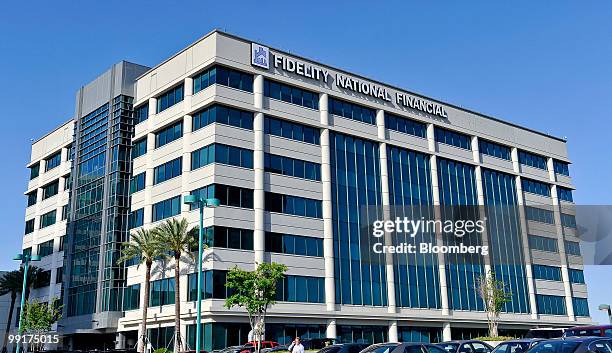
Fidelity National Information Services (FIS) Q4 Earnings Report 2025
Financial Modeling Prep· 2026-02-24 21:06
Core Insights - Fidelity National Information Services, Inc. (FIS) reported its Q4 2025 earnings, showing a slight miss in adjusted EPS but exceeding revenue expectations, indicating a mixed performance in the financial technology sector [2][5]. Financial Performance - For Q4, adjusted EPS was $1.68, slightly below the estimated $1.69, while revenue reached $2.81 billion, surpassing the expected $2.74 billion [2][5]. - Year-over-year, adjusted EPS improved from $1.40 to $1.68, reflecting a positive trend in profitability [3][5]. Valuation Metrics - The trailing price-to-earnings (P/E) ratio is approximately 67.12, indicating that investors are willing to pay a premium for FIS's earnings, while the adjusted P/E ratio is around 8.52 [3][5]. - The price-to-sales ratio stands at 2.34, suggesting that investors are paying $2.34 for every dollar of sales, reflecting the market's valuation of the company's revenue [4][5]. - The enterprise value to sales ratio is 3.46, and the enterprise value to operating cash flow ratio is 14.23, indicating a healthy cash flow generation relative to market value [4]. Financial Stability - FIS maintains a debt-to-equity ratio of 0.94, indicating a moderate level of debt compared to equity, which suggests financial stability [4]. - The current ratio of 0.53 may indicate potential liquidity challenges in meeting short-term obligations, highlighting the need for careful management of working capital [4].


Under Armour's Financial Performance and Outlook
Financial Modeling Prep· 2026-02-06 23:00
Core Insights - Under Armour reported earnings per share of $0.09, exceeding the estimated loss of $0.015, and revenue of approximately $1.33 billion, surpassing the estimated $1.16 billion [1][5] Group 1: Financial Performance - The company's third-quarter revenue decline was smaller than anticipated due to successful turnaround efforts aimed at simplifying its product assortment [3] - Under Armour's adjusted operating results for the third quarter surpassed expectations, indicating positive progress [3] Group 2: Revenue Expectations - Despite positive earnings, Under Armour has adjusted its revenue expectations for fiscal 2026, anticipating a decline at the milder end of its forecast [2][5] - The company faces challenges such as weak demand in North American and Asia-Pacific markets and ongoing tariff pressures [2][5] Group 3: Valuation Metrics - The price-to-sales ratio is about 0.60, indicating investors pay 60 cents for every dollar of sales [4] - The enterprise value to sales ratio is approximately 0.90, reflecting the company's valuation relative to its revenue [4] - The debt-to-equity ratio is about 1.02, suggesting slightly more debt than equity, while the current ratio is approximately 1.69, indicating good liquidity to cover short-term liabilities [4]

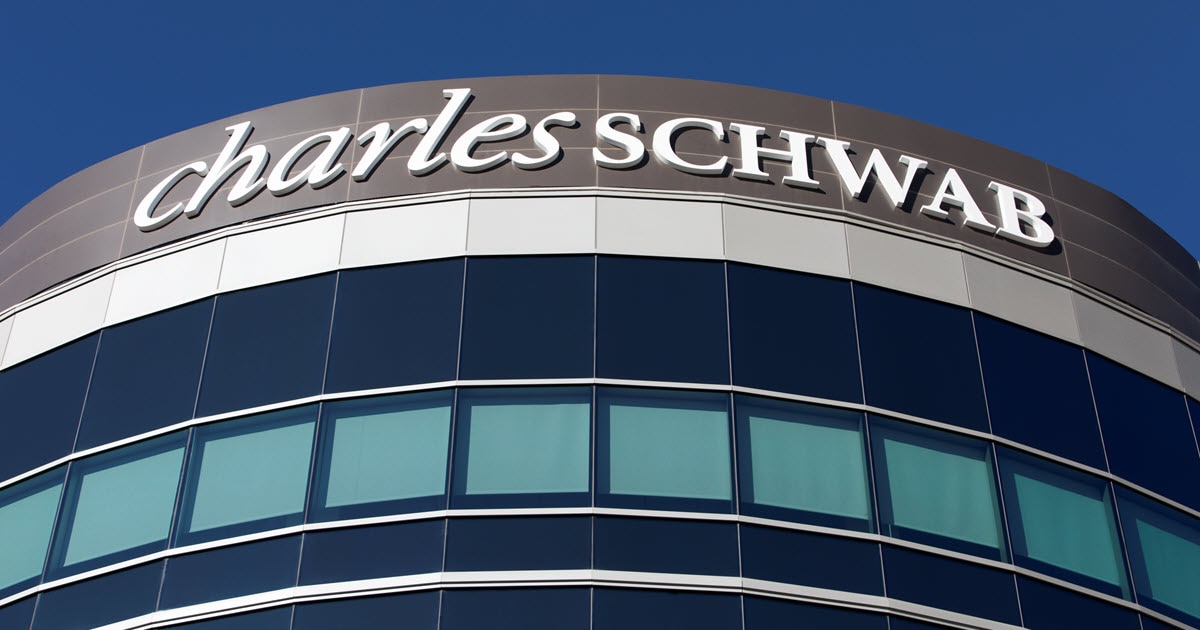
Charles Schwab Corporation (NYSE:SCHW) Financial Overview
Financial Modeling Prep· 2026-01-21 20:00
Core Viewpoint - Charles Schwab Corporation is a leading U.S. brokerage firm that offers a wide range of financial services and investment products, competing with major firms like Fidelity and E*TRADE [1] Financial Performance - On January 21, 2026, Schwab reported earnings per share (EPS) of $1.39, slightly below the estimated $1.40, with revenue of approximately $6.34 billion, just under the expected $6.38 billion [2][6] - In 2025, Schwab's net income for the fourth quarter reached $2.5 billion, driven by a surge in brokerage activity as individual investors engaged in stock and ETF trading at unprecedented levels [3][6] Market Position and Valuation - Schwab has a price-to-earnings (P/E) ratio of approximately 22.52, indicating investor confidence in its earnings potential, while the price-to-sales ratio is about 6.86 [4][6] - The enterprise value to operating cash flow ratio is notably negative at -243.46, suggesting challenges in cash flow generation [4] - The company's debt-to-equity ratio stands at 0.56, indicating a moderate level of debt compared to equity, while the current ratio of 0.50 may suggest potential liquidity concerns [5]

Interactive Brokers Group, Inc. (NASDAQ: IBKR) Surpasses Earnings Expectations
Financial Modeling Prep· 2026-01-21 05:00
Core Insights - Interactive Brokers Group, Inc. (IBKR) is a significant player in the financial services sector, offering automated global electronic brokerage services for trading various financial instruments [1] Financial Performance - On January 20, 2026, IBKR reported earnings per share (EPS) of $0.65, exceeding the estimated $0.59, indicating strong financial performance [2][6] - The company's revenue reached approximately $1.64 billion, slightly above the forecast, showcasing consistent financial growth [2][6] - Despite the positive earnings report, IBKR's stock price declined during extended trading, possibly due to market dynamics or investor sentiment [3] Customer Metrics - Key metrics from the fourth quarter show a 32% increase in customer accounts, reaching 4.4 million, reflecting a growing customer base [4] - Customer equity rose by 37% to $779.9 billion, indicating increased investor confidence [4] Revenue Growth - Commission revenue grew by 22% to $582 million, driven by higher customer trading volumes [4] Financial Ratios - IBKR maintains a price-to-earnings (P/E) ratio of approximately 34.63, reflecting investor confidence in its earnings potential [5] - The company has a low debt-to-equity ratio of 0.18, indicating a conservative approach to debt [5] - A current ratio of 1.15 suggests adequate liquidity to cover short-term liabilities, highlighting strong financial health [5]


UniFirst Corporation (NYSE: UNF) Earnings Report Analysis
Financial Modeling Prep· 2026-01-08 00:00
Core Insights - UniFirst Corporation is a leading provider of workplace uniforms and facility service products, competing with companies like Cintas Corporation and Aramark [1] Financial Performance - On January 7, 2026, UniFirst reported earnings per share (EPS) of $1.98, missing the estimated $2.05, but exceeded revenue expectations with $621.3 million compared to the estimated $614.7 million, marking a 2.7% increase from the previous year [2] - The company's operating margin decreased to 7.3% from 9.2% in the prior year due to planned investments in growth and digital transformation initiatives [3] - Net income for the quarter was $34.4 million, down from $43.1 million the previous year, and diluted earnings per share fell to $1.89 from $2.31 [3] Valuation Metrics - UniFirst has a price-to-earnings (P/E) ratio of approximately 25.63, indicating the market's valuation of its earnings [4] - The price-to-sales ratio is about 1.50, suggesting how much investors are willing to pay per dollar of sales [4] - The enterprise value to sales ratio is around 1.48, reflecting the company's total valuation relative to its sales [4] Financial Stability - The company maintains a low debt-to-equity ratio of 0.036, demonstrating minimal debt compared to its equity [5] - The current ratio is approximately 3.31, indicating strong liquidity and the ability to cover short-term liabilities [5] - These metrics highlight UniFirst's financial stability and potential for future growth [5]

Analyzing Adobe In Comparison To Competitors In Software Industry - Adobe (NASDAQ:ADBE)
Benzinga· 2026-01-07 15:02
Core Insights - The article provides a comprehensive analysis of Adobe in comparison to its major competitors in the Software industry, focusing on financial metrics, market position, and growth potential [1] Company Overview - Adobe specializes in content creation, document management, and digital marketing software and services, operating through three segments: digital media content creation, digital experience for marketing solutions, and publishing for legacy products [2] Financial Metrics Comparison - Adobe's Price to Earnings (P/E) ratio is 20.12, which is 0.21x lower than the industry average, indicating potential for growth at a reasonable price [3] - The Price to Book (P/B) ratio for Adobe is 12.10, which is 0.67x below the industry average, suggesting the stock may be undervalued based on its book value [3] - Adobe's Price to Sales (P/S) ratio is 6.04, which is 0.28x the industry average, indicating potential undervaluation based on sales performance [3] - The Return on Equity (ROE) for Adobe is 15.87%, which is 7.49% above the industry average, reflecting efficient use of equity to generate profits [3] - Adobe's Earnings Before Interest, Taxes, Depreciation, and Amortization (EBITDA) stands at $2.46 billion, which is 2.44x above the industry average, indicating stronger profitability [3] - The gross profit for Adobe is $5.35 billion, which is 3.07x above the industry average, showcasing strong earnings from core operations [3] - Revenue growth for Adobe is 3.44%, significantly lower than the industry average of 41.05%, indicating a slowdown in sales expansion [3] Debt to Equity Ratio - Adobe has a moderate debt-to-equity ratio of 0.57, placing it in the middle among its top four peers, suggesting a balanced financial structure [6] Key Takeaways - Adobe's low P/E, P/B, and P/S ratios compared to peers indicate potential undervaluation, while its high ROE, EBITDA, and gross profit suggest strong profitability and operational efficiency [7] - The low revenue growth rate raises concerns about Adobe's ability to expand its market share relative to industry competitors [7]



ABM Industries Incorporated (NYSE:ABM) Earnings Report Analysis
Financial Modeling Prep· 2025-12-18 07:00
Core Insights - ABM Industries Incorporated reported earnings per share (EPS) of $0.88, which was below the estimated $1.09, resulting in a negative surprise of 20% [2][6] - The company's revenue for the period was approximately $2.30 billion, exceeding the estimated $2.27 billion, and reflecting a year-over-year increase of 5.4% [3][6] Financial Performance - ABM's EPS decreased from $0.90 reported in the same quarter last year, indicating a trend of missing consensus EPS estimates, having exceeded them only once in the past four quarters [2] - The company has a price-to-earnings (P/E) ratio of approximately 18.27, and a price-to-sales ratio of about 0.35, reflecting market valuation metrics [4] - ABM's enterprise value to sales ratio is around 0.35, and its enterprise value to operating cash flow ratio is approximately 13.06 [4] Financial Health - The company maintains a low debt-to-equity ratio of 0.079, indicating conservative use of debt [5][6] - ABM's current ratio is approximately 1.48, suggesting a strong liquidity position to cover short-term liabilities [5][6] - The earnings yield is about 5.47%, making ABM an attractive option for investors seeking stable returns [5]

Market Analysis: Automatic Data Processing And Competitors In Professional Services Industry - Automatic Data Processing (NASDAQ:ADP)
Benzinga· 2025-12-09 15:01
Core Insights - The article provides a comprehensive analysis of Automatic Data Processing (ADP) in comparison to its competitors in the Professional Services industry, focusing on financial metrics, market position, and growth prospects [1] Company Overview - Automatic Data Processing is a global technology company specializing in cloud-based human capital management solutions, serving over 1.1 million clients and paying over 42 million workers across 140 countries as of fiscal 2025 [2] Financial Metrics Comparison - ADP's Price to Earnings (P/E) ratio is 25.54, which is 0.98x lower than the industry average, indicating favorable growth potential [3] - The Price to Book (P/B) ratio of 16.42 exceeds the industry average by 2.64x, suggesting the stock may be trading at a premium relative to its book value [3] - ADP's Price to Sales (P/S) ratio of 5.05 is 1.98x higher than the industry average, indicating potential overvaluation in terms of sales performance [3] - The Return on Equity (ROE) stands at 16.13%, which is 11.17% above the industry average, reflecting efficient use of equity to generate profits [3] - ADP's EBITDA of $1.59 billion is 11.36x above the industry average, showcasing stronger profitability and robust cash flow generation [3] - The gross profit of $2.34 billion is 5.71x above the industry average, indicating strong profitability from core operations [8] - Revenue growth of 7.09% surpasses the industry average of 4.63%, demonstrating strong sales performance and market outperformance [8] Debt-to-Equity Ratio - ADP has a moderate debt-to-equity ratio of 1.49, indicating a balanced financial structure with a reasonable level of debt while leveraging equity for financing operations [11]


Ferguson plc (NYSE:FERG) Earnings Preview: Key Financial Insights
Financial Modeling Prep· 2025-12-05 21:00
Core Insights - Ferguson plc is a leading distributor of plumbing and heating products, primarily operating in North America and the UK, competing with major players like Home Depot and Lowe's [1] Financial Performance Expectations - Ferguson is scheduled to release its quarterly earnings on December 9, 2025, with analysts expecting earnings per share (EPS) of $2.77 and projected revenue of approximately $8.1 billion [2] Financial Metrics - The company's price-to-earnings (P/E) ratio is around 26.76, indicating investor confidence in future earnings potential [3] - The price-to-sales ratio is 1.59, suggesting investors are paying $1.59 for every dollar of sales [3] - The enterprise value to sales ratio is approximately 1.76, reflecting the company's total valuation compared to its sales [4] - The enterprise value to operating cash flow ratio stands at about 28.20, highlighting the relationship between valuation and cash flow from operations [4] Financial Stability - Ferguson's debt-to-equity ratio is 1.02, indicating a balanced proportion of debt to shareholders' equity [5] - The current ratio of 1.68 suggests the company's strong liquidity position, as it can cover short-term liabilities with short-term assets [5]

BNY Mellon Surpasses Earnings Estimates with Strong Financial Performance
Financial Modeling Prep· 2025-10-16 17:00
Core Insights - BNY Mellon reported an earnings per share (EPS) of $1.88, exceeding the estimated $1.77 and showing significant growth from the previous year's EPS of $1.52 [2][6] - The company achieved a revenue of approximately $5.07 billion, surpassing the estimated $4.97 billion, with a price-to-sales ratio of about 1.91 [3][6] - BNY Mellon's price-to-earnings (P/E) ratio is approximately 15.64, indicating favorable market valuation of its earnings, and an earnings yield of around 6.40% highlights its profitability [4][6] Financial Metrics - The debt-to-equity ratio of 1.17 suggests a higher level of debt relative to equity, indicating the company's financial leverage [5] - A current ratio of 0.49 reflects BNY Mellon's ability to cover short-term liabilities with short-term assets, which is crucial for its financial health [5]