Banks(银行业)

Search documents
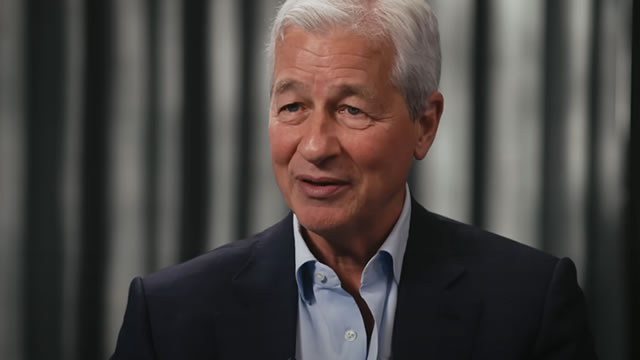
Dimon Says There's Always Surprise in a 'Credit Cycle'
Youtube· 2026-02-24 22:23
It's obviously interesting, given what we've been seeing in the market, Right. There's been these sort of scare trades in her coming for almost every industry, you know, each day. And so, you know, I think Jamie obviously was expressing some some caution around the different parts of the sector.But he also did note, you know, Jp morgan is using AI like they're trying to figure out how best they can use it at the banks so that they can make things faster for their clients. And he was even talking about how t ...


STANCHART(02888) - 2025 Q4 - Earnings Call Transcript
2026-02-24 09:00
Standard Chartered (SEHK:02888) Q4 2025 Earnings call February 24, 2026 03:00 AM ET Speaker4Good morning, and good afternoon, everyone, and welcome to our full year 2025 results call. I'm joined here in London by Pete Burrill, our interim group CFO, and Manus Costello, our global head of Investor Relations. We'll take you through our results and outlook before opening up for questions. 2025 was an extraordinary year by any measure. It tested the resilience of the global system and the relevance of instituti ...
From SBI to PNB: How much PSU banks made from minimum balance & SMS charges
The Economic Times· 2026-02-10 07:18
As far as the highest amount received for providing SMS facilities to its customers is concerned, for the same financial years, Highest amount received for non-maintenance of minimum balance amount in savings accounts in FY 22-23, FY 23-24 and FY 24-25 As per the data provided by Pankaj Choudahry, State Finance Minister, the total amount PNB received from its customers for the non-maintenance of the minimum balance amount in savings accounts in the three financial years is Rs 1,577.87 crore. stands second ...

JPMorgan's 2026 NII Guide Signals Resilience: Is JPM Stock a Buy Now?
ZACKS· 2026-01-28 14:36
Core Viewpoint - JPMorgan expects continued growth in net interest income (NII) for 2026, projecting it to reach approximately $103 billion, representing an increase of over 7% year over year, despite anticipated rate cuts and deposit margin compression [2][8]. NII Expectations - In 2025, JPMorgan reported a 3% increase in NII, driven by 11% loan growth and lower funding costs, despite the Federal Reserve's rate cuts [1]. - For 2026, JPMorgan anticipates NII, excluding Markets, to be around $95 billion, with Markets NII estimated at approximately $8 billion [3]. Competitive Landscape - Bank of America expects a 5-7% increase in NII for 2026, following a 7% rise in 2025, benefiting from a supportive rate environment and technology investments [7]. - Citigroup projects a 5-6% NII growth for 2026, after an 11% increase in 2025, supported by a steadier rate environment [7]. Strategic Developments - JPMorgan signed an agreement to become the new issuer of the Apple Card, which has about $20 billion in receivables, expected to strengthen its credit card operations [8]. - The bank plans to open 500 more branches by 2027, enhancing its competitive edge in relationship banking [16]. Fee Income Growth - Lower borrowing costs are expected to support corporate financing activity, boosting advisory and underwriting fees, with JPMorgan ranking 1 for global investment banking fees [13]. - Non-interest income streams are projected to improve due to increased client activity and deal flow as monetary policy eases [12]. Asset Management and Trading - JPMorgan's asset management business is expected to benefit from rising assets under management and higher fee revenues as markets rally [15]. - The bank's leading trading desk is positioned to gain from increased client hedging and speculative activity amid rate transitions [14]. Financial Health - As of December 31, 2025, JPMorgan had a total debt of $500 billion and cash and deposits of $343.3 billion, maintaining strong liquidity [18]. - The company has consistently rewarded shareholders, increasing its quarterly dividend by 7% to $1.50 per share and authorizing a $50 billion share repurchase program [19]. Earnings Estimates - Earnings estimates for JPMorgan for 2026 and 2027 have been revised upward, indicating bullish analyst sentiments, with expected year-over-year increases of 4.9% and 7.8%, respectively [28]. - Adjusted non-interest expenses are projected to rise over 9% from 2025, primarily due to growth-related spending and inflation-related costs [31][32]. Overall Outlook - JPMorgan is well-positioned for growth, supported by its robust capital markets business, strong NII growth expectations, and strategic branch openings [33].

From potential Treasury Secretary to a $5 billion lawsuit: Trump and Jamie Dimon's on-again, off-again relationship
Business Insider· 2026-01-23 09:44
Jamie Dimon is known for saying what he thinks. At Davos, the JPMorgan CEO was uncharacteristically constrained when talking about Donald Trump and his policies, striking a cautious balance between criticism and praise. This is a familiar dance in a relationship that has swung between mutual respect and open hostility since Trump first took office in 2016. Dimon, who once described himself as "barely a Democrat," has publicly criticized some of Trump's economic and political policies, including on tariffs, ...

Bank Stocks: Another Quarter of Double-Digit S&P 500 Earnings Growth?
See It Market· 2026-01-22 22:45
Group 1 - The "Big Six" US banks (JPM, BAC, C, WFC, MS, GS) reported strong Q4 2025 profits, with half of them missing revenue expectations due to one-time charges [1] - Investment banking showed a resurgence, and loan demand remained strong despite falling interest rates and significant restructuring charges [2] - Most banks exceeded EPS estimates, but market reactions were muted or negative due to cautious 2026 guidance and rising operational costs related to AI investments [3] Group 2 - Bank of America reported a 12% profit increase driven by record net interest income, while JPMorgan and Citigroup managed one-time cleanup costs to signal a clearer path forward [4] - As of now, 7% of S&P 500 companies have reported results, with a blended EPS growth rate of 8.2% and revenue growth expectations rising to 7.8% [5] - The Late Earnings Report Index (LERI) indicates that CEOs are more confident than ever, with a record low reading of 46 for Q4 earnings season [6][8] Group 3 - The peak earnings season for Q4 is expected to run from January 26 to February 27, with over 1,000 reports anticipated each week [11] - Upcoming earnings releases include 35 S&P 500 companies and 577 companies in the global universe of 11,000 equities [9]


Standard Chartered strengthens global CIO team with key hires
Yahoo Finance· 2026-01-06 12:09
Core Viewpoint - Standard Chartered is enhancing its global chief investment office (CIO) team to strengthen its affluent business segment through key appointments in equity and fixed income strategies [1][5]. Group 1: Key Appointments - Sundeep Gantori has been appointed as chief investment officer for equities, bringing nearly 20 years of experience in equity strategy, previously working at UBS [2][4]. - Jonathan Liang has been named chief investment officer for fixed income and foreign exchange, with over 25 years of investment experience, previously serving at J.P. Morgan Asset Management [3][4]. Group 2: Responsibilities and Impact - Gantori will operate from Singapore, overseeing the equity strategy team and integrating equity strategies into client advisory services [1][4]. - Liang, based in Hong Kong, will lead the fixed income and foreign exchange strategy team, aligning these offerings with frontline teams [3][4]. - Both executives will report to Steve Brice, the global chief investment officer, who emphasized the importance of the CIO in providing consistent wealth advisory services to affluent clients [4][5].
BMO(BMO) - 2025 Q4 - Earnings Call Transcript
2025-12-04 14:30
Financial Data and Key Metrics Changes - Adjusted EPS for Q4 2025 was $3.28, up from $1.90 the previous year, with full-year EPS at $12.16, reflecting a 26% growth [4][17] - Record net income of $9.2 billion for the year, with a return on equity (ROE) increase of 150 basis points from 9.8% to 11.3%, and exiting Q4 at 11.8% [4][6] - Total provision for credit losses (PCL) decreased by $768 million year-over-year, with impaired provisions moderating to 44 basis points this quarter [5][30] Business Line Data and Key Metrics Changes - Wealth Management reported a 28% increase in net income, driven by strong revenue performance and growth in client assets [25] - Canadian Personal and Commercial Banking delivered record revenue with PPPT growth of 7%, while U.S. Banking net income rose to $627 million, up from $262 million [23][24] - Capital Markets net income increased to $532 million, reflecting strong PPPT performance and revenue growth of 14% [25][26] Market Data and Key Metrics Changes - Average loans grew 1% year-over-year, with higher residential mortgages and commercial loans in Canada, while customer deposits also increased by 1% [18] - Net interest income was up 10% from the prior year, supported by margin expansion and balance growth in Canadian P&C and wealth [19] - Non-interest revenue increased by 9%, driven by strong wealth management fees and underwriting fees in capital markets [19] Company Strategy and Development Direction - The company is focused on rebuilding ROE and achieving profitable earnings growth, with a clear strategy to optimize capital and enhance digital capabilities [4][6] - A digital-first, AI-powered strategy is being implemented to reshape operations and improve client service, with significant investments in technology and talent [6][7] - Plans to add 150 new branches over the next five years, particularly in California, to strengthen market presence [13] Management's Comments on Operating Environment and Future Outlook - The economic environment remains resilient, with modest GDP growth expected in the U.S. (1.8%) and Canada (1.4%) [14] - Challenges include a Canadian unemployment rate above 7% and trade uncertainties, but there are signs of optimism in client activity and pipelines [14][39] - The company anticipates continued market share gains and improving conditions in 2026, supported by fiscal initiatives and lower borrowing costs [27] Other Important Information - The CET1 ratio stands at 13.3%, above the target of 12.5%, with ongoing share buybacks and a recent dividend increase of 5% [6][22] - The company is committed to disciplined expense management, with a projected upfront charge of CAD 225 million for workforce optimization expected to yield annualized savings of CAD 250 million [20][21] Q&A Session Summary Question: Regarding ROE targets and timeline for achieving 15% - Management confirmed that the 15% target remains, with a medium-term outlook of three to five years for achieving it [34][35] Question: Comfort level with CET1 ratio and potential for dropping below 13% - Management expressed comfort with the 12.5% target, emphasizing a disciplined approach to capital management [36][37] Question: Outlook for commercial loan growth in the U.S. and Canada - Management noted general optimism among clients in the U.S. and highlighted strong pipelines, while in Canada, there is pent-up demand but low utilization rates [38][40] Question: Concerns about the Canadian credit card book and delinquency rates - Management acknowledged rising delinquency rates in the Canadian credit card segment but emphasized strong performance in the premium segment [41][42] Question: Potential for M&A and impact on ROE targets - Management stated that any M&A activity would not sacrifice ROE targets, focusing on strategic and financial alignment [45][46] Question: Clarification on corporate segment performance - Management indicated that there was no unique action taken in the corporate segment that led to better-than-expected performance [49]

Should You Invest in Goldman Stock Post Its Q3 Earnings Release?
ZACKS· 2025-10-21 17:26
Core Viewpoint - Goldman Sachs reported strong third-quarter 2025 results, exceeding Zacks Consensus Estimates, driven by robust trading revenues and investment banking performance [1] Investment Banking (IB) Performance - IB revenues surged 42.5% year over year, primarily due to increased advisory revenues linked to a rise in mergers and acquisitions (M&A) volumes [2][10] - Goldman Sachs led the market in both announced and completed M&A, advising on over $1 trillion in M&A volumes year to date, with expectations for even stronger activity in 2026 [7][8] Trading Revenues - Trading revenues showed significant growth, with equities trading revenues increasing 7% to $3.7 billion and fixed income, currency, and commodities trading revenues rising 17% to $3.5 billion [3][10] Asset & Wealth Management (AWM) Division - AWM division revenues reached $4.4 billion, up 17% year over year, reflecting higher management fees and increased net revenues in private banking and lending [5][13] - The AWM segment's assets under supervision hit a record $3.5 trillion, with a notable $33 billion raised in alternatives during the quarter [10][14] Strategic Initiatives - Goldman Sachs is streamlining operations by exiting non-core consumer banking and focusing on Global Banking and Markets and AWM divisions [11] - The company is implementing an AI-driven operating model, "One Goldman Sachs 3.0," aimed at enhancing efficiency and capacity for future growth [24] Financial Strength and Capital Distribution - Goldman maintains a strong liquidity profile with $169 billion in cash and cash equivalents, allowing for aggressive capital returns through buybacks and dividends [15] - The quarterly dividend was increased by 33.3% to $4 per share, with a payout ratio of 33% of earnings [16] Stock Performance and Valuation - Year-to-date, Goldman shares have appreciated 34.6%, outperforming industry peers [18] - The stock trades at a forward P/E of 14.42, below the industry average of 14.61, indicating potential value [20] Future Outlook - The Zacks Consensus Estimate projects earnings growth of 18.6% for 2025 and 12.6% for 2026, with upward revisions in estimates over the past week [21] - Goldman is well-positioned for sustained growth and long-term value delivery, supported by favorable market conditions and operational discipline [25][26]

Jamie Dimon Cuts the Ribbon to Open JPMorgan's New NYC Headquarters
Youtube· 2025-10-21 16:52
Core Insights - JPMorgan has completed the construction of its new headquarters at 270 Park, which is notable for being the largest U.S. building ever voluntarily demolished to make way for a new structure [2] - The new building will accommodate approximately 10,000 employees and features amenities such as a pub and a gym, reflecting a commitment to employee well-being and work-life balance [3][5] - The construction took six years and cost $4 billion, indicating a significant investment in the New York City market [5] Company Commitment - The opening of the new headquarters comes at a pivotal time for New York City, coinciding with the upcoming mayoral election, suggesting a strategic commitment from JPMorgan to the city [4] - JPMorgan has mandated a return to the office five days a week, emphasizing the importance of in-person work for its corporate culture [5][6] - The company also plans to invest $1 billion in renovating its temporary quarters at 383 Madison, which is expected to open in 2027, further solidifying its presence in New York City [6] Employee Engagement - The new headquarters is designed to enhance employee experience, with facilities that allow employees to spend more time on-site, potentially increasing productivity and engagement [5] - With over 17,000 corporate workers in New York City, the push for a five-day office workweek reflects a broader trend in corporate America towards returning to traditional work environments [6]